


Top Trending Finance & Stock Market News & Highlights


Ether retreats after momentarily touching the $3,000 mark, while Bitcoin drops from the $52,000 mark.
On Wednesday, February 21, there was a tiny 0.31 percent gain for Bitcoin. At the moment, Bitcoin is worth $51,977, or about Rs. 43 lakh. Market analysts claim that the resistance level for Bitcoin is currently at $53,000, or approximately Rs. 43.9 lakh; a breach of this level would signal a significant increase in the value of the asset. The price of Bitcoin has seen a significant increase of $400 (approximately Rs. 33,160) in the last day. Wednesday's market volatility was reflected in the cryptocurrency chart, where altcoins fluctuated between gains and losses. For the first time since April 2022, Ether crossed the $3,000 (about Rs. 2.48 lakh) threshold. But at that point, the asset was unable to maintain a significant advantage. Ether's current value, after a 2.05 percent loss, is $2,870, or approximately Rs. 2.3 lakh. "Bitcoin is indicating overbought conditions in the current market environment, which is causing investor caution regarding possible consolidation. Ethereum, on the other hand, is showing an ascending channel pattern, driven by continuous developments in its ecosystem and flirting with $3,000 (about Rs. 2.48 lakh). Deviating from their customary daily routines, investors are being cautious because of a recent buying frenzy amid bullish momentum suggested by moving averages, according to Rajagopal Menon, Vice President of WazirX, who spoke with Gadgets360. Market observers are currently more interested in watching Ether's trajectory than Bitcoin's. "Ethereum has a huge following. For most Web3 developers, it is the default option when it comes to compute networks. This translates to increased traffic volume and road upkeep. Therefore, an update to make the highway much smoother is being shipped by developers. They are also doing it without causing any traffic hiccups. They port the upgrade to the mainnet highway after testing it on the testnets, or service road. Dencun's planned mainnet launch in March "can be seen as an internal catalyst for a better Web3 future," according to CoinSwitch co-founder Ashish Singhal.
Published 22 Feb 2024 02:33 AM

India Accepts All Foreign Investment In The Space Industry
In an effort to facilitate business in the nation, the Indian government approved an amendment on Wednesday that permits 100% foreign direct investment (FDI) in the space sector. The government stated in a statement that the FDI policy reform will encourage growth in investment, income, and employment. The government stated in a statement that the FDI policy reform will encourage growth in investment, income, and employment.
Published 22 Feb 2024 01:45 AM

The Price of Bitcoin Exceeds $48,000
At the time of publishing, the price of the most popular cryptocurrency in the world, Bitcoin, was $48,101 (approximately Rs. 39.9 lakh), having seen a slight increase of 0.74 percent on Monday. The digital asset gained $1,826 in value over the course of the weekend (about Rs. 1.5 lakh). The next target, according to market analysts, would be $50,000 (about Rs. 41.5 lakh), which is a milestone that Bitcoin hasn't been able to reach since December 2021, if the price of the cryptocurrency rises above $48,970 (about Rs. 40 lakh). Ether's value fell by 0.55 percent on Monday as it was unable to keep up with Bitcoin's gains. At the moment, ether is worth $2,498 (about Rs. 2.07 lakh). Due to large net inflows into spot Bitcoin ETFs the week before, Bitcoin surged above $48,000 (about Rs. 39.8 lakh) over the weekend, hitting its highest level in 26 months. The CEO of Mudrex, Edul Patel, told Gadgets360 that Ethereum also reached its highest point since January 19 at $2,540, or roughly Rs. 2 lakh. It is currently consolidating around $2,500, or roughly Rs. 2.07 lakh, with resistance at $2,620, or roughly Rs. 2.17 lakh, and support at $2,440, or roughly Rs. 2.02 lakh.The majority of cryptocurrencies saw losses on Monday, including Ether. These comprise Avalanche, Dogecoin, Cardano, Ripple, and Binance Coin. On Monday, the values of other altcoins, including Uniswap, Shiba Inu, Litecoin, Bitcoin Cash, Solana, and Binance Coin, also decreased. In the past day, the value of the cryptocurrency industry as a whole fell by 0.76 percent. According to CoinMarketCap, the current value of the cryptocurrency market is $1.8 trillion, or approximately Rs. 1,49,40,576 crore. Ether's market share is currently 16.7%, while Bitcoin's dominance is currently 52.5 percent.This week, there will probably be a few notable token unlocks, such as the release of SAND from Sandbox worth over $96 million (about Rs. 796 crore), or roughly 9% of the total supply. We plan to do this on Valentine's Day. Additional unlocks include Aptos, which released more than 7% .
Published 13 Feb 2024 01:20 AM

Paytm Payments Bank Is Looking To Employ Outside Compliance
Four people with knowledge of the situation claim that Paytm Payments Bank Ltd. has sent out a request for proposals to outside auditors. According to the individuals cited above, who requested to remain anonymous, the bank only made this RFP available to outside auditors. As a result, it is not in the public domain.According to the three individuals mentioned above, the goal of this RFP is to audit the bank for compliance and the know-your-customer procedure.As stated by the first person quoted above, Paytm Payments Bank also hopes to demonstrate to the Reserve Bank of India that it is fully compliant by starting this audit. One97 Communications Ltd.'s associate company came under heavy fire from the RBI on January 31 for "persistent non-compliance" and serious "supervisory concerns." The regulator stated in its directives that Paytm Payments Bank will not be able to take new credit transactions, top-ups, or deposits into its accounts after February 29.
Published 10 Feb 2024 10:20 AM


Finance & Stock Market
Finance & Stock Market

For FY23, Unacademys revenue jumps 26% to Rs 907 crore while its loss cuts
The test-prep startup Unacademy reported that, despite constant layoffs at the company, its losses in FY23 decreased by 41% to Rs 1,678 crore. In FY23, employee-related expenses decreased by 28% to Rs 1,281 crore.The test-prep startup Unacademy reported that, despite constant layoffs at the company, its losses in FY23 decreased by 41% to Rs 1,678 crore. In FY23, employee-related expenses decreased by 28% to Rs 1,281 crore.In what was a difficult year for the startup environment, many modern businesses, like Myntra, ZestMoney, and Curefoods, reported stronger revenues for FY23, but their losses also increased.Revenue at Myntra rises to Rs 4,375 crore: The apparel retailer Myntra, which is owned by Flipkart, reported a 25% increase in operating revenue to Rs 4,375 crore in FY23, despite a 31% increase in losses to Rs 782 crore. The online fashion platform's largest expense, amounting to Rs 1,758 crore, was spent on advertising and promotional activities, representing a 35% increase over the previous year.Unacademy reduces losses to Rs 1,678 crore, or 41%: Unacademy, a startup providing test preparation, reported that its losses in FY23, which included several layoffs at the company, decreased by 41% to Rs 1,678 crore. The Bengaluru-based firm saw a 26% increase in sales to Rs 907 crore during the year, while costs associated with payroll decreased by 28% to Rs 1,281 crore.ZestMoney reports a loss of Rs 412 crore. ZestMoney, a troubled startup that has been searching for a buyer, declared a net loss of Rs 412.4 crore for the fiscal year 2023. On the other hand, while total expenses increased by 21% to Rs 662.2 crore, overall revenue for the buy-now-pay-later platform increased by 72% to Rs 250 crore.

SentinelOne, a US-based company, purchases PingSafe, a Bengaluru cybersecurity startup.
SentinelOne, an AI-powered cybersecurity startup based in the United States, said on Wednesday that it has reached an agreement to purchase Bengaluru-based PingSafe for an undisclosed sum.The Mountain View, California-based business said in a statement that it will buy PingSafe for a mix of cash and stock, and that the deal is anticipated to close in SentinelOne's first quarter of the 2025 fiscal year, contingent upon customary closing conditions and any necessary regulatory approvals.The Mountain View, California-based business said in a statement that it will buy PingSafe for a mix of cash and stock, and that the deal is anticipated to close in SentinelOne's first quarter of the 2025 fiscal year, contingent upon customary closing conditions and any necessary regulatory approvals.Bengaluru: The $100 million purchase of Bengaluru-based cloud security platform PingSafe by NYSE-listed SentinelOne is hailed as the greatest acquisition in the history of Indian cyber security startups. According to Barclays' report, the transaction is made up of both cash and stock.Companies won't have to deal with the complexity of multiple-point solutions, triage and analyze cases with insufficient context, or stream data between different data silos thanks to this new approach to cloud security. Rather, companies can manage their whole attack surface from a single platform that offers all the analytics, real-time interaction, and full context required to correlate, detect, and thwart multi-stage attacks in a straightforward manner—unlike old CNAPP and standalone solutions.
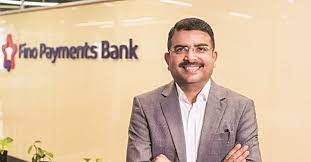
Following board approval, Fino Payments Bank requests an SFB licence from the RBI.
The Reserve Bank of India has received an application for a small finance bank (SFB) license from Fino Payments Bank, a division of Fino Paytech Limited (RBI). The RBI announced in a statement on Monday, January 8, that Fino Payments Bank had submitted an application in accordance with the SFBs' "Guidelines for on-tap licensing."The bank's board gave its approval in July 2023 to the application for an SFB license and instructed the creation of a committee to move forward with the evaluation of a reverse merger with Fino Paytech Limited, the bank's parent company. "Our SFB will be a Payments Bank++ model, different from existing players," stated Chief Financial Officer Ketan Merchant at the time. "In the first few years of operation, fee-based income will constitute 75% – 80% of the revenue."Fino's net worth is estimated to be over INR 600 Cr, but small financing banks currently need INR 200 Cr to meet their minimal capital requirements. On June 30, 2017, Fino Payments Bank commenced its business activities. Among its notable investors are Bharat Petroleum, ICICI Group, Blackstone, IFC, Intel, and LIC.
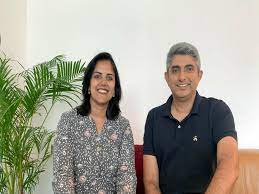
Fireside Ventures leads a 50 crore Series A fundraising round for mental health firm Amaha.
On Wednesday, Amaha, a company focused on mental health, announced that it has raised ₹50 crore in a Series A financing round led by Fireside Ventures. ₹15.6 crore more was contributed by other angel investors.Amaha, the former InnerHour, intends to expand and improve its mental health offerings with the help of this investment. Serving more than 600 Indian locations, the Mumbai-based organization provides a range of therapies and care programs for mental health issues like anxiety, depression, bipolar disorder, ADHD, OCD, schizophrenia, and addictions.The portfolio of Fireside Ventures, an investment firm that focuses mostly on consumer-focused startups, comprises businesses in the food and beverage, personal care, kids & education, lifestyle, and home products industries. It made investments in various wellness firms last year, including The Good Bug and Inito.A portion of the increased awareness and support for mental health and wellness in recent years has come from celebrities, including actors and cricket players, as well as from a number of organizations and social media platforms. Amaha was established in 2016 and offers digital services via an app that provides self-care tools and resources, in addition to operating physical centers in Delhi NCR, Bengaluru, and Mumbai. The founder and CEO of Amaha, Amit Malik, stated in an interview with Mint that "we're looking to go beyond digital at this stage because I think there is a lot of unmet need within the industry." Amaha has been aggressively investing in infrastructure, including physical clinics and technical advancements, despite growing losses in 2023 and maintaining a positiveAmaha obtained $5.2 million from Lightbox Ventures, a venture capital firm, in 2021. Additional angel investors that took part were Hitesh Oberoi, CEO & MD of Info Edge India Pvt. Ltd., Pankaj Sahni, CEO of Medanta-The Medicity Hospitals, and Capricorn Ventures & Micasa Investments (Singapore).

ETtech Deals Digest: This week, startup funding dropped 70% to $102 million.
In the second week of 2024, investments in startups fell by around 70% year over year to a total of $102.1 million across 26 different agreements, indicating that the funding crunch was not going away. According to data from Tracxn, companies in seed, early, and late stages raised around $288 million between January 6 and January 12, 2023.At roughly $49 million, or 48% of the total deal value, the early stage saw the largest amount of capital raised throughout the week. $35.2 million in late-stage finance, representing 35% of the total, came next.Funding increased sequentially in the most recent week, rising more than three times in volume and nearly three times in value terms. These cutting-edge businesses closed eight deals for $35.8 million last week.The latest numbers come after a busy spell of dealmaking in December, which came as a twist at the end of 2023 – one of the weakest years for venture capital activity in the country.The financial shortage persisted as evidenced by the fact that, in the second week of 2024, investments in startups plummeted by over 70% year over year to a total of $102.1 million across 26 separate agreements. Tracxn data indicates that between January 6 and January 12, 2023, companies in seed, early, and late stages raised approximately $288 million.In the second week of 2024, investments in startups fell by around 70% year over year to a total of $102.1 million across 26 different agreements, indicating that the funding crunch was not going away. According to data from Tracxn, companies in seed, early, and late stages raised over $288 million between January 6 and January 12, 2023.

Rupee ends lower under pressure from the stronger dollar and probable equity outflows.
Pressured by anticipated equity outflows and the U.S. dollar index rising to a more than one-month high due to moderating expectations for U.S. rate cuts, the Indian rupee ended lower on Wednesday.The rupee closed at 83.1375 against the dollar, down 0.08% from the previous session's close of 83.07.In Asia hours, the dollar index reached its highest point since mid-December, 103.58. With a decline of 0.91%, the Korean won led all Asian currencies in decline.Federal Reserve Governor Christopher Waller on Tuesday said that while the U.S. is “within striking distance” of the Fed’s 2% inflation goal, the central bank should not rush to cut benchmark interest rates.The comments prompted investors to pare bets on aggressive rate cuts.”A combination of weakish China data and a pushback” by European Central Bank and Fed officials against early easing is weighing on risk sentiment and supporting the dollar, ING Bank said in a note. In the meantime, data released on Wednesday indicates that China's economy grew marginally slower in the October–December quarter than anticipated. According to a foreign exchange trader at a private bank, pressure on the rupee on Wednesday came from dollar bids from foreign banks, probably acting on behalf of custodian clients.The blue-chip NSE Nifty 50 shed 2.09%, while the S&P BSE Sensex lost 2.23%. This is the highest percentage drop for both the indexes since June 2022.The rupee’s weakness is unlikely to “sustain a lot as the tilt or bias on the rupee remains positive”, Arnob Biswas, head of foreign exchange research at SMC Global Securities, said.Investors now await December U.S. retail sales data due later in the day, which is expected to show a month-on-month rise of 0.4%, up

Evolving Trends in Stock Market Regulations: Adapting to Algorithmic and Automated Trading in India
With the growing use of automated and algorithmic trading, the Indian stock market is going through a major transition. This technological evolution demands a corresponding shift in regulatory frameworks to maintain market integrity, fairness, and stability. High-frequency trading (HFT) and other forms of algorithmic trading have grown significantly in the Indian market. In order to profit from transient market movements, HFT, in particular, employs techniques like market making, momentum trading, and statistical arbitrage. While these technologies enhance market efficiency and liquidity, they also pose challenges such as potential market manipulation and a possible unfair advantage to large institutions over smaller investors. The Securities and Exchange Board of India (SEBI) has taken the initiative to regulate algorithmic trading in response to these issues. The main goal of the most recent regulations is to guarantee that exchanges have approved and certified all trading algorithms. This includes a thorough vetting process, and brokers are required to ensure proper security measures are in place to prevent unauthorized algorithmic activities. Additionally, SEBI has tightened short-selling norms to prevent market abuses like naked short-selling, mandating that all investors honor their securities delivery obligations. The Indian stock market is undergoing a significant transformation as a result of the uptake of cutting-edge trading technologies like algorithmic and high-frequency trading. A commitment to ensuring a dynamic, equitable, and resilient financial ecosystem is reflected in SEBI's evolving regulations. As these technologies continue to advance, the collaboration between regulators and market participants will be key to maintaining the integrity and efficiency of the Indian financial markets.

Offer for New Fund: Motilal Oswal The Motilal Oswal Large Cap Fund is launched by AMC; should you invest?
The "Motilal Oswal Large Cap Fund" is the newest investment product offered by Motilal Oswal Asset Management Company. The AMC claims that this open-ended equity scheme is purposefully created to give investors a special chance to capitalize on the large-cap segment's potential.Investment Objective: To achieve long-term capital appreciation by predominantly investing in equity and equity-related instruments of large-cap companies. Nevertheless, there can be no guarantee that the scheme's investment goal will be accomplished.

The U.S. economy will be impacted in 2024 and 2025 by "all these very powerful forces," according to Jamie Dimon.
Jamie Dimon, the CEO of JPMorgan Chase, stated that he is still cautious about the U.S. economy for the next two years due to a mix of geopolitical and financial risks. At the World Economic Forum in Davos, Switzerland, on Wednesday, Dimon told Andrew Ross Sorkin on CNBC, "You have all these very powerful forces that are going to be affecting us in '24 and '25.""I still wonder if we fully comprehend the mechanisms behind the quantitative tightening, the terrorist activity in Israel and the Red Sea, and the Ukraine," Dimon stated. The term "quantitative tightening" describes actions taken by the Federal Reserve to lower the size of its balance sheet and scale back earlier initiatives, such as bond-purchasing plans. Despite record profits at JPMorgan, the country's largest bank, and an unexpectedly strong U.S. economy, Dimon has urged caution over the past few years. Because of high employment rates and savings from the pandemic, the American consumer has largely remained healthy despite the damaging effects of inflation.n Dimon’s view, the relatively buoyant stock market of recent months has lulled investors on the potential risks ahead. The S&P 500 market index rose 19% in the past year and isn’t far from peak levels. “I think it’s a mistake to assume that everything’s hunky-dory,” Dimon said. “When stock markets are up, it’s kind of like this little drug we all feel like it’s just great. But remember, we’ve had so much fiscal monetary stimulation, so I’m a little more on the cautious side.


Numaligarh Refinery planning for IPO in next two years, says MD
Numaligarh Refinery Limited (NRL) is looking at an initial public offer (IPO) in the next two years, primarily to support net-zero emission plans of the company, its Managing Director Bhaskar Jyoti Phukan told Moneycontrol.Phukan said NRL has several projects planned to achieve net-zero targets by 2038 and setting a 2G bio-refinery is one among them. NRL, a subsidiary of state-run Oil India Limited (OIL), is setting up India’s first bio-refinery which would use bamboo as feedstock in Assam. Phukan said NRL has several projects planned to achieve net-zero targets by 2038 and setting a 2G bio-refinery is one among them. NRL, a subsidiary of state-run Oil India Limited (OIL), is setting up India’s first bio-refinery which would use bamboo as feedstock in Assam. The Assam-based refinery’s head said major expansion projects of the company would also have been commissioned in the next two years, working in favour of the IPO plans. Under expansion plans, NRL is ramping up its refining capacity to 9 MMTPA (million metric tonne per annum) from 3 MMTPA, setting up crude oil import terminal at Paradip port in Odisha and laying about 1,640 km of pipelines for transportation of imported crude oil to Numaligarh. our new refinery would be commissioned by then (in the next two years), pipeline will also be in place. So, therefore, it will be very comfortable time to go for IPO. And once we identify the green project, I think market will reward us by subscribing to the IPO that we will float,” said Phukan.

Zaggle Prepaid scales record high after agreement with EaseMyTrip
Shares of Zaggle Prepaid Ocean Services surged 18 percent to Rs 299, hitting an all-time high, after the company announced it has entered into an agreement with EasyMyTrip Planners Limited for three years. Zaggle and EaseMyTrip will offer integrated travel and expense management solutions to corporate clients," the company said in a regulatory filing on February 20. At 3:20 pm, the stock was trading at Rs 294 apiece, up 16 percent from the previous close on the NSE. The counter has surged nearly 20 percent in the last three months. The stock price of the Hyderabad-based fintech company has nearly doubled from its IPO and listing price of Rs 164 per share. The company made a debut on the exchanges on September 22, 2023. Since listing, the shares have gained around 88 percent. The company's current market capitalisation is around Rs 3,590 crore, Moneycontrol data showed. In the December quarter, Zaggle's profit zoomed 919.5 percent year-on-year to Rs 15.22 crore, on the back of a decrease in finance cost after prepayment of debts. The company clocked its highest quarterly revenue to date at Rs 199.51 crore, driven by revenue contribution from Zoyer–its software platform. Zaggle is a fintech company which follows a B2B2C business model. Within this sector, the company provides software solutions catering to payables, payroll, and tax processing. Additionally, it collaborates with banking partners to issue prepaid cards as part of its comprehensive service offerings. Disclaimer: The views and investment tips expressed by investment experts on Moneycontrol.com are their own and not those of the website or its management. Moneycontrol.com advises users to check with certified experts before taking any investment decisions.

AdEx to grow at 12% to reach Rs 1.11 lakh crore in 2024 Madison
Over 700 million people watch the 26 channels that Sony Pictures Network India (SPNI), an indirect wholly-owned subsidiary of Sony Group Corporation, Japan, owns and operates in Hindi and numerous other languages. In addition, it offers live sports, movies, short films, as well as its own original and archived material, on its single OTT platform, Sony LIV. There are about 33 million people who watch it. Madison World Chairman Sam Balsara stated, "Whilst the outlook for AdEx in India is extremely strong in the mid-term and long-term, we are witnessing a slowdown in momentum in the short term because of India Inc's focus on quarterly profits." "This does not augur well for sustained growth in profits for Advertisers who should be focussing on volume growth." Video, social, display, e-commerce, and search will contribute 17% of the growth in digital advertising, which is expected to reach Rs 46,465 crore in 2024, according to the report. It is anticipated that digital would account for 42% of all ad spending, up from 40% now. The Indian Premier League (IPL) has increased its ad market size from Rs 450 crore to about Rs 1000 crore in 2023Connected TV advertising. Traditional media, which include TV, print, radio, outdoor, and cinema, are predicted to account for 58%, or Rs 64,545 crore, of all ad spends in 2024, despite the fact that digital is currently the leading advertising medium. However, it is anticipated that traditional advertising would no longer account for 60% of all advertising by 2023. PMAR predicts that TV Adex will increase by 8% to Rs 35,575 crore. It is anticipated that in 2024, its portion of total AdEx will drop from 33% in 2023 to 32%. Thanks to sports, TV AdEx increased by 7% in 2023 to reach Rs 32,886 crore. It is anticipated that in 2019, the print AdEx will surpass the pre-Covid estimates, rising by 7% to Rs 20,613 crore. Publications in Hindi, English, and Marathi are most common the amount of print advertising space in India.OOH AdEx is expected to expand by 13% in 2023 and by 15% in 2024, primarily as a result of elections, to reach Rs 4761 crore. After surpassing pre-Covid levels to achieve Rs. 2,272 crore, radio advertising revenue growth is predicted to climb at a rate of 12% in 2024 to reach Rs. 2549 crore. Cinema AdEx has increased 36% to Rs 776 crore, although it has yet to return to pre-COVID levels. By 2024, the medium is projected to have grown by 35% to Rs 1047 crore

Bank account freeze case: Why accounts of Congress were under I-T depts scanner | Explained
The Congress' main bank accounts were frozen on Friday over an income tax demand of ₹210 crore but an I-T appellate tribunal later allowed it to operate them pending a further hearing next week, a huge relief for the party which said the move had impacted all political activity.ITAT (Income Tax Appellate Tribunal) will hear the matter on February 21, sources told ANI, adding that the current due of Congress to the Tax Department totals ₹115 crores.No bank operations have been seized or stopped in the Congress bank account freeze case, the sources informed further. "The Congress' tax due pertains to FY 17-18, AY 18-19. The initial due to the Tax Dept was ₹103 crores and ₹32 crores in interest accrued on late payment. The claims were for not filing the returns on time. The tax due was reassessed at ₹105 crores on 6th July 2021. Post this, the INC appealed before Commissioner Appeals but did not pay the mandatory 20 per cent of the tax as they had filed a plea by then," a source said. "INC paid only ₹78 lakh, prompting CIT (Appeal) to dismiss their plea. Again, on May 2023, the INC went for 2nd appeal at ITAT. The Congress did not apply for any stay on the tax demand at ITAT. In October 2023, the INC paid ₹1.72 crore. No orders were passed by ITAT today. Nowhere in their appeal has the Congress disputed the tax-due amount. No bank account operation has been stopped by the Income Tax department," the source told ANI. “You are hereby required under Section 226(3) of the Income-tax Act, 1961, to pay to me forthwith any amount due from you to or, held by you, for or on account of Bank Account No. 062304xxxxx and any other bank account/fixed deposit with your bank in the name of Indian National Congress upto the amount of arrears shown above" All Our bankers are being sent this...

57% vs 10%: BJP vs Congress share in electoral bond funds
In the six years since the electoral bonds scheme was introduced, more than half, or 57%, of the funds extended through bonds have gone to the BJP. The party, as per its declarations to the Election Commission, received Rs 5,271.97 crore via bonds between 2017-2022. The Congress was a distant second at Rs 952.29 crore. The EC is yet to publish the annual reports of parties for the financial year 2022-2023. The Supreme Court on Thursday held the changes made in the law to introduce the electoral bonds scheme as unconstitutional, in a unanimous verdict on a batch of pleas challenging the legal validity of the Centre’s scheme which allowed for anonymous funding to political parties. A five-judge Constitution Bench presided by Chief Justice of India D Y Chandrachud also directed that “the issuing bank shall herewith stop the issuance of electoral bonds” and asked the State Bank of India (SBI) to “submit details of the electoral bonds purchased since the interim order of the court dated April 12, 2019, till date to the Election Commission of India (ECI)”. The bench, also comprising Justices Sanjiv Khanna, B R Gavai, J B Pardiwala and Manoj Misra, said, “The deletion of the proviso to Section 182(1) of the Companies Act, permitting unlimited corporate funding to political parties is arbitrary and violative of Article 14”. Under the scheme, notified by the Narendra Modi government on January 2, 2018, electoral bonds could be purchased by any citizen of India or entity incorporated or established in India. An individual can buy electoral bonds, either singly or jointly with other individuals. It was pitched as an alternative to cash donations and as a way to increase transparency in political funding. In the period between 2017-2018 and 2021-2022, electoral bonds worth Rs 9,208.23 crore were sold, according to State Bank of India data obtained by The Indian Express through RTI.An analysis of the annual audited account statements submitted by the parties to the EC puts the worth of the contributions via bonds to the BJP at Rs 5,271.97 crore, from 2017-2018 till 2021-2022.

Tata Motors ties up with LeadIT for greener future
Tata Motors on Monday said it has tied up with the Leadership Group for Industry Transition (LeadIT), a global alliance launched by governments of Sweden and India at the UN Climate Action Summit in September 2019. As a member of LeadIT, the auto major will be able to harness the power of global best practices, influence policy-making, and together with other members strengthen climate action plans, thereby accelerating transition towards net-zero emissions. "Our pledge to attain net-zero emissions across our Passenger Vehicles (PV) business by 2040, and our Commercial Vehicles (CV) business by 2045, is a testament to our commitment to a greener future," Tata Motors Vice President and Chief Sustainability Officer SJR Kutty said in a statement. Joining forces with LeadIT propels the automaker closer to these ambitious goals, facilitating a journey towards sustainable transformation, he added. "Our pledge to attain net-zero emissions across our Passenger Vehicles (PV) business by 2040, and our Commercial Vehicles (CV) business by 2045, is a testament to our commitment to a greener future," Tata Motors Vice President and Chief Sustainability Officer SJR Kutty said in a statement.Joining forces with LeadIT propels the automaker closer to these ambitious goals, facilitating a journey towards sustainable transformation, he added.

Services trade surplus hits record $44.9 billion in December quarter
India’s services trade surplus shot up to a record $44.9 billion in the October-December quarter (third quarter, or Q3) of 2023-24 (FY24), growing 16 per cent year-on-year, showing resilience amid strong global headwinds. This is likely to reduce the current account deficit (CAD) in Q3. According to the Reserve Bank of India (RBI) data, services exports grew 5.2 per cent to $87.7 billion during Q3, while services imports contracted 4.3 per cent to $42.8 billion during the same period. India’s CAD moderated to 1 per cent of gross domestic product (GDP) in the first half (April-September) of FY24 from 2.9 per cent of GDP during the same period of 2022-23 (FY23), on the back of a lower merchandise trade deficit and higher net services receipts. Fitch Ratings has projected CAD to narrow to 1.4 per cent of GDP in FY24 and 2024-25 from 2 per cent of GDP in FY23. IDFC Bank has revised downward its CAD estimate to 1.2 per cent of GDP from 1.5 per cent, incorporating a higher monthly services surplus. In the Economic Review released ahead of the Interim Budget, the finance ministry last month said services exports, with a compound annual growth rate (CAGR) of 7.1 per cent during 2011-12 through FY23, combined with the CAGR of remittances of 4.5 per cent during the same period, enabled India’s current account balance to remain within a comfortable range. India’s services exports range from information technology to services provided by doctors and nurses abroad. While the RBI doesn’t release monthly disaggregated services exports data, its classification of services exports released quarterly with balance of payment data includes transport, travel, construction, insurance and pensions, financial services, telecommunications, computer and information services, and personal, cultural and recreational services, and other business services. While software exports dominate India’s services exports, “other business services” exports that primarily include global capability centres (GCCs) have seen a strong ramp-up recently, accounting for 26.4 per cent of the total services exports in the first half (April-September) of FY24, from 19 per cent in 2013-14.

RBI implies that a sponsor bank will be allowed to step in
The Reserve Bank of India (RBI) has implied that a sponsor bank will be allowed to step in to manage Paytm's transactions, in the FAQs released on February 16. A payment processor app--as a third-party application provider (TPAP)--needs a sponsor bank to access the UPI infrastructure. Until now, Paytm had Paytm Payments Bank (PPB). With the central bank cracking down on the bank, there was heightened uncertainty around Paytm's future. This latest communication from RBI should settle that to a large extent. The sponsor bank can step in provided the National Payments Corporation of India (NPCI) gives its approval. Market sources told Moneycontrol that the bank names are likely to be announced next week. The stock was up 5 percent today.The RBI released FAQs suggests developments along this line in point number 21. This answered a question that a merchant could have. Yes. If your receipt and transfer of funds is linked to any bank account other than Paytm Payments Bank, you can continue to use this arrangement even after March 15, 2024. This implies that a sponsor bank can step in to manage Paytm's nodal account that accepts payments made to its merchant partners

Govt raises windfall gains tax on crude oil, diesel
The government has revised its windfall gains tax on crude petroleum with effect from February 16. As per the revisions, Special Additional Excise Duty (SAED) on crude petroleum will increase to Rs 3,300/tonne, from Rs 3,200/tonne earlier; while tax on diesel will increase to Rs 1.50/litre from nil/litre. Further, SAED on petrol and aviation turbine fuel (ATF) will continue to be nil. Earlier this month, the government had hiked windfall tax on domestically produced crude oil to Rs 3,200 per tonne from Rs 1,700 per tonne. The tax is levied in the form of Special Additional Excise Duty (SAED). The government levies tax on windfall profits made by oil producers on any price they get above a threshold of $75 per barrel. The levy on fuel exports is based on cracks or margins that refiners earn on overseas shipments. These margins are primarily a difference between the international oil price realised and the cost. India first imposed windfall profit taxes on July 1, 2022, joining a host of nations that tax supernormal profits of energy companies. At that time, export duties of Rs 6 per litre ($12 per barrel) each were levied on petrol and ATF and Rs 13 a litre ($26 a barrel) on diesel. The tax rates are reviewed every fortnight based on average oil prices in the previous two weeks. Crude oil pumped out of the ground and from below the seabed is refined and converted into fuel like petrol, diesel and ATF. A windfall tax is levied on domestic crude oil if rates of the global benchmark rise above $75 per barrel. Export of diesel, ATF and petrol attract the levy if product cracks (or margins) rise above $20 per barrel.

Rakesh Jhunjhunwalas close aide spells out Big Bull’s advise now
Every time market fell sharply till about 18 months ago, retail investors would take comfort in the words of India’s Big Bull Rakesh Jhunjhunwala, whose optimism and confidence in India and Indian market seemed unshakable. His close aide and chief investment officer of Alchemy Capital, Hiren Ved, said in an exclusive interview with Moneycontrol: "He would have said, be careful of what you buy now but certainly don't sell.” Besides, he would have said, "The best way to buy a bull market is to stay committed to it." Ved is one of the close aides of Rakesh Jhunjhunwala who was the original investors in Alchemy Capital, originally promoted by Lashit Sanghavi and Ashwin Kedia. The firm was started in 1996 and Ved joined the company in 1999. Outguessing the Big Bull on his take on current markets, Ved said, he might say: "You can't get on and off the horse, you have to stay on the horse. The horse might not be galloping but throttling. As long as it is throttling in the right direction and once in a while it gallops in the right direction, one has to stay on the horse," said Ved. Ved said, staying the course was the Jhunjhunwala’s consistent advise to him and other investors. In the last one year, Nifty 50 has gained 23 percent while the Senex has gained 19 percent in the same period. Nifty 50 forward PE is at 20.05x while Nifty 50 ten-year average PE is at 20.08x.

Farmers protest: Key differences in 2020 versus 2024 agitation
Thousands of farmers from Haryana, Punjab and Uttar Pradesh were back on the road to the national capital on February 13 over two years after they had called off their strike. The move came after the last round of talks between the farmer leaders and the Union ministers remained inconclusive on February 12 night. Massive security arrangements have been made and borders have been between Punjab and Haryana and Haryana and Delhi to deter farmers from entering New Delhi. However, this protest is different from the ones the farmers held in 2020-2021. In 2020, the farmers protested the three farm laws. They were repealed by the Centre in 2021. However, the key demand this time is different. They want legal guarantee to MSP for all crops, full debt waiver and pension for farmers, the implementation of the Swaminathan Commission's formula, and withdrawal of cases against farmers during the 2020 protest. According to the guidelines, the government sets the MSP for nearly two dozen commodities twice a year based on the recommendations of the Commission for Agricultural Costs and Prices.

Paytm’s UPI payments: Two contrasting trends
Digital payments major Paytm, which is run by One 97 Communications, has seen a stagnation in Unified Payments Interface payments originating from its payments bank over the last six months. Data shared by the National Payments Corporation of India shows that from August 2023, payments originating from Paytm’s own UPI address started falling. In August last year, Paytm reported 455 million UPI payments on its own handle that is @paytm. But since then it fell all the way to 410 million in December last year. From 323 million in May 2022, these transactions had grown nearly 41% to 455 million in August 2023. Paytm Payments Bank was put under an embargo by the RBI in March 2022. For understanding, UPI has two legs in a payment journey. One is on the issuance side, that is where a customer pays using the Paytm handle, which in many cases could be connected to the Paytm Payments Bank savings account. And the other is the acceptance side where the merchant or the beneficiary account is on Paytm. Analysis of industry data shows that since the middle of last year, Paytm has been fully focusing on the acquisition side. Data shows that Paytm’s acquisition numbers grew consistently to 2.8 billion transactions in December last year from 1.7 billion in December 2022. “After the bank went into an embargo, new customers were not joining the bank and on top of that the management was fully focused on acquiring more merchants for all forms of digital payments, thereby slowing down on issuance,” said a senior industry executive in the know.


