


Top Trending Finance & Stock Market News & Highlights


Ether retreats after momentarily touching the $3,000 mark, while Bitcoin drops from the $52,000 mark.
On Wednesday, February 21, there was a tiny 0.31 percent gain for Bitcoin. At the moment, Bitcoin is worth $51,977, or about Rs. 43 lakh. Market analysts claim that the resistance level for Bitcoin is currently at $53,000, or approximately Rs. 43.9 lakh; a breach of this level would signal a significant increase in the value of the asset. The price of Bitcoin has seen a significant increase of $400 (approximately Rs. 33,160) in the last day. Wednesday's market volatility was reflected in the cryptocurrency chart, where altcoins fluctuated between gains and losses. For the first time since April 2022, Ether crossed the $3,000 (about Rs. 2.48 lakh) threshold. But at that point, the asset was unable to maintain a significant advantage. Ether's current value, after a 2.05 percent loss, is $2,870, or approximately Rs. 2.3 lakh. "Bitcoin is indicating overbought conditions in the current market environment, which is causing investor caution regarding possible consolidation. Ethereum, on the other hand, is showing an ascending channel pattern, driven by continuous developments in its ecosystem and flirting with $3,000 (about Rs. 2.48 lakh). Deviating from their customary daily routines, investors are being cautious because of a recent buying frenzy amid bullish momentum suggested by moving averages, according to Rajagopal Menon, Vice President of WazirX, who spoke with Gadgets360. Market observers are currently more interested in watching Ether's trajectory than Bitcoin's. "Ethereum has a huge following. For most Web3 developers, it is the default option when it comes to compute networks. This translates to increased traffic volume and road upkeep. Therefore, an update to make the highway much smoother is being shipped by developers. They are also doing it without causing any traffic hiccups. They port the upgrade to the mainnet highway after testing it on the testnets, or service road. Dencun's planned mainnet launch in March "can be seen as an internal catalyst for a better Web3 future," according to CoinSwitch co-founder Ashish Singhal.
Published 22 Feb 2024 02:33 AM

India Accepts All Foreign Investment In The Space Industry
In an effort to facilitate business in the nation, the Indian government approved an amendment on Wednesday that permits 100% foreign direct investment (FDI) in the space sector. The government stated in a statement that the FDI policy reform will encourage growth in investment, income, and employment. The government stated in a statement that the FDI policy reform will encourage growth in investment, income, and employment.
Published 22 Feb 2024 01:45 AM

The Price of Bitcoin Exceeds $48,000
At the time of publishing, the price of the most popular cryptocurrency in the world, Bitcoin, was $48,101 (approximately Rs. 39.9 lakh), having seen a slight increase of 0.74 percent on Monday. The digital asset gained $1,826 in value over the course of the weekend (about Rs. 1.5 lakh). The next target, according to market analysts, would be $50,000 (about Rs. 41.5 lakh), which is a milestone that Bitcoin hasn't been able to reach since December 2021, if the price of the cryptocurrency rises above $48,970 (about Rs. 40 lakh). Ether's value fell by 0.55 percent on Monday as it was unable to keep up with Bitcoin's gains. At the moment, ether is worth $2,498 (about Rs. 2.07 lakh). Due to large net inflows into spot Bitcoin ETFs the week before, Bitcoin surged above $48,000 (about Rs. 39.8 lakh) over the weekend, hitting its highest level in 26 months. The CEO of Mudrex, Edul Patel, told Gadgets360 that Ethereum also reached its highest point since January 19 at $2,540, or roughly Rs. 2 lakh. It is currently consolidating around $2,500, or roughly Rs. 2.07 lakh, with resistance at $2,620, or roughly Rs. 2.17 lakh, and support at $2,440, or roughly Rs. 2.02 lakh.The majority of cryptocurrencies saw losses on Monday, including Ether. These comprise Avalanche, Dogecoin, Cardano, Ripple, and Binance Coin. On Monday, the values of other altcoins, including Uniswap, Shiba Inu, Litecoin, Bitcoin Cash, Solana, and Binance Coin, also decreased. In the past day, the value of the cryptocurrency industry as a whole fell by 0.76 percent. According to CoinMarketCap, the current value of the cryptocurrency market is $1.8 trillion, or approximately Rs. 1,49,40,576 crore. Ether's market share is currently 16.7%, while Bitcoin's dominance is currently 52.5 percent.This week, there will probably be a few notable token unlocks, such as the release of SAND from Sandbox worth over $96 million (about Rs. 796 crore), or roughly 9% of the total supply. We plan to do this on Valentine's Day. Additional unlocks include Aptos, which released more than 7% .
Published 13 Feb 2024 01:20 AM

Paytm Payments Bank Is Looking To Employ Outside Compliance
Four people with knowledge of the situation claim that Paytm Payments Bank Ltd. has sent out a request for proposals to outside auditors. According to the individuals cited above, who requested to remain anonymous, the bank only made this RFP available to outside auditors. As a result, it is not in the public domain.According to the three individuals mentioned above, the goal of this RFP is to audit the bank for compliance and the know-your-customer procedure.As stated by the first person quoted above, Paytm Payments Bank also hopes to demonstrate to the Reserve Bank of India that it is fully compliant by starting this audit. One97 Communications Ltd.'s associate company came under heavy fire from the RBI on January 31 for "persistent non-compliance" and serious "supervisory concerns." The regulator stated in its directives that Paytm Payments Bank will not be able to take new credit transactions, top-ups, or deposits into its accounts after February 29.
Published 10 Feb 2024 10:20 AM


Finance & Stock Market
Finance & Stock Market

For FY23, Unacademys revenue jumps 26% to Rs 907 crore while its loss cuts
The test-prep startup Unacademy reported that, despite constant layoffs at the company, its losses in FY23 decreased by 41% to Rs 1,678 crore. In FY23, employee-related expenses decreased by 28% to Rs 1,281 crore.The test-prep startup Unacademy reported that, despite constant layoffs at the company, its losses in FY23 decreased by 41% to Rs 1,678 crore. In FY23, employee-related expenses decreased by 28% to Rs 1,281 crore.In what was a difficult year for the startup environment, many modern businesses, like Myntra, ZestMoney, and Curefoods, reported stronger revenues for FY23, but their losses also increased.Revenue at Myntra rises to Rs 4,375 crore: The apparel retailer Myntra, which is owned by Flipkart, reported a 25% increase in operating revenue to Rs 4,375 crore in FY23, despite a 31% increase in losses to Rs 782 crore. The online fashion platform's largest expense, amounting to Rs 1,758 crore, was spent on advertising and promotional activities, representing a 35% increase over the previous year.Unacademy reduces losses to Rs 1,678 crore, or 41%: Unacademy, a startup providing test preparation, reported that its losses in FY23, which included several layoffs at the company, decreased by 41% to Rs 1,678 crore. The Bengaluru-based firm saw a 26% increase in sales to Rs 907 crore during the year, while costs associated with payroll decreased by 28% to Rs 1,281 crore.ZestMoney reports a loss of Rs 412 crore. ZestMoney, a troubled startup that has been searching for a buyer, declared a net loss of Rs 412.4 crore for the fiscal year 2023. On the other hand, while total expenses increased by 21% to Rs 662.2 crore, overall revenue for the buy-now-pay-later platform increased by 72% to Rs 250 crore.

SentinelOne, a US-based company, purchases PingSafe, a Bengaluru cybersecurity startup.
SentinelOne, an AI-powered cybersecurity startup based in the United States, said on Wednesday that it has reached an agreement to purchase Bengaluru-based PingSafe for an undisclosed sum.The Mountain View, California-based business said in a statement that it will buy PingSafe for a mix of cash and stock, and that the deal is anticipated to close in SentinelOne's first quarter of the 2025 fiscal year, contingent upon customary closing conditions and any necessary regulatory approvals.The Mountain View, California-based business said in a statement that it will buy PingSafe for a mix of cash and stock, and that the deal is anticipated to close in SentinelOne's first quarter of the 2025 fiscal year, contingent upon customary closing conditions and any necessary regulatory approvals.Bengaluru: The $100 million purchase of Bengaluru-based cloud security platform PingSafe by NYSE-listed SentinelOne is hailed as the greatest acquisition in the history of Indian cyber security startups. According to Barclays' report, the transaction is made up of both cash and stock.Companies won't have to deal with the complexity of multiple-point solutions, triage and analyze cases with insufficient context, or stream data between different data silos thanks to this new approach to cloud security. Rather, companies can manage their whole attack surface from a single platform that offers all the analytics, real-time interaction, and full context required to correlate, detect, and thwart multi-stage attacks in a straightforward manner—unlike old CNAPP and standalone solutions.
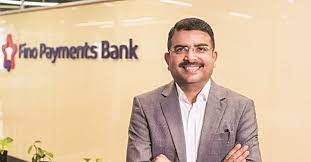
Following board approval, Fino Payments Bank requests an SFB licence from the RBI.
The Reserve Bank of India has received an application for a small finance bank (SFB) license from Fino Payments Bank, a division of Fino Paytech Limited (RBI). The RBI announced in a statement on Monday, January 8, that Fino Payments Bank had submitted an application in accordance with the SFBs' "Guidelines for on-tap licensing."The bank's board gave its approval in July 2023 to the application for an SFB license and instructed the creation of a committee to move forward with the evaluation of a reverse merger with Fino Paytech Limited, the bank's parent company. "Our SFB will be a Payments Bank++ model, different from existing players," stated Chief Financial Officer Ketan Merchant at the time. "In the first few years of operation, fee-based income will constitute 75% – 80% of the revenue."Fino's net worth is estimated to be over INR 600 Cr, but small financing banks currently need INR 200 Cr to meet their minimal capital requirements. On June 30, 2017, Fino Payments Bank commenced its business activities. Among its notable investors are Bharat Petroleum, ICICI Group, Blackstone, IFC, Intel, and LIC.
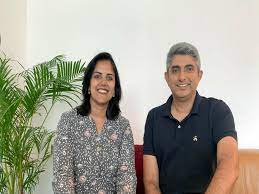
Fireside Ventures leads a 50 crore Series A fundraising round for mental health firm Amaha.
On Wednesday, Amaha, a company focused on mental health, announced that it has raised ₹50 crore in a Series A financing round led by Fireside Ventures. ₹15.6 crore more was contributed by other angel investors.Amaha, the former InnerHour, intends to expand and improve its mental health offerings with the help of this investment. Serving more than 600 Indian locations, the Mumbai-based organization provides a range of therapies and care programs for mental health issues like anxiety, depression, bipolar disorder, ADHD, OCD, schizophrenia, and addictions.The portfolio of Fireside Ventures, an investment firm that focuses mostly on consumer-focused startups, comprises businesses in the food and beverage, personal care, kids & education, lifestyle, and home products industries. It made investments in various wellness firms last year, including The Good Bug and Inito.A portion of the increased awareness and support for mental health and wellness in recent years has come from celebrities, including actors and cricket players, as well as from a number of organizations and social media platforms. Amaha was established in 2016 and offers digital services via an app that provides self-care tools and resources, in addition to operating physical centers in Delhi NCR, Bengaluru, and Mumbai. The founder and CEO of Amaha, Amit Malik, stated in an interview with Mint that "we're looking to go beyond digital at this stage because I think there is a lot of unmet need within the industry." Amaha has been aggressively investing in infrastructure, including physical clinics and technical advancements, despite growing losses in 2023 and maintaining a positiveAmaha obtained $5.2 million from Lightbox Ventures, a venture capital firm, in 2021. Additional angel investors that took part were Hitesh Oberoi, CEO & MD of Info Edge India Pvt. Ltd., Pankaj Sahni, CEO of Medanta-The Medicity Hospitals, and Capricorn Ventures & Micasa Investments (Singapore).

ETtech Deals Digest: This week, startup funding dropped 70% to $102 million.
In the second week of 2024, investments in startups fell by around 70% year over year to a total of $102.1 million across 26 different agreements, indicating that the funding crunch was not going away. According to data from Tracxn, companies in seed, early, and late stages raised around $288 million between January 6 and January 12, 2023.At roughly $49 million, or 48% of the total deal value, the early stage saw the largest amount of capital raised throughout the week. $35.2 million in late-stage finance, representing 35% of the total, came next.Funding increased sequentially in the most recent week, rising more than three times in volume and nearly three times in value terms. These cutting-edge businesses closed eight deals for $35.8 million last week.The latest numbers come after a busy spell of dealmaking in December, which came as a twist at the end of 2023 – one of the weakest years for venture capital activity in the country.The financial shortage persisted as evidenced by the fact that, in the second week of 2024, investments in startups plummeted by over 70% year over year to a total of $102.1 million across 26 separate agreements. Tracxn data indicates that between January 6 and January 12, 2023, companies in seed, early, and late stages raised approximately $288 million.In the second week of 2024, investments in startups fell by around 70% year over year to a total of $102.1 million across 26 different agreements, indicating that the funding crunch was not going away. According to data from Tracxn, companies in seed, early, and late stages raised over $288 million between January 6 and January 12, 2023.
Rupee ends lower under pressure from the stronger dollar and probable equity outflows.
Pressured by anticipated equity outflows and the U.S. dollar index rising to a more than one-month high due to moderating expectations for U.S. rate cuts, the Indian rupee ended lower on Wednesday.The rupee closed at 83.1375 against the dollar, down 0.08% from the previous session's close of 83.07.In Asia hours, the dollar index reached its highest point since mid-December, 103.58. With a decline of 0.91%, the Korean won led all Asian currencies in decline.Federal Reserve Governor Christopher Waller on Tuesday said that while the U.S. is “within striking distance” of the Fed’s 2% inflation goal, the central bank should not rush to cut benchmark interest rates.The comments prompted investors to pare bets on aggressive rate cuts.”A combination of weakish China data and a pushback” by European Central Bank and Fed officials against early easing is weighing on risk sentiment and supporting the dollar, ING Bank said in a note. In the meantime, data released on Wednesday indicates that China's economy grew marginally slower in the October–December quarter than anticipated. According to a foreign exchange trader at a private bank, pressure on the rupee on Wednesday came from dollar bids from foreign banks, probably acting on behalf of custodian clients.The blue-chip NSE Nifty 50 shed 2.09%, while the S&P BSE Sensex lost 2.23%. This is the highest percentage drop for both the indexes since June 2022.The rupee’s weakness is unlikely to “sustain a lot as the tilt or bias on the rupee remains positive”, Arnob Biswas, head of foreign exchange research at SMC Global Securities, said.Investors now await December U.S. retail sales data due later in the day, which is expected to show a month-on-month rise of 0.4%, up

Evolving Trends in Stock Market Regulations: Adapting to Algorithmic and Automated Trading in India
With the growing use of automated and algorithmic trading, the Indian stock market is going through a major transition. This technological evolution demands a corresponding shift in regulatory frameworks to maintain market integrity, fairness, and stability. High-frequency trading (HFT) and other forms of algorithmic trading have grown significantly in the Indian market. In order to profit from transient market movements, HFT, in particular, employs techniques like market making, momentum trading, and statistical arbitrage. While these technologies enhance market efficiency and liquidity, they also pose challenges such as potential market manipulation and a possible unfair advantage to large institutions over smaller investors. The Securities and Exchange Board of India (SEBI) has taken the initiative to regulate algorithmic trading in response to these issues. The main goal of the most recent regulations is to guarantee that exchanges have approved and certified all trading algorithms. This includes a thorough vetting process, and brokers are required to ensure proper security measures are in place to prevent unauthorized algorithmic activities. Additionally, SEBI has tightened short-selling norms to prevent market abuses like naked short-selling, mandating that all investors honor their securities delivery obligations. The Indian stock market is undergoing a significant transformation as a result of the uptake of cutting-edge trading technologies like algorithmic and high-frequency trading. A commitment to ensuring a dynamic, equitable, and resilient financial ecosystem is reflected in SEBI's evolving regulations. As these technologies continue to advance, the collaboration between regulators and market participants will be key to maintaining the integrity and efficiency of the Indian financial markets.

Offer for New Fund: Motilal Oswal The Motilal Oswal Large Cap Fund is launched by AMC; should you invest?
The "Motilal Oswal Large Cap Fund" is the newest investment product offered by Motilal Oswal Asset Management Company. The AMC claims that this open-ended equity scheme is purposefully created to give investors a special chance to capitalize on the large-cap segment's potential.Investment Objective: To achieve long-term capital appreciation by predominantly investing in equity and equity-related instruments of large-cap companies. Nevertheless, there can be no guarantee that the scheme's investment goal will be accomplished.

The U.S. economy will be impacted in 2024 and 2025 by "all these very powerful forces," according to Jamie Dimon.
Jamie Dimon, the CEO of JPMorgan Chase, stated that he is still cautious about the U.S. economy for the next two years due to a mix of geopolitical and financial risks. At the World Economic Forum in Davos, Switzerland, on Wednesday, Dimon told Andrew Ross Sorkin on CNBC, "You have all these very powerful forces that are going to be affecting us in '24 and '25.""I still wonder if we fully comprehend the mechanisms behind the quantitative tightening, the terrorist activity in Israel and the Red Sea, and the Ukraine," Dimon stated. The term "quantitative tightening" describes actions taken by the Federal Reserve to lower the size of its balance sheet and scale back earlier initiatives, such as bond-purchasing plans. Despite record profits at JPMorgan, the country's largest bank, and an unexpectedly strong U.S. economy, Dimon has urged caution over the past few years. Because of high employment rates and savings from the pandemic, the American consumer has largely remained healthy despite the damaging effects of inflation.n Dimon’s view, the relatively buoyant stock market of recent months has lulled investors on the potential risks ahead. The S&P 500 market index rose 19% in the past year and isn’t far from peak levels. “I think it’s a mistake to assume that everything’s hunky-dory,” Dimon said. “When stock markets are up, it’s kind of like this little drug we all feel like it’s just great. But remember, we’ve had so much fiscal monetary stimulation, so I’m a little more on the cautious side.


Morgan Stanley sees opportunity, buys shares worth ₹244 crore
Morgan Stanley on Friday bought shares worth ₹244 crore in Paytm's parent company One97 Communications, representing a 0.8 per cent stake Financial services giant Morgan Stanley on Friday made an investment in Paytm's parent company, One97 Communications, by acquiring shares worth ₹244 crore through an open market transaction.Morgan Stanley, via its affiliate Morgan Stanley Asia (Singapore) Pte - ODI, purchased 50 lakh shares on the National Stock Exchange (NSE), representing a 0.8 per cent stake in Paytm. The average price per share was ₹487.20, resulting in a total deal size of ₹243.60 crore. However, details about the sellers remain undisclosed, PTI reported.This comes after the banking sector regulator has found potential violations, including the misuse of customer documentation rules and non-disclosure of material transactions. Paytm shares price faced another 20 per cent decline on the NSE. This adds to a total of 36 per cent drop in the share price in just 2 days after the Reserve Bank of India (RBI) directed Paytm Payments Bank Ltd (PPBL), an associate of Paytm, to cease accepting deposits or top-ups in various accounts, wallets, and instruments from March 1. Morgan Stanley, via its affiliate Morgan Stanley Asia (Singapore) Pte - ODI, purchased 50 lakh shares on the National Stock Exchange (NSE), representing a 0.8 per cent stake in Paytm. The average price per share was ₹487.20, resulting in a total deal size of ₹243.60 crore. However, details about the sellers remain undisclosed, PTI reported.In related news, there are reports that the RBI is contemplating revoking the license of Paytm Payments Bank as early as next month.

Global stocks hit two-year highs, as dollar eases
Global equities rose to a more than two-year high and the S&P 500 touched a record peak on Wednesday, as strong earnings offset jitters related to US regional banks and China markets. Bonds were under modest pressure, as comments from Federal Reserve officials reaffirmed expectations that the central bank may not soon cut rates.The MSCI world equity index, which tracks shares in 49 nations, gained 0.37% by 10:11 a.m. EST (1511 GMT) after hitting its highest since mid-January 2022. Markets got a boost from a rally in Chinese blue-chips. On Wall Street, the Dow Jones Industrial Average rose 0.25% to 38,619.03, the S&P 500 gained 0.48% to 4,978.24 and the Nasdaq Composite added 0.48% to 15,683.15. "We are at the midpoint of the 4Q earnings reporting season, and we would say that there has been more good news than bad," Arthur Hogan, chief market strategist with B. Riley Wealth, said in a morning note. The US regional banking sector remained a concern as Moody's downgraded New York Community Bancorp to junk citing pressure on its funding and liquidity. The stock lost 22% on Tuesday, to be down 60% since it reported surprise losses last week. Chinese regulators continued efforts to steady markets, placing further curbs on short selling and state investors said they were expanding their stock buying plans. President Xi Jinping would discuss the stock market with financial regulators, Bloomberg News reported, though there was no confirmation this had happened or what was discussed. The head of China's securities regulator was replaced on Wednesday, according to Xinhua news agency, as policymakers struggle to stabilise the country's main stock indexes after a plunge to five-year lows.

Stock Market LIVE Updates | Nifty 50, Sensex open higher, Paytm down nearly 10%
Suven Pharma, Performance over the next few quarters likely to remain soft due to near-term macro challenges and industry-wide inventory de-stocking in specialty chemicals and the impact of Covid molecule in the CDMO business. Net profit for the quarter fell 56%, while revenue declined by 38%. Margin also narrowed to 29.78% from 41.5% last year.Following Reserve Bank of India’s (RBI) crackdown on Paytm Payments Bank, several Indian startup founders have written to the Prime Minister’s Office (PMO), Finance Ministry as well as the central bank requesting a rollback restrictions imposed on the fintech led by Vijay Shekhar Sharma, sources told CNBC-TV18 on February 6Net profit of ₹2,442.2 crore misses CNBC-TV18 poll estimate of ₹3,200 crore. Revenue and EBITDA in-line with estimates, while margin of 52.9%, higher than expectations of 52.2%. On a sequential basis, the margin narrowed by 20 basis points, while profit rose over 80%. India mobile services Average Revenue Per User (*ARPU) stood at ₹208 from ₹193 during the same quarter last year. Ashok Leyland reported a robust Q3 with an EBITDA of ₹1114 Cr (12.0%) and a net profit of ₹580 crore, marking a 60% increase over Q3 FY23. Revenues stood at ₹9273 crore, a 2.7% growth. The company achieved a historic high commercial vehicle volume of 1,38,416 units in the first nine months of the fiscal year. Despite global challenges, it recorded a 6.5% growth in export volume. The debt was ₹1747 Cr at the end of Q3 FY24, with a debt-equity ratio of 0.2 times.

Varun Beverages Q4 Results: Cons PAT at Rs 132 crore; final dividend declared
Varun Beverages Ltd, PepsiCo's largest franchise bottler, on Monday reported a consolidated net profit of ₹132 crore for the fourth quarter ended December 2023, up 77% year-on-year, helped by growth in revenue and improved profit margins. The company, which follows the calendar year as its financial year, had posted a net profit of ₹74.7 crore during the October-December quarter a year ago. Its revenue from operations during October-December 2023 stood at ₹2,731 crore, a jump of 21% as compared with ₹2,257 crore in the the year-ago period, Varun Beverages said in a regulatory filing. Varun Beverages' total expenses stood at ₹2,552 crore, a jump of 17% as against ₹2,177 crore. The board of PepsiCo's largest franchise bottler also recommended a final dividend of ₹1.25 per equity share for the financial year ended December 31, 2023 to the shareholders of the company. The record date will be fixed by the Board of Directors of the company. Ravi Jaipuria, Chairperson of Varun Beverages, said that despite the abnormally high unseasonal rains in the peak season, his company concluded 2023 on a strong note. He said his company witnessed a healthy double-digit volume growth in both Indian and International markets. "Our consolidated sales volume increased by 13.9%, and the net realisation per case increased by 7% in 2023. Both these together contributed to our remarkable revenue growth of 21.8 per cent and an impressive PAT growth of 35.6 per cent. In line with our strategic objectives, we have successfully commissioned multiple greenfield and brownfield facilities across key geographies during the year. This expansion not only strengthened our manufacturing capabilities but also extended our market reach," he added.Shares of Varun Beverages Ltd was trading almost flat at ₹1,287.75 apiece on the NSE.

Over 50 smallcap stocks gain between 15-50% as Sensex logs best week in 2024; do you own?
Nearly 50 smallcap stocks logged a double digit rise in their stock prices - in the range of 15-50 per cent last week, with the benchmark BSE Sensex logging its best week in 2024 so far, as the government's fiscal prudence in Interim Budget 2024 also boosted sentiment. The benchmark Nifty 50 index hit an all-time high for the fifth time this year on Friday, driven by gains in heavyweights such as Reliance Industries and information technology (IT) stocks.On the stock-specific front, NBCC (India), HCC, IRB Infra, Shakti Pumps, Punjab & Sind Bank, KPI Green Energy, Tata Investment, Andrew Yule, Infibeam Avenues, Man Industries, Indian Bank, PTC Industries, Jaiprakash Power, Zen Technologies, SpiceJet, UCO Bank, Orient Green Power, and others are among the smallcaps that logged a double-digit rise in their share prices last week. The government's adherence to its fiscal consolidation roadmap and thrust on capex are positive for bonds and the impact on equities has been as expected, said Abhishek Goenka, founder and CEO of IFA Global. The gains in mid-caps last week were capped by Paytm shares nosediving 20 per cent for the second day in a row, since the central bank ordered its banking arm to stop taking fresh deposits. Markets rebounded after spending two weeks in a corrective phase and gained around two per cent, led by favorable cues. The tone was positive for most of the week citing favorable global cues and buying in select heavyweights however underperformance of banking majors continues to weigh on the sentiment.Frontline indices logged their best week this year so far, led by large-cap stocks like Reliance Industries, which logged its best week since June 2022. On the weekly basis, the BSE benchmark jumped 1,384.96 points or 1.95 per cent, and the Nifty climbed 501.2 points or 2.34 per cent."Large-caps like Reliance and HDFC Bank have come to the fore in this leg of the rally," said Saurabh Jain, assistant vice president of research for retail equities at SMC Global. The allocations could shift further towards the segment from small- and mid-caps as investors seek safety in an expensive market, according to analysts.The BSE benchmark declined 106.81 points or 0.15 per cent to settle at 71,645.30 on Thursday when the finance minister presented Interim Budget 2024 in the Parliament. The Nifty 50 dipped 28.25 points or 0.13 per cent to 21,697.45 on February 1. PSU bank surged over two per cent on account of the 10-year G-Sec yield falling to an eight-month low at 7.04 per cent after the finance minister announced a lower borrowing plan.

Banks await RBI nod on KYC challenges at Paytm before moving business
Digital payments player Paytm is awaiting the Reserve Bank of India’s (RBI) approval to start moving its settlements business from Paytm Payments Bank to other lenders. But issues around KYC (Know Your Customer) of the accounts could be a major hiccup holding up the process. Two senior bankers in the know told ET that given Paytm was involved in issues around KYC of its user base in the past, bankers are looking for directions from the RBI before taking on the business. KYC is a process that requires a potential customer to submit original identity documents to a bank before being able to access its services. The central bank allows digital KYC through video verification. “We have to be careful about who we are doing business with. In this case, we need to be sure of the KYC of the merchants as well as the customers, so the central bank will need to take a call on that,” one of the bankers said. This will take time, and the banking regulator will only take the call after detailed consideration and thorough scrutiny of its own. The actual number of proper KYC-ed users of Paytm will be scrutinised too, the bankers added. The RBI did not respond to emailed queries from ET. On January 31, the RBI asked Paytm Payments Bank to stop offering basic banking services from February 29. It has effectively asked its customers to move all their funds from the payments bank or use up their available balance.The language and the directive from the banking regulator came as a shock to the banking and fintech industry. Several industry insiders said that coming back from this situation might be a huge challenge for the bank promoted by Paytm founder Vijay Shekhar Sharma.

The Following Bitcoin Halving Is Set for April 2024: Why Is It Important?
The most costly cryptocurrency asset to dominate the market since its launch in 2009 is Bitcoin, the first cryptocurrency ever created. When Bitcoin was first created, its anonymous creator—known only by the pseudonym Satoshi Nakamoto—capped the number of tokens in circulation at 21 million. This basically indicates that once there are 21 million Bitcoin in circulation, no more will be created. A regular process known as "Bitcoin halving" takes place to prevent that from occurring. The Bitcoin blockchain undergoes a halving process every 210,000 blocks are mined. Following a halving, miners' block rewards are cut in half, which lessens their incentive to mine Bitcoin blocks and stifles the flow of new coins into the network. It takes three to four years for the process of halving to occur because that is how long it takes to mine 210,000 blocks on the Bitcoin blockchain. The first Bitcoin halving process took place in 2012, following its creation in 2009. The payout for mining Bitcoin decreased to 25 BTC at that time from 50 BTC. The reward for mining bitcoin decreased from 25 bitcoin to its current price of 6.25 bitcoin during the second and third halving processes, which took place in 2016 and 2020. BitPanda records the history of Bitcoin halving.With Bitcoin currently trading at $42,812 (approximately Rs. 35.5 lakh), the reward value for Bitcoin miners is 6.25 BTC, or $269,465 (approximately Rs. 2 crore). As stated in the code that Satoshi Nakamoto compiled, the Bitcoin halving event is only planned to occur 64 times in total.

In a pre-Series A funding round, EV ride-hailing company Snap-E Cabs raises $2.5M.
Snap-E Cabs, an EV ride-hailing startup, earns $2.5 million in a pre-Series A funding round headed by Inflection Point Ventures.Snap-E Cabs is a ride-hailing platform for electric vehicles that offers 100% electric mobility solutions that are dependable, economical, efficient, and sustainable. The funds generated will go toward hiring more employees to support the company's expansion, making technology upgrades, launching new tech-enabled services, and growing its operations into other regions."In addition to upending the world's oil markets, India's shift to electric vehicles positions the nation—with its 1.4 billion people and quickly expanding economy—as a major player in the global EV market, signifying a significant step toward sustainable development," stated Mayank Bindal, the founder and CEO of Snap-E Cabs.In line with the company's announcement, the funds would be invested in technology upgrades and new tech-enabled services to improve operating capabilities.The firm also wants to extend its services to new regions and increase its geographic reach. According to the announcement, the company places a lot of emphasis on talent acquisition to make sure it has the trained personnel necessary to support its growth and innovation initiatives.Inflection Point Ventures led a Pre-Series A Round that saw USD 2.5 million obtained by Snap-E Cabs, a platform for electric vehicle (EV) ride-hailing. The money raised will go toward hiring skilled workers, modernizing equipment, and expanding into new areas.The company has experienced significant growth, operating 600 automobiles annually with an Annual Recurring Revenue (ARR) of $35Cr. With a hybrid B2B and B2C approach, Snap-E Cabs guarantees quick vehicle rotation and less than 5% downtime. The company sets itself apart with features like a fleet that is entirely electric, no surge pricing, and no cancellations.Notable alliances that Snap-E Cabs has forged include contracts with the West Bengal government and the Airport Authority of India (AAI). An important 5-year contract for EV operations at Howrah train Station, a major Indian Railways train terminal, has been obtained by the business.Leading the Pre-Series A Round, Inflection Point Ventures (IPV) has invested over INR 650 Cr in more than 200 deals. The managing director of IPV, Rahul Wagh, highlights the importance of decarbonizing transportation on a worldwide scale and notes that India offers a favorable climate for e-mobility.The founder and CEO of Snap-E Cabs, Mayank Bindal, highlights the growing trend of electric car adoption worldwide as well as India's audacious goal of having 30% of its fleet electric by 2030. According to Bindal, India's transition to electric vehicles is an important step toward lessening its reliance on foreign oil, promoting sustainable development, and establishing the nation as a prominent player in the global EV industry.Snap-E Cabs currently operates a fleet of 600 electric vehicles in Kolkata; by the end of FY 24, it hopes to increase that number to 300–400 EVs. Additionally, the company plans to add 1500–2000 more EVs to its fleet and expand its services to two or three more locations in FY 25.

Finance Secretary: "No Conscious Discrimination" Regarding the Center-States Funds Row
According to TV Somanathan, the finance secretary, financial allocations to states—whether through tax devolution or money from federally sponsored welfare programs—are determined by consistent rules that prohibit discrimination. She made this statement in an exclusive interview with NDTV. The remarks made by Mr. Somanathan coincide with a day after a heated argument between Congress MP Adhir Ranjan Chowdhury and Finance Minister Nirmala Sitharaman over claims that non-BJP states are "deprived of (financial) dues.""In the operation of the Finance Ministry as regards funding to states, we go by formulae that have been laid down by the Finance Commission... we have not discriminated, for or against, any state government," Mr. Somanathan explained today, emphasizing what the Finance Minister had stated.There doesn't seem to be any intentional discrimination, but I won't get into the political aspects." He stated that the distribution of GST, or the sharing of tax revenue, is based on percentages established by the Finance Commission and examined by the Comptroller and Auditor General. Bengal and Punjab, among other states, have regularly claimed withholding dues. This issue has been contentious for years. He emphasized that these were immutable and that funds were disbursed in accordance with the guidelines; yesterday, Ms. Sitharaman reiterated this and added that she was unable to modify them "as per my whims". According to Mr. Somanathan, the distribution of funds for the center's sponsored schemes is also based on predetermined percentages: 60-40 for "mainstream" states and 90-10 for northeastern or hill states. We disburse money in percentages, so long as the prior installment was used, the funds will be disbursed. Thus, I can state unequivocally that the Finance Ministry is nondiscriminatory. I am unable to comment on the complaints that some states may have regarding the Finance Commission's percentages.However, we have followed the Finance Commission's recommendations exactly," Mr. Somanathan stated. In response to a query regarding the conflict between the center and the ruling Trinamool Congress of Bengal—wherein Chief Minister Mamata Banerjee staged a protest event last week to demand the state's "dues"—the Finance Secretary informed NDTV that the Prime Minister's Office had emphasized that Bengal receive its fair share.
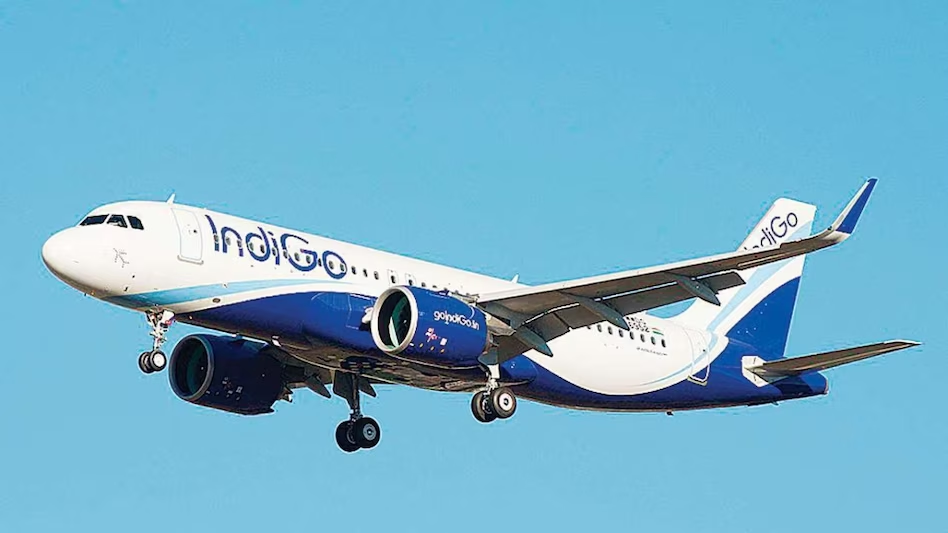
IndiGo Q3 profit more than doubles to Rs 2,998 crore
IndiGo’s parent InterGlobe Aviationon on Friday reported more than doubling of its profit after tax to Rs 2,998.1 crore in the three months ended December 2023, as it remained profitable for the fifth straight quarter. In the year-ago period, the profit after tax stood at Rs 1,422.6 crore. “For the third quarter of financial year 2024, we reported a profit after tax of 30 billion rupees with a profit after tax margin of 15.4 per cent. With these 5 consecutive quarters of profit we continue to recover from the losses of Covid and have now become net worth positive again,” IndiGo CEO Pieter Elbers said in a release. The company’s total income in the third quarter of the current fiscal rose to Rs 20,062.3 crore from Rs 15,410.2 crore in the same period a year ago. “For the quarter, our passenger ticket revenues were Rs 171,572 million, an increase of 30.3 per cent and ancillary revenues were Rs 17,600 million, an increase of 23.8 per cent compared to the same period last year,” the release said.IndiGo is the country’s largest airline.

Infra focus, fiscal prudence are positives for street
The interim Budget on Thursday maintained the government’s focus on infrastructure development while surprising the street with its fiscal deficit target. In an election year, the government resisted the temptation to announce populist measures. For Financial Year 2024-25 (FY25), capital expenditure (capex) was hiked 17 per cent to Rs 11.1 trillion. In FY24, capex was hiked by 33 per cent. The fourth straight hike is expected to take the capex to gross domestic product (GDP) ratio to 3.4 per cent in FY25 compared to 3.2 per cent in FY24. ICICI Direct Research said capex growth is on a high base of the last four years and has tripled in that period, resulting in a multiplier impact on economic growth and the moderation in the interim Budget was on expected lines. The key takeaway was the aggressive fiscal deficit target of 5.1 per cent for FY25 compared to the market expectation of 5.5 per cent. The government said it is on course to hit the sub-4.5 per cent number for the metric by FY26. Its expectations are based on higher tax collections, dividends from the Reserve Bank of India and public sector companies, and control on expenditure. With the fiscal deficit in check, the government’s market borrowing in FY25 is expected to be Rs 14.1 trillion compared to Rs 15.4 trillion in FY24. HSBC said small savings have played an important role in funding the fiscal deficit. The savings funded 27 per cent of the fiscal deficit in FY24 compared to 23 per cent in FY23. However, India Ratings and Research said the system-wide capex growth hinges on continued recovery of state spending (up 42 per cent year-on-year in the first eight months of FY24) and hope of acceleration in tentative recovery in private sector capex. The states account for two-thirds of overall capex. In a flat market on Thursday, the Nifty PSU Bank Index was the biggest gainer among sectoral indices by jumping 3.1 per cent. Among other sectors, sentiment was also positive in the logistics space as the three largest listed companies by market capitalisation registered gains between 1-5 per cent. The interim Budget announced a new housing scheme for the middle class as the ongoing Pradhan Mantri Awas Yojana (Grameen) aims to build crores of new homes. The proposals for housing and infrastructure development are expected to boost the real estate and building materials sectors. However, the Nifty Realty and the building materials companies ended in the red. The interim Budget did not have major measures in the consumer space. Consumption is weak, especially in rural India, as indicated by corporate earnings for the last few quarters. The Budget doesn’t provide any near-term solution for quick revival for consumption, said Motilal Oswal Financial Services.

Budget offers lower borrowing plan, 10-year bonds suffer 8-month steepest fall of 8bps
India's 10-year bond yield fell 8 basis points, making its steepest fall in the last eight months, after the government surprised with a lower-than-expected borrowing programme in its Union Budget for FY25. The 10-year bond yield ended at 7.07 percent, down 8 basis points, its maximum fall since May 3, 2023, from its previous close of 7.14 percent. The government announced Rs 14.13 trillion in the fiscal year starting April 1. A Moneycontrol poll estimated around Rs 15-16 lakh crore for the fiscal year 2024-25, with net borrowing estimated at Rs 11.50-11.75 lakh crore. The net borrowings, adjusted for maturities, are planned at Rs 11.75 trillion for the next fiscal year, according to Finance Minster Nirmala Sitharaman. Analysts said the borrowing programme is lower than expected as India prepares for big foreign inflows on global index inclusions. In FY24, the Centre declared the gross market borrowing at Rs 15.43 lakh crore, marking an 8.6 percent increase from the borrowing in 2022-23. "While the net borrowings for FY25 are in line with our expectations, lower-than-expected gross borrowings possibly could be attributed to the government utilising its surplus from the GST compensation fund (a public fund) to pay off their debt for FY25 to RBI or market participants, leading to a difference of Rs 1.24 trillion between actual total redemption and the (lower) market loan redemption taken in the budget.


