


Top Trending Finance & Stock Market News & Highlights


Ether retreats after momentarily touching the $3,000 mark, while Bitcoin drops from the $52,000 mark.
On Wednesday, February 21, there was a tiny 0.31 percent gain for Bitcoin. At the moment, Bitcoin is worth $51,977, or about Rs. 43 lakh. Market analysts claim that the resistance level for Bitcoin is currently at $53,000, or approximately Rs. 43.9 lakh; a breach of this level would signal a significant increase in the value of the asset. The price of Bitcoin has seen a significant increase of $400 (approximately Rs. 33,160) in the last day. Wednesday's market volatility was reflected in the cryptocurrency chart, where altcoins fluctuated between gains and losses. For the first time since April 2022, Ether crossed the $3,000 (about Rs. 2.48 lakh) threshold. But at that point, the asset was unable to maintain a significant advantage. Ether's current value, after a 2.05 percent loss, is $2,870, or approximately Rs. 2.3 lakh. "Bitcoin is indicating overbought conditions in the current market environment, which is causing investor caution regarding possible consolidation. Ethereum, on the other hand, is showing an ascending channel pattern, driven by continuous developments in its ecosystem and flirting with $3,000 (about Rs. 2.48 lakh). Deviating from their customary daily routines, investors are being cautious because of a recent buying frenzy amid bullish momentum suggested by moving averages, according to Rajagopal Menon, Vice President of WazirX, who spoke with Gadgets360. Market observers are currently more interested in watching Ether's trajectory than Bitcoin's. "Ethereum has a huge following. For most Web3 developers, it is the default option when it comes to compute networks. This translates to increased traffic volume and road upkeep. Therefore, an update to make the highway much smoother is being shipped by developers. They are also doing it without causing any traffic hiccups. They port the upgrade to the mainnet highway after testing it on the testnets, or service road. Dencun's planned mainnet launch in March "can be seen as an internal catalyst for a better Web3 future," according to CoinSwitch co-founder Ashish Singhal.
Published 22 Feb 2024 02:33 AM

India Accepts All Foreign Investment In The Space Industry
In an effort to facilitate business in the nation, the Indian government approved an amendment on Wednesday that permits 100% foreign direct investment (FDI) in the space sector. The government stated in a statement that the FDI policy reform will encourage growth in investment, income, and employment. The government stated in a statement that the FDI policy reform will encourage growth in investment, income, and employment.
Published 22 Feb 2024 01:45 AM

The Price of Bitcoin Exceeds $48,000
At the time of publishing, the price of the most popular cryptocurrency in the world, Bitcoin, was $48,101 (approximately Rs. 39.9 lakh), having seen a slight increase of 0.74 percent on Monday. The digital asset gained $1,826 in value over the course of the weekend (about Rs. 1.5 lakh). The next target, according to market analysts, would be $50,000 (about Rs. 41.5 lakh), which is a milestone that Bitcoin hasn't been able to reach since December 2021, if the price of the cryptocurrency rises above $48,970 (about Rs. 40 lakh). Ether's value fell by 0.55 percent on Monday as it was unable to keep up with Bitcoin's gains. At the moment, ether is worth $2,498 (about Rs. 2.07 lakh). Due to large net inflows into spot Bitcoin ETFs the week before, Bitcoin surged above $48,000 (about Rs. 39.8 lakh) over the weekend, hitting its highest level in 26 months. The CEO of Mudrex, Edul Patel, told Gadgets360 that Ethereum also reached its highest point since January 19 at $2,540, or roughly Rs. 2 lakh. It is currently consolidating around $2,500, or roughly Rs. 2.07 lakh, with resistance at $2,620, or roughly Rs. 2.17 lakh, and support at $2,440, or roughly Rs. 2.02 lakh.The majority of cryptocurrencies saw losses on Monday, including Ether. These comprise Avalanche, Dogecoin, Cardano, Ripple, and Binance Coin. On Monday, the values of other altcoins, including Uniswap, Shiba Inu, Litecoin, Bitcoin Cash, Solana, and Binance Coin, also decreased. In the past day, the value of the cryptocurrency industry as a whole fell by 0.76 percent. According to CoinMarketCap, the current value of the cryptocurrency market is $1.8 trillion, or approximately Rs. 1,49,40,576 crore. Ether's market share is currently 16.7%, while Bitcoin's dominance is currently 52.5 percent.This week, there will probably be a few notable token unlocks, such as the release of SAND from Sandbox worth over $96 million (about Rs. 796 crore), or roughly 9% of the total supply. We plan to do this on Valentine's Day. Additional unlocks include Aptos, which released more than 7% .
Published 13 Feb 2024 01:20 AM

Paytm Payments Bank Is Looking To Employ Outside Compliance
Four people with knowledge of the situation claim that Paytm Payments Bank Ltd. has sent out a request for proposals to outside auditors. According to the individuals cited above, who requested to remain anonymous, the bank only made this RFP available to outside auditors. As a result, it is not in the public domain.According to the three individuals mentioned above, the goal of this RFP is to audit the bank for compliance and the know-your-customer procedure.As stated by the first person quoted above, Paytm Payments Bank also hopes to demonstrate to the Reserve Bank of India that it is fully compliant by starting this audit. One97 Communications Ltd.'s associate company came under heavy fire from the RBI on January 31 for "persistent non-compliance" and serious "supervisory concerns." The regulator stated in its directives that Paytm Payments Bank will not be able to take new credit transactions, top-ups, or deposits into its accounts after February 29.
Published 10 Feb 2024 10:20 AM


Finance & Stock Market
Finance & Stock Market

For FY23, Unacademys revenue jumps 26% to Rs 907 crore while its loss cuts
The test-prep startup Unacademy reported that, despite constant layoffs at the company, its losses in FY23 decreased by 41% to Rs 1,678 crore. In FY23, employee-related expenses decreased by 28% to Rs 1,281 crore.The test-prep startup Unacademy reported that, despite constant layoffs at the company, its losses in FY23 decreased by 41% to Rs 1,678 crore. In FY23, employee-related expenses decreased by 28% to Rs 1,281 crore.In what was a difficult year for the startup environment, many modern businesses, like Myntra, ZestMoney, and Curefoods, reported stronger revenues for FY23, but their losses also increased.Revenue at Myntra rises to Rs 4,375 crore: The apparel retailer Myntra, which is owned by Flipkart, reported a 25% increase in operating revenue to Rs 4,375 crore in FY23, despite a 31% increase in losses to Rs 782 crore. The online fashion platform's largest expense, amounting to Rs 1,758 crore, was spent on advertising and promotional activities, representing a 35% increase over the previous year.Unacademy reduces losses to Rs 1,678 crore, or 41%: Unacademy, a startup providing test preparation, reported that its losses in FY23, which included several layoffs at the company, decreased by 41% to Rs 1,678 crore. The Bengaluru-based firm saw a 26% increase in sales to Rs 907 crore during the year, while costs associated with payroll decreased by 28% to Rs 1,281 crore.ZestMoney reports a loss of Rs 412 crore. ZestMoney, a troubled startup that has been searching for a buyer, declared a net loss of Rs 412.4 crore for the fiscal year 2023. On the other hand, while total expenses increased by 21% to Rs 662.2 crore, overall revenue for the buy-now-pay-later platform increased by 72% to Rs 250 crore.

SentinelOne, a US-based company, purchases PingSafe, a Bengaluru cybersecurity startup.
SentinelOne, an AI-powered cybersecurity startup based in the United States, said on Wednesday that it has reached an agreement to purchase Bengaluru-based PingSafe for an undisclosed sum.The Mountain View, California-based business said in a statement that it will buy PingSafe for a mix of cash and stock, and that the deal is anticipated to close in SentinelOne's first quarter of the 2025 fiscal year, contingent upon customary closing conditions and any necessary regulatory approvals.The Mountain View, California-based business said in a statement that it will buy PingSafe for a mix of cash and stock, and that the deal is anticipated to close in SentinelOne's first quarter of the 2025 fiscal year, contingent upon customary closing conditions and any necessary regulatory approvals.Bengaluru: The $100 million purchase of Bengaluru-based cloud security platform PingSafe by NYSE-listed SentinelOne is hailed as the greatest acquisition in the history of Indian cyber security startups. According to Barclays' report, the transaction is made up of both cash and stock.Companies won't have to deal with the complexity of multiple-point solutions, triage and analyze cases with insufficient context, or stream data between different data silos thanks to this new approach to cloud security. Rather, companies can manage their whole attack surface from a single platform that offers all the analytics, real-time interaction, and full context required to correlate, detect, and thwart multi-stage attacks in a straightforward manner—unlike old CNAPP and standalone solutions.
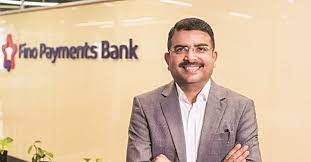
Following board approval, Fino Payments Bank requests an SFB licence from the RBI.
The Reserve Bank of India has received an application for a small finance bank (SFB) license from Fino Payments Bank, a division of Fino Paytech Limited (RBI). The RBI announced in a statement on Monday, January 8, that Fino Payments Bank had submitted an application in accordance with the SFBs' "Guidelines for on-tap licensing."The bank's board gave its approval in July 2023 to the application for an SFB license and instructed the creation of a committee to move forward with the evaluation of a reverse merger with Fino Paytech Limited, the bank's parent company. "Our SFB will be a Payments Bank++ model, different from existing players," stated Chief Financial Officer Ketan Merchant at the time. "In the first few years of operation, fee-based income will constitute 75% – 80% of the revenue."Fino's net worth is estimated to be over INR 600 Cr, but small financing banks currently need INR 200 Cr to meet their minimal capital requirements. On June 30, 2017, Fino Payments Bank commenced its business activities. Among its notable investors are Bharat Petroleum, ICICI Group, Blackstone, IFC, Intel, and LIC.
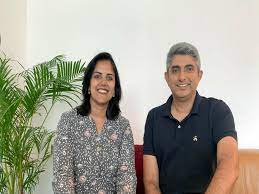
Fireside Ventures leads a 50 crore Series A fundraising round for mental health firm Amaha.
On Wednesday, Amaha, a company focused on mental health, announced that it has raised ₹50 crore in a Series A financing round led by Fireside Ventures. ₹15.6 crore more was contributed by other angel investors.Amaha, the former InnerHour, intends to expand and improve its mental health offerings with the help of this investment. Serving more than 600 Indian locations, the Mumbai-based organization provides a range of therapies and care programs for mental health issues like anxiety, depression, bipolar disorder, ADHD, OCD, schizophrenia, and addictions.The portfolio of Fireside Ventures, an investment firm that focuses mostly on consumer-focused startups, comprises businesses in the food and beverage, personal care, kids & education, lifestyle, and home products industries. It made investments in various wellness firms last year, including The Good Bug and Inito.A portion of the increased awareness and support for mental health and wellness in recent years has come from celebrities, including actors and cricket players, as well as from a number of organizations and social media platforms. Amaha was established in 2016 and offers digital services via an app that provides self-care tools and resources, in addition to operating physical centers in Delhi NCR, Bengaluru, and Mumbai. The founder and CEO of Amaha, Amit Malik, stated in an interview with Mint that "we're looking to go beyond digital at this stage because I think there is a lot of unmet need within the industry." Amaha has been aggressively investing in infrastructure, including physical clinics and technical advancements, despite growing losses in 2023 and maintaining a positiveAmaha obtained $5.2 million from Lightbox Ventures, a venture capital firm, in 2021. Additional angel investors that took part were Hitesh Oberoi, CEO & MD of Info Edge India Pvt. Ltd., Pankaj Sahni, CEO of Medanta-The Medicity Hospitals, and Capricorn Ventures & Micasa Investments (Singapore).

ETtech Deals Digest: This week, startup funding dropped 70% to $102 million.
In the second week of 2024, investments in startups fell by around 70% year over year to a total of $102.1 million across 26 different agreements, indicating that the funding crunch was not going away. According to data from Tracxn, companies in seed, early, and late stages raised around $288 million between January 6 and January 12, 2023.At roughly $49 million, or 48% of the total deal value, the early stage saw the largest amount of capital raised throughout the week. $35.2 million in late-stage finance, representing 35% of the total, came next.Funding increased sequentially in the most recent week, rising more than three times in volume and nearly three times in value terms. These cutting-edge businesses closed eight deals for $35.8 million last week.The latest numbers come after a busy spell of dealmaking in December, which came as a twist at the end of 2023 – one of the weakest years for venture capital activity in the country.The financial shortage persisted as evidenced by the fact that, in the second week of 2024, investments in startups plummeted by over 70% year over year to a total of $102.1 million across 26 separate agreements. Tracxn data indicates that between January 6 and January 12, 2023, companies in seed, early, and late stages raised approximately $288 million.In the second week of 2024, investments in startups fell by around 70% year over year to a total of $102.1 million across 26 different agreements, indicating that the funding crunch was not going away. According to data from Tracxn, companies in seed, early, and late stages raised over $288 million between January 6 and January 12, 2023.
Rupee ends lower under pressure from the stronger dollar and probable equity outflows.
Pressured by anticipated equity outflows and the U.S. dollar index rising to a more than one-month high due to moderating expectations for U.S. rate cuts, the Indian rupee ended lower on Wednesday.The rupee closed at 83.1375 against the dollar, down 0.08% from the previous session's close of 83.07.In Asia hours, the dollar index reached its highest point since mid-December, 103.58. With a decline of 0.91%, the Korean won led all Asian currencies in decline.Federal Reserve Governor Christopher Waller on Tuesday said that while the U.S. is “within striking distance” of the Fed’s 2% inflation goal, the central bank should not rush to cut benchmark interest rates.The comments prompted investors to pare bets on aggressive rate cuts.”A combination of weakish China data and a pushback” by European Central Bank and Fed officials against early easing is weighing on risk sentiment and supporting the dollar, ING Bank said in a note. In the meantime, data released on Wednesday indicates that China's economy grew marginally slower in the October–December quarter than anticipated. According to a foreign exchange trader at a private bank, pressure on the rupee on Wednesday came from dollar bids from foreign banks, probably acting on behalf of custodian clients.The blue-chip NSE Nifty 50 shed 2.09%, while the S&P BSE Sensex lost 2.23%. This is the highest percentage drop for both the indexes since June 2022.The rupee’s weakness is unlikely to “sustain a lot as the tilt or bias on the rupee remains positive”, Arnob Biswas, head of foreign exchange research at SMC Global Securities, said.Investors now await December U.S. retail sales data due later in the day, which is expected to show a month-on-month rise of 0.4%, up

Evolving Trends in Stock Market Regulations: Adapting to Algorithmic and Automated Trading in India
With the growing use of automated and algorithmic trading, the Indian stock market is going through a major transition. This technological evolution demands a corresponding shift in regulatory frameworks to maintain market integrity, fairness, and stability. High-frequency trading (HFT) and other forms of algorithmic trading have grown significantly in the Indian market. In order to profit from transient market movements, HFT, in particular, employs techniques like market making, momentum trading, and statistical arbitrage. While these technologies enhance market efficiency and liquidity, they also pose challenges such as potential market manipulation and a possible unfair advantage to large institutions over smaller investors. The Securities and Exchange Board of India (SEBI) has taken the initiative to regulate algorithmic trading in response to these issues. The main goal of the most recent regulations is to guarantee that exchanges have approved and certified all trading algorithms. This includes a thorough vetting process, and brokers are required to ensure proper security measures are in place to prevent unauthorized algorithmic activities. Additionally, SEBI has tightened short-selling norms to prevent market abuses like naked short-selling, mandating that all investors honor their securities delivery obligations. The Indian stock market is undergoing a significant transformation as a result of the uptake of cutting-edge trading technologies like algorithmic and high-frequency trading. A commitment to ensuring a dynamic, equitable, and resilient financial ecosystem is reflected in SEBI's evolving regulations. As these technologies continue to advance, the collaboration between regulators and market participants will be key to maintaining the integrity and efficiency of the Indian financial markets.

Offer for New Fund: Motilal Oswal The Motilal Oswal Large Cap Fund is launched by AMC; should you invest?
The "Motilal Oswal Large Cap Fund" is the newest investment product offered by Motilal Oswal Asset Management Company. The AMC claims that this open-ended equity scheme is purposefully created to give investors a special chance to capitalize on the large-cap segment's potential.Investment Objective: To achieve long-term capital appreciation by predominantly investing in equity and equity-related instruments of large-cap companies. Nevertheless, there can be no guarantee that the scheme's investment goal will be accomplished.

The U.S. economy will be impacted in 2024 and 2025 by "all these very powerful forces," according to Jamie Dimon.
Jamie Dimon, the CEO of JPMorgan Chase, stated that he is still cautious about the U.S. economy for the next two years due to a mix of geopolitical and financial risks. At the World Economic Forum in Davos, Switzerland, on Wednesday, Dimon told Andrew Ross Sorkin on CNBC, "You have all these very powerful forces that are going to be affecting us in '24 and '25.""I still wonder if we fully comprehend the mechanisms behind the quantitative tightening, the terrorist activity in Israel and the Red Sea, and the Ukraine," Dimon stated. The term "quantitative tightening" describes actions taken by the Federal Reserve to lower the size of its balance sheet and scale back earlier initiatives, such as bond-purchasing plans. Despite record profits at JPMorgan, the country's largest bank, and an unexpectedly strong U.S. economy, Dimon has urged caution over the past few years. Because of high employment rates and savings from the pandemic, the American consumer has largely remained healthy despite the damaging effects of inflation.n Dimon’s view, the relatively buoyant stock market of recent months has lulled investors on the potential risks ahead. The S&P 500 market index rose 19% in the past year and isn’t far from peak levels. “I think it’s a mistake to assume that everything’s hunky-dory,” Dimon said. “When stock markets are up, it’s kind of like this little drug we all feel like it’s just great. But remember, we’ve had so much fiscal monetary stimulation, so I’m a little more on the cautious side.


Medical devices startup Noccarc raises $2 Mn led by IAN
Indian Angel Network (IAN) sponsored a $2 million funding round for medical device startup Noccarc. IIT Kanpur, SIDBI (Small Industries Development Bank of India), and TDB (Technology Development Board) were also involved in this round. In addition, Hero Enterprises Chairman Sunil Munjal was welcomed as a prominent stakeholder in the investment round. The money raised will be put towards growing Noccarc's business and diversifying its line of products. The fundraising round, according to the company, is anticipated to assist R&D projects, ease market penetration, bolster customer service, and establish sales and distribution networks throughout major cities. Founded by Harshit Rathore, Noccarc specializes in the development and manufacturing of high-value critical care medical equipment, including ICU ventilators, patient monitors and more. In addition, the company offers a digital platform that allows doctors to remotely access device data, digitize documents and plans to integrate AI-based services in the future. The company has a strong research and development unit and ambitious plans to develop a versatile product range, starting with intensive care. Noccarc currently holds seven patents and has applied for 19 new patents for its innovative technologies. The company has also recently received a license from CDSCO (Central Drug Standard Control Organisation), which gives them the right to manufacture and sell these regulated products in India. The startup claims to have shipped more than 3,600 ventilators across India and has partnered with several different hospitals. Noccarc is now expanding its product range with a view to globalization..Future-Generation Ventilation for Intensive Care Units With the use of cutting-edge technologies, critical care has been redefined and given new meaning. The most advanced ICU ventilator, created specifically for user comfort and ease of use, will raise the bar for both patient care and your own standards.

Bharat Forge-backed Tork Motors raises $6 Mn in new round
Electric car startup Tork Motors has raised 50 million rupees, or $6 million, from Maxis Capital. This is the second institutional round for the Pune-based company after a gap of two-and-a-half years. The Tork Motors board approved a special resolution to issue 1 share and 6,912 CCPS at an issue price of 72,425 rupees to raise 50 million rupees, or $6 million, according to a regulatory filing available with the registrar of companies. Each preferred share issued to the new investor (Maxis Capital) will be converted into one share during the corresponding conversion period, in the appendix. Founded in 2010, Tork Motors is an electric two-wheeler manufacturer known for its flagship Kratos R. The company initially started with its units in Mumbai and Hyderabad and currently has a monthly production capacity of 4000-5000 units. The company planned to expand its geographic reach and reach 70-100 cities by the end of 2023. In October, Tork Motors announced a partnership with electric car software and charging infrastructure provider Bolt.Earth to provide its customers with 30,000 charging points. According to startup data intelligence platform TheKredible, the company is worth about 370 million rupees, or $45 million, after the split.. Through several rounds, Tork Motors has raised almost $16 million. With 52.46% of the total ownership, Bharat Forge is the largest shareholder, followed by Maxis Advisors with 13.51%. Kapil Shelke, the company's founder and CEO, owns 19.42% of the business. To view the entire shareholding pattern, visit TheKredible. Operating revenue for Tork Motors increased sevenfold from Rs 4.5 crore in FY22 to Rs 35.5 crore in FY23. During that time, the company's losses increased by 5.7X, from Rs 8.34 crore in FY22 to Rs 47.9 crore in FY23. Disclaimer: A group of investors just provided funds to Bareback Media. Some of the investors might be connected to other businesses we might write about, or they might be directly or indirectly involved in a rival company. That being said, this will not in any way affect our coverage or reporting. A list of our investors is available.
The Price of Bitcoin Exceeds $48,000
At the time of publishing, the price of the most popular cryptocurrency in the world, Bitcoin, was $48,101 (approximately Rs. 39.9 lakh), having seen a slight increase of 0.74 percent on Monday. The digital asset gained $1,826 in value over the course of the weekend (about Rs. 1.5 lakh). The next target, according to market analysts, would be $50,000 (about Rs. 41.5 lakh), which is a milestone that Bitcoin hasn't been able to reach since December 2021, if the price of the cryptocurrency rises above $48,970 (about Rs. 40 lakh). Ether's value fell by 0.55 percent on Monday as it was unable to keep up with Bitcoin's gains. At the moment, ether is worth $2,498 (about Rs. 2.07 lakh). Due to large net inflows into spot Bitcoin ETFs the week before, Bitcoin surged above $48,000 (about Rs. 39.8 lakh) over the weekend, hitting its highest level in 26 months. The CEO of Mudrex, Edul Patel, told Gadgets360 that Ethereum also reached its highest point since January 19 at $2,540, or roughly Rs. 2 lakh. It is currently consolidating around $2,500, or roughly Rs. 2.07 lakh, with resistance at $2,620, or roughly Rs. 2.17 lakh, and support at $2,440, or roughly Rs. 2.02 lakh.The majority of cryptocurrencies saw losses on Monday, including Ether. These comprise Avalanche, Dogecoin, Cardano, Ripple, and Binance Coin. On Monday, the values of other altcoins, including Uniswap, Shiba Inu, Litecoin, Bitcoin Cash, Solana, and Binance Coin, also decreased. In the past day, the value of the cryptocurrency industry as a whole fell by 0.76 percent. According to CoinMarketCap, the current value of the cryptocurrency market is $1.8 trillion, or approximately Rs. 1,49,40,576 crore. Ether's market share is currently 16.7%, while Bitcoin's dominance is currently 52.5 percent.This week, there will probably be a few notable token unlocks, such as the release of SAND from Sandbox worth over $96 million (about Rs. 796 crore), or roughly 9% of the total supply. We plan to do this on Valentine's Day. Additional unlocks include Aptos, which released more than 7% .

Congress mastered art of spoiling accomplishments: FM Sitharaman in RS
Accusing the UPA government of mismanaging the price situation after taking charge from the Vajpayee government in 2004, Finance Minister Nirmala Sitharaman on Saturday mocked the grand old party, saying 'gur ko gobar karna inki maastaree hai'.Replying to a short-duration discussion on the 'White Paper on the Indian Economy' in the Rajya Sabha, Sitharaman said inflation in the last year of Prime Minister Atal Bihari Vajpayee-led NDA government was below 4 per cent. "Through their ill-targeted, reckless fiscal policy, ill-targeted subsidies and wasteful expenditure, all done for political gains, inflation went high during the UPA rule," she said.In AICC's Session in Jaipur, she said, former prime minister Manmohan Singh admitted that handling inflation was a shortcoming of the UPA government. "Gur ko gobar karna inki (Congress) maastaree hai (Congress has a mastery of ruining something that has been accomplished)," she said.The minister outlined the steps taken by the Modi government after 2014 to manage inflation in the country.In the last nine years of the Modi government, retail inflation has been mostly around 5 per cent, and it has never crossed 8 per cent. "And that Congress is lecturing us now on how to manage inflation," Sitharaman noted.She further said the Modi-led government toiled for 10 years to bring the economy back on track, taking India from the 'Fragile Five' to the fifth largest economy in the world. India is soon going to become the world's third-largest economy.On the contrary, in the Modi government, the Prime Minister personally monitors programmes and projects and their progress through the PRAGATI portal by holding video conferences with officers even at the district level. Up to the 43rd edition of PRAGATI, 348 pending projects worth Rs 17.36 lakh crores have been reviewed, their progress is happening, and they are coming to a conclusion."This kind of effort never happened earlier during the UPA era," Sitharaman said.Giving reasons for coming out with the White Paper now, Sitharaman said a similar exercise earlier would have impacted the confidence of institutions, investors, and the people. As an elected government, she said it is imperative to inform the public and Parliament about the true picture of the economy during the UPA regime and the efforts taken by the Modi government to revive the economy.In an apparent jibe at the erstwhile National Advisory Council headed by Sonia Gandhi, the finance minister said India needs a clean and accountable governance and not governance through an extra-constitutional body.

The mojo of PSU bank stocks might fade away soon
PSU banks have been in focus for quite some time due to several tailwinds, as most entities are performing well both internally & externally from maintaining healthy asset quality to several governments' initiatives where PSU banks are the beneficiaries. The PSU Bank Index has risen by more than 56% in the last 1 year, the Nifty Private Bank Index rose by just 14%, and in the same period Bank Nifty by 13%, making PSU Banks the leader of the segment. The government kickstarted the rally through banking reforms such as the establishment of Bad Banks to move the long outstanding NPAs out of the books, the implementation of the Insolvency & Bankruptcy Code helping banks to recover their debts and, merger of several PSU banks enabling them to have a more focused approach on their operations. The current government's focus on long-term projects of infrastructure, power, and agriculture would benefit PSU banks more than private banks as they traditionally have higher exposure in these sectors. This is one of the factors due to which the share prices are soaring to new highs. PSU Banks usually trade at a low Price-to-Book value but currently, they are trading at the highest levels compared to their historical valuations. The valuations look stretched.Share price appreciation happens because of two main reasons: Earnings expansion and perception-led growth or multiple expansion. The former can be computed based on financials on a quarterly and yearly basis and the latter could be assumed as the difference between share price CAGR and earnings growth CAGR. The lower the difference, the higher the safety and vice-versa. The current rally in several PSU Banks is more because of multiple expansions rather than earnings expansion.
Paytm Payments Bank Is Looking To Employ Outside Compliance
Four people with knowledge of the situation claim that Paytm Payments Bank Ltd. has sent out a request for proposals to outside auditors. According to the individuals cited above, who requested to remain anonymous, the bank only made this RFP available to outside auditors. As a result, it is not in the public domain.According to the three individuals mentioned above, the goal of this RFP is to audit the bank for compliance and the know-your-customer procedure.As stated by the first person quoted above, Paytm Payments Bank also hopes to demonstrate to the Reserve Bank of India that it is fully compliant by starting this audit. One97 Communications Ltd.'s associate company came under heavy fire from the RBI on January 31 for "persistent non-compliance" and serious "supervisory concerns." The regulator stated in its directives that Paytm Payments Bank will not be able to take new credit transactions, top-ups, or deposits into its accounts after February 29.

Maruti Grand Vitara gets up to Rs 75,000 off on MY2023 stocks
Maruti Suzuki is offering attractive discounts and benefits on Nexa models such as the Grand Vitara, Jimny, Baleno and Ignis this February. These can be availed in the form of cash discounts and exchange offers and is available on both MY2023 and MY2024 production units. The only models not listed with any offers are the XL6 and Invicto MPVs. MY2023 units of the Grand Vitara hybrid can be had with benefits of up to Rs 75,000 which includes cash discounts and exchange offers. Meanwhile, the MY2024 units are listed with benefits of Rs 50,000 which just includes an exchange offer. Regular petrol variants of the Grand Vitara are listed with benefits of up to Rs 45,000 and Rs 30,000 for MY2023 and MY2024, respectively. This is the highest benefit the Grand Vitara has been available with in a while. The highest benefit from the Nexa lineup this February is on the Jimny. It continues to be offered with Rs 1.50 lakh cash discount on the top-spec Alpha trim while the lower Zeta trim gets Rs 50,000 off. These are, however, only applicable on MY2023 units. MY2024 units of the Jimny are not listed with any benefits currently. While the SUV is capable off-road, the high sticker price has resulted in sluggish sales. The SUV has since received multiple discounts, including a Rs 2.3 lakh discount in December. 2023 model year of the Maruti Suzuki Ignis manual get discounts of up to Rs 55,000, while automatic variants get up to Rs 50,000 off. For 2024 models, the discounts are marginally less but still substantial. Manual transmission variants made in 2024 get benefits of up to Rs 45,000, while automatic variants get discounts of up to Rs 40,000. The Ignis is powered by a 1.2-litre petrol engine that puts out 83hp and 113Nm. It’s available with the choice of a 5-speed manual gearbox or a 5-speed AMT. The Maruti Suzuki Baleno has been a strong performer for the Nexa brand and is available with petrol and CNG powertrains. Petrol models manufactured in 2023 are available with benefits of up to Rs 35,000 that’s inclusive of cash discount and exchange bonuses, while CNG variants get up to Rs 15,000 off as an exchange bonus. 2024 models get benefits of up to Rs 30,000 and Rs 35,000 on petrol and CNG, respectively. The Baleno is offered with a 1.2-litre engine that produces 90hp, 113Nm and can be mated to either a 5-speed manual gearbox or a 5-speed AMT. While using CNG, the engine output drops to 78hp and 98.5Nm, and it is only available with the 5-speed manual gearbox. Ciaz models manufactured in 2023 are offered with benefits of up to Rs 45,000, while models manufactured in 2024 get benefits of up to Rs 25,000 in the form of cash discount and exchange offers. The Ciaz is powered by a 105hp, 1.5-litre petrol engine and is available with either a five-speed manual or a four-speed torque converter automatic gearbox. Its interiors are dated and the petrol engine is unexciting, but its spacious cabin and smart pricing make it a level-headed buy

Fintech major Paytm set for small win as govt close to approving investment
Shruti Srivastava and Sankalp Phartiyal Paytm is close to winning India’s approval to invest in its key payments gateway arm, a decision which has been pending for two years and which would give the troubled fintech company some respite. The government grew more supportive of the investment after Paytm’s Chinese shareholder Ant Group Co. lowered its stake in the Indian firm, people familiar with the matter said, with one of the people saying the approval could come within days. A federal approval is needed because Ant’s stake in Paytm makes its outlay in the Paytm Payments Services Ltd. arm a direct foreign investment. The investment allows Paytm to beef up its arm which processes online transactions. While the investment is less than Rs 1 billion ($12 million), an approval would signal Paytm is still in the government’s good books even as the country’s banking regulator has tightened its grip on the company. The Reserve Bank of India in 2022 held back Paytm Payments Services’ application to become a so-called payments aggregator — an entity which makes it easier for online retailers and merchants to accept customers’ digital payments. The banking regulator also asked the unit to seek permission from the federal government for a past investment from Paytm, whose official name is One97 Communications Ltd. At the time, Ant owned a nearly 25% stake in One97, and New Delhi had stepped up scrutiny of investments from China.Paytm’s billionaire founder Vijay Shekhar Sharma acquired 10.3% stake from Ant last year in a cashless deal that made him the biggest shareholder in One97 with just over 24% equity. The deal likely boosted the government’s confidence toward giving Paytm Payments Services security clearance for foreign direct investment, the people said, declining to be named as the matter is private. The proposal will now go to an inter-ministerial committee for a final decision, one of the people said. Paytm’s application to qualify as a payments aggregator is still pending before the RBI, which in 2022 also barred the company from onboarding new online merchants. The RBI approves such applications if they fulfill regulatory requirements and match compliance norms it has set.

Chris Wood of Jefferies buys Airtel to pare stake in RIL, HDFC Bank
Jefferies' Chris Wood has tweaked his India long-only portfolio to buy Bharti Airtel, raise investments in Axis Bank and State Bank of India (SBI), and pare stakes in giants Reliance and HDFC Bank. Changes will be made in the India long-only portfolio and the global long-only portfolio. An investment in Bharti Airtel will be introduced in the India long-only portfolio with a 3% weighting. This will be paid for by shaving the investment in Reliance Industries by three percentage points," Wood said. The investment in HDFC Bank will also be reduced by two percentage points, while the investments in Axis Bank and SBI will be increased by one percentage point each, he said. In Wood's global long-only portfolio, the investment in HDFC Bank will be reduced by two percentage points, while the investments in Axis Bank and TSMC will be increased by one percentage point each. Other top bets in his India long-only equity portfolio are ICICI Bank, REC Ltd, JSW Energy, Godrej Properties, DLF, Macrotech, L&T, Adani Ports, and Zomato.

Stock Market Today: Top 10 things to know before the market opens
The benchmark Sensex and Nifty indices are likely to open on a higher note on February 8 as trends in the GIFT Nifty indicate a positive start for the broader index with a gain of 26 points. Equity benchmarks the Sensex and the Nifty ended February 7 flat after a choppy session, with the Nifty failing to defend the 22,000 mark despite opening above it. The indices squandered early gains as investors' focus shifted to the Reserve Bank of India's monetary policy decision to be announced on February 8. The Sensex closed 34.09 points down at 72,152, while the Nifty close 1.1 points higher at 21,930.50. About 1,954 shares advanced, 1,314 declined and 63 were unchanged. The pivot point calculator indicates that the Nifty is likely to take immediate support at 21,874 followed by 21,829 and 21,755 levels, while on the higher side, it may see immediate resistance at 21,948 followed by 22,067 and 22,141 levels. Stay tuned to Moneycontrol to find out what happens in the currency and equity markets today. We have collated a list of important headlines across news platforms, which could impact Indian as well as international markets.

Obtaining $3.4 million in Series A investment, Cashinvoice
A $3.4 million Series A funding led by HDFC Bank, Pravega Ventures, and Accion Venture Lab was obtained by Cashinvoice. By FY25, the company hope"By implementing cutting-edge SCF technology, this strategic investment will enable extended financial inclusion for the missing middle. It highlights our commitment to improving MSMEs' working capital management and cash flow, resulting in a more simplified and effective supply chain finance environment," Cashinvoice co-founder Shrinivas Kasar stated.Anchor firms and MSME partners benefit from Cashinvoice's digital invoice discounting marketplace, which integrates with corporates to handle loans against invoices. More than 15 lakh invoices worth more than Rs 15,000 crore have been processed thus far.s to have disbursed $2.4 billion in loans to MSMEs in order to grow operations, improve market presence, and create new products.Pravega Ventures, HDFC Bank, and current investor Accion Venture Lab were among the backers. The company plans to use the money to grow operations, improve its visibility in both new and existing markets, and create new products.Under the direction of co-founder and CEO Arun Poojari, Cashinvoice provides customized SCF solutions to anchor corporations, including some of India's top 100 corporates and its MSME partners (both vendors and distributors), through its digital invoice discounting platform. Its digital platform uses risk assessment and authenticated invoicing, and it integrates with anchor companies. By FY25, the company hopes to increase its discounting throughput to Rs. 20,000 Cr, which will enable digital loan processing against invoices for lenders and upscale the MSME base from the current 3,000 to 10,000.Cashinvoice was founded in September 2019 and has since made a profit by enabling the payment of over 15 lakh invoices, worth over INR 15 crore. It has done this by forming partnerships with Indian corporations, including Tata Motors, Bata, Bajaj Electricals, Oppo, Voltas, One Plus, Patanjali, Kalyan Jewellers, Paragon, and more."India's Digital Public Infrastructure prowess has allowed lenders multiple data points to assess credit risk beyond the traditional asset-based credit mechanism," Arun Poojari said in response to the news. Supply chain finance examines the vintage and pace of the buyer-seller connection while concentrating on financing particular transactions. It assists MSMEs in bringing predictability and regularity to their financial flows, allowing them to expand and create jobs. With this round, Cashinvoice will keep enhancing its offerings by capitalizing on India's DPI and the steady expansion of trade, which supports the rising GST collections.

Paytm asks merchants to link QRs to other banks’ accounts
Following the Reserve Bank of India’s (RBI’s) strictures on Paytm Payments Bank (PPB) last week, Paytm has directed its field sales executives to migrate merchant QR codes from their existing PPB accounts to accounts with other banks. For example, Manoj Kumar, who works for a retail chain ‘More’ in Indirapuram, Ghaziabad, said that representatives of the fintech major asked them to move the store’s funds from PPB to other bank accounts before February 29. The process has started over the weekend itself and the fintech major is trying to sensitise as many merchants as possible before the deadline of February 29 to ensure that their business transactions can continue unhindered. “We have been asked to migrate as many QRs as possible to alternate bank accounts by the end of the month,” said area sales executives Fe spoke to. This comes against the backdrop of panic that has spread among a section of merchants. As per a survey of 5,000 retailers on Paytm by Kirana Club, 68% of the respondents said that they have decreased their trust on the firm since RBI’s announcement. While merchants need to shift their PPB accounts, the good news is that the QR code, soundbox or card machine will not require any physical changes, the company confirmed. “In instances, where our associate PPB operates as a back-end bank, these services can seamlessly be transitioned to other partner banks. This means that for our merchant partners, there will be no disruptions, no need to revisit existing setups, and no additional effort,” said a company spokesperson.

