


Top Trending Finance & Stock Market News & Highlights


Ether retreats after momentarily touching the $3,000 mark, while Bitcoin drops from the $52,000 mark.
On Wednesday, February 21, there was a tiny 0.31 percent gain for Bitcoin. At the moment, Bitcoin is worth $51,977, or about Rs. 43 lakh. Market analysts claim that the resistance level for Bitcoin is currently at $53,000, or approximately Rs. 43.9 lakh; a breach of this level would signal a significant increase in the value of the asset. The price of Bitcoin has seen a significant increase of $400 (approximately Rs. 33,160) in the last day. Wednesday's market volatility was reflected in the cryptocurrency chart, where altcoins fluctuated between gains and losses. For the first time since April 2022, Ether crossed the $3,000 (about Rs. 2.48 lakh) threshold. But at that point, the asset was unable to maintain a significant advantage. Ether's current value, after a 2.05 percent loss, is $2,870, or approximately Rs. 2.3 lakh. "Bitcoin is indicating overbought conditions in the current market environment, which is causing investor caution regarding possible consolidation. Ethereum, on the other hand, is showing an ascending channel pattern, driven by continuous developments in its ecosystem and flirting with $3,000 (about Rs. 2.48 lakh). Deviating from their customary daily routines, investors are being cautious because of a recent buying frenzy amid bullish momentum suggested by moving averages, according to Rajagopal Menon, Vice President of WazirX, who spoke with Gadgets360. Market observers are currently more interested in watching Ether's trajectory than Bitcoin's. "Ethereum has a huge following. For most Web3 developers, it is the default option when it comes to compute networks. This translates to increased traffic volume and road upkeep. Therefore, an update to make the highway much smoother is being shipped by developers. They are also doing it without causing any traffic hiccups. They port the upgrade to the mainnet highway after testing it on the testnets, or service road. Dencun's planned mainnet launch in March "can be seen as an internal catalyst for a better Web3 future," according to CoinSwitch co-founder Ashish Singhal.
Published 22 Feb 2024 02:33 AM

India Accepts All Foreign Investment In The Space Industry
In an effort to facilitate business in the nation, the Indian government approved an amendment on Wednesday that permits 100% foreign direct investment (FDI) in the space sector. The government stated in a statement that the FDI policy reform will encourage growth in investment, income, and employment. The government stated in a statement that the FDI policy reform will encourage growth in investment, income, and employment.
Published 22 Feb 2024 01:45 AM

The Price of Bitcoin Exceeds $48,000
At the time of publishing, the price of the most popular cryptocurrency in the world, Bitcoin, was $48,101 (approximately Rs. 39.9 lakh), having seen a slight increase of 0.74 percent on Monday. The digital asset gained $1,826 in value over the course of the weekend (about Rs. 1.5 lakh). The next target, according to market analysts, would be $50,000 (about Rs. 41.5 lakh), which is a milestone that Bitcoin hasn't been able to reach since December 2021, if the price of the cryptocurrency rises above $48,970 (about Rs. 40 lakh). Ether's value fell by 0.55 percent on Monday as it was unable to keep up with Bitcoin's gains. At the moment, ether is worth $2,498 (about Rs. 2.07 lakh). Due to large net inflows into spot Bitcoin ETFs the week before, Bitcoin surged above $48,000 (about Rs. 39.8 lakh) over the weekend, hitting its highest level in 26 months. The CEO of Mudrex, Edul Patel, told Gadgets360 that Ethereum also reached its highest point since January 19 at $2,540, or roughly Rs. 2 lakh. It is currently consolidating around $2,500, or roughly Rs. 2.07 lakh, with resistance at $2,620, or roughly Rs. 2.17 lakh, and support at $2,440, or roughly Rs. 2.02 lakh.The majority of cryptocurrencies saw losses on Monday, including Ether. These comprise Avalanche, Dogecoin, Cardano, Ripple, and Binance Coin. On Monday, the values of other altcoins, including Uniswap, Shiba Inu, Litecoin, Bitcoin Cash, Solana, and Binance Coin, also decreased. In the past day, the value of the cryptocurrency industry as a whole fell by 0.76 percent. According to CoinMarketCap, the current value of the cryptocurrency market is $1.8 trillion, or approximately Rs. 1,49,40,576 crore. Ether's market share is currently 16.7%, while Bitcoin's dominance is currently 52.5 percent.This week, there will probably be a few notable token unlocks, such as the release of SAND from Sandbox worth over $96 million (about Rs. 796 crore), or roughly 9% of the total supply. We plan to do this on Valentine's Day. Additional unlocks include Aptos, which released more than 7% .
Published 13 Feb 2024 01:20 AM

Paytm Payments Bank Is Looking To Employ Outside Compliance
Four people with knowledge of the situation claim that Paytm Payments Bank Ltd. has sent out a request for proposals to outside auditors. According to the individuals cited above, who requested to remain anonymous, the bank only made this RFP available to outside auditors. As a result, it is not in the public domain.According to the three individuals mentioned above, the goal of this RFP is to audit the bank for compliance and the know-your-customer procedure.As stated by the first person quoted above, Paytm Payments Bank also hopes to demonstrate to the Reserve Bank of India that it is fully compliant by starting this audit. One97 Communications Ltd.'s associate company came under heavy fire from the RBI on January 31 for "persistent non-compliance" and serious "supervisory concerns." The regulator stated in its directives that Paytm Payments Bank will not be able to take new credit transactions, top-ups, or deposits into its accounts after February 29.
Published 10 Feb 2024 10:20 AM


Finance & Stock Market
Finance & Stock Market

For FY23, Unacademys revenue jumps 26% to Rs 907 crore while its loss cuts
The test-prep startup Unacademy reported that, despite constant layoffs at the company, its losses in FY23 decreased by 41% to Rs 1,678 crore. In FY23, employee-related expenses decreased by 28% to Rs 1,281 crore.The test-prep startup Unacademy reported that, despite constant layoffs at the company, its losses in FY23 decreased by 41% to Rs 1,678 crore. In FY23, employee-related expenses decreased by 28% to Rs 1,281 crore.In what was a difficult year for the startup environment, many modern businesses, like Myntra, ZestMoney, and Curefoods, reported stronger revenues for FY23, but their losses also increased.Revenue at Myntra rises to Rs 4,375 crore: The apparel retailer Myntra, which is owned by Flipkart, reported a 25% increase in operating revenue to Rs 4,375 crore in FY23, despite a 31% increase in losses to Rs 782 crore. The online fashion platform's largest expense, amounting to Rs 1,758 crore, was spent on advertising and promotional activities, representing a 35% increase over the previous year.Unacademy reduces losses to Rs 1,678 crore, or 41%: Unacademy, a startup providing test preparation, reported that its losses in FY23, which included several layoffs at the company, decreased by 41% to Rs 1,678 crore. The Bengaluru-based firm saw a 26% increase in sales to Rs 907 crore during the year, while costs associated with payroll decreased by 28% to Rs 1,281 crore.ZestMoney reports a loss of Rs 412 crore. ZestMoney, a troubled startup that has been searching for a buyer, declared a net loss of Rs 412.4 crore for the fiscal year 2023. On the other hand, while total expenses increased by 21% to Rs 662.2 crore, overall revenue for the buy-now-pay-later platform increased by 72% to Rs 250 crore.

SentinelOne, a US-based company, purchases PingSafe, a Bengaluru cybersecurity startup.
SentinelOne, an AI-powered cybersecurity startup based in the United States, said on Wednesday that it has reached an agreement to purchase Bengaluru-based PingSafe for an undisclosed sum.The Mountain View, California-based business said in a statement that it will buy PingSafe for a mix of cash and stock, and that the deal is anticipated to close in SentinelOne's first quarter of the 2025 fiscal year, contingent upon customary closing conditions and any necessary regulatory approvals.The Mountain View, California-based business said in a statement that it will buy PingSafe for a mix of cash and stock, and that the deal is anticipated to close in SentinelOne's first quarter of the 2025 fiscal year, contingent upon customary closing conditions and any necessary regulatory approvals.Bengaluru: The $100 million purchase of Bengaluru-based cloud security platform PingSafe by NYSE-listed SentinelOne is hailed as the greatest acquisition in the history of Indian cyber security startups. According to Barclays' report, the transaction is made up of both cash and stock.Companies won't have to deal with the complexity of multiple-point solutions, triage and analyze cases with insufficient context, or stream data between different data silos thanks to this new approach to cloud security. Rather, companies can manage their whole attack surface from a single platform that offers all the analytics, real-time interaction, and full context required to correlate, detect, and thwart multi-stage attacks in a straightforward manner—unlike old CNAPP and standalone solutions.

Following board approval, Fino Payments Bank requests an SFB licence from the RBI.
The Reserve Bank of India has received an application for a small finance bank (SFB) license from Fino Payments Bank, a division of Fino Paytech Limited (RBI). The RBI announced in a statement on Monday, January 8, that Fino Payments Bank had submitted an application in accordance with the SFBs' "Guidelines for on-tap licensing."The bank's board gave its approval in July 2023 to the application for an SFB license and instructed the creation of a committee to move forward with the evaluation of a reverse merger with Fino Paytech Limited, the bank's parent company. "Our SFB will be a Payments Bank++ model, different from existing players," stated Chief Financial Officer Ketan Merchant at the time. "In the first few years of operation, fee-based income will constitute 75% – 80% of the revenue."Fino's net worth is estimated to be over INR 600 Cr, but small financing banks currently need INR 200 Cr to meet their minimal capital requirements. On June 30, 2017, Fino Payments Bank commenced its business activities. Among its notable investors are Bharat Petroleum, ICICI Group, Blackstone, IFC, Intel, and LIC.
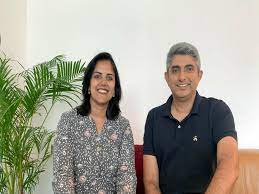
Fireside Ventures leads a 50 crore Series A fundraising round for mental health firm Amaha.
On Wednesday, Amaha, a company focused on mental health, announced that it has raised ₹50 crore in a Series A financing round led by Fireside Ventures. ₹15.6 crore more was contributed by other angel investors.Amaha, the former InnerHour, intends to expand and improve its mental health offerings with the help of this investment. Serving more than 600 Indian locations, the Mumbai-based organization provides a range of therapies and care programs for mental health issues like anxiety, depression, bipolar disorder, ADHD, OCD, schizophrenia, and addictions.The portfolio of Fireside Ventures, an investment firm that focuses mostly on consumer-focused startups, comprises businesses in the food and beverage, personal care, kids & education, lifestyle, and home products industries. It made investments in various wellness firms last year, including The Good Bug and Inito.A portion of the increased awareness and support for mental health and wellness in recent years has come from celebrities, including actors and cricket players, as well as from a number of organizations and social media platforms. Amaha was established in 2016 and offers digital services via an app that provides self-care tools and resources, in addition to operating physical centers in Delhi NCR, Bengaluru, and Mumbai. The founder and CEO of Amaha, Amit Malik, stated in an interview with Mint that "we're looking to go beyond digital at this stage because I think there is a lot of unmet need within the industry." Amaha has been aggressively investing in infrastructure, including physical clinics and technical advancements, despite growing losses in 2023 and maintaining a positiveAmaha obtained $5.2 million from Lightbox Ventures, a venture capital firm, in 2021. Additional angel investors that took part were Hitesh Oberoi, CEO & MD of Info Edge India Pvt. Ltd., Pankaj Sahni, CEO of Medanta-The Medicity Hospitals, and Capricorn Ventures & Micasa Investments (Singapore).

ETtech Deals Digest: This week, startup funding dropped 70% to $102 million.
In the second week of 2024, investments in startups fell by around 70% year over year to a total of $102.1 million across 26 different agreements, indicating that the funding crunch was not going away. According to data from Tracxn, companies in seed, early, and late stages raised around $288 million between January 6 and January 12, 2023.At roughly $49 million, or 48% of the total deal value, the early stage saw the largest amount of capital raised throughout the week. $35.2 million in late-stage finance, representing 35% of the total, came next.Funding increased sequentially in the most recent week, rising more than three times in volume and nearly three times in value terms. These cutting-edge businesses closed eight deals for $35.8 million last week.The latest numbers come after a busy spell of dealmaking in December, which came as a twist at the end of 2023 – one of the weakest years for venture capital activity in the country.The financial shortage persisted as evidenced by the fact that, in the second week of 2024, investments in startups plummeted by over 70% year over year to a total of $102.1 million across 26 separate agreements. Tracxn data indicates that between January 6 and January 12, 2023, companies in seed, early, and late stages raised approximately $288 million.In the second week of 2024, investments in startups fell by around 70% year over year to a total of $102.1 million across 26 different agreements, indicating that the funding crunch was not going away. According to data from Tracxn, companies in seed, early, and late stages raised over $288 million between January 6 and January 12, 2023.

Rupee ends lower under pressure from the stronger dollar and probable equity outflows.
Pressured by anticipated equity outflows and the U.S. dollar index rising to a more than one-month high due to moderating expectations for U.S. rate cuts, the Indian rupee ended lower on Wednesday.The rupee closed at 83.1375 against the dollar, down 0.08% from the previous session's close of 83.07.In Asia hours, the dollar index reached its highest point since mid-December, 103.58. With a decline of 0.91%, the Korean won led all Asian currencies in decline.Federal Reserve Governor Christopher Waller on Tuesday said that while the U.S. is “within striking distance” of the Fed’s 2% inflation goal, the central bank should not rush to cut benchmark interest rates.The comments prompted investors to pare bets on aggressive rate cuts.”A combination of weakish China data and a pushback” by European Central Bank and Fed officials against early easing is weighing on risk sentiment and supporting the dollar, ING Bank said in a note. In the meantime, data released on Wednesday indicates that China's economy grew marginally slower in the October–December quarter than anticipated. According to a foreign exchange trader at a private bank, pressure on the rupee on Wednesday came from dollar bids from foreign banks, probably acting on behalf of custodian clients.The blue-chip NSE Nifty 50 shed 2.09%, while the S&P BSE Sensex lost 2.23%. This is the highest percentage drop for both the indexes since June 2022.The rupee’s weakness is unlikely to “sustain a lot as the tilt or bias on the rupee remains positive”, Arnob Biswas, head of foreign exchange research at SMC Global Securities, said.Investors now await December U.S. retail sales data due later in the day, which is expected to show a month-on-month rise of 0.4%, up

Evolving Trends in Stock Market Regulations: Adapting to Algorithmic and Automated Trading in India
With the growing use of automated and algorithmic trading, the Indian stock market is going through a major transition. This technological evolution demands a corresponding shift in regulatory frameworks to maintain market integrity, fairness, and stability. High-frequency trading (HFT) and other forms of algorithmic trading have grown significantly in the Indian market. In order to profit from transient market movements, HFT, in particular, employs techniques like market making, momentum trading, and statistical arbitrage. While these technologies enhance market efficiency and liquidity, they also pose challenges such as potential market manipulation and a possible unfair advantage to large institutions over smaller investors. The Securities and Exchange Board of India (SEBI) has taken the initiative to regulate algorithmic trading in response to these issues. The main goal of the most recent regulations is to guarantee that exchanges have approved and certified all trading algorithms. This includes a thorough vetting process, and brokers are required to ensure proper security measures are in place to prevent unauthorized algorithmic activities. Additionally, SEBI has tightened short-selling norms to prevent market abuses like naked short-selling, mandating that all investors honor their securities delivery obligations. The Indian stock market is undergoing a significant transformation as a result of the uptake of cutting-edge trading technologies like algorithmic and high-frequency trading. A commitment to ensuring a dynamic, equitable, and resilient financial ecosystem is reflected in SEBI's evolving regulations. As these technologies continue to advance, the collaboration between regulators and market participants will be key to maintaining the integrity and efficiency of the Indian financial markets.

Offer for New Fund: Motilal Oswal The Motilal Oswal Large Cap Fund is launched by AMC; should you invest?
The "Motilal Oswal Large Cap Fund" is the newest investment product offered by Motilal Oswal Asset Management Company. The AMC claims that this open-ended equity scheme is purposefully created to give investors a special chance to capitalize on the large-cap segment's potential.Investment Objective: To achieve long-term capital appreciation by predominantly investing in equity and equity-related instruments of large-cap companies. Nevertheless, there can be no guarantee that the scheme's investment goal will be accomplished.

The U.S. economy will be impacted in 2024 and 2025 by "all these very powerful forces," according to Jamie Dimon.
Jamie Dimon, the CEO of JPMorgan Chase, stated that he is still cautious about the U.S. economy for the next two years due to a mix of geopolitical and financial risks. At the World Economic Forum in Davos, Switzerland, on Wednesday, Dimon told Andrew Ross Sorkin on CNBC, "You have all these very powerful forces that are going to be affecting us in '24 and '25.""I still wonder if we fully comprehend the mechanisms behind the quantitative tightening, the terrorist activity in Israel and the Red Sea, and the Ukraine," Dimon stated. The term "quantitative tightening" describes actions taken by the Federal Reserve to lower the size of its balance sheet and scale back earlier initiatives, such as bond-purchasing plans. Despite record profits at JPMorgan, the country's largest bank, and an unexpectedly strong U.S. economy, Dimon has urged caution over the past few years. Because of high employment rates and savings from the pandemic, the American consumer has largely remained healthy despite the damaging effects of inflation.n Dimon’s view, the relatively buoyant stock market of recent months has lulled investors on the potential risks ahead. The S&P 500 market index rose 19% in the past year and isn’t far from peak levels. “I think it’s a mistake to assume that everything’s hunky-dory,” Dimon said. “When stock markets are up, it’s kind of like this little drug we all feel like it’s just great. But remember, we’ve had so much fiscal monetary stimulation, so I’m a little more on the cautious side.



The defense budget for 2024–2025 is estimated to be ₹ 6.21 lakh crore in the interim budget.
The government on Thursday unveiled an ambitious plan for "deep-tech" technologies in the military sphere and modestly raised the defense budget from ₹ 5.94 lakh crore to ₹ 6.21 lakh crore for 2024–2025. A sum of ₹ 1.72 lakh crore was allocated to the military for capital expenditures, which primarily comprise the acquisition of new weaponry, aircraft, warships, and other military hardware, in the interim Union budget that Finance Minister Nirmala Sitharaman presented in Parliament. The budgetary allotment for capital expenditure in 2023–2024 was ₹ 1.62 lakh crore.The finance minister also announced that a new scheme will be launched for strengthening deep-tech technologies for defence purposes and to expedite 'atmanirbharta' or self-reliance in the area.The Ministry of Defence (Civil) will receive ₹ 15,322 crore, the defense services will receive ₹ 2,82,772 crore, and defense pensions will receive ₹ 1,41,205 crore. The total revenue expenditure has been estimated at ₹ 4,39,300 crore. Amounts ₹ 40,777 crore and ₹ 62,343 crore, respectively, have been set aside for aircraft and aero engines and "other equipment" in the capital outlay for defence services. ₹ 23,800 crore has been allocated for the naval fleet, while ₹ 6,830 crore is for projects involving naval dockyards. The Indian Air Force incurred the largest capital outlay of ₹ 57,137.09 crore in the budget for 2023–24. This amount comprised ₹ 15,721 crore for the purchase of aircraft and aero engines and ₹ 36,223.13 crore for other equipment. For 2024–2025, the Army's revenue expenditure is estimated to be ₹ 1,92,680 crore, while the Navy and Indian Air Force will receive ₹ 32,778 crore and ₹ 46,223 crore, respectively.The overall defense budget allocation, according to Dr. Laxman Kumar Behera, Associate Professor at the Jawaharlal Nehru University's Special Centre for National Security Studies, is modest overall and reflects the government's priorities for the military. "The allocations did not show any lack of commitment to the armed forces," he stated to PTI.Additionally, Dr. Behera characterized the ₹ 10,000 crore increase in capital expenditure outlay as a "healthy sign".

India’s Crypto Industry Misses Mention in FM’s Budget 2024 Speech, No Change in Taxes
"Social media platforms have been inundated with posts from the Indian crypto and Web3 industries pleading with the government to ""ReduceCryptoTax"" for days now. In the interim budget speech she gave to the parliament on Thursday, February 1, India Finance Minister Nirmala Sitharaman did not even bring up the cryptocurrency industry, despite the outcry. Members of the industry feel a little ignored and let down by this. The business community does not, however, give up hope that the elected government's finalized budget may undergo some modifications following the conclusion of India's general elections later this year. During her hour-long speech, Sitharaman stated that no tax changes are being implemented at this time. ""We believe crypto and virtual digital assets can be a force multiplier in achieving 'Viksit Bharat' by empowering individuals at the grassroots level,"" WazirX vice president Rajagopal Menon said in response to the development. Given that India is at a turning point in the cryptocurrency revolution, provisions for long-term financing of domestic crypto projects will benefit both digital public infrastructure and the PM's goal for ""Anusandhan"" (research). We anticipate that these developments will be taken into consideration by the government in addition to our current requests for a reduction of TDS rates to 0.01 percent and an offset of trader losses." The hashtag #ReduceCryptoTax has been trending on X in India since last week, and thousands of posts have called for an update to the country's crypto tax laws. India implemented a 30 percent tax on all cryptocurrency profits in July 2022, in addition to imposing a one percent tax deduction on each cryptocurrency transaction. Industry insiders claim that this tax structure has caused a decline in cryptocurrency-related activity in India, which has resulted in the migration of Web3 talent and businesses to countries with more hospitable tax regimes. Numerous cryptocurrency companies in India have even declared layoffs, citing a decline in users and inquiries about the industry.The three demands from the cryptocurrency community were anticipated to be addressed in this budget: carrying forward losses, similar to stock gains, and flexible tax slabs with a TDS reduction from one percent to 0.01 percent on each transaction.However, these recommendations from the cryptocurrency industry have not been taken into consideration for this interim budget. The finance minister did make an announcement about a plan to provide a 50-year interest-free loan of Rs. 1 lakh crore to assist India's youth, which is seen favorably by the crypto community.
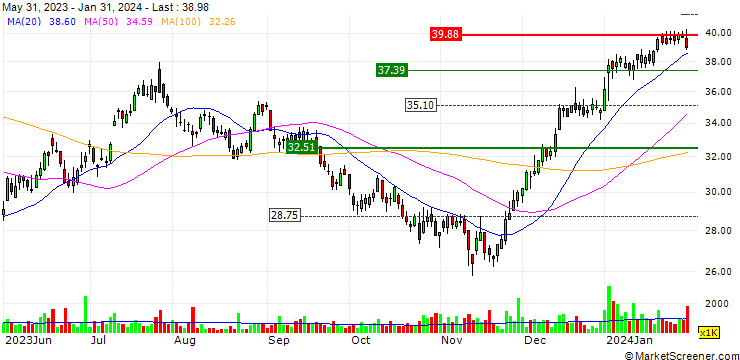
Board Appointments Announced by Lazard, Inc., Effective February 1, 2024
With effect from February 1, 2024, Lazard, Inc. announced the appointment of former PayPal CEO Dan Schulman and former US Chairman and Managing Partner of the Americas for Ernst & Young to its board of directors. As the CEO of PayPal, Dan Schulman, an accomplished executive and board member, oversaw the company's metamorphosis to completely change the way consumers transfer and manage money. At the moment, he is a member of the boards of Verizon Communications and Cisco Systems.Previous executive positions include CEO and President of Priceline Group, President at Sprint Nextel Corporation, Group President at American Express, and founding CEO of Virgin Mobile USA. Additionally, Mr. Schulman worked with AT&T for eighteen years, holding a number of positions, including President of the Consumer Markets Division. In addition to being vice-chair of the Economic Club of New York, he is on the boards of the Cleveland Clinic and the Council on Foreign Relations.He graduated from Middlebury College with a B.A. and New York University with an M.B.A. Stephen R. Howe Jr. is a highly esteemed CEO, member of boards, and specialist in corporate governance, audit, and financial services. He worked for Ernst & Young for 35 years. From 2012 to 2018, he guided the company to double-digit yearly growth in his most recent position as US Chairman, Managing Partner for the Americas, and a member of the Global Executive Board.Leading the Financial Services sector practice and managing client service teams for international financial institutions were among the previous positions held by the firm. At the moment, Mr. Howe is a member of the Royal Caribbean board. He is a member of the Liberty Science Center Board, the Peterson Institute for International Economics Board, and the Carnegie Hall Board of Trustees.
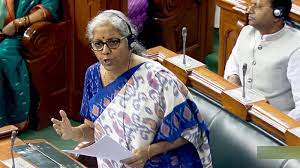
Budget 2024 For a few hours of Budget presentation, preparations start 6 months in advance know why
Union Budget 2024: On Thursday, February 1, 2024, Finance Minister Nirmala Sitharaman is scheduled to deliver the Interim Budget 2024. Every budget includes some items that address the needs of various government agencies, states, union territories, and citizens from all walks of life in India. For those in business and the salaried class, it is one of the most anticipated occasions of the year. During their potentially multi-hour speech, the finance minister makes several significant announcements. But it takes six months to develop the budget that is presented in a few hours. Are you aware of the reason? Be aware of thisInterim Budget 2024: What can we expect when Finance Minister Nirmala Sitharaman presents the Interim Budget 2024 on February 1, 2024? A member of the salaried class for tax breaks; an entrepreneur for programs that support entrepreneurs; an experienced businessman for regulations that can protect their company or boost their earnings.For this reason, most Indians pay attention to the significant statements made by the finance minister during their annual speech. These announcements contained in the budget speech could be made in a few minutes or several hours. However, the preparation time for a speech that lasts only a few hours is about six months.Interim Budget 2024: On February 1 at 11 a.m., Union Finance Minister Nirmala Sitharaman is scheduled to read the Interim Budget 2024 in the Parliament. The Interim Budget, which will implement the major decisions taken by the Center, is the focus of attention. Prior to the Lok Sabha elections, the departing government presents the interim budget during the budget session. After winning the Lok Sabha elections, the newly formed government then presents the comprehensive budget.In addition to discussing the government's accomplishments since 2014, FM Sitharaman's Interim Budget is anticipated to look ahead to Amrit Kaal in 2047. Similar to the previous interim budget, the Budget 2024 paper is anticipated to provide historical context, assess the current situation, and outline plans for the future. A summary of the government's anticipated revenue and outlays through the formation of the next government is the primary purpose of the interim budget. A comprehensive budget, on the other hand, addresses every facet of government funding, including receipts and outlays as well as allocations and policy declarations. A full-year budget outlines the nation's economic course for the whole fiscal year and acts as a strategic plan. The financial data for the transitional phase is provided by the interim budget.The timeline for presenting an interim budget is identical to that of the Union budget during a regular fiscal year. The Interim Budget has grown in importance for the ruling administrations in recent years as a tactical instrument for national elections. It enables them to outline the ruling party's economic strategy and provide justification for reelection.Some significant modifications were announced by former FM Piyush Goyal in the most recent interim budget: > Earnings up to Rs 5 lakh are exempt from income tax; individuals with gross incomes up to Rs 6.5 lakh are exempt from paying taxes if they invest in authorized stocks and provident funds. The TDS level on interest on bank and post office deposits was raised from Rs 10,000 to Rs 40,000. The TDS barrier on rental income was increased from Rs 1.8 lakh to Rs 2.4 lakh. The standard tax deduction for salaried individuals was raised from Rs 40,000 to Rs 50,000. I-T will process returns in a day.> In the following two years, all tax return verification will be completed electronically without involving the taxpayer. a bundle of Rs.The 74-page report, "The Indian Economy: A Review," authored by Chief Economic Advisor V Anantha Nageswaran, was delivered by the NDA administration this year. It provided an assessment of India's economy and outlined difficulties for the upcoming fiscal year. "This is not the Department of Economic Affairs' Economic Survey of India. Following the general elections, it will take precedence over the entire budget. The paper titled "Indian Economy–A Review" stated, "This review offers a brief sketch of the outlook for the economy in the coming years and takes stock of the state of the Indian economy and its journey over the last ten years." Following the presentation of the Interim Budget, a vote-on-account is held by the Parliament. This clause enables the government to secure parliamentaryA complete budget and an interim budget are comparable. One significant distinction is that it covers forecasts for a shorter time frame instead of the whole fiscal year. Without requiring a formal discussion, Parliament can pass a vote-on-account that just addresses spending.
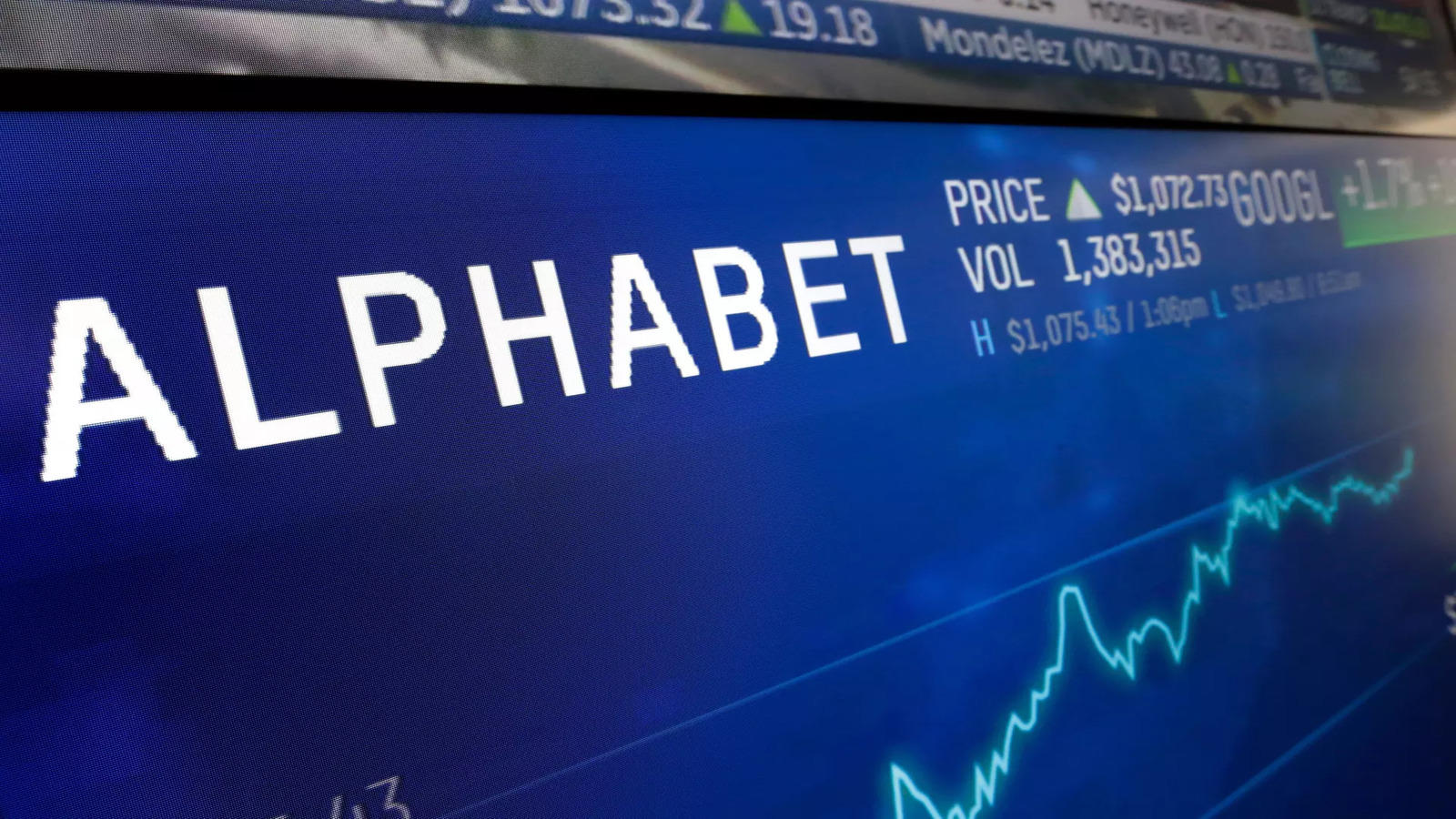
Google parent Alphabets share price drops 6 percentas ad revenue declines and capex increases.
Wall Street was let down by Alphabet on Tuesday when the company revealed that this year it would be spending more on things like servers that fuel artificial intelligence, despite the fact that holiday-season advertising sales fell short of forecasts.After hours trading saw a 6% decline in Alphabet shares. Alphabet's dominant businesses, Google and YouTube, have been up against competition for advertising budgets from other online platforms like Facebook, Instagram, TikTok, and Amazon.com, all against the backdrop of conflicting U.S. economic indications.The company's fourth-quarter ad revenue increased to $65.5 billion from $59.0 billion the previous year, with retail sales being a bright light. Based on LSEG statistics, that fell short of analysts' average projection of $66.1 billion.According to Thomas Monteiro, an analyst at Investing.com, "Alphabet's disappointing ad revenue numbers suggest that corporations worldwide are still uncertain about the pace of interest rate cuts from global central banks."Google, the creator of the technology that laid the groundwork for the current AI boom, is engaged in conflict with two major competitors in the market: OpenAI, the company that created ChatGPT, and Microsoft, which supports it.Microsoft's Azure grew faster in the same period that Google Cloud's revenue exceeded Wall Street forecasts and growth resumed with a boost from AI.Such AI demands significant investments in data centers, servers, and research. Alphabet's capital expenditures surged by 45% to $11 billion, the biggest level in years. During a conference call with analysts, Chief Financial Officer Ruth Porat stated that this year's capital expenditures will be significantly higher than those of 2023.Technology companies have been reducing staff and shutting down non-priority initiatives in order to save expenses. According to Porat, Alphabet anticipates spending $700 million on severance-related costs in the first quarter.Google is giving its ChatGPT competitor Bard access to a potent model suite dubbed Gemini. A agreement to invest up to $2 billion in the well-known AI firm Anthropic was also made, as it attempts to lure clients away from more established cloud rivals Microsoft and Amazon. Additionally, it is giving advertisers control over Gemini to maintain their financial support for Google's search division.However, because ad purchasers may be deterred by geopolitical and economic uncertainties, AI's boost to advertising may still be some way off. Alphabet's AI initiatives are being investigated by the US, and Google is preparing to file an appeal of a significant antitrust lawsuit that it lost. Alphabet reported $20.7 billion in profit for the fourth quarter."BETTER THAN AN AGENT" During the analyst call, Alphabet CEO Sundar Pichai highlighted the advancements made with AI in various areas of the company, such as posing new queries that Google can skillfully handle. Since OpenAI's November 2022 announcement of ChatGPT, which demonstrated to the public how so-called generative AI can create fresh text and graphics with a single command, a frenzy has engulfed the technology industry. The possibility of AI "agents" managing human demands with more autonomy has also increased with advancements.When asked about Google Assistant, the company's digital assistant, Pichai stated that artificial intelligence (AI) "allows us to act more like an agent over time" and "go beyond answers and follow through for users even more." Investor interest in Google Cloud has increased as Alphabet concentrates on artificial intelligence. The segment turned a quarterly profit for the first time last year, but as clients reduced their cloud expenditure, sales growth slowed. While Google has promoted competing technologies, Microsoft has been a formidable foe, integrating AI into its cloud and productivity suite, which has long been adopted by corporations.Pichai informed investors that cloud expansion was being encouraged by generative AI. With $9.2 billion in sales for the most recent quarter, Google Cloud exceeded analyst projections of $8.9 billion. While it was less than the 32% growth in the same quarter last year, cloud revenue growth had resumed its upward trajectory from the previous quarter, reaching 25.7%. Azure, Microsoft's cloud platform, saw a 30% increase in sales, the company announced on Tuesday.LSEG data shows that Alphabet's total revenue for the quarter ended December 31 was $86.3 billion, versus projections of $85.3 billion.

Interim Budget 2024: Expectations for Indirect Taxation
Given that there is a high priority on increasing participation in global value chains, the expectations from this budget from an Indirect Tax standpoint could be around improving the global trade ecosystem, simplification and streamlining of compliance framework, policy measures to cultivate local competencies and exports as well as focus on simplification and certainty in tax policy. The 2024 Interim Budget is set to be presented in Parliament on February 1. Given that there is a high priority on increasing participation in global value chains, the expectations from this budget from an Indirect Tax standpoint could be around improving the global trade ecosystem, simplification and streamlining of compliance framework, policy measures to cultivate local competencies and exports as well as focus on simplification and certainty in tax policy. The Manufacturing and Other Operations in Warehouse Regulations (MOOWR) Scheme has been conceived to encourage domestic manufacturing to participate in the global value chain by offering duty deferment and location flexibility. The changes made through the Finance Act, 2023, which requires payment of Integrated Goods and Services Tax (IGST) and Compensation cess on goods stored in a warehouse for manufacturing, seem to have been an intent to restrict the benefit to customs duty other than IGST and Compensation cess. This change allows for sector-specific carve-outs and at present such a carve-out has been made for electronics and semiconductor manufacturing sectors. Such change in the scheme seems to have raised uncertainty for manufacturers with expansion plans and importing capital goods. To bolster manufacturing and to support export competitiveness, this uncertainty may be addressed in this Interim Budget. Given the intent of the GST system to have a seamless flow of credits across the value chain, degree of compliance by way of e-invoicing, and buoyant tax collections, the fragments of the erstwhile regime with respect to credit restrictions may be reconsidered. Reducing credit barriers, particularly those pertaining to infrastructure, employee-related expenditures, and construction or immovable property could perhaps benefit businesses by unlocking working capital. Like some of the erstwhile state Value Added Tax (VAT) legislations, a mechanism for allowing refund of unutilised GST input tax credits balance at the conclusion of each fiscal year could be explored, regardless of exports or refund towards inverted duty structure.
Stock Market Today: Sensex, Nifty edge higher as Budget session commences
Indian indices inched higher as trading session progressed on Wednesday ahead of the FY 2024 interim budget to be presented on February 1. Investors will keenly observe the announcements despite the interim nature of the budget. Share Market Updates: Indian benchmark indices opened near flatline on Wednesday’s trading session amid cues from the global market. BSE Sensex opened 58.60 points, or 0.08 per cent at 71,081.30 while Nifty opened 34.80 points, or 0.16 per cent at 21,487.30. However, the indices inched higher as trading session progressed on Wednesday ahead of the FY 2024 interim budget to be presented on February 1. Investors will keenly observe the announcements despite the interim nature of the budget. Observers will keep an eye on any proposals on taxation on investment in capital markets. Commentators say sentiments are running positive ahead of the anticipated budget. Voltas, M&M Financials and L&T Finance remained among top gainers and Nifty 50 Larsen, Indus Towers, Astral Ltd tanked the most. Nifty Bank traded over 1.5 per cent higher. International oil prices climbed on higher global economic forecasts and sustained tension between the US and oil rich Iran. Brent Oil Futures lost 0.22 points, or 0.27 per cent at $82.31 a barrel while WTI futures traded 0.17 points, or 0.22 per cent at $77.65 per barrel. Indian Rupee closed today’s trade 8 paisa stronger at 83.11 against the American currency. Indian currency opened flat at $83.11 vs Tuesday’s close. The US dollar index gained 0.20 points, or 0.20 per cent 103.42. Asian markets remain mixed after China posted below the expectation industrial results. Chinese manufacturing contracted in January for a fourth straight month, reflecting weak demand and a faltering recovery. Nikkei gained 0.61 per cent and Kospi fell 0.07 per cent. NASDAQ 100 futures slid 0.8 per cent after several tech companies posted Q4 results that fell below the expectations of market analysts. Shares of tech giant Alphabet tanked by 5 per cent while Apple shares fell nearly 1 per cent. Dow Jones Industrial Average ended with minor gains with 133.86 points, or 0.36 per cent at 48,467.31 while S&P 500 ended 2.96 points, or 4,924.97 lower.

Walmart announces 3-for-1 stock split
Walmart said on Tuesday it will carry out a stock split of its outstanding shares at a ratio of 3:1, as part of its ongoing review of optimal trading and spread levels.Shares of the big box retailer rose 1% after the bell. The company said the stock split would increase the number of outstanding common stock to about 8.1 billion from about 2.7 billion.The additional shares will be payable after market close on Feb. 23, Walmart said. Walmart announced a three-for-one stock split on Tuesday as the retailer's shares sit just below their all-time high. The company said the additional shares will be payable after the market closes Feb. 23 to shareholders of record as of the previous day. Walmart's stock will start trading on a post-split basis Feb. 26. Walmart said it chose to break up shares in part to allow more employees to buy into its stock purchase plan. The company "felt it was a good time to split the stock and encourage our associates to participate in the years to come," CEO Doug McMillon said in a statement.Walmart shares rose about 1% in extended trading. The big-box retailer thrived in the last year as many of its rivals stagnated. As the largest grocer in the U.S., it could withstand pressures on discretionary spending that tripped up competitors.Walmart's sales climbed to $160.80 billion in the third quarter, a roughly 5% increase from the previous year. The company plans to report earnings for the holiday quarter next month. The stock closed Tuesday at $165.59, shy of the all-time high of $169.94 it hit in November. Walmart shares have climbed about 5% this year.The company has done 11 two-for-one stock splits in its history. The most recent came in 1999. The stock split comes as Walmart tries to boost employee benefits and loyalty. Earlier this month, the company said it would increase store manager wages to an average of $128,000 per year and change its bonus program to make managers eligible for a bonus of up to 200% of their base salary.
Stocks & sectors likely to benefit from 2024 Interim Budget
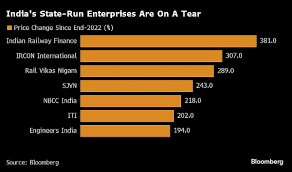
Companies building roads, ports and airports are on traders’ watchlist as Prime Minister Narendra Modi’s administration is set to present its last budget before the national elections. Shares linked to rural spending and state-owned firms are likely to be a focus area in Finance Minister Nirmala Sitharaman’s budget speech on Thursday, as policymakers seek ways to boost demand in the vast rural hinterland. Development of highways, tunnels and power plants is among the key focus areas for the government, which has more than doubled its capital spending over the last three years. Modi has made infrastructure building a cornerstone of his economic policy, helping India expand faster than any other major economy. The optimism seeped into the nation’s stock markets, which have advanced in all but one year since Modi first came to power in 2014. The enthusiasm has waned a bit this month, with foreign investors taking out more than $2.6 billion from local equities.The Feb. 1 budget is an interim one until a new administration takes office. It will still be keenly followed as the proposals would provide an indication on the government’s assessment of the economy, with Modi widely expected to win a third term in the elections due around April-May.
IndiGo’s Delhi-Baku flight takes off without ATC clearance
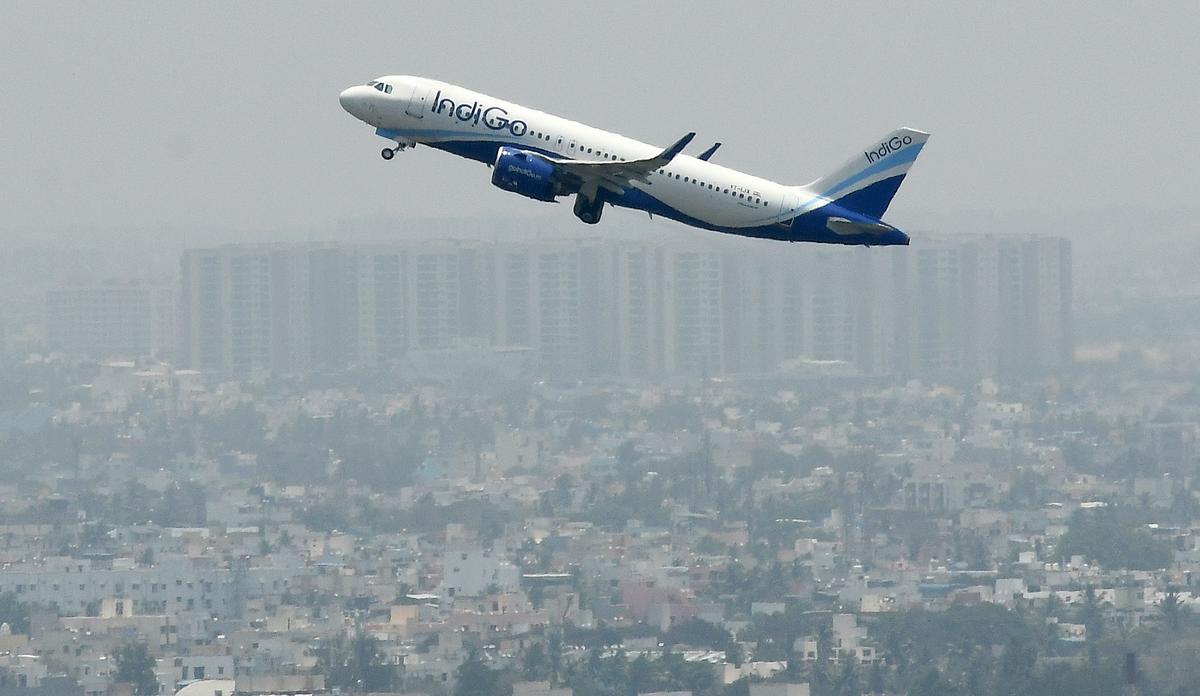
The Directorate General of Civil Aviation (DGCA) has off-rostered two IndiGo pilots after the airline’s Delhi to Baku flight allegedly took off on Monday night without clearance from the air traffic controller.Sources at Indira Gandhi International Airport said that IndiGo’s 6E 1803 from Delhi to Azerbaijan’s Baku at 7:38 p.m. on Monday took off without a departure clearance from the air traffic controller.The pilots of an IndiGo flight from Delhi to Baku have been removed from flying duty with the Directorate General of Civil Aviation (DGCA) investigating whether they took off without the required air traffic control (ATC) clearance.The flight to the capital of Azerbaijan departed at around 7:38 pm on January 29.IndiGo said the incident is currently under investigation and appropriate action will be taken as necessary. This comes amid a series of incidents in recent days involving IndiGo and the action taken against the airlines by aviation bodies. The Bureau of Civil Aviation Security (BCAS) had imposed a fine of Rs 1.2 crore on IndiGo after passengers were seen sitting on the tarmac and eating food while waiting for their delayed flight.Around the same time as the tarmac incident, a frustrated passenger was also caught on camera hitting the pilot of an IndiGo flight while the latter was making an announcement regarding delays.Other passengers, including actor Radhika Apte, have been sharing their harrowing experience with IndiGo for the past several weeks as they slam the airlines over cancellations, unreasonable delays and not meeting the standards.

From February 1, You Can Send More Money Through IMPS: Key Details
The National Payments Corporation of India (NPCI) announced new changes for the Immediate Payment Service (IMPS) online bank transaction system in October 2023. As per NPCI’s circular shared in October, customers will be able to transfer up to Rs 5 lakh between bank accounts without adding a beneficiary starting February 1. The regulatory body has also asked all members to comply with the directive for initiating and accepting fund transfers via mobile number and bank name on all IMPS channels by January 31.What is IMPSIMPS is a 24x7 instant domestic funds transfer system. This online bank account transfer system has played a crucial role in transforming the financial landscape of India. To ensure both accuracy and speed, it facilitates real-time fund transfers with a deferred net settlement between banks. How this will help usersWith the new changes implemented, users will soon be able to transfer up to Rs 5 lakh using IMPS. For such transactions, users won’t need to input recipient details like mobile numbers, bank account names, account numbers or IFSC codes.The recent update is set to eliminate the need for users to input tedious beneficiary details during transactions. Users will be able to execute fund transfers with a simplified process that only requires the recipient's mobile number and bank name.

Range Rover Evoque facelift launched in India at Rs 67.90 lakh
JLR India has launched the Range Rover Evoque facelift at a starting price of Rs 67.90 lakh (ex-showroom). Available in Dynamic SE trim only, the SUV comes with a moderate exterior update, while the interior has been tweaked significantly. The powertrain options remain same. The Range Rover Evoque facelift gets new headlamps and LED DRLs. The latest family grille design now provides a unified look across the Range Rover brand. The SUV has a coupe-like silhouette, floating roof, flush deployable door handles, and new alloy wheels. Among the exterior colour options are Tribeca Blue, Corinthian Bronze, Narvik Black and Corinthian Bronze. The new Range Rover Evoque comes with the latest-generation Pivi Pro infotainment technology, which can be accessed by a fresh 11.4-inch curved glass touchscreen. Pivi Pro supports smartphone connectivity with wireless Apple CarPlay and Android Auto. There is a wireless charging option as well. The climate, seating and audio volume controls are visible via new sidebars, featuring multi-functional sliding controls on either side. While starting a journey, drivers are presented with a pre-drive panel for fast access to commonly used features, such as window demisters, and heated and cooled seats.The Range Rover facelift is also claimed to offer one of the most sophisticated suites of camera technologies in its class with a 3D surround view, clearsight ground view and clearsight interior rearview. There is a fresh centre console design with a new gear shifter. Additionally, there is new detailing, including Moonlight chrome on the steering wheel, centre console trim and air vents. Like before, there is a panoramic sunroof. The new Range Rover Evoque gets Cabin Air Purification Plus tech, featuring PM 2.5 filtration and carbon dioxide management. The SUV has a couple of engine options -- 2.0-litre petrol (247hp and 365Nm) and 2.0-litre Ingenium diesel (201kW and 430Nm). Both engines, with mild-hybrid electric tech, come mated with a 9-speed automatic transmission.


