


Top Trending Finance & Stock Market News & Highlights


Ether retreats after momentarily touching the $3,000 mark, while Bitcoin drops from the $52,000 mark.
On Wednesday, February 21, there was a tiny 0.31 percent gain for Bitcoin. At the moment, Bitcoin is worth $51,977, or about Rs. 43 lakh. Market analysts claim that the resistance level for Bitcoin is currently at $53,000, or approximately Rs. 43.9 lakh; a breach of this level would signal a significant increase in the value of the asset. The price of Bitcoin has seen a significant increase of $400 (approximately Rs. 33,160) in the last day. Wednesday's market volatility was reflected in the cryptocurrency chart, where altcoins fluctuated between gains and losses. For the first time since April 2022, Ether crossed the $3,000 (about Rs. 2.48 lakh) threshold. But at that point, the asset was unable to maintain a significant advantage. Ether's current value, after a 2.05 percent loss, is $2,870, or approximately Rs. 2.3 lakh. "Bitcoin is indicating overbought conditions in the current market environment, which is causing investor caution regarding possible consolidation. Ethereum, on the other hand, is showing an ascending channel pattern, driven by continuous developments in its ecosystem and flirting with $3,000 (about Rs. 2.48 lakh). Deviating from their customary daily routines, investors are being cautious because of a recent buying frenzy amid bullish momentum suggested by moving averages, according to Rajagopal Menon, Vice President of WazirX, who spoke with Gadgets360. Market observers are currently more interested in watching Ether's trajectory than Bitcoin's. "Ethereum has a huge following. For most Web3 developers, it is the default option when it comes to compute networks. This translates to increased traffic volume and road upkeep. Therefore, an update to make the highway much smoother is being shipped by developers. They are also doing it without causing any traffic hiccups. They port the upgrade to the mainnet highway after testing it on the testnets, or service road. Dencun's planned mainnet launch in March "can be seen as an internal catalyst for a better Web3 future," according to CoinSwitch co-founder Ashish Singhal.
Published 22 Feb 2024 02:33 AM

India Accepts All Foreign Investment In The Space Industry
In an effort to facilitate business in the nation, the Indian government approved an amendment on Wednesday that permits 100% foreign direct investment (FDI) in the space sector. The government stated in a statement that the FDI policy reform will encourage growth in investment, income, and employment. The government stated in a statement that the FDI policy reform will encourage growth in investment, income, and employment.
Published 22 Feb 2024 01:45 AM

The Price of Bitcoin Exceeds $48,000
At the time of publishing, the price of the most popular cryptocurrency in the world, Bitcoin, was $48,101 (approximately Rs. 39.9 lakh), having seen a slight increase of 0.74 percent on Monday. The digital asset gained $1,826 in value over the course of the weekend (about Rs. 1.5 lakh). The next target, according to market analysts, would be $50,000 (about Rs. 41.5 lakh), which is a milestone that Bitcoin hasn't been able to reach since December 2021, if the price of the cryptocurrency rises above $48,970 (about Rs. 40 lakh). Ether's value fell by 0.55 percent on Monday as it was unable to keep up with Bitcoin's gains. At the moment, ether is worth $2,498 (about Rs. 2.07 lakh). Due to large net inflows into spot Bitcoin ETFs the week before, Bitcoin surged above $48,000 (about Rs. 39.8 lakh) over the weekend, hitting its highest level in 26 months. The CEO of Mudrex, Edul Patel, told Gadgets360 that Ethereum also reached its highest point since January 19 at $2,540, or roughly Rs. 2 lakh. It is currently consolidating around $2,500, or roughly Rs. 2.07 lakh, with resistance at $2,620, or roughly Rs. 2.17 lakh, and support at $2,440, or roughly Rs. 2.02 lakh.The majority of cryptocurrencies saw losses on Monday, including Ether. These comprise Avalanche, Dogecoin, Cardano, Ripple, and Binance Coin. On Monday, the values of other altcoins, including Uniswap, Shiba Inu, Litecoin, Bitcoin Cash, Solana, and Binance Coin, also decreased. In the past day, the value of the cryptocurrency industry as a whole fell by 0.76 percent. According to CoinMarketCap, the current value of the cryptocurrency market is $1.8 trillion, or approximately Rs. 1,49,40,576 crore. Ether's market share is currently 16.7%, while Bitcoin's dominance is currently 52.5 percent.This week, there will probably be a few notable token unlocks, such as the release of SAND from Sandbox worth over $96 million (about Rs. 796 crore), or roughly 9% of the total supply. We plan to do this on Valentine's Day. Additional unlocks include Aptos, which released more than 7% .
Published 13 Feb 2024 01:20 AM

Paytm Payments Bank Is Looking To Employ Outside Compliance
Four people with knowledge of the situation claim that Paytm Payments Bank Ltd. has sent out a request for proposals to outside auditors. According to the individuals cited above, who requested to remain anonymous, the bank only made this RFP available to outside auditors. As a result, it is not in the public domain.According to the three individuals mentioned above, the goal of this RFP is to audit the bank for compliance and the know-your-customer procedure.As stated by the first person quoted above, Paytm Payments Bank also hopes to demonstrate to the Reserve Bank of India that it is fully compliant by starting this audit. One97 Communications Ltd.'s associate company came under heavy fire from the RBI on January 31 for "persistent non-compliance" and serious "supervisory concerns." The regulator stated in its directives that Paytm Payments Bank will not be able to take new credit transactions, top-ups, or deposits into its accounts after February 29.
Published 10 Feb 2024 10:20 AM


Finance & Stock Market
Finance & Stock Market

For FY23, Unacademys revenue jumps 26% to Rs 907 crore while its loss cuts
The test-prep startup Unacademy reported that, despite constant layoffs at the company, its losses in FY23 decreased by 41% to Rs 1,678 crore. In FY23, employee-related expenses decreased by 28% to Rs 1,281 crore.The test-prep startup Unacademy reported that, despite constant layoffs at the company, its losses in FY23 decreased by 41% to Rs 1,678 crore. In FY23, employee-related expenses decreased by 28% to Rs 1,281 crore.In what was a difficult year for the startup environment, many modern businesses, like Myntra, ZestMoney, and Curefoods, reported stronger revenues for FY23, but their losses also increased.Revenue at Myntra rises to Rs 4,375 crore: The apparel retailer Myntra, which is owned by Flipkart, reported a 25% increase in operating revenue to Rs 4,375 crore in FY23, despite a 31% increase in losses to Rs 782 crore. The online fashion platform's largest expense, amounting to Rs 1,758 crore, was spent on advertising and promotional activities, representing a 35% increase over the previous year.Unacademy reduces losses to Rs 1,678 crore, or 41%: Unacademy, a startup providing test preparation, reported that its losses in FY23, which included several layoffs at the company, decreased by 41% to Rs 1,678 crore. The Bengaluru-based firm saw a 26% increase in sales to Rs 907 crore during the year, while costs associated with payroll decreased by 28% to Rs 1,281 crore.ZestMoney reports a loss of Rs 412 crore. ZestMoney, a troubled startup that has been searching for a buyer, declared a net loss of Rs 412.4 crore for the fiscal year 2023. On the other hand, while total expenses increased by 21% to Rs 662.2 crore, overall revenue for the buy-now-pay-later platform increased by 72% to Rs 250 crore.

SentinelOne, a US-based company, purchases PingSafe, a Bengaluru cybersecurity startup.
SentinelOne, an AI-powered cybersecurity startup based in the United States, said on Wednesday that it has reached an agreement to purchase Bengaluru-based PingSafe for an undisclosed sum.The Mountain View, California-based business said in a statement that it will buy PingSafe for a mix of cash and stock, and that the deal is anticipated to close in SentinelOne's first quarter of the 2025 fiscal year, contingent upon customary closing conditions and any necessary regulatory approvals.The Mountain View, California-based business said in a statement that it will buy PingSafe for a mix of cash and stock, and that the deal is anticipated to close in SentinelOne's first quarter of the 2025 fiscal year, contingent upon customary closing conditions and any necessary regulatory approvals.Bengaluru: The $100 million purchase of Bengaluru-based cloud security platform PingSafe by NYSE-listed SentinelOne is hailed as the greatest acquisition in the history of Indian cyber security startups. According to Barclays' report, the transaction is made up of both cash and stock.Companies won't have to deal with the complexity of multiple-point solutions, triage and analyze cases with insufficient context, or stream data between different data silos thanks to this new approach to cloud security. Rather, companies can manage their whole attack surface from a single platform that offers all the analytics, real-time interaction, and full context required to correlate, detect, and thwart multi-stage attacks in a straightforward manner—unlike old CNAPP and standalone solutions.
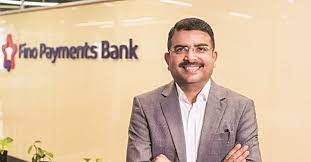
Following board approval, Fino Payments Bank requests an SFB licence from the RBI.
The Reserve Bank of India has received an application for a small finance bank (SFB) license from Fino Payments Bank, a division of Fino Paytech Limited (RBI). The RBI announced in a statement on Monday, January 8, that Fino Payments Bank had submitted an application in accordance with the SFBs' "Guidelines for on-tap licensing."The bank's board gave its approval in July 2023 to the application for an SFB license and instructed the creation of a committee to move forward with the evaluation of a reverse merger with Fino Paytech Limited, the bank's parent company. "Our SFB will be a Payments Bank++ model, different from existing players," stated Chief Financial Officer Ketan Merchant at the time. "In the first few years of operation, fee-based income will constitute 75% – 80% of the revenue."Fino's net worth is estimated to be over INR 600 Cr, but small financing banks currently need INR 200 Cr to meet their minimal capital requirements. On June 30, 2017, Fino Payments Bank commenced its business activities. Among its notable investors are Bharat Petroleum, ICICI Group, Blackstone, IFC, Intel, and LIC.
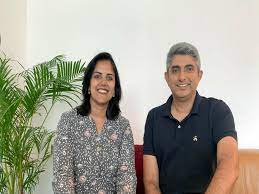
Fireside Ventures leads a 50 crore Series A fundraising round for mental health firm Amaha.
On Wednesday, Amaha, a company focused on mental health, announced that it has raised ₹50 crore in a Series A financing round led by Fireside Ventures. ₹15.6 crore more was contributed by other angel investors.Amaha, the former InnerHour, intends to expand and improve its mental health offerings with the help of this investment. Serving more than 600 Indian locations, the Mumbai-based organization provides a range of therapies and care programs for mental health issues like anxiety, depression, bipolar disorder, ADHD, OCD, schizophrenia, and addictions.The portfolio of Fireside Ventures, an investment firm that focuses mostly on consumer-focused startups, comprises businesses in the food and beverage, personal care, kids & education, lifestyle, and home products industries. It made investments in various wellness firms last year, including The Good Bug and Inito.A portion of the increased awareness and support for mental health and wellness in recent years has come from celebrities, including actors and cricket players, as well as from a number of organizations and social media platforms. Amaha was established in 2016 and offers digital services via an app that provides self-care tools and resources, in addition to operating physical centers in Delhi NCR, Bengaluru, and Mumbai. The founder and CEO of Amaha, Amit Malik, stated in an interview with Mint that "we're looking to go beyond digital at this stage because I think there is a lot of unmet need within the industry." Amaha has been aggressively investing in infrastructure, including physical clinics and technical advancements, despite growing losses in 2023 and maintaining a positiveAmaha obtained $5.2 million from Lightbox Ventures, a venture capital firm, in 2021. Additional angel investors that took part were Hitesh Oberoi, CEO & MD of Info Edge India Pvt. Ltd., Pankaj Sahni, CEO of Medanta-The Medicity Hospitals, and Capricorn Ventures & Micasa Investments (Singapore).

ETtech Deals Digest: This week, startup funding dropped 70% to $102 million.
In the second week of 2024, investments in startups fell by around 70% year over year to a total of $102.1 million across 26 different agreements, indicating that the funding crunch was not going away. According to data from Tracxn, companies in seed, early, and late stages raised around $288 million between January 6 and January 12, 2023.At roughly $49 million, or 48% of the total deal value, the early stage saw the largest amount of capital raised throughout the week. $35.2 million in late-stage finance, representing 35% of the total, came next.Funding increased sequentially in the most recent week, rising more than three times in volume and nearly three times in value terms. These cutting-edge businesses closed eight deals for $35.8 million last week.The latest numbers come after a busy spell of dealmaking in December, which came as a twist at the end of 2023 – one of the weakest years for venture capital activity in the country.The financial shortage persisted as evidenced by the fact that, in the second week of 2024, investments in startups plummeted by over 70% year over year to a total of $102.1 million across 26 separate agreements. Tracxn data indicates that between January 6 and January 12, 2023, companies in seed, early, and late stages raised approximately $288 million.In the second week of 2024, investments in startups fell by around 70% year over year to a total of $102.1 million across 26 different agreements, indicating that the funding crunch was not going away. According to data from Tracxn, companies in seed, early, and late stages raised over $288 million between January 6 and January 12, 2023.
Rupee ends lower under pressure from the stronger dollar and probable equity outflows.
Pressured by anticipated equity outflows and the U.S. dollar index rising to a more than one-month high due to moderating expectations for U.S. rate cuts, the Indian rupee ended lower on Wednesday.The rupee closed at 83.1375 against the dollar, down 0.08% from the previous session's close of 83.07.In Asia hours, the dollar index reached its highest point since mid-December, 103.58. With a decline of 0.91%, the Korean won led all Asian currencies in decline.Federal Reserve Governor Christopher Waller on Tuesday said that while the U.S. is “within striking distance” of the Fed’s 2% inflation goal, the central bank should not rush to cut benchmark interest rates.The comments prompted investors to pare bets on aggressive rate cuts.”A combination of weakish China data and a pushback” by European Central Bank and Fed officials against early easing is weighing on risk sentiment and supporting the dollar, ING Bank said in a note. In the meantime, data released on Wednesday indicates that China's economy grew marginally slower in the October–December quarter than anticipated. According to a foreign exchange trader at a private bank, pressure on the rupee on Wednesday came from dollar bids from foreign banks, probably acting on behalf of custodian clients.The blue-chip NSE Nifty 50 shed 2.09%, while the S&P BSE Sensex lost 2.23%. This is the highest percentage drop for both the indexes since June 2022.The rupee’s weakness is unlikely to “sustain a lot as the tilt or bias on the rupee remains positive”, Arnob Biswas, head of foreign exchange research at SMC Global Securities, said.Investors now await December U.S. retail sales data due later in the day, which is expected to show a month-on-month rise of 0.4%, up

Evolving Trends in Stock Market Regulations: Adapting to Algorithmic and Automated Trading in India
With the growing use of automated and algorithmic trading, the Indian stock market is going through a major transition. This technological evolution demands a corresponding shift in regulatory frameworks to maintain market integrity, fairness, and stability. High-frequency trading (HFT) and other forms of algorithmic trading have grown significantly in the Indian market. In order to profit from transient market movements, HFT, in particular, employs techniques like market making, momentum trading, and statistical arbitrage. While these technologies enhance market efficiency and liquidity, they also pose challenges such as potential market manipulation and a possible unfair advantage to large institutions over smaller investors. The Securities and Exchange Board of India (SEBI) has taken the initiative to regulate algorithmic trading in response to these issues. The main goal of the most recent regulations is to guarantee that exchanges have approved and certified all trading algorithms. This includes a thorough vetting process, and brokers are required to ensure proper security measures are in place to prevent unauthorized algorithmic activities. Additionally, SEBI has tightened short-selling norms to prevent market abuses like naked short-selling, mandating that all investors honor their securities delivery obligations. The Indian stock market is undergoing a significant transformation as a result of the uptake of cutting-edge trading technologies like algorithmic and high-frequency trading. A commitment to ensuring a dynamic, equitable, and resilient financial ecosystem is reflected in SEBI's evolving regulations. As these technologies continue to advance, the collaboration between regulators and market participants will be key to maintaining the integrity and efficiency of the Indian financial markets.

Offer for New Fund: Motilal Oswal The Motilal Oswal Large Cap Fund is launched by AMC; should you invest?
The "Motilal Oswal Large Cap Fund" is the newest investment product offered by Motilal Oswal Asset Management Company. The AMC claims that this open-ended equity scheme is purposefully created to give investors a special chance to capitalize on the large-cap segment's potential.Investment Objective: To achieve long-term capital appreciation by predominantly investing in equity and equity-related instruments of large-cap companies. Nevertheless, there can be no guarantee that the scheme's investment goal will be accomplished.

The U.S. economy will be impacted in 2024 and 2025 by "all these very powerful forces," according to Jamie Dimon.
Jamie Dimon, the CEO of JPMorgan Chase, stated that he is still cautious about the U.S. economy for the next two years due to a mix of geopolitical and financial risks. At the World Economic Forum in Davos, Switzerland, on Wednesday, Dimon told Andrew Ross Sorkin on CNBC, "You have all these very powerful forces that are going to be affecting us in '24 and '25.""I still wonder if we fully comprehend the mechanisms behind the quantitative tightening, the terrorist activity in Israel and the Red Sea, and the Ukraine," Dimon stated. The term "quantitative tightening" describes actions taken by the Federal Reserve to lower the size of its balance sheet and scale back earlier initiatives, such as bond-purchasing plans. Despite record profits at JPMorgan, the country's largest bank, and an unexpectedly strong U.S. economy, Dimon has urged caution over the past few years. Because of high employment rates and savings from the pandemic, the American consumer has largely remained healthy despite the damaging effects of inflation.n Dimon’s view, the relatively buoyant stock market of recent months has lulled investors on the potential risks ahead. The S&P 500 market index rose 19% in the past year and isn’t far from peak levels. “I think it’s a mistake to assume that everything’s hunky-dory,” Dimon said. “When stock markets are up, it’s kind of like this little drug we all feel like it’s just great. But remember, we’ve had so much fiscal monetary stimulation, so I’m a little more on the cautious side.


Kanika Pasricha is appointed top economic adviser by the Union Bank of India.
According to the bank's regulatory filing, the appointment has a three-year contractual term that is extendable by one year at a time for a maximum of five years assuming acceptable performance.Pasricha was previously employed by Standard Chartered Bank as a director of global research and economist. She was employed by ICICI Bank Ltd. as a chief manager and economist.Ms. Kanika Pasricha was named Chief Economic Advisor of Union Bank of India, a public sector bank with its headquarters located in Mumbai, on January 23. She was hired on a contractual basis for a three-year term that can be extended by one year at a time, with a five-year maximum term possible for good performance.Ms. Kanika Pasricha, a 38-year-old economist with over 15 years of expertise, works in the field. She graduated with a graduate degree in arts in economics from Delhi University and an MA in economics from Delhi School of Economics.She was previously employed by Standard Chartered Bank as an Economist (Director) - Global Research. Her work involves a great deal of research and data analysis to establish a connection between market measures and macro characteristics.She was also employed by ICICI Bank Ltd. as a Chief Manager and Economist.Leading Indian public sector bank Union Bank of India Limited (UBI) announced that Kanika Pasricha has been appointed Chief Economic Advisor (CEA), effective January 23, 2024. "We wish to inform you that Ms. Kanika Pasricha has been appointed as the Chief Economic Advisor of the Bank," the bank said in its exchange filing, "in terms of Regulation 30 read with Clause No. 7 of Para A of Part A of Schedule III of the SEBI (Listing Obligations & Disclosure Requirements) Regulations, 2015."Kanika Pasricha, a 38-year-old economist, has over 15 years of expertise in the field. She holds an MA in Economics from Delhi University's Delhi School of Economics as well as a Graduate Arts degree in Economics from Delhi University.She was previously employed by Standard Chartered Bank as an Economist (Director) in Global Research. Her work involves a great deal of research and data analysis to establish a connection between market measures and macro characteristics.She was also employed by ICICI Bank Ltd. as a Chief Manager and Economist.
ZEE stock at 130 rupees?
Given the sharp convergence of linear TV growth, Elara Securities believes ZEE may see a sharp de-rating in the P/E valuation of its broadcasting company, to at least 10 times one-year forward or below, as a result of the incomplete merger.The termination of the merger agreement by Sony India due to purported breaches of the conditions of the merger cooperation agreement (MCA) could have a significant negative impact on ZEE Entertainment Enterprises Ltd's values in the near future. A few brokerages changed their recommendations to "Sell" for the shares when Sony demanded termination fees of $90 million. With their current target prices for ZEE slashed by up to 50%, experts declared that the transaction termination is a lose-lose situation for both parties.When the company's stock declined in value in 2019 due to a problem involving promoter share pledges and a decline in business cash conversion, ZEE's corporate governance came under scrutiny. Analysts noted that the Zee-Sony combination would have resolved ZEE's low promoter ownership issue, but they also predicted that shareholder activism against ZEE management will occur in the near future.Given the sharp convergence of linear TV growth, Elara Securities believes ZEE may see a sharp de-rating in the P/E valuation of its broadcasting company, to at least 10 times one-year forward or below, as a result of the incomplete merger.ZEE's OTT service might not be able to grow in size in a market that is so fragmented and profitable; the company stated that the Ebitda margin, excluding sports losses, might converge to 14%. Elara is concerned about any additional inventory write-offs, connected parties' debt, and Disney's noncompliance with the sports contract (ICC tournaments).The main factor that increased valuation during the previous two years was the merger with Sony. However, we lower ZEE to Sell due to the termination, with a revised March 2025E objective of Rs 170 from Rs 340. However, the target price can increase to Rs 130 if the Disney deal is upheld. Another strategic or financial partner purchasing the majority of Zee's shares could give the value multiple some relief, according to Elara.According to Emkay Global, both parties stand to lose from this arrangement, especially given the rivalry from Reliance-Disney, a larger potential player. As stated in their press release, Emkay Global stated that the termination should also lead to a legal battle between the two involved corporations."We think that shareholder activism against ZEE management may potentially be sparked by this breakdown. Furthermore, we believe that ZEE will now attract more bidders for possible agreements. Because of the stock's poor competitive posture and escalating corporate governance concerns, we currently lower it from Buy to SELL (from Buy). We reduce our target from Rs 315 to Rs 175 at eight times the Dec. 25E SA broadcasting Ebitda, according to Emkay.Due to Sony's request for a termination fee, uncertainty surrounding ZEE's new strategy and partners, and actions taken by its minority stakeholders, Nuvama Institutional Equities believes that ZEE's near-term valuation will remain low. "Our favourable opinion was based on the merger. The statement read, "We are cutting FY25E/26E EPS by 16 per cent/24 per cent; downgrade to 'REDUCE' with target of Rs 190 (13 times PE FY26E)," in light of the shifting dynamics of the business and the slower ramp-up of ad income. In addition, CLSA lowered its target price for ZEE from Rs 300 to Rs 198 since it thinks the competition will likely get more fierce following the rumored Reliance and Disney Star combination. "We think ZEE's PE will drop back to the 12x levels observed before the August 21 announcement of the Sony deal. Zee's stock PE had previously depreciated amid the promoter share pledge problem (in 2019) and the decline in corporate cash conversion, according to CLSA. This was also the time of the Covid-19 second wave.

The IT companies Accenture, TCS, and Infosys have higher brand values than Wipro.
Despite a slow growth environment and disruption from newer technologies, IT services firms Accenture, Tata Consultancy Services (TCS), and Infosys managed to increase the value of their brands. The Brand Finance 2024 report states that the three IT behemoths ranked highest on the charts of IT brands. Accenture's $40.5 billion brand value, up 1.6% from the previous year, keeps it as the most valuable IT services brand in the world.Brand Finance research indicates that Accenture is well-positioned to seize the mega-trend—generative large language models—which is garnering a lot of attention and has the potential to completely transform industries and businesses. The second-place finish went to homegrown IT heavyweight TCS, whose brand value increased by 11% to $19.2 billion. Among global IT majors, the incremental brand value increased to nearly $2 billion from $17.2 billion the previous year, making it the highest in absolute terms. This was "driven by consistent investments in AI-readiness and a commitment to sustainability," according to a statement from TCS. The only significant provider of IT services, Wipro, which is backed by billionaire businessman Azim Premji, saw its brand value decline by 7.6% annually to $6.2 billion. Over the past few years, Wipro has lagged behind as it struggles to turn the business around in a competitive market. Additionally, a number of departures have occurred, with about ten senior executives leaving in 2023.

Crypto Price Today: Bitcoin Falls Below $40,000, Small Gains Seen by Tether, USD Coin
On Tuesday, January 23, the price of bitcoin showed a 3.63 percent decline. As a result, Bitcoin is now worth only $39,820, or about Rs. 33 lakh. For the first time in the previous two months, the price of Bitcoin has fallen below $40,000, or approximately Rs. 33 lakh. The price of Bitcoin dropped by $1,175 (approximately Rs. 97, 635) in the last day. Most cryptocurrencies followed Bitcoin on the loss-making side of the price chart. On Tuesday, Ether saw a 4.04 percent decline. When this article was written, the price of ETH was $2,336 (about Rs. 1.94 lakh). In the past day, the price of ether dropped by $81 (about Rs. 6,730). For the first time in fifty days, Bitcoin fell below $40,000 (approximately Rs. 33 lakh) as the Bulls were unable to maintain the support line. Those new investors who made large investments during the spot ETF announcement are currently sitting at nearly a twenty-five percent loss. During the late hours of US Monday trading, altcoins also experienced a deep red decline as concerns about ETH falling below the $2,000 (roughly Rs. 1.66 lakh) mark resurfaced in the markets. The Ethereum Foundation's sale of 700 ETH for about $2,400 (about Rs. 1.99 lakh) each served as the catalyst for this. Such token foundation sell-offs typically indicate a local peak, which may have occurred prior to the Bitcoin halving.After a tremendous bull run, the cryptocurrency market is currently experiencing a healthy retreat. As ETFs increase their AUM and encourage widespread adoption of the biggest digital asset in the world, we might witness a more stable Bitcoin. The CEO of BuyUcoin, Shivam Thakral, told Gadgets360, "Top Trader Henrik Zeberg shared a new Bitcoin price prediction of $120,000 (roughly Rs. 99.7 lakh). However, we will have to wait and see how the market moves in the coming weeks."
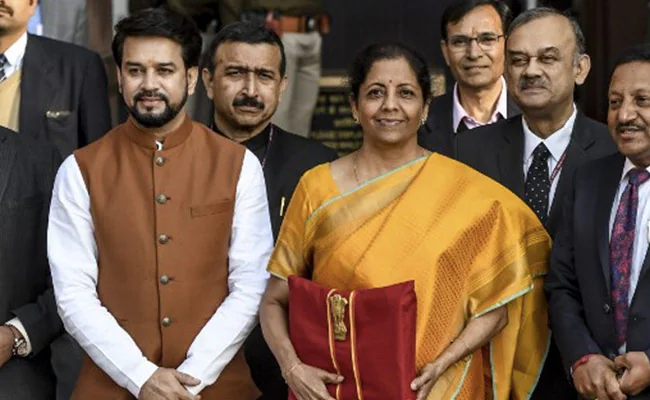
Briefcase To "Bahi Khata": Evolution of Budget Presentation Through Time
On February 1, Union Finance Minister Nirmala Sitharaman is scheduled to deliver the Interim Budget. Delhi, New: Finance ministers have been pictured bringing a briefcase into Parliament to present the Union Budget for decades. Nirmala Sitharaman called a 'bahi khata' in 2019 and abandoned this practice, which was a significant change. In 2021, she decided to switch to a paperless format and use a tablet that was "Made in India." It's amazing to see how the Union Budget is presented—from a briefcase to a fully digital format. The Interim Budget for FY 2024–25 is scheduled to be presented by Finance Minister Nirmala Sitharaman on February 1. Following the 2024 Lok Sabha elections and the establishment of a new government, a comprehensive budget will be presented. In 2019, Union Minister Piyush Goyal, while holding the additional charge of the Ministry of Finance, presented the last interim Budget. Ms Sitharaman presented her maiden Budget on July 5, 2019, after assuming charge as the finance minister following the Narendra Modi-led government's second consecutive win in the general elections. Let's examine the background of the Union Budget presentation exercise before the Budget 2024:

Asset Tokenization and DeFi for the Masses: The CEO of Giottus Reveals Crypto Trends That Could Be Big in 2024
The Web3 space appears to be in a constant state of flux, with blockchain-based ideas emerging and disappearing on a daily basis. For example, the sales of non-fungible tokens (NFTs) fell to an all-time low last year, but the Ordinals subcategory of these digital collectibles was able to pique buyer interest once more. The CEO of the Giottus cryptocurrency exchange, Vikram Subburaj, provided a list of several Web3 trends that are anticipated to become popular in 2019 in an interview with Gadgets360. According to Subburaj, the mass adoption of decentralized finance (DeFi) and real world assets (RWAs) is underway this year. Digital representations of tangible or conventional assets are generated on a blockchain network as tokens via RWAs. Each token represents a different attribute and represents a portion of the entity. Asset liquidity may rise as a result of tokenization. An owner of real estate, for example, might choose to sell 50,000 tokens of a tokenized real estate rather than the entire property and forfeiting its use as a livable space. Consider them NFTs for items such as bonds, art, or even real estate. The tokenized RWA ecosystem that is currently accessible on-chain is estimated to be worth $2 billion, or approximately Rs. 17,452 crore, according to Subburaj. He also predicted that as more people become aware of the concept, tokenizing assets will likely pick up speed this year.
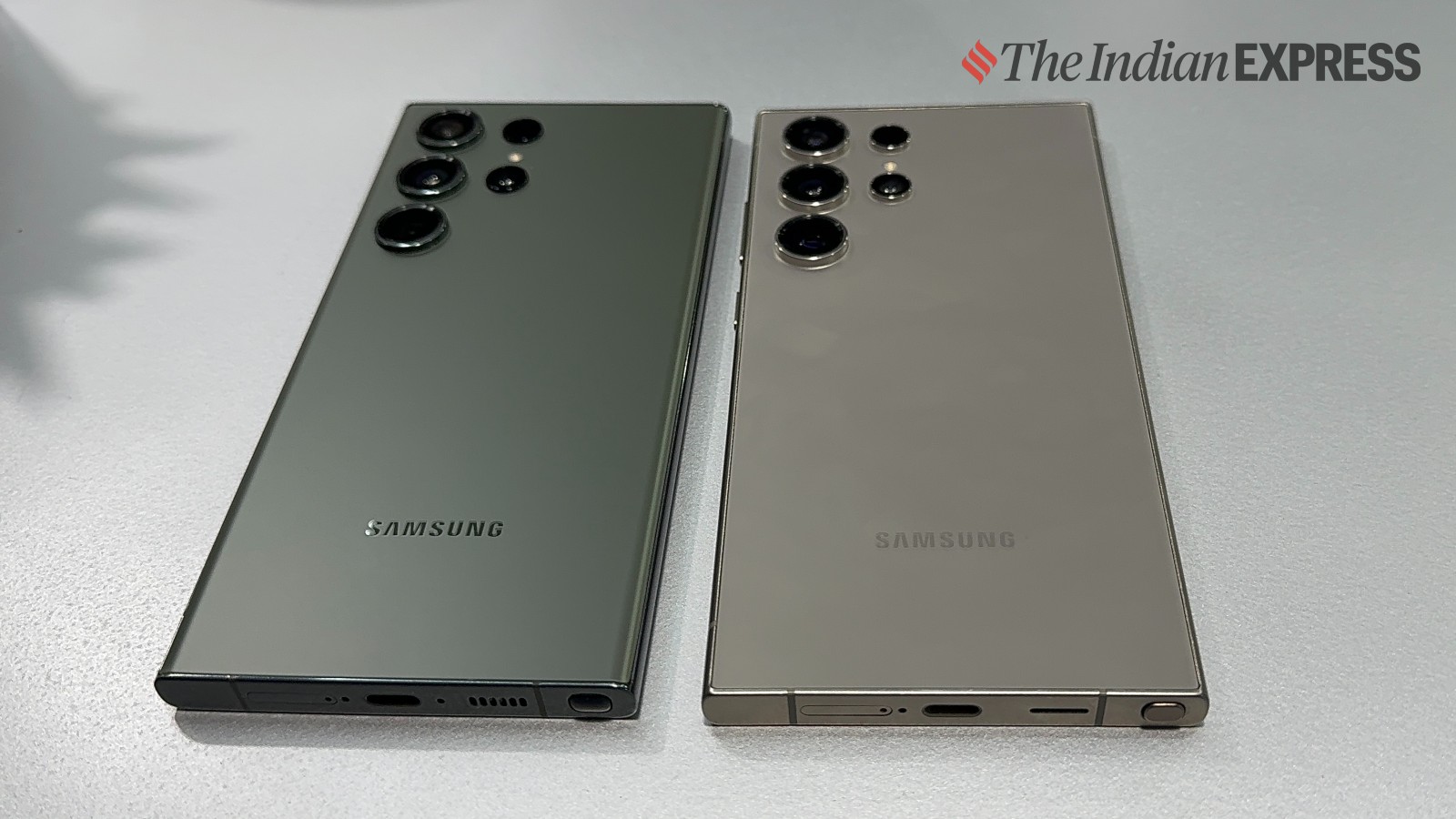
Galaxy S24 Ultra vs S23 Ultra: How Samsung’s top-end phones stack up
Samsung’s flagship Galaxy S series sees its latest iteration with the new Galaxy S24 Ultra, succeeding last year’s S23 Ultra. While retaining the S series DNA, Samsung has made subtle but meaningful upgrades to the S24 Ultra’s design, display, performance, camera, and software capabilities. But are these incremental improvements compelling enough for S23 Ultra owners to upgrade? Let’s find out. The design evolution from the Samsung Galaxy S23 Ultra to the new S24 Ultra is subtle. While retaining the recognisable tall, rectangular shape with ever-so-slight rounded edges, the S24 Ultra trims a wee bit of fat, shaving off 2 grams of weight for a total of 232 grams. It also slims down by 0.3mm to 8.6mm thickness. That said, this is not exactly a dramatic reduction from the S23 Ultra’s 234 gram weight and 8.9mm thickness. And if we’re being honest, we expected more in terms of weight reduction considering the phone gets a titanium frame this year. For comparison, the iPhone 15 Pro Max saw a substantial 20-gram weight loss by shifting to titanium.A more meaningful improvement is seeing upfront of the handset, which thanks to the combination of a flat display and a trimmed bottom bezel, now features symmetrical bezels all around. The S24 Ultra also introduces an appealing new lineup of colour options. The S23 Ultra played it relatively safe with Phantom Black, Cream, Green and Lavender as widely available colours. By contrast, the S24 Ultra really embraces colour with options like Titanium Gray, Titanium Black, Titanium Violet, and Titanium Yellow for all retailers. Even bolder Titanium Green, Titanium Blue, and Titanium Orange colours join the lineup as Samsung.com exclusives. The most noticeable change with the new Galaxy S24 Ultra is that its display has been hammered completely flat. Samsung has progressively reduced the display curvature of the Ultra models over the past couple of years and it’s now finally settled for completely flat edges, with the S23 Ultra being the last holdout with curved edges. Additionally, the S24 Ultra gains a brightness boost up to 2600 nits peak compared to 1750 nits on its predecessor, which should make the screen more visible and usable outdoors. The Galaxy S24 Ultra features an upgrade in processing power over its predecessor, packing the latest Qualcomm Snapdragon 8 Gen 3 chipset. This replaces the Snapdragon 8 Gen 2 found in last year’s Galaxy S23 Ultra model.With artificial intelligence being all the rage, the upgraded Snapdragon processor aims to provide a boost to AI capabilities. Qualcomm’s already shown that the new chip brings faster performance when using large language models, Stable Diffusion, generative AI applications and more that leverage machine learning.The new chip is also engineered to deliver enhanced graphics for mobile gaming without sacrificing battery life. However, we’ll have to get our hands on the S24 Ultra to see if these performance gains are as substantial as promised over the previous generation. Samsung’s flagship Galaxy S series has seen incremental upgrades over the past few generations, with no major leaps forward each year. However, with the launch of the Galaxy S24 Ultra, Samsung is focusing on revolutionary AI capabilities rather than minor spec bumps. The standout upgrade in the S24 Ultra is Galaxy AI, a suite of useful AI-powered features. While the S23 Ultra boasted impressive hardware, it simply can’t compete with the S24 Ultra’s intelligent software. Galaxy AI enables real-time translation during calls and texts with Live Translate. It also offers in-person translation with Interpreter mode. For productivity, Note Assist provides handy summaries and formatting for your notes. Chat Assist helps you strike the right tone in messages, whether chatting with coworkers or connecting on social media. And Circle to Search lets you draw a circle around anything on screen to instantly search for it.The new Samsung Galaxy S24 Ultra boasts of several AI-powered image editing and enhancement features over its predecessor, the S23 Ultra. But when you strip away the AI-powered software tricks, the hardware isn’t as different as you might expect. Let’s break it down. The S24 Ultra comes loaded with nifty new AI camera features like Edit Suggestion, which makes recommendations to improve your photos, and Generative Edit, which can fill in background details using AI. There’s also Instant Slow-mo for buttery smooth slo-mo videos. Pretty neat stuff.

Google Pay, NPCI Sign MoU to Expand UPI Globally, Aim to Ease Digital Payments Abroad
Google Pay and National Payments Corporation of India (NPCI) will work together to expand Unified Payments Interface (UPI), the instant payments system widely used in the country, to international markets, Google and NPCI confirmed Wednesday. A Memorandum of Understanding (MoU) has been signed between Google Pay India and NPCI subsidiary, NPCI International Payments Ltd (NIPL), to bring the instant payment functionality to other countries. UPI has become a widespread mode of digital payment throughout India in recent years, with interoperability between payments apps like Google Pay, PhonePe, and Paytm. The value processed via UPI payments in 2023 stood at Rs. 167 lakh crores, according to Google.The MoU signed between Google Pay India and NIPL primarily seeks to ease digital payments abroad for travellers outside of India. The collaboration will also aid in establishing a UPI-style digital payments infrastructure in other countries, a press release for the announcement said. Additionally, Google and NPCI also aim to leverage the UPI infrastructure to ease the process of remittances between countries, thus simplifying cross-border financial exchanges. “UPI has demonstrated to the world the step change that happens in economies with the introduction of interoperable, population scale digital infrastructure and each economy that joins such networks will create impact beyond the sum of parts,” Deeksha Kaushal, director of partnerships at Google Pay India said.According to the press release, the initiative will also help bring Indian customers to foreign merchants, reducing the need for credit or forex cards and instead allow UPI apps like Google Pay for international digital payments. “This strategic partnership will not only simplify foreign transactions for Indian travellers but will also allow us to extend our knowledge and expertise of operating a successful digital payments ecosystem to other countries,” Ritesh Shukla, CEO of NPCI International Payments Limited, said. Last year, Google Pay introduced a UPI Lite feature on its platform that enables small-value digital payments with just one tap, without the need to enter the UPI PIN, as required in regular transactions. UPI Lite supports a maximum instant transaction of up to Rs. 200 at a time. Users can load their UPI Lite account with up to Rs. 2,000, twice a day.In August, the Reserve Bank of India (RBI) increased the UPI Lite transaction limit from Rs. 200 to Rs. 500. The overall wallet limit, however, was retained at Rs. 2,000 only. A month later, NPCI said that UPI transactions had crossed the 10-billion mark in August. According to the NPCI data, number of UPI transactions stood at 10.24 billion on August 30. In value terms, the transactions amounted to Rs. 15,18,456.4 crore exchanging hands.

Volvo’s 10,000th car in India is its first pure electric offering
Volvo Car India has achieved a significant milestone by producing its ten thousandth car at its Bangalore facility. The company, which began assembly operations in 2017, has seen the highest production of the XC60 model, with over 4000 units produced to date.Jyoti Malhotra, Managing Director of Volvo Car India, in a company statement, revealed that the honour of being the ten thousandth car produced goes to the XC40 Recharge, the company's first pure electric offering.Malhotra said, "It is indeed a matter of pride for the company to have reached this milestone in a short span of time in spite of nearly three years of pandemic disruptions."Gao Feng, Production Head of Volvo Car India, highlighted the plant's achievement of rolling out India's first domestically assembled electric vehicle (EV), the XC40 Recharge. Today, the company assembles all its models in India, including the XC90, XC60, S90, XC40 Recharge, and the recently launched C40 Recharge.Meanwhile, Volvo Car India announced a 2% price increase for its conventional engine vehicles on Monday, while the prices of its EV offerings remain unchanged.Following the price hike, the XC60 is priced at ₹68.9 lakh, the S90 at ₹68.25 lakh, and the XC90 at ₹1,00,89,000.However, the prices of the XC40 Recharge and C40 Recharge remain unchanged at ₹57.9 lakh and ₹62.95 lakh, respectively.
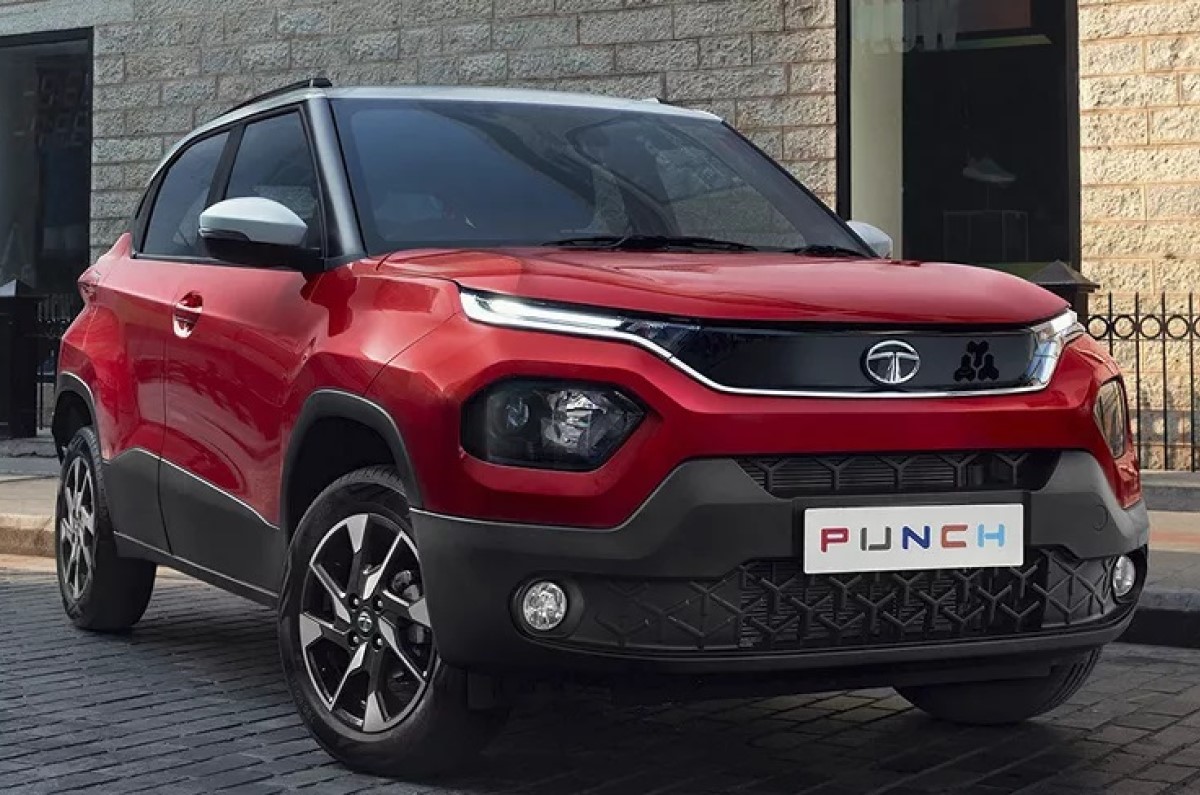
Tata Punch facelift launch confirmed for 2025
The Tata Punch petrol will see a mid-life facelift sometime next year. Confirming this development on the sidelines of the Punch EV launch, Tata Motors’ Passenger Vehicles Unit MD, Shailesh Chandra, said, “As far as the upgrade of the Punch is concerned, you know that it was launched in October 2021. Typical facelift period is three years. So, we should be expecting a facelift for the ICE version only in mid-2025, or slightly later.” Just like what we’ve seen on the Nexon and Harrier facelifts recently, expect Tata Motors to update the Punch SUV’s styling with fresh design cues to bring it in line with the newer Tata models. Changes to the front bumper and grille, along with minor tweaks to the headlamps and the bonnet can be expected to make the small SUV look new.Like the Nexon and the Nexon EV facelift, there will be styling bits that will help differentiate the petrol-powered Punch from the recently launched Punch EV. What’s more, Chandra also said that the Punch will have feature differences between the petrol and EV versions.
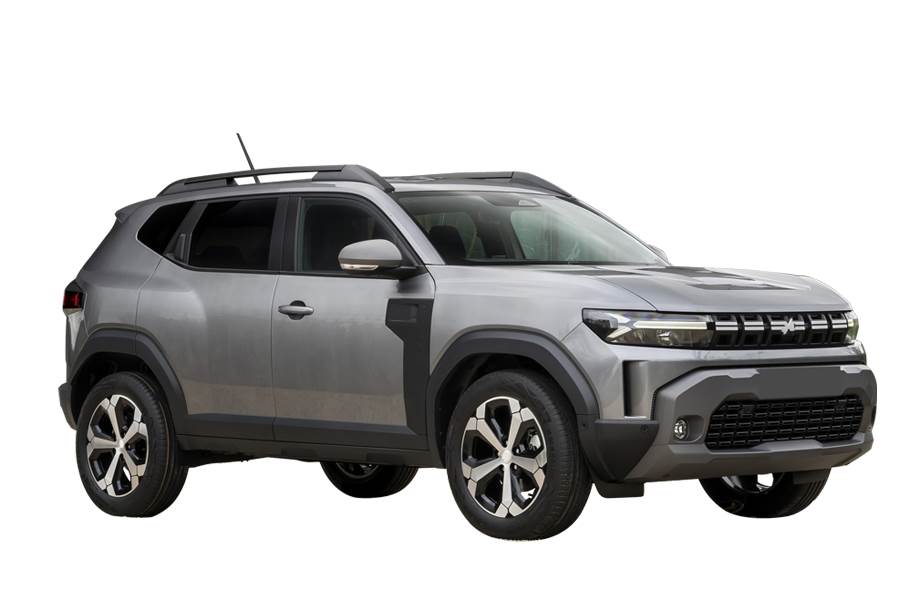
Renault Bigster global debut later this year
The new Renault Bigster SUV will see a global debut later this year and is expected to go on sale internationally by early 2025. Revealed as a concept in 2021, it is essentially a three-row iteration of the all-new Duster, which made its global debut a few months ago. Sources have conveyed to our friends at Motor1 Brazil that the Bigster SUV will share its design cues largely with the new Duster and the Bigster concept. Essentially, it will be most likely an elongated version of the Duster, similar to what we see with the Creta and Alcazar in India. There will, however, be styling, tech and equipment differences on the inside and out. This new SUV from Renault will be around 4.6 metres long – nearly 0.3 metres longer than the new Duster, which measures 4.34 metres. It will get rugged looks and interior bits from the Duster, but there will be more upmarket materials and additional creature comforts to justify the SUV's higher price tag. The Duster currently has a 2,657mm wheelbase, which also could see an increment for the Bigster in order to facilitate easy ingress-egress and more cabin room. As far as the platform goes, the Bigster will share the same CMF-B modular architecture. There isn’t much known about its powertrain options, however, it will be safe to expect that the SUV will share its powertrain line-up with the latest-gen Duster, which comes with three engine options – two of which are electrified. Starting the proceedings is the 1.6-litre four-cylinder petrol hybrid that gets two electric motors; this engine comes with an automatic gearbox. It also comes with regenerative braking and a 1.2kWh battery, enabling purely electric driving for up to 80 percent of the time in the city.The next engine is the 130hp, 1.2-litre three-cylinder turbo-petrol coupled with a 48V starter motor. While the Duster will also come with a 1.0-litre petrol-LPG option in some markets, there is no diesel option in any market right now. The next engine is the 130hp, 1.2-litre three-cylinder turbo-petrol coupled with a 48V starter motor. While the Duster will also come with a 1.0-litre petrol-LPG option in some markets, there is no diesel option in any market right now.

JLR India launches Discovery Sport 2024 at Rs 67.90 lakh
JLR India today launched the Discovery Sport 2024 in the country at a starting price of Rs 67.90 lakh (ex-showroom). The 2024 model comes with a price cut of Rs 3.49 lakh over the 2023 model.The Discovery Sport 2024 is available in Dynamic SE with two engine options - 2.0-litre petrol (245hp and 365Nm) and 2.0-litre Ingenium diesel (201hp and 430Nm). Both engines are mated to an automatic transmission. The new Discovery Sport gets subtle exterior updates. There is a contrast roof and exterior accents, including Discovery script, grille, lower body sills and lower bumpers, all having a distinctive Gloss Black finish. There is Gloss Black front claw detailing on the bumpers and wheel arches. There are 19-inch diamond-cut alloys. The SUV also gets a new Varesine Blue exterior paint option.JLR India today launched the Discovery Sport 2024 in the country at a starting price of Rs 67.90 lakh (ex-showroom). The 2024 model comes with a price cut of Rs 3.49 lakh over the 2023 model. JLR India today launched the Discovery Sport 2024 in the country at a starting price of Rs 67.90 lakh (ex-showroom). The 2024 model comes with a price cut of Rs 3.49 lakh over the 2023 model.The new Discovery Sport gets subtle exterior updates. There is a contrast roof and exterior accents, including Discovery script, grille, lower body sills and lower bumpers, all having a distinctive Gloss Black finish. There is Gloss Black front claw detailing on the bumpers and wheel arches. There are 19-inch diamond-cut alloys. The SUV also gets a new Varesine Blue exterior paint option.You now get a digital instrument cluster and steering wheel-mounted gearshift paddles as standard, while the redesigned centre console boasts a new floating 11.4-inch curved glass touchscreen. The latest Pivi Pro infotainment set-up features permanently accessible sidebars, which provide shortcuts to key vehicle controls and functions, such as media, volume, climate and navigation. There is a panoramic glass roof as well.The SUV has wireless Apple CarPlay and Android Auto as standard and a wireless charger. A natural shadow oak trim finisher surrounds a new gear shifter. Discovery Sport Dynamic SE features DuoLeather interiors with up to two colour options.

