


Top Trending Finance & Stock Market News & Highlights


Ether retreats after momentarily touching the $3,000 mark, while Bitcoin drops from the $52,000 mark.
On Wednesday, February 21, there was a tiny 0.31 percent gain for Bitcoin. At the moment, Bitcoin is worth $51,977, or about Rs. 43 lakh. Market analysts claim that the resistance level for Bitcoin is currently at $53,000, or approximately Rs. 43.9 lakh; a breach of this level would signal a significant increase in the value of the asset. The price of Bitcoin has seen a significant increase of $400 (approximately Rs. 33,160) in the last day. Wednesday's market volatility was reflected in the cryptocurrency chart, where altcoins fluctuated between gains and losses. For the first time since April 2022, Ether crossed the $3,000 (about Rs. 2.48 lakh) threshold. But at that point, the asset was unable to maintain a significant advantage. Ether's current value, after a 2.05 percent loss, is $2,870, or approximately Rs. 2.3 lakh. "Bitcoin is indicating overbought conditions in the current market environment, which is causing investor caution regarding possible consolidation. Ethereum, on the other hand, is showing an ascending channel pattern, driven by continuous developments in its ecosystem and flirting with $3,000 (about Rs. 2.48 lakh). Deviating from their customary daily routines, investors are being cautious because of a recent buying frenzy amid bullish momentum suggested by moving averages, according to Rajagopal Menon, Vice President of WazirX, who spoke with Gadgets360. Market observers are currently more interested in watching Ether's trajectory than Bitcoin's. "Ethereum has a huge following. For most Web3 developers, it is the default option when it comes to compute networks. This translates to increased traffic volume and road upkeep. Therefore, an update to make the highway much smoother is being shipped by developers. They are also doing it without causing any traffic hiccups. They port the upgrade to the mainnet highway after testing it on the testnets, or service road. Dencun's planned mainnet launch in March "can be seen as an internal catalyst for a better Web3 future," according to CoinSwitch co-founder Ashish Singhal.
Published 22 Feb 2024 02:33 AM

India Accepts All Foreign Investment In The Space Industry
In an effort to facilitate business in the nation, the Indian government approved an amendment on Wednesday that permits 100% foreign direct investment (FDI) in the space sector. The government stated in a statement that the FDI policy reform will encourage growth in investment, income, and employment. The government stated in a statement that the FDI policy reform will encourage growth in investment, income, and employment.
Published 22 Feb 2024 01:45 AM

The Price of Bitcoin Exceeds $48,000
At the time of publishing, the price of the most popular cryptocurrency in the world, Bitcoin, was $48,101 (approximately Rs. 39.9 lakh), having seen a slight increase of 0.74 percent on Monday. The digital asset gained $1,826 in value over the course of the weekend (about Rs. 1.5 lakh). The next target, according to market analysts, would be $50,000 (about Rs. 41.5 lakh), which is a milestone that Bitcoin hasn't been able to reach since December 2021, if the price of the cryptocurrency rises above $48,970 (about Rs. 40 lakh). Ether's value fell by 0.55 percent on Monday as it was unable to keep up with Bitcoin's gains. At the moment, ether is worth $2,498 (about Rs. 2.07 lakh). Due to large net inflows into spot Bitcoin ETFs the week before, Bitcoin surged above $48,000 (about Rs. 39.8 lakh) over the weekend, hitting its highest level in 26 months. The CEO of Mudrex, Edul Patel, told Gadgets360 that Ethereum also reached its highest point since January 19 at $2,540, or roughly Rs. 2 lakh. It is currently consolidating around $2,500, or roughly Rs. 2.07 lakh, with resistance at $2,620, or roughly Rs. 2.17 lakh, and support at $2,440, or roughly Rs. 2.02 lakh.The majority of cryptocurrencies saw losses on Monday, including Ether. These comprise Avalanche, Dogecoin, Cardano, Ripple, and Binance Coin. On Monday, the values of other altcoins, including Uniswap, Shiba Inu, Litecoin, Bitcoin Cash, Solana, and Binance Coin, also decreased. In the past day, the value of the cryptocurrency industry as a whole fell by 0.76 percent. According to CoinMarketCap, the current value of the cryptocurrency market is $1.8 trillion, or approximately Rs. 1,49,40,576 crore. Ether's market share is currently 16.7%, while Bitcoin's dominance is currently 52.5 percent.This week, there will probably be a few notable token unlocks, such as the release of SAND from Sandbox worth over $96 million (about Rs. 796 crore), or roughly 9% of the total supply. We plan to do this on Valentine's Day. Additional unlocks include Aptos, which released more than 7% .
Published 13 Feb 2024 01:20 AM

Paytm Payments Bank Is Looking To Employ Outside Compliance
Four people with knowledge of the situation claim that Paytm Payments Bank Ltd. has sent out a request for proposals to outside auditors. According to the individuals cited above, who requested to remain anonymous, the bank only made this RFP available to outside auditors. As a result, it is not in the public domain.According to the three individuals mentioned above, the goal of this RFP is to audit the bank for compliance and the know-your-customer procedure.As stated by the first person quoted above, Paytm Payments Bank also hopes to demonstrate to the Reserve Bank of India that it is fully compliant by starting this audit. One97 Communications Ltd.'s associate company came under heavy fire from the RBI on January 31 for "persistent non-compliance" and serious "supervisory concerns." The regulator stated in its directives that Paytm Payments Bank will not be able to take new credit transactions, top-ups, or deposits into its accounts after February 29.
Published 10 Feb 2024 10:20 AM


Finance & Stock Market
Finance & Stock Market

For FY23, Unacademys revenue jumps 26% to Rs 907 crore while its loss cuts
The test-prep startup Unacademy reported that, despite constant layoffs at the company, its losses in FY23 decreased by 41% to Rs 1,678 crore. In FY23, employee-related expenses decreased by 28% to Rs 1,281 crore.The test-prep startup Unacademy reported that, despite constant layoffs at the company, its losses in FY23 decreased by 41% to Rs 1,678 crore. In FY23, employee-related expenses decreased by 28% to Rs 1,281 crore.In what was a difficult year for the startup environment, many modern businesses, like Myntra, ZestMoney, and Curefoods, reported stronger revenues for FY23, but their losses also increased.Revenue at Myntra rises to Rs 4,375 crore: The apparel retailer Myntra, which is owned by Flipkart, reported a 25% increase in operating revenue to Rs 4,375 crore in FY23, despite a 31% increase in losses to Rs 782 crore. The online fashion platform's largest expense, amounting to Rs 1,758 crore, was spent on advertising and promotional activities, representing a 35% increase over the previous year.Unacademy reduces losses to Rs 1,678 crore, or 41%: Unacademy, a startup providing test preparation, reported that its losses in FY23, which included several layoffs at the company, decreased by 41% to Rs 1,678 crore. The Bengaluru-based firm saw a 26% increase in sales to Rs 907 crore during the year, while costs associated with payroll decreased by 28% to Rs 1,281 crore.ZestMoney reports a loss of Rs 412 crore. ZestMoney, a troubled startup that has been searching for a buyer, declared a net loss of Rs 412.4 crore for the fiscal year 2023. On the other hand, while total expenses increased by 21% to Rs 662.2 crore, overall revenue for the buy-now-pay-later platform increased by 72% to Rs 250 crore.

SentinelOne, a US-based company, purchases PingSafe, a Bengaluru cybersecurity startup.
SentinelOne, an AI-powered cybersecurity startup based in the United States, said on Wednesday that it has reached an agreement to purchase Bengaluru-based PingSafe for an undisclosed sum.The Mountain View, California-based business said in a statement that it will buy PingSafe for a mix of cash and stock, and that the deal is anticipated to close in SentinelOne's first quarter of the 2025 fiscal year, contingent upon customary closing conditions and any necessary regulatory approvals.The Mountain View, California-based business said in a statement that it will buy PingSafe for a mix of cash and stock, and that the deal is anticipated to close in SentinelOne's first quarter of the 2025 fiscal year, contingent upon customary closing conditions and any necessary regulatory approvals.Bengaluru: The $100 million purchase of Bengaluru-based cloud security platform PingSafe by NYSE-listed SentinelOne is hailed as the greatest acquisition in the history of Indian cyber security startups. According to Barclays' report, the transaction is made up of both cash and stock.Companies won't have to deal with the complexity of multiple-point solutions, triage and analyze cases with insufficient context, or stream data between different data silos thanks to this new approach to cloud security. Rather, companies can manage their whole attack surface from a single platform that offers all the analytics, real-time interaction, and full context required to correlate, detect, and thwart multi-stage attacks in a straightforward manner—unlike old CNAPP and standalone solutions.

Following board approval, Fino Payments Bank requests an SFB licence from the RBI.
The Reserve Bank of India has received an application for a small finance bank (SFB) license from Fino Payments Bank, a division of Fino Paytech Limited (RBI). The RBI announced in a statement on Monday, January 8, that Fino Payments Bank had submitted an application in accordance with the SFBs' "Guidelines for on-tap licensing."The bank's board gave its approval in July 2023 to the application for an SFB license and instructed the creation of a committee to move forward with the evaluation of a reverse merger with Fino Paytech Limited, the bank's parent company. "Our SFB will be a Payments Bank++ model, different from existing players," stated Chief Financial Officer Ketan Merchant at the time. "In the first few years of operation, fee-based income will constitute 75% – 80% of the revenue."Fino's net worth is estimated to be over INR 600 Cr, but small financing banks currently need INR 200 Cr to meet their minimal capital requirements. On June 30, 2017, Fino Payments Bank commenced its business activities. Among its notable investors are Bharat Petroleum, ICICI Group, Blackstone, IFC, Intel, and LIC.
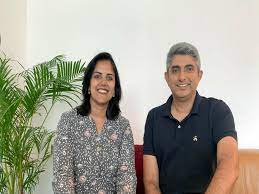
Fireside Ventures leads a 50 crore Series A fundraising round for mental health firm Amaha.
On Wednesday, Amaha, a company focused on mental health, announced that it has raised ₹50 crore in a Series A financing round led by Fireside Ventures. ₹15.6 crore more was contributed by other angel investors.Amaha, the former InnerHour, intends to expand and improve its mental health offerings with the help of this investment. Serving more than 600 Indian locations, the Mumbai-based organization provides a range of therapies and care programs for mental health issues like anxiety, depression, bipolar disorder, ADHD, OCD, schizophrenia, and addictions.The portfolio of Fireside Ventures, an investment firm that focuses mostly on consumer-focused startups, comprises businesses in the food and beverage, personal care, kids & education, lifestyle, and home products industries. It made investments in various wellness firms last year, including The Good Bug and Inito.A portion of the increased awareness and support for mental health and wellness in recent years has come from celebrities, including actors and cricket players, as well as from a number of organizations and social media platforms. Amaha was established in 2016 and offers digital services via an app that provides self-care tools and resources, in addition to operating physical centers in Delhi NCR, Bengaluru, and Mumbai. The founder and CEO of Amaha, Amit Malik, stated in an interview with Mint that "we're looking to go beyond digital at this stage because I think there is a lot of unmet need within the industry." Amaha has been aggressively investing in infrastructure, including physical clinics and technical advancements, despite growing losses in 2023 and maintaining a positiveAmaha obtained $5.2 million from Lightbox Ventures, a venture capital firm, in 2021. Additional angel investors that took part were Hitesh Oberoi, CEO & MD of Info Edge India Pvt. Ltd., Pankaj Sahni, CEO of Medanta-The Medicity Hospitals, and Capricorn Ventures & Micasa Investments (Singapore).

ETtech Deals Digest: This week, startup funding dropped 70% to $102 million.
In the second week of 2024, investments in startups fell by around 70% year over year to a total of $102.1 million across 26 different agreements, indicating that the funding crunch was not going away. According to data from Tracxn, companies in seed, early, and late stages raised around $288 million between January 6 and January 12, 2023.At roughly $49 million, or 48% of the total deal value, the early stage saw the largest amount of capital raised throughout the week. $35.2 million in late-stage finance, representing 35% of the total, came next.Funding increased sequentially in the most recent week, rising more than three times in volume and nearly three times in value terms. These cutting-edge businesses closed eight deals for $35.8 million last week.The latest numbers come after a busy spell of dealmaking in December, which came as a twist at the end of 2023 – one of the weakest years for venture capital activity in the country.The financial shortage persisted as evidenced by the fact that, in the second week of 2024, investments in startups plummeted by over 70% year over year to a total of $102.1 million across 26 separate agreements. Tracxn data indicates that between January 6 and January 12, 2023, companies in seed, early, and late stages raised approximately $288 million.In the second week of 2024, investments in startups fell by around 70% year over year to a total of $102.1 million across 26 different agreements, indicating that the funding crunch was not going away. According to data from Tracxn, companies in seed, early, and late stages raised over $288 million between January 6 and January 12, 2023.

Rupee ends lower under pressure from the stronger dollar and probable equity outflows.
Pressured by anticipated equity outflows and the U.S. dollar index rising to a more than one-month high due to moderating expectations for U.S. rate cuts, the Indian rupee ended lower on Wednesday.The rupee closed at 83.1375 against the dollar, down 0.08% from the previous session's close of 83.07.In Asia hours, the dollar index reached its highest point since mid-December, 103.58. With a decline of 0.91%, the Korean won led all Asian currencies in decline.Federal Reserve Governor Christopher Waller on Tuesday said that while the U.S. is “within striking distance” of the Fed’s 2% inflation goal, the central bank should not rush to cut benchmark interest rates.The comments prompted investors to pare bets on aggressive rate cuts.”A combination of weakish China data and a pushback” by European Central Bank and Fed officials against early easing is weighing on risk sentiment and supporting the dollar, ING Bank said in a note. In the meantime, data released on Wednesday indicates that China's economy grew marginally slower in the October–December quarter than anticipated. According to a foreign exchange trader at a private bank, pressure on the rupee on Wednesday came from dollar bids from foreign banks, probably acting on behalf of custodian clients.The blue-chip NSE Nifty 50 shed 2.09%, while the S&P BSE Sensex lost 2.23%. This is the highest percentage drop for both the indexes since June 2022.The rupee’s weakness is unlikely to “sustain a lot as the tilt or bias on the rupee remains positive”, Arnob Biswas, head of foreign exchange research at SMC Global Securities, said.Investors now await December U.S. retail sales data due later in the day, which is expected to show a month-on-month rise of 0.4%, up

Evolving Trends in Stock Market Regulations: Adapting to Algorithmic and Automated Trading in India
With the growing use of automated and algorithmic trading, the Indian stock market is going through a major transition. This technological evolution demands a corresponding shift in regulatory frameworks to maintain market integrity, fairness, and stability. High-frequency trading (HFT) and other forms of algorithmic trading have grown significantly in the Indian market. In order to profit from transient market movements, HFT, in particular, employs techniques like market making, momentum trading, and statistical arbitrage. While these technologies enhance market efficiency and liquidity, they also pose challenges such as potential market manipulation and a possible unfair advantage to large institutions over smaller investors. The Securities and Exchange Board of India (SEBI) has taken the initiative to regulate algorithmic trading in response to these issues. The main goal of the most recent regulations is to guarantee that exchanges have approved and certified all trading algorithms. This includes a thorough vetting process, and brokers are required to ensure proper security measures are in place to prevent unauthorized algorithmic activities. Additionally, SEBI has tightened short-selling norms to prevent market abuses like naked short-selling, mandating that all investors honor their securities delivery obligations. The Indian stock market is undergoing a significant transformation as a result of the uptake of cutting-edge trading technologies like algorithmic and high-frequency trading. A commitment to ensuring a dynamic, equitable, and resilient financial ecosystem is reflected in SEBI's evolving regulations. As these technologies continue to advance, the collaboration between regulators and market participants will be key to maintaining the integrity and efficiency of the Indian financial markets.

Offer for New Fund: Motilal Oswal The Motilal Oswal Large Cap Fund is launched by AMC; should you invest?
The "Motilal Oswal Large Cap Fund" is the newest investment product offered by Motilal Oswal Asset Management Company. The AMC claims that this open-ended equity scheme is purposefully created to give investors a special chance to capitalize on the large-cap segment's potential.Investment Objective: To achieve long-term capital appreciation by predominantly investing in equity and equity-related instruments of large-cap companies. Nevertheless, there can be no guarantee that the scheme's investment goal will be accomplished.

The U.S. economy will be impacted in 2024 and 2025 by "all these very powerful forces," according to Jamie Dimon.
Jamie Dimon, the CEO of JPMorgan Chase, stated that he is still cautious about the U.S. economy for the next two years due to a mix of geopolitical and financial risks. At the World Economic Forum in Davos, Switzerland, on Wednesday, Dimon told Andrew Ross Sorkin on CNBC, "You have all these very powerful forces that are going to be affecting us in '24 and '25.""I still wonder if we fully comprehend the mechanisms behind the quantitative tightening, the terrorist activity in Israel and the Red Sea, and the Ukraine," Dimon stated. The term "quantitative tightening" describes actions taken by the Federal Reserve to lower the size of its balance sheet and scale back earlier initiatives, such as bond-purchasing plans. Despite record profits at JPMorgan, the country's largest bank, and an unexpectedly strong U.S. economy, Dimon has urged caution over the past few years. Because of high employment rates and savings from the pandemic, the American consumer has largely remained healthy despite the damaging effects of inflation.n Dimon’s view, the relatively buoyant stock market of recent months has lulled investors on the potential risks ahead. The S&P 500 market index rose 19% in the past year and isn’t far from peak levels. “I think it’s a mistake to assume that everything’s hunky-dory,” Dimon said. “When stock markets are up, it’s kind of like this little drug we all feel like it’s just great. But remember, we’ve had so much fiscal monetary stimulation, so I’m a little more on the cautious side.



Samsung Galaxy S24 Ultra Review: The most feature packed flagship
Over the past couple of years, Samsung has consistently launched flagship devices at the beginning of the year, and these devices often maintain their top positions in the market throughout the year. The latest addition to this trend is the Samsung Galaxy S24 Ultra, unveiled at the global 'Galaxy Unpacked' event in San Jose. After using the device for the past 10 days, it has left a positive impression. The device is priced at ₹1,29,999, slightly higher than last year's S23 Ultra. But is it worth the investment? Let's delve into the details. I have hands-on experience with previous Ultra models, including the Note series, and the S24 Ultra has made significant advancements. Samsung has slimmed down the sides for this year's model, making it a delight to hold. The titanium frame adds a touch of sophistication, and the phone feels slightly lighter compared to last year's device. On the right edge, you'll find the power and volume buttons, while the bottom edge features the lone USB-C port and a slot for the S Pen. The S Pen employs the tried-and-tested push mechanism for easy ejection, making it convenient to grab even when not directly looking at the screen. Despite its lightweight feel, the stylus appears to be durable. The S Pen is very responsive to the S24 Ultra's display. I appreciate its versatility for note-taking, colouring, drawing, and the added functionality of using the S Pen button as a remote camera shutter. The phone features a 120 Hz adaptive refresh rate and a 6.80-inch touchscreen display, protected by Gorilla Glass Armor. Let’s just say the 6.8-inch 1440 x 3120 OLED screen is the centrepiece of the S24 Ultra. It is perfectly sharp and crisp and with the huge screen, the viewing experience is delightful. The display is exceptionally bright, providing no difficulty in reading emails and messages outdoors, even under direct sunlight. With a brightness of 2,600 nits, a 40% upgrade over the S23 Ultra, and the added protection of Gorilla Glass Armor with an effective anti-reflective coating, the S24 Ultra's screen ensures both durability and visual clarity.
Piramal Enterprises suffers ₹2,378-crore Q3 loss due to AIF provisioning
Piramal Enterprises Ltd, the financial services arm of the Piramal Group, on Monday (January 29) reported a consolidated net loss of ₹2,377.6 crore for the third quarter that ended December 31, 2023. The exceptional loss of ₹3,339.8 crore has to do with its investments in alternative investment funds (AIFs). In the corresponding quarter last year, Piramal Enterprises posted a net profit of ₹3,545.4 crore, the company said in a regulatory filing. The company's revenue from operations declined 11.9% to ₹2,475.7 crore against ₹2,811.2 crore in the corresponding period of the preceding fiscal. The total assets under management (AUM) is up 6% quarter-on-quarter and 9% year-on-year, excluding the impact of AIF provisions. Provisions of ₹3,540 crore, taken according to RBI circular on AIF investments, led to a reduction in AUM. The company remains confident of the full recovery of the AIF investments. Interest income also fell to ₹1,931 crore from ₹2,006 crore in the year-ago period. However, the total expenses of the company stood at ₹2,414 crore against ₹2,807 crore in the same period a year ago, Piramal Enterprises said. Ajay Piramal, Chairman of Piramal Enterprises Ltd, stated, "In response to the RBI circular issued in December, we made complete provisions for our investments in AIFs, subsequently removing them from our AUM. Our confidence in the full recovery of these investments remains strong, which is evident in the positive payment record thus far. We have made substantial enhancements to our net interest margins, achieved robust fee income growth, and optimized opex (operating expense) ratios to deliver a strong core operating profit. Our commitment is to further enhance profitability by optimising operating leverage in our growth business and reducing the contribution of the legacy business." On January 27, Piramal Enterprises announced its intention to sell the entire direct investment of 20% of the fully paid-up equity share capital held in Shriram Investment Holdings Pvt Ltd (formerly known as Shriram Investment Holdings Ltd) to Shriram Ownership Trust (SOT), for a consideration of ₹1,440 crore.The transaction is subject to receipt of requisite regulatory approvals by SOT and is expected to be completed before March 31, 2024, PEL had said in a separate regulatory filing. The contribution of SIHPL in the revenue of the company for the year ende
Bajaj Finserv Q3 results: Net profit increases by 22% to Rs 2,158 crore
Bajaj Finserv on Tuesday reported a 22 per cent increase in consolidated net profit to Rs 2,158 crore for the December quarter.The diversified financial services group had earned a net profit of Rs 1,782 crore in the year-ago period.The company's total income increased to Rs 29,038 crore in the third quarter of the ongoing fiscal from Rs 21.755 crore in the year-ago period, Bajaj Finserv said in a regulatory filing.Interest income during the quarter increased to Rs 13,922 crore as against Rs 10,430 crore in the same period a year ago.Total expenses also moved up to Rs 23,609 crore from Rs 17,336 crore in the same quarter a year ago. During the quarter, its subsidiary Bajaj Allianz Life Insurance Company posted shareholders' profit at Rs 108 crore from Rs 81 crore, registering an increase of 33 per cent.Non-life arm Bajaj Allianz General Insurance profit remained flat at Rs 281 crore as compared to Rs 278 crore in the year-ago period. The profit after tax for Bajaj Housing Finance Ltd, a wholly-owned subsidiary of Bajaj Finance, experienced a growth of 31 per cent. Additionally, Bajaj Finance's consolidated assets under management crossed the milestone of Rs 3 lakh crore in Q3FY24.Bajaj Allianz General Insurance Company (BAGIC) reported a 19 per cent growth in gross written premium. Excluding the impact of bulky tender-driven crops and government health business, the growth remained robust at 20 per cent for the company. Meanwhile, on Monday, Bajaj Finance, a subsidiary of Bajaj Finserv, announced a consolidated net profit of Rs 3,638.95 crore for the December quarter, marking a 22.4 per cent increase from the previous year. In Q3FY24, Bajaj Finance achieved its highest-ever quarterly growth in customer franchise, adding 3.85 million new customers and recording 9.86 million new loans booked.In addition, the interest income of the company during the quarter increased by 33.5 per cent on an on-year basis to Rs 13,922 crore compared to Rs 10,430 crore in the same period of the previous fiscal year. The premium and operating income from the insurance business of the company in the October-December quarter climbed to Rs 12,308.62 crore, as compared to Rs 9,102.50 crore in the same period of the previous year.

ITC Q3 results: Net profit rises 10.8% to Rs 5,572 crore, beats estimates
India's ITC beat analysts' estimates for third-quarter profit on Monday as the consumer goods giant benefited from higher demand for its products ranging from cigarettes to noodles. The company's profit rose 10.8% to Rs 5,572 crore ($670.3 million) in the three months ended Dec. 31. Analysts on average had expected a profit of Rs 5,148 crore, according to data from LSEG. The company and peers have benefited as a crackdown oFY23.e smuggling of international cigarette brands reduced competition.Cigarettes account for more than 40% of ITC's topline. Revenue from operations rose 2% to Rs 17,665 crore, with the cigarettes business growing 3.6%. Bajaj Finance Ltd on Monday reported a 22.40 per cent year-on-year (YoY) rise in its consolidated third-quarter (Q3) profit for the ongoing financial year 2023-24 (FY24). The figure stood at Rs 3,638.95 crore in Q3 FY24 as against Rs 2,973 crore in the same period last fiscal. During the quarter under review, the non-bank lender's revenue from operations grew 31.28 per cent to Rs 14,161.09 crore from Rs 10,787.25 crore in Q3 FY23. Assets under management (AUM) grew by 35 per cent to Rs 3,10,968 crore as of December 31, 2023 from Rs 230,842 crore in Q3 FY23. Net interest income increased by 29 per cent in Q3 FY24 to Rs 7,655 crore from Rs 5,922 crore in Q3 FY23. In Q3 FY24, gross NPA (non-performing asset) and net NPA stood at 0.95 per cent and 0.37 per cent, respectively, as against 1.14 per cent and 0.41 per cent in the corresponding period last fiscal. The company also said it has provisioning coverage ratio of 62 per cent on stage 3 assets.Pre-provisioning operating profit increased by 27 per cent in Q3 FY24 to Rs 5,539 crore from Rs 4,351 crore in Q3 FY23

NDTV posts Q3 loss as advertising woes persist
New Delhi Television Ltd (NDTV), part of the billionaire Gautam Adani-led Adani Group, reported a third-quarter loss on Tuesday, as businesses cut back on advertising spending.Companies diverted advertising spends to the cricket world cup during the quarter, hurting broadcasters that were unaffiliated with the tournament. Advertising is the biggest source of revenue for a broadcaster.NDTV's consolidated net loss stood at 95.5 million rupees ($1.2 million) in the three months to Dec. 31 against a profit of 25.9 million rupees a year earlier. Weak advertising spends have been hurting the news network, which posted its fifth straight revenue drop in the December quarter.Revenue fell 7% to 979.5 million rupees, while expenses climbed one-fourth on a nearly 35% jump in production expenses and cost of services.Another competitor Zee Entertainment, embroiled in conflicts related to its failed merger with Sony's India unit and licensing rights with Disney, will report next month.Rival TV18 Broadcast had posted a quarterly loss earlier this month.NDTV had posted a profit in the September quarter, and profit had last risen in June 2022.The Adani Group had taken control of the news network from its founders in December 2022.

Sebi returns IPO papers of Gretex Share Broking
Capital markets regulator Sebi has returned the draft IPO papers of Gretex Share Broking, a move that might delay the company's initial share sale.The proposed IPO is a combination of a fresh issue of 1.67 crore equity shares and an offer-for-sale (OFS) component of 30.96 lakh shares by selling shareholders.Proceeds from the fresh issue would be used towards working capital requirements and for general corporate purposes.The company filed its Draft Red Herring Prospectus (DRHP) with the Securities and Exchange Board of India (Sebi) in December 2023.According to an update on Sebi's website on Tuesday, the market regulator returned the company's DRHP on January 25 without giving reasons for the same. Gretex Share Broking is engaged in the business of market making and stock broking, underwriting capital markets issuances and depository participants of NSDL.Pantomath Capital Advisors is the sole book-running lead manager to the issue.Earlier this month, the markets watchdog returned the IPO papers of Stallion India Fluorochemicals.

Share Market Budget 2024 Expectations Live: Top Stocks to watch
On February 1, finance minister Nirmala Sitharaman will present an ‘interim’ budget as the government faces a general election this year, in April-May. There are the top stocks to watch before the interim budget to watch for. The benchmark equity indices ended Monday’s trading session in the positive territory. The NSE Nifty 50 gained 385 points or 1.80% to settle at 21,737.60, while the BSE Sensex soared 1240.90 points or 1.79% to 71,941.57. The broader indices ended in positive territory, with gain led by Largecap and Smallcap stocks. Bank Nifty index ended higher by 576.20 points or 1.28% to settle at 45,442.35. Energy and PSU Banks stocks outperformed among the other sectoral indices while Media and FMCG stocks shed. Over the last 5 days, BPCL shares have seen a notable increase of 3.53%, and in the last month, the growth has been substantial, reaching almost 9.31%. Assessing the medium and long-term performance, the stock has delivered exceptional returns, recording a surge of 30.49% in the last 6 months and an impressive 47.08% over the past year. Year-to-date, the stock has jumped by a noteworthy 9.01%. As the Indian e-commerce market continues to thrive, a robust last-mile infrastructure becomes paramount for seamless and efficient deliveries. Investments in improved road networks, strategically located delivery hubs, and advanced technology solutions for optimal route planning are essential. Particularly crucial in a market with a substantial volume of Cash-on-delivery (COD) orders, enhancing last-mile capabilities not only benefits e-commerce sellers but also offers logistics companies a cost-effective solution, steering away from expensive air deliveries. Additionally, anticipating reduced tax burdens, especially on fuel and operations, would further support the financial sustainability of courier companies, fostering a conducive environment for cost-effective operations. In tandem, advocating for e-commerce-friendly policies can propel the growth of the sector, indirectly benefiting courier companies. Streamlining licensing procedures, minimizing regulatory hurdles, and implementing measures that facilitate the smooth functioning of e-commerce operations will contribute to a thriving logistics ecosystem. Furthermore, recognizing the pivotal role played by small and medium-sized enterprises (SMEs) in the logistics sector, incentivizing their growth through financial support, simplified regulations, and improved access to credit can significantly boost the overall efficiency of e-commerce logistics in India. Finally, changes in taxation policies, especially related to customs duties and tariffs, can substantially impact import costs, providing e-commerce sellers with opportunities to minimize overall expenses and scale up their businesses rapidly,” said Raju Sinha, Chief Business Officer at Fship Logistics.

AU SFB stock falls nearly 12 per cent on weak Q3 results
Shares of AU Small Finance Bank (SFB) tanked nearly 12% in intra-day trading on Monday, closing 11.5% down at Rs 626.80 apiece on the BSE after analysts downgraded the bank’s stock and target price due to weak Q3 results. While analysts at YES Securities downgraded the stock to “neutral” from “add” and cut price target to Rs 780 apiece from Rs 840 earlier, Emkay Global Financial Services has cut the target price from Rs 650 apiece to Rs 625 and maintained its “reduce” rating. Nuvama Institutional Equities and Kotak Institutional, meanwhile, have retained their “reduce” and “sell” rating, respectively. AU SFB’s fresh slippages were elevated in Q3 at Rs 403 crore, higher than Rs 349 crore in Q2 and Rs 231 crore a year ago. This resulted in its gross and net non-performing asset (GNPA, NNPA) ratio rising to 1.98% and 0.68% as on December 31 from 1.91% and 0.60% in Q2, respectively. Analysts at Emkay Global said the stress in the SFB’s credit card business is on the rise. Separately, the bank has counter-intuitively cut down its specific provision coverage ratio (PCR) to 66% amid rising stress, which it believes will need to be shored up and, thereby lead to higher loan loss provisioning going ahead. AU SFB’s overall advances stood at Rs 67,624 crore as of December 31, of which the wheels segment accounted for Rs 20,375 crore and credit card exposure was at Rs 2,740 crore. The proposed merger of Fincare SFB with AU SFB, the brokerage said, will be return on asset (RoA) positive but managing human and tech integration and Fincare’s micro finance portfolio will be an “arduous” task.

Sony scrapped $10 bn merger as Zee failed to meet financial terms: Report
Sony scrapped the $10 billion merger of its Indian arm with Zee Entertainment in part because Zee failed to meet some financial terms of the deal and come up with a plan to address them, according to a termination notice reviewed by Reuters.India's Zee denied the allegations in a letter to Sony, also reviewed by Reuters, and accused the Japanese company of "bad faith" in calling off the merger.A Zee-Sony merger in India would have created a media powerhouse in the world's most populous nation with 90-plus channels across sports, entertainment and news.But Sony terminated the plans on Jan. 22, saying in a statement it was doing so because "closing conditions" were not satisfied after two years of negotiations. Neither Sony nor Zee made the contents of the termination notice public.Reviewed by Reuters, Sony's notice said Zee had "failed to take commercially reasonable" efforts to meet some financial thresholds, including with regards to cash availability, while a "lack of commercial prudence" by the Indian network contributed to its decision. In the 62-page notice, Sony said several breaches of the merger agreement were "not remediable and any further attempts to mutually discuss would be an empty formality, especially given ... plain denial (by Zee) and failure to provide a proposal to protect" Sony's interests."The breaches committed by Zee are not 'procedural or technical' in nature and will have a substantive impact on the transactions," Sony said.Zee responded privately to Sony a day later, on Jan. 23, saying it denied all Sony's allegations, adding the Japanese company's demand for a termination fee of $90 million was "legally untenable".The termination was "effected in bad faith" and "is wrongful, bad in law," Zee wrote in its letter, which asked Sony to withdraw its notice.A Zee spokesperson declined to comment, while Sony did not respond to Reuters queries.Zee's shares have fallen about 30% since the deal collapsed.Its business has struggled over the years. Zee's advertising revenues fell to $488 million for the 2022-23 financial year from around $600 million five years earlier. Cash reserves dropped to $86 million from $116 million in that period.Sony, in its termination notice, said that Zee's cash position was 4.76 billion rupees ($57.26 million) as of Sept. 30, adding that was "much below the requirements" of the merger agreement. Reuters reported last week that Sony was also concerned about Zee CEO Punit Goenka - who was set to head the merged entity - facing a regulatory investigation for suspected diversion of company funds - allegations he has denied. The "ongoing investigation" was cited in Sony's notice.Zee was "unable to realistically assess the timeline required to resolve all the outstanding issues," Sony's termination notice stated.

HDFC Bank sees period of consolidation as it absorbs mega merger: Report
HDFC Bank, India's largest private sector lender, will take 4-5 years to fully digest its merger with its parent last July but expects to restore a key financial metric to pre-merger levels at the end of that period, two sources familiar with the bank's thinking said. The lender's quarterly earnings last week prompted a sharp 15% decline in the stock, even as its profit beat expectations, as analysts raised concerns about lending margins and sluggish deposit growth in its second quarterly report since merging with Housing Development Finance Co. "We will see a period of consolidation for 4-5 years during which growth rates and trajectory of some of the metrics will differ from what we were used to in the bank but this a different institution now after the merger," said one of the sources quoted above. Before the merger, the bank's return on equity was above 17%, but it has since declined to 15.8% as of December-end. "We are very focused on profitable growth and we will see the return on equity move back to the levels we saw before the merger over this 4-5 year period," this person said.Other metrics, including the net interest margin, deposit and loan growth will be contingent on the economic environment and the strategic decisions the bank makes to adapt to the environment, the person said.Following the earnings, investors and analysts criticised the bank for over-promising and under-delivering on certain metrics, particularly margins.

Sony scraps $10 bn merger as Zee failed to meet financial terms: Report
Sony scrapped the $10 billion merger of its Indian arm with Zee Entertainment in part because Zee failed to meet some financial terms of the deal and come up with a plan to address them, according to a termination notice reviewed by Reuters. India's Zee denied the allegations in a letter to Sony, also reviewed by Reuters, and accused the Japanese company of "bad faith" in calling off the merger. A Zee-Sony merger in India would have created a media powerhouse in the world's most populous nation with 90-plus channels across sports, entertainment and news. But Sony terminated the plans on Jan. 22, saying in a statement it was doing so because "closing conditions" were not satisfied after two years of negotiations. Neither Sony nor Zee made the contents of the termination notice public. Reviewed by Reuters, Sony's notice said Zee had "failed to take commercially reasonable" efforts to meet some financial thresholds, including with regards to cash availability, while a "lack of commercial prudence" by the Indian network contributed to its decision.In the 62-page notice, Sony said several breaches of the merger agreement were "not remediable and any further attempts to mutually discuss would be an empty formality, especially given ... plain denial (by Zee) and failure to provide a proposal to protect" Sony's interests.

Indian luxury car buyers move from diesel to electric
Sales of diesel vehicles in the luxury vehicle segment have more than halved in the last five years even as the rich and well-heeled have taken the lead in adoption of electric vehicles in the country. The share of diesel in total sales of luxury vehicles in the local market declined to 35% last year from about 80% in 2018, and electric vehicles now account for 6% of overall volumes in the segment - thrice the share of EVs in the mass market, as per industry estimates. Ease of installing charging points at homes or offices for more affluent buyers who can also buy electric as a second or third vehicle has been fuelling demand for these cleantech vehicles at the upper end of the market, industry executives said. The "better than expected demand" for EVs in a country where charging infrastructure is yet not widely accessible has surprised carmakers like BMW, Audi, and Mercedes Benz, who have together lined up more than half a dozen EV models for launch in the next one year to capitalise on latent demand. Market leader Mercedes Benz India has even commenced local assembly of EV EQS 580 at its facility in Pune (its first assembly plant outside Germany for EVs), while others are fast-tracking feasibility studies for the same, to bring down costs of electric vehicles in the country. The luxury carmakers are clearly not as gung-ho about their diesel offerings. "The share of diesel in vehicle sales is already on a decline," Balbir Singh Dhillon, head of Audi India, told ET. "Going ahead, we will see a transition to petrol and electric vehicles in the market, which was earlier dominated by diesel." Once the share of diesel in sales of luxury vehicles dips to 20%, it is unlikely to be viable for any manufacturer to continue to offer the fuel option to customers, Dhillon said. Audi India had stopped sales of diesel vehicles in the country ahead of the transition to BSVI emission norms, and has on offer only petrol and electric cars here. The company, which has on offer four EVs in the country with prices starting at Rs 1.2 crore, has plans to strengthen its portfolio with more affordable battery electric cars to expand its share in the space. BMW, which leads the Indian luxury EV market with 50% share in 2023, plans to drive in two new EV models in 2024 while Mercedes Benz India has scheduled three new EV launches in the country this calendar year. BMW, which saw the share of diesel vehicles slide to 36% last year from 65% four years back, is working on introducing more electric vehicles in India at varied price points to cater to a wider array of customers. "We have the most diverse product portfolio in electric with five distinct products and will continue to strengthen our range to build on our leadership position in EVs," BMW Group India president Vikram Pawah said.

