


Top Trending Gadgets News & Highlights


Before its launch in India, the Realme 12 5G was teased with a dynamic button.
On March 6, the Realme 12 5G is expected to debut in India. It will be released in the nation concurrently with the recently unveiled Realme 12+ 5G model in a few markets. Pre-orders for both phones were made available by the company last week. Prior to the models' release in India, Realme has also disclosed a few of their most important features. The Realme 12 5G's design, camera, and color options have been verified. There are now hints that the phones will have a dynamic button.On March 6, the Realme 12 5G is expected to debut in India. It will be unveiled in the nation concurrently with the Realme 12 5G, which has been hinted at to feature a Dynamic Button that functions similarly to Apple's Action Button. According to the teaser, the button can be used to access a number of custom actions that control various features, including the flashlight, do not disturb (DND) mode, silent mode, airplane mode, shutter on the camera, and more. This has a similar purpose to Apple's Action button, which lets users personalize which actions activate the flashlight, camera, focus modes, and other features. The button, which is located on the right edge beneath the volume rocker, has not been given any information by the company.The Realme 12+ 5G variant,The Realme 12 5G will have a 108-megapixel primary sensor with a 3x in-sensor zoom, as the company had previously confirmed. It has also been hinted at in a purple hue. Large circular rear camera modules are featured in the teasers, which also feature designs similar to those of the Realme 12+ 5G, Realme 12 Pro 5G, and Realme 12 Pro+ 5G.In India, the Realme 12 5G and Realme 12+ 5G will go on sale simultaneously. It is anticipated that the phone's Plus version will resemble its international counterpart. The company has stated that the MediaTek Dimensity 7050 SoC, a 120Hz AMOLED display with rainwater smart technology, and a 50-megapixel Sony LYT-600 OIS-supported primary camera will be included in the Indian version.
Published 04 Mar 2024 05:48 PM

Global Release of Xiaomi 14 With Snapdragon 8 Gen 3 SoC and Leica Adapted Cameras
The Xiaomi 14 was released worldwide on Sunday, February 25, one day prior to the start of the Mobile World Congress (MWC) 2024 in Barcelona. The flagship phone from the Chinese company has an LTPO AMOLED display with a 120Hz dynamic refresh rate and is powered by Qualcomm's most recent Snapdragon 8 Gen 3 SoC. The Leica-branded triple rear camera unit with a Summilux lens is a feature of the Xiaomi 14. The phone is compatible with 90W HyperCharge wired charging and has an IP68 rating for water and dust resistance. Alongside the Xiaomi 14 Pro, the Xiaomi 14 was introduced in China last year. The Xiaomi 14's single 12GB RAM + 512GB storage model is priced at €999. It is available in White, Jade Green, and Black colors. According to reports, the phone will cost less after bank offers and will retail for less than Rs. 75,000 in India. On March 7, Xiaomi 14 is expected to officially launch in the Indian market. In addition to being offered for sale on Flipkart, it will be sold on Amazon. It is anticipated that the Indian version will have comparable specs to the international version. With an adaptive refresh rate ranging from 1Hz to 120Hz and a 6.36-inch LTPO AMOLED (1,200x2,670 pixels) display with 460ppi pixel density, the Xiaomi 14 dual SIM (nano +e-SIM) runs on the HyperOS interface, which is based on Android 14. The screen is rated to provide up to 240Hz touch sampling rate, support for HDR10+, and a peak brightness of 3,000 nits. Corning Gorilla Glass Victus protection is applied to the screen, and 3D curved glass is coated on the back. It is powered by a 4nm Snapdragon 8 Gen 3 SoC, coupled with 12GB of LPDDR5 RAM and 512GB of UFS 4.0 storage.
Published 26 Feb 2024 10:42 AM

Launch Date of OnePlus Watch 2 in India
Prior to its eagerly anticipated launch at the Mobile World Congress (MWC) 2024, the OnePlus Watch 2 has been unveiled. According to the company, it will debut on February 26 at 8:30 p.m. IST (4:00 p.m. CET). Three years have passed since the 2021 launch of the OnePlus Watch, the smartwatch's predecessor. The consumer tech brand did disclose some information about its design and battery life, but not many important specifications. Unusual for OnePlus, a community post on the company's website disclosed the launch date and gave a sneak peek at a few of the Watch 2's features. A pre-reserve pass has been used to open early reservations, and a microsite for the smartwatch has also been developed. As of the writing of this article, all 1500 of the passes were sold out. The OnePlus Watch 2's sapphire crystal glass and stainless steel chassis were highlighted in the announcement post. There will be two color options: radiant steel and black steel. The smartwatch will have up to 100 hours of battery life in "full Smart Mode," according to the company. If accurate, this will surpass the battery life of the Apple Watch Series 9, which in our review we discovered to provide about 2.5 days when in low-power mode. Since the post mentioned recently released products like the foldable OnePlus Open, OnePlus Buds Pro 2, and OnePlus Tab, some attention was also paid to ecosystem building. But no mention of ecosystem features was made. Additionally, the term "meticulous health monitoring" surfaced, suggesting that there may be significant improvements to the health tracking system. Some more important details about the upcoming smartwatch have leaked according to earlier reports. The Qualcomm Snapdragon W5 Gen 1 chipset and a 1.43-inch AMOLED display are possible features of the OnePlus Watch 2. Although Wear OS is anticipated to run on it, it is unknown if Wear OS 3 or Wear OS 4 will be used. To confirm that it might be available in India at the same time as its global launch, a landing page has also been created on Amazon mentioning the same launch date and time.
Published 22 Feb 2024 02:29 AM

Launch Date of Realme 12+ 5G in India
The Realme 12+ 5G will go on sale in India the following month, the company said on Wednesday. The smartphone's back camera has also been made public by the company, which claims that it will be the first in its price range to launch in the nation with a 50-megapixel Sony LYT-600 sensor that features optical image stabilization (OIS). The Realme 12+ 5G's alleged retail boxes were leaked by a tipster earlier this week, and the company hinted at the release of a new phone.Meanwhile, tipster Ishan Agarwal released a picture of the alleged retail box of the Realme 12+ earlier this week via X (previously Twitter). According to the box, the smartphone will have an AMOLED screen with a refresh rate of 120 Hz and be powered by MediaTek's Dimensity 7050 chip. Also, according to the leaked picture of the Realme 12+ 5G retail box, the phone will have a 5,000mAh battery that supports 67W wired charging. Additionally, it was disclosed that the smartphone will have a Sony LYT-600 sensor with OIS; the business has verified this information. The price of the smartphone is blurred on the part of the box where the sticker is located. Some of the Realme 12+ 5G's specifications have already leaked online, providing fans with a preview of what to anticipate from the upcoming phone. A 50-megapixel primary camera, an 8-megapixel ultra-wide-angle camera, and a 2-megapixel macro camera are reportedly part of the phone's triple camera setup. It is anticipated to include a 6.7-inch full-HD+ (1,080 x 2,400 pixels) AMOLED screen, up to 1TB of internal storage, and up to 16GB of RAM.
Published 22 Feb 2024 02:24 AM


Gadgets
Gadgets are of different type and there is all new advancements coming on regular basis be it Mobile phones or Laoptops of Consumer appliances. Everything is rapidely changing gloablly.

How to Revolutionize Your Company Using Facebook Advertising.
Facebook provides advertisers with a range of ad formats to select from when promoting content on the network. Depending on the target demographics and campaign goals, choosing the appropriate ad format can assist increase engagement and conversions. An overview of the primary Facebook ad formats that will be accessible to marketers in 2024 is given in this article. Popular choices including carousels, collections, slideshows, narratives, and more are covered. Facebook has a large user base and precise targeting capabilities, so having a high-level grasp of the formats can assist guide efficient ad tactics.Facebook Ads Content Guidelines Facebook has tight guidelines that all ads, regardless of format, have to abide by. These rules are essential for legal and successful Facebook advertisements. The primary goals of the standards are to stop misleading, improper, or damaging advertising experiences. Important prerequisites consist of: Advertisements are not allowed to make unfounded claims or to be deceptive. Advertisements have to be appropriate for the audience's age and geography. Images, videos, and other content must have the appropriate rights to be utilized. Political advertisements, regulated sectors, and product rules need to be adhered to. Certain restrictions forbid statements about one's bad self-perception, vulgarity, nudity, and COVID-19 disinformation. Ads concerning cryptocurrencies, dating, gaming, alcohol, and other topics are likewise subject to restrictions.

Why Are They Hurrying To Purchase This Chic New SmartWatch? The Incredible Health Benefits
The smartwatch industry was dominated for a long time by a small number of powerful companies that were able to set their own prices and continue to defraud consumers. However, a new tech startup is upending the $45 billion smartwatch market. Even the biggest tech geeks agree that CrossFit Watch has figured out a way to offer a far superior product at a fraction of the cost.With the CrossFit Watch, you can get the advantages of a hands-free headset, digital watch, fitness band, and health monitor all in one. It is pleasant to wear around the wrist. Superior to a few of the high-end smartwatches I own from other major tech brands. strenuous exercise and outdoor activities? No worries, even if you try to scratch or break the tempered touchscreen glass or the hardened aluminum shell, it won't break. The CrossFit Watch, in my opinion, is the smartwatch of the future.

Apple Reduces Prices On The iPhone 15 In China With An Unusual Discount.
Hong Kong: In response to increasing competitive pressure in the largest smartphone market in the world, Apple is offering unusual discounts on its iPhones in China, slashing retail prices by as much as 500 yuan ($70). On Monday, the US tech giant's Chinese website displayed a 5% price reduction on select iPhone models. The time-limited promotion, branded as a Lunar New Year event, will last from January 18 through January 21 in a lead-up to the holiday in mid-February. In China, sales of Apple's most recent iPhone 15 series of phones have been significantly lower than those of earlier models.Local competitors like Xiaomi and Huawei Technologies provide competitive models, and according to sources, some businesses and government agencies have been restricting employees' use of Apple devices, which is similar to the US government's ban on Chinese apps due to security concerns. According to a client note from Jefferies analysts, Chinese iPhone sales fell 30% in the first week of 2024 compared to the same period the previous year. Sales had already decreased 3% for the entire year of 2023. Analysts predict that this year will see more competition. For years, Apple has not lowered the cost of its most recent iPhone models. The cuts come after it surprised the market by not raising prices for the iPhone 15 series at its September launch.

Samsung unveils the new Galaxy S24 lineup, which includes AI-powered search and photo-editing capabilities.
Unexpectedly, Samsung unveiled its new flagship Galaxy S24 smartphone lineup on Wednesday, showcasing cutting-edge AI capabilities as the company aims to start 2024 strong. There are three versions of the S24 range available: the S24, S24+, and S24 Ultra, as is currently the norm with Samsung's flagship line. The S24 Ultra starts at a price of $1,300, the S24+ will cost $1,000, and the S24 will retail at $800.Before the announcement, the South Korean electronics behemoth unveiled the new devices at its Kings Cross offices in London earlier this week. During a press briefing, Samsung showcased the phone's artificial intelligence (AI) capabilities, demonstrating its ability to alter photos and perform object searches. Samsung is utilizing an optimized version of Qualcomm's most recent Snapdragon Series 8 Gen 3 for use with its flagship S24 Ultra, the company's largest of the three smartphones with punchier specs and features. For its S24 and S24+ models, the company uses a combination of internal Exynos chipset and Qualcomm systems-on-chips (SoCs).

Once more, Apple is not allowed to sell watches with blood oxygen sensors in the United States.
The U.S. Court of Appeals for the Federal Circuit announced on Thursday that Apple will once more be prohibited from selling watches equipped with blood oxygen sensors. Apple's attempt to overturn an ITC ban on the company selling the impacted watches in the US was not addressed by the court order issued on Wednesday. However, while that appeal is pending, it lifted an injunction that had prevented the ban from going into effect. An intellectual property dispute with the medical device company Masimo is the reason for the ban. In October, the International Trade Commission found that Apple’s blood oxygen sensors had infringed on Masimo’s intellectual property.During Wednesday afternoon trading, Apple shares saw a slight decline. Apple is not allowed to import the aforementioned devices, which include the Apple Watch Series 9 and Ultra 2. Retailers who still have the impacted watches in stock may continue to sell them, but Apple decided in December to temporarily remove them from both its online and physical stores. Earlier this week, court filings suggested that Apple had received approval from U.S. Customs for a modified version of its Apple Watches that lack the blood oxygen feature and therefore no longer infringe on Masimo’s intellectual property. It could open a path for a modified Apple Watch to return to U.S. store shelves. An Apple representative earlier this week declined to comment on the Customs decision.After turning down a partnership, Masimo had claimed that Apple had stolen some of its top executives and replicated its technology. Last month, Masimo CEO Joe Kiani told CNBC that his company is willing to reach a settlement with Apple. If Apple must continue to keep its latest smartwatches from U.S. stores, it could complicate repairs at Apple stores, which often swap broken devices with replacements. Apple did not immediately respond to a request for comment on the denial.

This soil-powered fuel cell, according to scientists, can "run forever."
A group out of Northwestern University in Illinois has created a novel fuel cell that they say can draw energy from soil-dwelling microorganisms. The fuel, which is about the size of a book, may be utilized to power subterranean sensors for precision farming and green infrastructure. It might develop into a viable, renewable replacement for batteries made of hazardous, flammable chemicals that seep into the earth when buried. Additionally, the resources needed to make batteries are obtained through supply chains impacted by conflict and add to the waste generated by electronics.The new fuel cell was tested by the researchers by powering touch and soil moisture sensor sensors. The results were published in the Proceedings of the Association for Computing Machinery on Interactive, Mobile, Wearable, and Ubiquitous Technologies. One can track passing animals with the former capability. In order to relay data to a nearby base station by reflecting pre-existing radio frequency signals, the researchers additionally equipped the soil-powered sensor with a tiny antenna. “The number of devices in the Internet of Things (IoT) is constantly growing. Even if we envision a world where trillions of these devices exist, we are unable to construct each and every one of them using hazardous materials like heavy metals, lithium, and environmental pollutants. We need to find alternatives that can provide low amounts of energy to power a decentralized network of devices. In a search for solutions, we looked to soil microbial fuel cells, which use special microbes to break down soil and use that low amount of energy to power sensors. As long as there is organic carbon in the soil for the microbes to break down, the fuel cell can potentially last forever,” said Northwestern alumnus Bill Yen, who led the work, in

The Rabbit R1 is a tiny device that can be used for any purpose.
The R1, a tiny pocket-sized AI-powered gadget created by a startup called Rabbit, may one day be able to take the place of your smartphone. The square device has a rotating camera that can take back-and-forth photos and videos in addition to a 2.88-inch LCD touchscreen. Additionally, the R1 comes with a clickable scroll wheel that allows you to interact with the built-in voice assistant and navigate the user interface. The device, which was created in partnership with Teenage Engineering, resembles a half-flip phone but uses voice commands to operate instead of apps, akin to Humane AI Pins.The gadget also has a speaker and two microphones. Like the Humane AI Pin, you can use the Rabbit R1 to interact by holding down the "Push-to-talk" button, which activates the device's built-in voice assistant and allows you to ask any question you have without using an app. Similar to Humane, Rabbit brags that the R1 has a "all day" battery, but it withholds information regarding its capacity.In a video demo, company CEO Jesse Lyu says that the Rabbit R1 is powered by an in-house developed operating system called RabbitOS that uses a ‘Large Action Model’ instead of a large language model like ChatGPT. He says that they wanted to “find a universal solution that can trigger services”
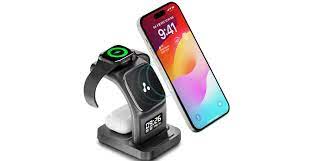
Amazon's Great Republic Day Sale 2024: The Best Offers on Wireless Charging and Power Banks
For a few more hours, Amazon's Great Republic Day Sale 2024 will be offering discounts on a variety of electronic products. For all Amazon India customers, the sale began on January 13 and would last for a week. In addition to savings on smartphones, tablets, and laptops, the Great Republic Day Sale features promotions on popular brand power banks and chargers for mobile accessories. Additional discounts on a selection of devices bought through the online marketplace are offered by bank offers as well. Additionally, customers can use coupons to receive discounts.Customers of State Bank of India (SBI) can receive extra instant discounts on purchases made with their cards and EMI options, up to a maximum of 10%. Amazon is providing bundled offers that include free EMI payment options and exchange. Meanwhile, Flipkart is also running a discount sale, which means you should compare prices across both platforms to ensure the best deal. Power banks and wireless chargers that will simplify and enhance your travel experience, such as those from Ambrane and Mi, are available on Amazon during the Great Republic Day Sale at reasonable prices. The price of Xiaomi's Power Bank 3i has dropped from Rs. 2,199 to Rs. 1,899 at this time. Additionally, interested customers can receive discounts of up to Rs. 300 when making purchases with EMI and SBI cards. Amazon Pay ICICI credit card users can avail of Rs. 300 cashback as well. The Xiaomi Power Bank 3i packs a large 20,000mAh lithium polymer battery and supports Quick Charge 3.0. Similarly, Portronics's Freedom Fold 15W wireless charger is available for Rs. 799, down from Rs. 1,999.

US Pre-Orders for the Apple Vision Pro begin on January 19 and the device will go on sale on February 2.
"The Vision Pro, Apple's first mixed reality headset, will go on sale in the US in February, the company said on Tuesday. On January 19, preorders for the headset will go live. The headset will be available at all US Apple Store locations as well as through the company's web store. The Apple Vision Pro was announced in June last year at the Worldwide Developers Conference (WWDC) 2023. The headset supports both augmented reality (AR) and virtual reality (VR) technologies and runs on the visionOS operating system. On February 2, the company officially announced on its newsroom website that the Apple Vision Pro would go on sale in the United States. The US Apple Store online and at all of its physical locations will both sell it. At the company's retail locations, customers can register to test the headset out for themselves. The gadget will go up for preorder on January 19 at 5:00 am PST (6.30 pm IST).With 256GB of storage, the Apple Vision Pro starts at $3,499, or approximately Rs. 2,90,000. A Solo Knit Band and a Dual Loop Band are included with the device. A polishing cloth, a battery, a USB Type-C cable, a Light Seal, and two Light Seal Cushions are also included in the package. "ZEISS Optical Inserts are available as readers that magnetically attach to Vision Pro or with a prescription for people who need vision correction. According to Apple, readers will run you $99, or about Rs. 8,000, while prescription lenses will set you back $149, or about Rs. 12,000, for them. For nations other than the US, the Apple Vision Pro's release date and price have not yet been disclosed. The company first entered the spatial computing space with the release of the Apple Vision Pro, which was unveiled at last year's WWDC event in June. It has two high-resolution micro-OLED displays and is powered by visionOS. With an R1 chip to handle input from 12 cameras, 5 sensors, and 6 microphones, it runs on Apple's M2 chips. With its three-dimensional user interface, the headset


Apple unveils AI image tool that lets you make edits by just describing them
The researchers highlighted the model's ability to derive explicit visual-aware intentions, leading to meaningful image enhancements. Apple researchers have introduced an AI model enabling users to write desired changes to a photograph using simple language, eliminating the need for traditional photo editing software. The groundbreaking model, named MGIE (MLLM-Guided Image Editing), is the result of a collaboration between Apple and the University of California, Santa Barbara. Capable of executing various editing tasks including cropping, resizing, flipping, and applying filters solely through text prompts, MGIE represents a significant advancement in image editing technology. This innovation can handle both straightforward and intricate editing requests, such as altering specific objects within a photo or enhancing brightness levels. MGIE harnesses the power of multimodal language models, first deciphering user prompts and then generating corresponding edits. For instance, a request for a "bluer sky" translates to adjusting the brightness of the sky portion of an image. This approach ensures precise interpretation and execution of editing instructions. For example, a prompt to "make it more healthy" when editing an image of a pepperoni pizza results in the addition of vegetable toppings. Similarly, instructing the model to "add more contrast to simulate more light" enhances the brightness of a dark image, such as tigers in the Sahara.

Vivo Y200e 5G Observed on the Website for BIS Certification
The Vivo Y200e 5G may soon be released in India. The smartphone has reportedly been spotted on the Indian BIS certification website, following its recent appearances on the Google Play Console and GeekBench listing. The phone is expected to be similar to the Vivo Y200 5G, which debuted in India in October 2023 and included a Qualcomm Snapdragon 4 Gen 1 SoC, a 4,800mAh battery, and a 64-megapixel primary camera with optical image stabilization (OIS). Although there are rumors that the upcoming phone will cost a little less than the Y200, leaks have indicated that it may come with a more recent chipset. MySmartPrice discovered that the model number V2336 and the brand name Vivo were listed in the BIS certification listing. According to a 91Mobiles report, the model number is the same as the one that was recently seen on the GeekBench V4.0 and Bluetooth SIG listings. It is noteworthy, though, that this model number—V2327—differes from the one found on the Google Play Console, which also goes by the name Vivo Y200e 5G for the handset. It's unknown why there is this disparity. The Vivo Y200e 5G's primary specifications don't change in spite of this inconsistency. The smartphone may come with an octa-core chipset (model number SM4450), according to reports. According to reports, the Snapdragon 4 Gen 2 chipset from Qualcomm is paired with an Adreno 613 GPU and 8GB of RAM. This is indicated by the serial number. There are currently no known variations of the handset in terms of RAM or storage. The device might also come pre-installed with Funtouch OS 14, which is based on Android 14. It might also have a Full-HD+ screen with a resolution of 1080x2400.

The February update for Pixel 8 Series and Older Models includes security patches and bug fixes.
The Pixel 5a through the Pixel 8 Pro are among the smartphone models that are eligible for Google's monthly Android 14 update. The February update will also be available for Google's first Pixel-branded tablet and foldable phone, the Pixel Tablet and Pixel Fold. With the most recent monthly update, the search giant fixed a few bugs and patched a few issues affecting the company's phones. On its most recent Pixel 8 series of smartphones, Google recently enabled new software features. According to the company's release notes, which were made public on Monday, the February Pixel update fixes a bug that occasionally caused the screens of the Pixel 8 and Pixel 8 Pro to appear corrupted and brings general improvements for camera system stability and performance. Additionally, on the Pixel 5a, Pixel 6 Pro, Pixel 6a, Pixel 7, Pixel 7 Pro, Pixel 7a, Pixel 8, and Pixel 8 Pro, Google has resolved problems with the Android system framework that impacted stability or performance when using third-party apps. With the February update, problems with the Pixel Fold's external display have also been fixed. In the meantime, a security vulnerability (CVE-2024-22012) with 'high' severity that affects the bootloader—the program that loads the operating system into memory when the device is started—has been patched, according to the company's February update bulletin.Six security vulnerabilities have been fixed, five of which were related to Qualcomm components (audio) and one of which affected a closed-source Qualcomm component. All six vulnerabilities have been categorized as "moderate" in severity. Owners of the Pixel Fold and Pixel Tablet, as well as the Pixel 5a and later models, can open the Settings app and select System > Software updates > System update to download and install the update. The phone will be protected with the most recent security patches after installing the update and restarting the tablet or smartphone. The company advises owners of Pixel hardware to download and install the most recent February Pixel update.

Honor X9b Amazon India Microsite Goes Live; Honor Choice Earbuds X5 Launch Teased
Honor X9b is set to launch in India on February 15, months after its initial launch in October 2023 in select global markets. The Indian variant is expected to come with similar features to its global version. A key display feature of the smartphone was recently teased and its Amazon product page was also leaked. However, the Amazon microsite for the Honor 90 5G has now gone live officially. This confirms that the phone will be available for purchase in the country via Amazon. Some key details of the upcoming smartphone are teased on the page alongside the possible launch of Honor Choice Earbuds X5.The Amazon microsite for the Honor X9b claims that the curved display of the upcoming handset will be "unbreakable." An earlier teaser of the phone suggested that similar to its global variant, the Indian version of the Honor X9b will come with SGS-certified "360-degree whole-device protection." It is said to sport "India's first ultra bounce display" with 'Airbag' technology. Amazon's product page also teases a big battery, a Qualcomm Snapdragon chipset, and a slim design for the upcoming Honor X9b. It does not list the exact specifications but hints at another key launch that is likely to occur alongside the smartphone. At the top of the microsite is a banner that shows a big, round silhouette of the rear camera module of the upcoming phone inside which the launch date, i.e. February 15, and the words "unlock the extra" are written.Upon looking closely, however, we can see the "x" in the word extra to be portrayed by two overlapping earbuds. These are quite possibly the Honor Choice Earbuds X5, which the HonorTech CEO Madhav Sheth had teased previously. This easter egg likely indicates the launch of these TWS earbuds on February 15, confirming a recent report. Since the Indian variant of the Honor 9Xb is likely to come with similar specifications as the global variant, the phone could be powered by the Snapdragon 6 Gen 1 SoC paired with up to 12GB of RAM. It may also get a 6.78-inch 1.5K (1,200 x 2,652 pixels) AMOLED display and run Android 13-based MagicOS 7.2. The phone is also likely to pack a 5,800mAh battery with 35W wired fast charging support. For optics, the Honor 9Xb may launch with a 108-megapixel triple rear camera system including a 5-megapixel sensor with an ultra-wide lens, and a 2-megapixel macro shooter. The front camera is likely to carry a 16-megapixel sensor.

Apple Vision Pro cost is about Rs 2.8 lakh, Tim Cook explains why it is priced so high
Apple's latest innovation, the Apple Vision Pro, hits stores today with a hefty price tag of $3,500 (around Rs 2.8 lakh). The sticker shock may leave some wondering why such a steep cost, but Apple CEO Tim Cook took the opportunity to shed light on the matter during a recent earnings call.He emphasized that the high price is a reflection of the incredible technological advancements packed into the mixed-reality headset. The Vision Pro, built on a foundation of 5,000 patents, stands as a testament to Apple's commitment to cutting-edge technology.During the earnings call, Cook addressed concerns about the steep pricing, stating, "If you look at it from a price point of view, there's an incredible amount of technology packed into the product." He went on to highlight the inclusion of two Apple Silicon chips and the availability of 600 new apps and games tailored for the device. The Apple Vision Pro introduces spacial computing, allowing wearers to integrate digital content into their physical surroundings. This technology is a result of years of innovation, from silicon advancements to displays, and significant strides in AI and machine learning.Cook elaborated on the role of AI, stating, "It's, of course, built on many innovations that Apple has spent multiple years on, from silicon to displays and significant AI machine learning — all the hand tracking, the room mapping, all this stuff is driven by AI. Despite the seemingly high price, many Apple fans didn't hesitate to grab their piece of the future when preorders opened on January 19 as there were reports that that the company has already sold around 2 lakh headsets. However, some analysts predict that the demand may taper off due to the niche nature of the headset.Interestingly, major corporations like Walmart and Nike are already exploring potential applications for the Vision Pro among their customers and employees, according to Apple's CFO Luca Maestri. This indicates that the headset's capabilities extend beyond entertainment. The headset is yet to be launched in India.

"ISRO On Space Platform POEM-3: ""All Payload Objectives Fully Met"" "
On Saturday, ISRO announced that POEM-3, its space platform, had successfully completed all of its payload goals. The PSLV-C58 rocket, which launched XPoSat on January 1st of this year, includes a spent PS4 stage that is used by POEM-3 (the PSLV Orbital Experimental Module-3). According to ISRO, POEM-3 carried nine payloads from space start-ups, academia, the Physical Research Laboratory, and the Vikram Sarabhai Space Centre. POEM-3, which the space agency described as a novel and low-cost platform, had completed 400 orbits by the 25th day of its orbit. Every payload was deployed according to schedule during this time, and performance was shown. It was mentioned that POEM-3 is a three-axis-attitude controlled platform that can support payloads with power generation, telecommand, and telemetry capabilities. POEM-3 is expected to stay in orbit for a further 73 days or so before returning to Earth's atmosphere. "With the likely re-entry of POEM-3 in the next 75 days, the PSLV-C58 XPoSat mission will be leaving zero debris in space" , stated ISRO.

Google CEO Sundar Pichai confirms Bard Advanced will be Google’s answer to Microsoft’s Copilot Pro
Microsoft recently announced Copilot Pro, an advanced version of its AI-powered tool for power users and content creators. The company said that this subscription-based tier offers 'advanced help’ in taking up various tasks. Google Bard Advanced will have similar capabilities but the search giant is yet to make it available to customers. Rumours were rife that this will be a paid version, and the company CEO has now confirmed a subscription-based model for the AI chatbot.During the company’s Q4 earnings call, Sundar Pichai said that Bard Advanced will be available to users as a subscription.“It’s [Bard] now powered by Gemini Pro, and it’s much more capable at things like understanding, summarising, reasoning, coding, and planning. It’s now in over 40 languages and over 230 countries around the world. Looking ahead, we’ll be rolling out an even more advanced version for subscribers powered by Gemini Ultra,” said Pichai, who is also the CEO of Google-parent company Alphabet. Google didn’t share any details about when it will be available or what subscription cost will be but the company previously said that it will release the powerful AI chatbot sometime this year.Bard Advanced is Google’s more powerful AI chatbot that will be powered by Gemini Ultra – the most powerful large language model (LLM) in the Gemini lineup of models. As per Google, Gemini Ultra is its largest and most capable model.It is “designed for highly complex tasks and built to quickly understand and act on different types of information — including text, images, audio, video and code. One of the first ways you’ll be able to try Gemini Ultra is through Bard Advanced, a new, cutting-edge AI experience in Bard that gives you access to our best models and capabilities,” Google said.
Apple extends agreement with Qualcomm for 5G modem chips until 2027: Report
Qualcomm CEO Cristiano Amon in an interview with CNBC has confirmed that Apple has agreed to extend its patent licence agreement related to 5G modem through March 2027. Last year, Apple extended the agreement for using Qualcomm’s 5G modems until 2026 which has now been extended further until 2027. Amon in his interview with CNBC said that after last year’s deal, Apple had an option to extend the deal further, which they have until March 2027. “We are very happy with the relationship with Apple right now, and we will continue to be supplying modems to them,” said Amon. Apple has been working on developing in-house modems since 2019 when the Cupertino-based company acquired the majority of Intel's smartphone modem business. However, there have been news reports alleging that Apple's attempt to produce in-house 5G modem chips has been hampered by major problems related to unrealistic goals, an inadequate understanding of the challenges involved, and unusable prototypes. Last month, Bloomberg’s Mark Gurman reported that Apple has shifted its attention to focus on the 6G cellular modem, while continuing to work on its first 5G modem chip. According to the analyst, Apple is racing to get its modem finished so it does not need to extend a contract with Qualcomm. He stated that the two companies have feuded over the years, and Apple really does not want to rely on Qualcomm for this vital iPhone component.Apple is yet to comment on the deal with Qualcomm, but with the new contract extension in place, it is highly likely that Apple’s attempt of producing in-house modem chips have been hindered further.

Xiaomi Rises to the Top as Smartphone Shipments to India Increase 25% YoY in Q4 2023: Counterpoint
According to a recent report by market research firm Counterpoint, smartphone shipments in India increased by a noteworthy 25 percent year-over-year (YoY) for the October–December period (Q4) in 2023. For the first time since Q3 2022, Xiaomi took the top spot during the quarter with 18% of the market share. The accomplishment was made possible by the company's entry into the low-cost 5G market with the Redmi 13C. Vivo held onto the second position, with Samsung falling to third after dominating the market for four straight quarters. Realme and Oppo, two Chinese smartphone manufacturers, took fourth and fifth place, respectively.One of the main drivers of the growth in the quarter, according to Counterpoint's report, was the 61 percent contribution from 5G smartphones. Notably, 24% of all smartphone shipments were made up of 5G phones priced between Rs. 10,000 and Rs. 15, 000. There was also a 51% increase in the premium smartphone market. Due to the release of the iPhone 15 series, Apple dominated the market with a 17 percent share. When comparing brands among the top five positions, Xiaomi emerged as the market leader with an 18% market share. For the second quarter in a row, Vivo maintained its impressive second place ranking and gained 17 percent of the smartphone market. Samsung only managed to secure 16.8% of the market share in third place, despite having a strong Q3 performance in which it led the industry. At number four with an 11 percent market share, Realme was present. With a 69 percent YoY growth, the company was the fastest-growing brand, according to the report. Oppo maintained its fifth-place position with a 10 percent share of the market. A different Counterpoint report noted that even with a strong quarter, the overall picture for smartphone shipments in India in 2023 stayed unchanged at 152 million units. The market research firm attributed the lack of growth to issues arising from macroeconomic turbulence, which led to low demand and an inventory build-up in the first half of 2023. The report also stated, "Better-than-expected holiday sales and 5G upgrades helped the market start recovering in the second half of the year." After capturing 18% of the market as a result of its impressive performance in the first three quarters, Samsung emerged as the market leader in 2023. Since 2017, this is the first time the South Korean tech giant has taken the lead in a calendar year. Notably, the business debuted the Galaxy Z Fold 5 and Galaxy Z Flip 5 in 2023 along with the Samsung Galaxy S23 series. Vivo, with a 17 percent share, continued to perform steadily and held the second position. The next three positions were occupied by Chinese smartphone brands Xiaomi, Realme, and Oppo, with respective market shares of 16.5%, 12%, and 10.5%. Although Apple did not place among the top five in shipments, it led the category when revenue crossed the ten million mark for the first time in a calendar year.

iPhone 16 may not feature any major design changes, bring new gen AI features
It's only been a few months since Apple unveiled the iPhone 15 series at its Wonderlust event in California. However, there have been a lot of rumours about the iPhone 16. The iPhone 16, like other iPhone models before it, is expected to debut in September this year.According to a recent post by analyst Ming-Chi Kuo on Medium, Apple is unlikely to make any major design changes to the iPhone 16 this year. Furthermore, the company is not expected to make any major generative AI-based changes to its ecosystem until at least the launch of iPhone 17 in 2025. “It is expected that Apple will not launch new iPhone models with significant design changes and the more comprehensive/differentiated GenAI ecosystem/applications until 2025 at the earliest. Until then, it will likely harm Apple’s iPhone shipment momentum and ecosystem growth." Kuo wrote in a blogpost. Notably, previous reports have suggested that the iPhone 16 may follow a similar camera design to the iPhone 12, which isn't likely to be a major design change and seems compatible with the usual changes Apple makes every year.Other rumours about the iPhone 16 include the addition of a dedicated camera button, which will make it easier to take videos and photos. The iPhone 16 Pro series is also expected to have a larger display than the current generation, with the iPhone 16 likely to have a 6.3-inch display and the 16 Pro a 6.9-inch display.Kuo's blog post noted that Apple is likely to see a decline in iPhone shipments in 2024, due to the increasing demand for AI and foldable smartphones. Meanwhile, Kuo added that the decline in iPhone shipments in China could be a direct result of competition from Huawei.

Room Heaters Under Rs 2,000 To Keep Your Home Warm And Cosy
As temperatures drop, keeping our homes warm and cosy becomes a top priority. Room heaters offer a convenient solution, providing warmth and comfort during chilly days and nights. However, finding an efficient and budget-friendly room heater can be challenging, especially with so many options available in the market. Fortunately, there are several affordable room heaters priced under Rsafety. 0 that effectively heat small to medium-sized rooms without breaking the bank.In this article, you can check out some of the best room heaters available under Rs 2,000, ensuring that you can stay snug and comfortable without exceeding your budget. Bajaj RHX-2 Halogen Heater: The Bajaj RHX-2 halogen heater comes with two halogen tubes and high-quality reflectors to provide consistent and effective heating. It offers two heat settings, 400W and 800W, allowing users to adjust the temperature according to their preference. Moreover, it includes a sturdy mesh grill for hand safety from direct heat exposure, while its robust outer body is constructed from durable ABS material to ensure longevity.RR Calid Halogen Room Heater 1200 W: The room heater functions silently, delivering ample warmth without producing any noise. Its 180-degree oscillation ensures uniform heat dispersion across the room by moving from side to side, effectively covering a larger area. Additionally, the heater includes tip-over protection, ensuring automatic shutdown if accidentally knocked over for added safety.Crompton Insta Comfy 800 Watt Room Heater: The heater features a high-quality plastic body that remains cool even during operation. Its advanced Quartz tubes heat up rapidly, ensuring faster dispersion of warmth. Moreover, the inclusion of two advanced quartz tubes, each with a power of 400 W, enables you to adjust the heat level according to your preference.

From February 1, You Can Send More Money Through IMPS: Key Details
The National Payments Corporation of India (NPCI) announced new changes for the Immediate Payment Service (IMPS) online bank transaction system in October 2023. As per NPCI’s circular shared in October, customers will be able to transfer up to Rs 5 lakh between bank accounts without adding a beneficiary starting February 1. The regulatory body has also asked all members to comply with the directive for initiating and accepting fund transfers via mobile number and bank name on all IMPS channels by January 31.What is IMPSIMPS is a 24x7 instant domestic funds transfer system. This online bank account transfer system has played a crucial role in transforming the financial landscape of India. To ensure both accuracy and speed, it facilitates real-time fund transfers with a deferred net settlement between banks. How this will help usersWith the new changes implemented, users will soon be able to transfer up to Rs 5 lakh using IMPS. For such transactions, users won’t need to input recipient details like mobile numbers, bank account names, account numbers or IFSC codes.The recent update is set to eliminate the need for users to input tedious beneficiary details during transactions. Users will be able to execute fund transfers with a simplified process that only requires the recipient's mobile number and bank name.

