


Top Trending Acquisitions & Mergers News & Highlights
No News Founds!



Acquisitions & Mergers
Acquisitions & Mergers are the latest trend in the globe.

Vodafone Idea and Team Vitality form a strategic partnership to advance the expansion of Indian esports
The State of India Gaming Report 2022 projects that by 2027, the Indian esports market will be worth $140 million. Esports as a category have been more well-known in recent years, particularly when they were first offered as legitimate medal sports on numerous international sports platforms. Vodafone Idea (Vi), one of India's top telecom providers, and Paris-based Team Vitality, a globally recognized esports organization, have announced a long-term partnership to strengthen the esports ecosystem in India in an effort to capitalize on this expanding consumer segment.The two brands hope to provide possibilities and exposes to both esports fans and gaming aficionados with this first-of-its-kind relationship. The agreement covers a wide range of activities, including gaming events, content partnerships, brand sponsorship, and one-of-a-kind experiences on an unprecedented scale. Vi clients will be able to take part in esports and get special access to some of the well-liked Teams Vitality competitions and teams as a result. Through this agreement, aspiring esports athletes from all around the nation will have access to professional players, master courses, meet-and-greets with esports talent, and a plethora of other chances. Vi is well-known for having a significant presence in the mobile gaming market and providing consumers with access to a large selection of ultra-casual games on Vi Games.Avneesh Khosla, CMO of Vi, commented on the affiliation, saying, "We have consistently worked to expand our gaming portfolio through appropriate partnerships and pertinent offerings. Gaming has always been our strategic focus area." Vi Games made sense to expand its focus in this area as esports, particularly among younger viewers, have transformed the mobile gaming landscape in recent years. We are thrilled to be working with Team Vitality, one of the top esports companies globally. Our joint goal is to promote and democratize India's esports industry. We'll be introducing some thrilling esports and other material geared toward young people in the upcoming months for our customers to enjoy. Speaking about the event Team Vitality's managing director, Randall Fernandez
The Adani Group buys the bulk of IANS News Agency
Adani Group announced on last Friday that it has purchased a 50.50 percent ownership in news agency IANS India Private Limited through its fully owned subsidiary, AMG Media Networks Limited (AMNL). According to the Share Purchase Agreement dated December 15, 2023, this majority stake is made up of Equity Shares (Category I shares with voting rights) and Equity Shares (Category II shares without voting rights) of IANS India Private Limited (IANS), each, the company announced through an exchange filing. Adani first entered the media industry in March of last year when it bought Quintillion Business Media, the company behind the digital news platform BQ Prime for business and finance. After that, in December, it acquired over 65% of the broadcaster NDTV. According to the petition, AMNL would have complete operational and managerial control over IANS, and it will also have the authority to name all of the organization's directors. IANS is currently an AMNL subsidiary as a result of the aforementioned acquisition." Adani, a first-generation businessman, began his career as a commodities trader in 1988 before growing his company to become the biggest private infrastructure player in India, owning 13 ports and 8 airports. Its operations have expanded over time to include the production of coal, energy distribution, data centers, and, more recently, cement and copper. In order to establish a private network, it even placed a bid and won the 5G telecom spectrum.
Sobek Auto to be acquired by CarTrade Tech for ₹537 crore
CarTrade Tech, an online vehicle classifieds platform, announced on Monday that it has signed an agreement to buy Sobek Auto India for a reported ₹537 crore. Sobek operates an online classifieds company in addition to an automotive digital platform. CarTrade Tech announced in a regulatory filing that the business has engaged into a share purchase agreement to purchase a 100% ownership in Sobek from OLX India BV, subject to the fulfilment of certain requirements. According to the company, the acquisition is a step towards its strategic goals of making investments that will complement CarTrade Tech's current commercial operations. On June 30, 2023, Sobek purchased the online classifieds company from OLX India in accordance with the terms and conditions specified in the business transfer agreement.
Sonata Finance is expected to be acquired by Kotak Mahindra for ₹537 crore.
The Reserve Bank of India (RBI) has given Kotak Mahindra Bank permission to acquire Sonata Finance, a microlender, for a sum of Rs 537 crore. The RBI has allowed Kotak to make Sonata its business correspondent subsidiary, making it a wholly-owned subsidiary of the bank. Through the acquisition, Kotak will be able to further establish itself in northern India's semi-urban and rural areas. Sonata has Rs 1,903 crore . In a notification to the exchanges, Kotak Mahindra Bank stated that Sonata will become a fully owned subsidiary of the bank upon the completion of the deal (subject to obtaining other necessary approvals). Subject to the necessary clearances, including the RBI's, the bank had entered into share-purchase agreements with the shareholders of Sonata Finance, an NBFC-MFI, in February with the aim of purchasing a 100% stake for ~537 crore. In a notification to the exchanges, Kotak Mahindra Bank stated that Sonata will become a fully owned subsidiary of the bank upon the completion of the deal (subject to obtaining other necessary approvals). Subject to the necessary clearances, including the RBI's, the bank had entered into share-purchase agreements with the shareholders of Sonata Finance, an NBFC-MFI, in February with the aim of purchasing a 100% stake for ~537 crore.

For ₹174 crore, Saregama will purchase the bulk of Pocket Aces.
The digital entertainment company Pocket Aces Pictures Pvt Ltd has seen a majority acquisition by Saregama, a music label controlled by the RP-Sanjiv Goenka Group, according to a statement from the company. For ₹174 crore, Saregama will purchase 51.8% of the shares, with a clear path to purchase an additional 41% of the shares at pre-agreed multiples over the following 15 months. This is an all-cash transaction. Saregama has revealed that it will pay ₹174 crore in cash to purchase a 51.8% share in Pocket Aces Pictures Private Ltd., a provider of digital entertainment. The corporation stated that it would purchase an additional 41% of the company within the next 15 months at pre-arranged multiples. The vice chairperson of Saregama, Avarna Jain, stated in a statement that this acquisition represents the meeting point of innovation and heritage. Although we have always been industry leaders in music and media, this collaboration with Pocket Aces will open up new revenue opportunities for us as we reach the growing youth digital audience.
HDFC Bank to sell its whole 9.95 percent equity stake at ₹600.36 per equity share to Softcell Technologies Global Private Limited (STGPL).
For a value of ₹9.94 crore, HDFC Bank has signed an agreement to sell its whole 9.95 percent equity ownership in Softcell Technologies Global Private Limited (STGPL) at ₹600.36 per equity share. Founded on September 6, 2018, STGPL is a company that sells software, related services, and IT items. The company reported a net profit of ₹11.33 crore for FY22, with a turnover (operating income) of ₹584.42 crore. According to the bank's regulatory filing, the deal is expected to be completed by the end of February. According to the filing, STGPL is a shareholder of HDFC Investments Limited, a promoter group entity of the Bank.
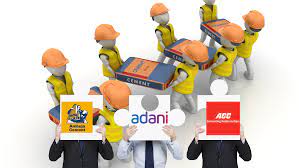
At USD 10.5 billion, the largest acquisition ever made in India's infrastructure and materials sectors
Ahmedabad, India, May 15, 2022: The Adani Family stated that it has finalised arrangements to purchase the whole interest of Switzerland-based Holcim Ltd in two of India's top cement companies, ACC Ltd. and Ambuja Cements Ltd., through an offshore special purpose company. Holcim owns 54.53% of ACC (of which 50.05% is held through Ambuja Cements) and 63.19% of Ambuja Cements through its subsidiaries. With a value of about USD 10.5 billion for the Holcim holding and open offer consideration for Ambuja Cements and ACC, this is both the largest acquisition by Adani and the largest M&A deal in the infrastructure and materials sector in India. "Thanks to Holcim's global leadership in cement production and sustainability best practices, we can accelerate the transition to greener cement production," Mr. Adani continued. Additionally, two of the most well-known brands in India are ACC and Ambuja Cements. Our footprint in the production of renewable energy gives us a significant advantage in the decarbonisation process, which is essential for the manufacturing of cement. With all of our skills combined, I have no doubt that we will be able to create the greenest and most sustainable cement production methods possible, ones that will either match or surpass international standards. "I am thrilled that the Adani Group is taking over our Indian company to spearhead its next phase of expansion," stated Mr.Jan Jenisch, CEO of Holcim Limited

PVR merger with Inox Leisure
PVR Pictures, a prominent multiplex operator, has merged with Inox Leisure to become PVR INOX Pictures. The multiplex chain operator had indicated a few days prior that it would be closing some of its screens due to accelerated depreciation on the theatres that were being considered for closure. Following the merging of PVR and Inox Leisure, PVR Pictures is now known as PVR INOX Pictures. Until the conclusion of FY23, the combined company will be running 361 theatres with 1,689 screens over 115 cities in Sri Lanka and India. The PVR Group's film production and distribution division was known as PVR Pictures. In a statement released on Wednesday, PVR INOX Pictures stated that it plans to raise its content acquisition expenditures for the Indian market and create more chances for independent artists and underrepresented storytellers. "With a wider screen network, it will expand its programming and marketing capabilities and create highly innovative experiences, bringing significant value to its partners as well as to its customers," stated the statement. In 2007, the business successfully debuted as a film producer with Taare Zameen Par and Jaane Tu Ya Jaane Na. Following the merging of PVR Ltd and INOX Leisure, two well-known movie theatre brands, PVR-INOX Ltd was established. The merger went into effect on February 6, 2023.

Worldpay is sold by FIS to GTCR for $18.5b.
In one of the biggest corporate carve-outs in history, US financial technology company Fidelity National Information Services has agreed to sell private equity firm GTCR the bulk of its merchant payments division, Worldpay. The transaction is valued at up to $18.5 billion. After telling investors in February that it intended to spin off the unit to stockholders, FIS changed its strategy and would now maintain a 45% ownership in Worldpay in addition to receiving net proceeds of $11.7 billion. The Florida-based business announced on Thursday that it will use the money to finance share buybacks and debt repayment. The Chicago-based GTCR is expected to invest over $5 billion in Worldpay, with a valuation of approximately $4.5 billion for FIS's 45 percent equity stake, as per individuals acquainted with the situation. According to people familiar with the situation, a syndicate of lenders led by Goldman and JPMorgan will raise $8.4 billion in debt to finance the private equity firm's acquisition. UBS, Deutsche Bank, Citigroup, and Wells Fargo are also involved in the funding. Chief executive Stephanie Ferris stated in a statement, "This transaction provides certainty for all stakeholders and allows FIS to partially monetarilyze our merchant solutions business at an attractive valuation." GTCR has a history of investing in the payments industry; in 2010, it even sold a company to Worldpay for a price over $1 billion. According to those with knowledge of the situation, Thursday's transaction is the biggest in the company's history.


Amber, Titagarh Rail Systems in deal for train components business
Both TRSL and Amber group, via its wholly-owned subsidiary Sidwal Refrigeration Industries Pvt Ltd, will invest approximately ₹120 crore each to obtain around 50% each in the SPV.The SPV will set up a new facility in India to manufacture critical railway components and subsystems used in the manufacture of railway and metro coaches and will also make fresh equity investments into Titagarh Firema. Titagarh Firema SpA, Italy, is an associate company of the Titagarh group where govt of Italy is also an equity stake holder. The new SPV will also invest in Titagarh Firema while government of Italy will invest in the entity for which it has already taken approval from Invitalia, the Italians government’s investment arm. Under the agreement, Firema will grant Sidwal, Titagarh Rail as well as the SPV a preferred supplier status and right of first refusal (ROFR) for all their products.Titagarh Rail is involved in the railway rolling stock space for both freight and passenger rolling stocks. Apart from being an established railway wagon and metro coach manufacturer, it is also currently executing the projects of Vande Bharat trains, Surat, Ahmedabad, Pune metros as well as executing its first export order for passenger rail components received from Firema. Titagarh is targeting a capacity of almost 800-850 coaches per year in the coming years. The Amber group is a diversified B2B company having three business verticals: consumer durables, electronics and railway subsystems and mobility. Sidwal, an Amber group company, has emerged as a leader in the train air conditioner market and has also signed a technology licensing agreement with Ultimate group to manufacture passenger coach doors and gangways. Sidwal is also planning to enter the European market for its products portfolio, a company statement said.The strategic partnership in Firema will not only facilitate Sidwal’s entry into the European market, but will also give Sidwal a preferred access to Firema’s own demand, the statement added. Both companies are investing to grow capabilities and capacities for various products that can be exported to Europe such as train mechanical and electrical components by TRSL and HVAC, doors, gangways and pantry systems by Sidwal. Firema is one of the largest and reputed designers and manufacturers of passenger trains in Italy and has executed marquee projects in Italy and other parts of Europe. Firema has an order book of almost euro 1 billion for producing new coaches and has an existing capacity to produce upwards of 240 coaches per year and has plans to double this capacity.

Deal values in India plunge to $66 billion in 2023, investors cautious, reports Grant Thornton
There was a significant drop in deal values in India for the year 2023, reaching $66 billion, marking a decrease of over 50 percent, a recent report from consultancy firm Grant Thornton Bharat found. Released on January 19, the report found a decline of over 20 percent in deal volume, with 1,641 deals compared to the previous year. Shanthi Vijetha, a partner at Grant Thornton Bharat, pointed out several factors contributing to this. The lack of liquidity in international markets, volatile market conditions, and cautious investor sentiment were identified as key hindrances to deal activities throughout 2023."While India's focus on sustainability and environmental responsibility positions it as an attractive hub for global economic opportunities, overcoming challenges such as currency strength and global instability is crucial," added Vijetha. Merger and Acquisition Impact The report indicates a significant impact on merger and acquisition (M&A) deal values, which plummeted by 72 percent to $25.2 billion across 494 transactions. Outbound M&As were particularly affected, dropping to $3.2 billion from $17.9 billion in the previous year. The sluggish M&A trend in the first half of 2023 recorded deal values of only $7.8 billion. The largest transaction during this period was Suraksha Group's $2.5 billion acquisition of Jaypee in the real estate sector. Private Equity and IPO Trends On the private equity (PE) front, 2023 witnessed a 23 percent decline in both deal volume and value, with 1,045 deals amounting to $27.4 billion. The most significant deal in this category was Temasek Holdings' $2 billion investment in Manipal Health Enterprises.

Everyman Media Group Earnings, Revenue Rose Despite Strikes
Premium cinema group Everyman Media (EMAN) said the resounding box office success of Barbie and Oppenheimer led to strong summer trading leaving it confident of meeting full year expectations. Unfortunately, both revenue and adjusted EBITDA (earnings before interest, tax, depreciation, and amortisation) fell in the first half to 29 June, admittedly against strong prior year comparatives. Investors seemed unmoved by the upbeat outlook, with the shares dropping 1% to 55p capping a disappointing 12 months for shareholders with the shares down 44%. Chief executive Alex Scrimgeour commented: ‘We are pleased to report that trading continues to be in line with the board's expectations, having achieved robust interim results despite this year's major film titles falling in the second half of 2023. We remain confident in our prospects as we continue to be supported by a slate of high-quality second-half releases, a carefully expanded estate and new banking facilities which ensure we are well configured to take advantage of future opportunities.’Revenue fell 6% to £38.3 million in the first half, but strong trading in July and August transformed the picture with year-to-date revenue 13% higher at £60 million while EBITDA was 12% ahead at £11 million.Everyman expects to meet full-year consensus forecasts which call for revenue of £94.4 million, representing 20% growth, and EBITDA of £17.2 million compared with £7.9 million in 2022. Having opened three new venues in the first half, taking the estate to 41 cinemas and 141 screens, the company has a healthy pipeline of new opportunities.A new two-screen venue will open in Marlow in the current quarter, while a further five venues are planned for 2024 including a three-screen venue in Stratford in the third quarter.The firm agreed a new three-year loan facility of £35 million replacing a £25 million revolving credit facility and £15 million Covid interruption loan. Leisure analyst Mark Photiades at Canaccord Genuity commented: ‘The film slate for Q4 and beyond is strong with a number of major releases and independent films due including Wonka, Ferrari, Napoleon, Killers of the Flower Moon and the latest instalment of The Hunger Games.’Photiades left his forecasts unchanged but reiterated his buy rating, saying, ‘Everyman remains a premium brand, synonymous with offering a first-class cinema and hospitality experience & a best-in-class food and beverage offer prepared in-house.’

Kolte-Patil acquires two society redevelopment projects in Mumbai’s Dahisar and Versova with topline potential of ~Rs 545 crore
Kolte-Patil Developers Limited has signed two new society redevelopment projects in the western suburbs of Mumbai with total saleable area of ~3.06 lakh square feet translating into top-line potential of ~Rs 545 crore. Kolte-Patil Developers Limited, a Pune based real estate player with growing presence in Mumbai and Bengaluru, on Tuesday announced that it has signed two new society redevelopment projects in the western suburbs of Mumbai with total saleable area of ~3.06 lakh square feet translating into top-line potential of ~Rs 545 crore. The two acquired projects are at strategic locations in prime residential areas, Dahisar and Versova. With these additions, the company now has a total of fifteen projects in the Mumbai Metropolitan Region (MMR). The Dahisar project is well connected to the Western Express Highway. Further, the close proximity to the metro connecting via Andheri and its further expansion to the BKC add to the attractiveness of the project. The Company has demonstrated success in the Dahisar micro market following the execution of its residential redevelopment project, Vaayu. The Versova project has strong demand potential and access to rapidly expanding public infrastructure including the metro lines and the proposed Versova-Virar Sea Link which will provide coastal road connectivity between South Mumbai and Western suburbs. Rahul Talele, Group CEO, Kolte-Patil Developers Ltd, said, “I am happy to announce the addition of two new society redevelopment projects in the western suburbs of Mumbai. This marks another significant milestone in our journey to strengthen our presence in Mumbai that represents the largest real estate market in the country. These projects align with our strategic goals and we are confident that our active initiatives and growing presence in the society redevelopment space will continue to enhance our standing in the MMR market in a significant manner.”
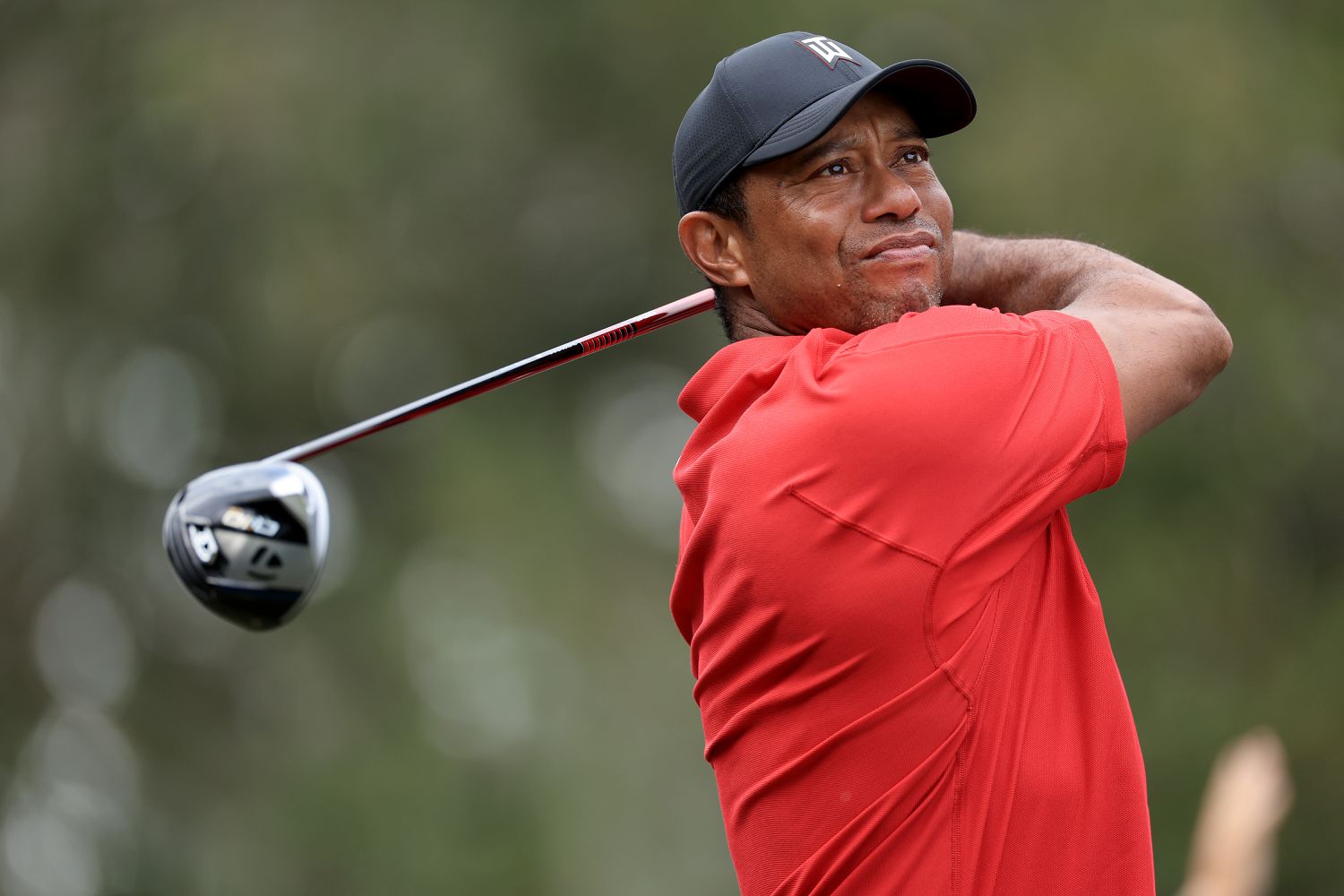
Tiger Woods Net Worth and Businesses—PGA, Nike, Gatorade, and a Mini Golf Chain
Golf legend Tiger Woods may have parted ways with Nike after 27 years, but he has made millions from his career as a pro golfer and lucrative endorsement deals with other major brands including Gatorade, Rolex, and Monster Energy. Considered one of the best golfers of all time, Woods is one of the few billionaire athletes in the world—and is only the second active athlete who is a billionaire, behind NBA star LeBron James. Woods has a net worth of $1.1 billion as of January 2024, according to Forbes.1 Here's how Tiger Woods built his fortune. In his 27-year career as a professional golfer, Woods accumulated 106 worldwide wins and 15 majors. He has 82 PGA Tour wins, tied with golfer Sam Snead for the most PGA Tour wins in history.Throughout his career as a pro golfer, Woods has earned about $1.8 billion, according to an estimate by Forbes.1 Woods has also earned a record-setting $121 million in prize money from PGA tours.3 PGA Tour. "Career Earnings."However, Woods' impressive earnings from golf are not the only way he amassed his wealth—in fact, they account for less than 10% of his net worth, according to Forbes. The rest of his fortune comes from major endorsement deals and a series of business ventures.Woods' 27-year partnership with Nike certainly contributed to his massive fortune as the sporting company was his biggest backer. Woods' deal with Nike was said to be worth about $500 million throughout the life of the contract. That's not the only major partnership Woods had, though. The golfer had a lucrative tie-up with sports drink company, Gatorade, which paid him an estimated $100 million over several years. However, the company ended its partnership with Woods in 2010 after news of several extramarital affairs surfaced. AT&T and technology consulting company Accenture were also among the brands that ended their partnerships with Woods at the time. Woods partnered with energy drink company, Monster Energy, in 2016 and has continued his endorsement deal with them. The pro golfer has been seen playing out of a Monster-branded golf bag and has also represented the brand's other drink, Monster Hydro Super Sport since 2022.Several of Woods' businesses have to do with golf—he owns a golf course design firm, TGR Design, golf simulator tool Full Swing, as well as an indoor mini golf chain, Popstroke. Popstroke has nine locations across Florida, Arizona, and Texas and anticipates opening an additional 15 sites in 2024 and 2025.Woods is also a shareholder in global real estate development company Nexus Luxury Collection, along with singer Justin Timberlake. In October 2023, the company announced that Woods and Timberlake will be opening a sports and entertainment gastropub in St. Andrews, Scotland, through Nexus. The premium venue includes dining and lounge areas, and Woods' own Full Swing golf simulators.Woods is no stranger to real estate and has bought and sold multiple million-dollar properties. His home on Jupiter Island costs an estimated $54 million.

New Worker Classification Rule Could Disrupt the US Gig Economy
Uber drivers and other gig economy workers could be legally classified as employees under a new Department of Labor rule that goes into effect in March. The new rule already faces at least one lawsuit, filed by freelance writers who want to remain "independent contractors" rather than employees. Employees are entitled to overtime pay, minimum wage, and other benefits not available to contractors.While people who work as contractors value the flexibility, employment law experts say there's no reason employers couldn't offer flexible hours alongside employee status and the benefits that go along with it. App-based ride-sharing services such as Uber (UBER) and Lyft (LYFT) earned the title of “disruptors” for the way they drove traditional cab companies out of business. Now, they’re trying to fend off the disruption that could be coming for them, in the form of a new federal labor rule. A new regulation on worker classification released this month is already facing at least one legal challenge, and will likely see more pushback from gig economy companies whose business model it threatens. The new law could turn the gig economy upside down, and affect many of the estimated 22.1 million Americans who work as independent contractors, employment experts say. Earlier this month, the Department of Labor released details on a rule setting standards on when a worker counts as an employee as opposed to an independent contractor, entitling them to overtime pay, unemployment insurance, and a slew of other benefits under the law. The new rule, first proposed in 2022, is set to go into effect in March.This week, a group of freelancers, including three New Jersey-based writers, sued the Department of Labor to overturn the new rule. At least one major business lobbying group is also considering legal action. Should the government give “employee” status to workers currently classified as contractors, it would threaten the business models of companies such as Uber, Lyft, and Doordash (DASH), whose contract workers cost their employers much less than traditional employees would.Uber and the Flex Association—a trade group representing gig economy companies—both released statements last week saying that the rule would have no immediate impact on their businesses. “This rule does not materially change the law under which we operate, and will not impact the classification of the over one million Americans who turn to Uber to earn money flexibly,” Uber’s statement reads.
Price cuts mar HUL’s Q3 show, posts flat revenue and profit growth
Consumer goods major Hindustan Unilever posted a flat 0.5% growth in net profit to ₹2,519 crore in the December quarter from ₹2,505 crore in the corresponding quarter last year. Its volumes grew at 2% year on year in the quarter ending December. Its sales growth was flat, registering a marginal decline of 0.3% to ₹14,928 crore due to price cuts taken by the company. “Looking forward we expect gradual recovery in market demand to continue aided by increased government spending, recovery in winter crop sowing and better crop realization. Rural income growths and winter crop yields are key factors that will determine the pace of recovery,” said Rohit Jawa, CEO and MD of HUL. The company also expects competitive intensity to stay due to benign commodity prices. Going ahead, the company expects price growth to be marginally negative if commodity prices remain where they are.“HUL remains well positioned to unlock this opportunity whilst navigating the short-term challenges,” Jawa added. Its earnings before interest tax depreciation and amortization (EBIDTA) expanded by 10 basis points year on year to 23.7% in Q3. The FMCG major gets three-fourths of its business from home care and BPC business. Both these businesses saw mid-single digit growth in volumes. The company’s sales were affected due pricing action. Its home care’s revenues fell by 1%, with the BPC segment posting no change. “Skin cleansing revenue declined due to the impact of price reductions taken to pass on the benefits of lower commodity costs to consumers. Market development actions in body wash continue to yield good results. While delayed winter impacted skin care performance in the quarter, premium non-winter portfolios continued to do well,” said HUL in its press release.Food and refreshment business however saw a low-to single digit fall in volumes, as this segmental revenues went up by 1%. The company said that tea further strengthened value and volume market leadership, with green tea and flavoured tea performing well“Coffee grew in double-digits driven by pricing. Health Food Drinks delivered competitive modest price-led growth driven by Plus range,” HUL said.During the quarter, it launched Knorr Korean K-Pot noodles; and Bru Gold in Vanilla, Caramel and Hazelnut flavours.

Retail Retail’s net profit jumps 32% to ₹3,165 crore on festive fervour
Reliance Retail’s third quarter net profit grew 31.9% growth to ₹3,165 crore from ₹2,400 crore in the same quarter last year. Its revenue from operations also registered a 23.8% growth to ₹74,373 crore in the festive quarter, aided by aggressive store expansions. The Isha Ambani-led company added 252 stores during the quarter. On a YoY basis, its store count is higher by 1,549 to a total of 18,774 stores as of December 2023 end. “Reliance Retail has delivered strong performance during the festive quarter. Our business success is intricately woven into the larger fabric of India's economic growth, and together, we are shaping a compelling story of innovation and world class possibilities for the future,” said Isha M Ambani, executive director of Reliance Retail Ventures.Its footfalls grew by a robust 40.3%. Its digital and new commerce businesses now contribute to 19% of its revenue. “The retail segment has delivered an impressive financial performance with its rapidly expanding physical as well as digital footprint,” said Mukesh D Ambani, chairman and managing director, Reliance Industries.All its business segments exhibited double digit growth in the December quarter. Its mainstay grocery business grew by 41%. “Stores witnessed strong growth in non-food categories led by general merchandise & home and personal care. Catalogue expansion across home, cookware, furnishings and travel needs have enabled consumers in extending their shopping mission at Smart Bazaar as a one stop destination,” the company said.Its nascent consumer brands business also grew 3x aided by distribution reach. The company which re-launched Campa line of soft drinks said that its beverage, general merchandise and stapes are driving growth momentum of its own brands. It had also launched its staples business under the brand name Independence.It also launched new namkeens and sweets under Masti Oye! Brand, along with Deluxe assorted toffees under Toffeeman. The festival and wedding season also drove business in its fashion and lifestyle segments with good performance from its jewels business. “Tira is expanding its store network across top tier cities and has received strong customer traction. The business has delivered strong performance across various operating metrics including sales productivity, average bill value, repeats,” the company said.

Sundar Pichai asks Google employees to brace for more job cuts
San Francisco, Google CEO Sundar Pichai has reportedly warned employees to brace themselves for more job cuts this year.Google, which has let go over a thousand employees across various departments in the last one week or so, is likely to go for more job cuts, reports The Verge, citing an internal memo."We have ambitious goals and will be investing in our big priorities this year," Pichai told employees in the memo."The reality is that to create the capacity for this investment, we have to make tough choices," he added. In the memo, Pichai said that latest "role eliminations are not at the scale of last year's reductions, and will not touch every team". "But I know it's very difficult to see colleagues and teams impacted," the Google CEO added.The layoffs this year are about "removing layers to simplify execution and drive velocity in some areas"."Many of these changes are already announced, though to be upfront, some teams will continue to make specific resource allocation decisions throughout the year where needed, and some roles may be impacted," Pichai further wrote.After laying off nearly 1,000 employees last week, Google is also reportedly slashing "a few hundred" more jobs in its advertising sales team as part of an ongoing restructuring exercise. Philipp Schindler, Google's chief business officer, told staff in a memo that the fresh job cuts "were the result of changes to how Google's sales team operated", Business Insider reported.A Google spokesperson also confirmed that "a few hundred roles globally are being eliminated" as part of the restructuring.In January last year, Google cut its workforce by 12,000 people, or around 6 per cent of its full-time employees.

2024 will be a perilous year for the world economy as geopolitical tensions ramp up, top economists warn
The year 2024 will likely be a stormy one for the global economy as growth slows and geopolitical tensions ramp up around the world, according to a World Economic Forum survey. The foundation polled over 60 chief economists ahead of its annual meeting, which is taking place in the Swiss ski resort town of Davos this week. More than half the respondents said the world economy will get weaker this year, and 70% predicted looser financial conditions – implying that they believe central banks, including the US Federal Reserve, will start lowering interest rates at some point in 2024. Over 80% of the economists surveyed by the WEF expect geopolitical tensions to drive up stock-market volatility and economic uncertainty, while around three-quarters of those polled said they're expecting artificial intelligence to boost innovation in advanced economies this year. "Amid accelerating divergence, the resilience of the global economy will continue to be tested in the year ahead," WEF managing director Saadia Zahidi said. "Though global inflation is easing, growth is stalling, financial conditions remain tight, global tensions are deepening and inequalities are rising." Wall Street executives have been fretting about heightened geopolitical volatility since war broke out in the Middle East in October, although those worries didn't stop stocks from charging higher over the final two months of 2023. Despite their gloomy outlooks, the Chicago Board Options Exchange's VIX index – a widely-followed Wall Street "fear gauge" – is trading close to its lowest level since before the pandemic, suggesting that traders aren't so worried.

India emerges strong amid global economic challenges, feels Citis Tyler Dickson
Tyler Dickson, head of investment banking at Citi feels that India stands out as a shining star in Asia in the midst of global macroeconomic challenges, The Economic Times reported. Dickson expressed bullish sentiments about India's mergers and acquisition (M&A) segment and equity market activities, during an interview with the paper.Questioned about his thoughts on how well India has fared amid the global macroeconomic challenges compared to other emerging markets in Asia, Dickson noted that the country is currently the fifth-largest economy globally and is poised to climb to the third position. The enthusiasm of Indian business leaders, coupled with the 'China plus one' strategy, makes India an attractive market for global investors, he said. Citi sees it as one of the best opportunities for both Indian and international clients, it reported. On the environment regarding M&As and tighter global liquidity conditions, Dickson felt that India's M&A market remains robust at around $85 billion despite global challenges. While the debt capital markets (DCM) face challenges due to fluctuating rates, Citi maintains a positive long-term perspective on the M&A landscape in India, he added. In terms of deal activity he feels that higher interest rates globally indicate slower economic growth and necessitate adjustments in deal activity. He however noted that stability in the cost of capital is crucial, and that as the market recalibrates, confidence will increase. The focus on quality in earnings, cash flow, and growth becomes more significant in a higher interest rate environment, he added. Further, Dickson also expressed a long-term bullish outlook on technology, considering it a fundamental driver of growth, the report said. While acknowledging the challenges faced during the "technology winter," Citi is cautiously optimistic about increased activity levels for technology companies in M&A, ECM, and DCM in 2024, he added. Acknowledging that there is a "financing wall in the 2025-2026 era", characterized by the need to refinance debt at higher costs, Dickson said Citi emphasises that this debt is not super expensive. The bank sees an opportunity for the global market to adjust to this reality, considering historical periods with more expensive debt, it said.
Fitch expects RBI to cut interest rates by 75 basis points in FY25
Mumbai, Federal Bank on Tuesday reported 23 per cent increase in consolidated net profit at Rs 1,035.42 crore for December quarter 2023-24, helped by a sharp decline in provisions and also surge in non-interest income. On a standalone basis, the private sector lender's net profit in the quarter increased 25 per cent to Rs 1,007 crore, its highest ever. The growth in the core NII was constrained because of narrowing of net interest margin at 3.19 per cent from the 3.55 per cent in the year-ago period, and the 18 per cent asset growth provided a limited succour. Chief executive and managing director Shyam Srinivasan said the bank has posted 19 per cent growth in deposits by giving higher rates, but was quick to add that the deposit growth is from individual clients which will yield dividends over a period of time. He admitted that the bank has not been able to deliver on its guidance of expanding NIMs in the second half of FY24 due to the challenging external environment where funds are coming at a higher cost, and added that it will look at maintaining NIM at the 3.20 per cent level in the near term. The net advances at the end of the December quarter stood at Rs 199,185 crore, 18% year-on-year (YoY) growth over Rs 168,173 crore in Q3FY23. In the previous quarter, the bank had reported net advances at Rs 192,817 crore.The retail book was up by 24% YoY in Q3Y24, while the business banking book registered an 18% YoY growth. The bank also reported a 23% YoY growth in gold loans.The deposits in the said quarter stood at Rs 239,591 crore and were up 19% versus Rs 201,408 crore in Q3FY23. On a quarter-on-quarter (QoQ) basis, the uptick was 3% against Rs 232,868 crore in Q2FY24.The bank reported a slight uptick in its gross non-performing assets (NPAs) in Q3FY24 at Rs 2.29% on a sequential basis against 2.26% in Q2FY24. However, GNPA was down YoY from 2.43% in Q3FY23. The net NPA was flat on a QoQ basis at 0.64% in Q3FY23. In the year-ago period, the lender had reported NNPA at 0.73%.The PCR improved by 189 bps YoY and 5 bps QoQ, while the collection efficiency ensured recoveries upgradations of Rs 290 crore, the company filing said. The PCR remains elevated at 11-quarter high.The returns on assets for Q3FY24 stood at 1.39% versus 1.36% in Q2FY24 and 1.33% in Q3FY23. The net interest margins (NIMs) were reported at 3.19%, down from 3.22% in Q2FY24 and 3.55% in Q3FY23.The bank reported its October-December quarter earnings during market hours and the share fell 0.55% to the day's low of Rs 152.10.Federal Bank posted strong growth in the branch network, adding 65 new branches in FY24.


