


Top Trending Gadgets News & Highlights


Before its launch in India, the Realme 12 5G was teased with a dynamic button.
On March 6, the Realme 12 5G is expected to debut in India. It will be released in the nation concurrently with the recently unveiled Realme 12+ 5G model in a few markets. Pre-orders for both phones were made available by the company last week. Prior to the models' release in India, Realme has also disclosed a few of their most important features. The Realme 12 5G's design, camera, and color options have been verified. There are now hints that the phones will have a dynamic button.On March 6, the Realme 12 5G is expected to debut in India. It will be unveiled in the nation concurrently with the Realme 12 5G, which has been hinted at to feature a Dynamic Button that functions similarly to Apple's Action Button. According to the teaser, the button can be used to access a number of custom actions that control various features, including the flashlight, do not disturb (DND) mode, silent mode, airplane mode, shutter on the camera, and more. This has a similar purpose to Apple's Action button, which lets users personalize which actions activate the flashlight, camera, focus modes, and other features. The button, which is located on the right edge beneath the volume rocker, has not been given any information by the company.The Realme 12+ 5G variant,The Realme 12 5G will have a 108-megapixel primary sensor with a 3x in-sensor zoom, as the company had previously confirmed. It has also been hinted at in a purple hue. Large circular rear camera modules are featured in the teasers, which also feature designs similar to those of the Realme 12+ 5G, Realme 12 Pro 5G, and Realme 12 Pro+ 5G.In India, the Realme 12 5G and Realme 12+ 5G will go on sale simultaneously. It is anticipated that the phone's Plus version will resemble its international counterpart. The company has stated that the MediaTek Dimensity 7050 SoC, a 120Hz AMOLED display with rainwater smart technology, and a 50-megapixel Sony LYT-600 OIS-supported primary camera will be included in the Indian version.
Published 04 Mar 2024 05:48 PM

Global Release of Xiaomi 14 With Snapdragon 8 Gen 3 SoC and Leica Adapted Cameras
The Xiaomi 14 was released worldwide on Sunday, February 25, one day prior to the start of the Mobile World Congress (MWC) 2024 in Barcelona. The flagship phone from the Chinese company has an LTPO AMOLED display with a 120Hz dynamic refresh rate and is powered by Qualcomm's most recent Snapdragon 8 Gen 3 SoC. The Leica-branded triple rear camera unit with a Summilux lens is a feature of the Xiaomi 14. The phone is compatible with 90W HyperCharge wired charging and has an IP68 rating for water and dust resistance. Alongside the Xiaomi 14 Pro, the Xiaomi 14 was introduced in China last year. The Xiaomi 14's single 12GB RAM + 512GB storage model is priced at €999. It is available in White, Jade Green, and Black colors. According to reports, the phone will cost less after bank offers and will retail for less than Rs. 75,000 in India. On March 7, Xiaomi 14 is expected to officially launch in the Indian market. In addition to being offered for sale on Flipkart, it will be sold on Amazon. It is anticipated that the Indian version will have comparable specs to the international version. With an adaptive refresh rate ranging from 1Hz to 120Hz and a 6.36-inch LTPO AMOLED (1,200x2,670 pixels) display with 460ppi pixel density, the Xiaomi 14 dual SIM (nano +e-SIM) runs on the HyperOS interface, which is based on Android 14. The screen is rated to provide up to 240Hz touch sampling rate, support for HDR10+, and a peak brightness of 3,000 nits. Corning Gorilla Glass Victus protection is applied to the screen, and 3D curved glass is coated on the back. It is powered by a 4nm Snapdragon 8 Gen 3 SoC, coupled with 12GB of LPDDR5 RAM and 512GB of UFS 4.0 storage.
Published 26 Feb 2024 10:42 AM
Launch Date of OnePlus Watch 2 in India
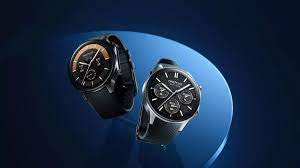
Prior to its eagerly anticipated launch at the Mobile World Congress (MWC) 2024, the OnePlus Watch 2 has been unveiled. According to the company, it will debut on February 26 at 8:30 p.m. IST (4:00 p.m. CET). Three years have passed since the 2021 launch of the OnePlus Watch, the smartwatch's predecessor. The consumer tech brand did disclose some information about its design and battery life, but not many important specifications. Unusual for OnePlus, a community post on the company's website disclosed the launch date and gave a sneak peek at a few of the Watch 2's features. A pre-reserve pass has been used to open early reservations, and a microsite for the smartwatch has also been developed. As of the writing of this article, all 1500 of the passes were sold out. The OnePlus Watch 2's sapphire crystal glass and stainless steel chassis were highlighted in the announcement post. There will be two color options: radiant steel and black steel. The smartwatch will have up to 100 hours of battery life in "full Smart Mode," according to the company. If accurate, this will surpass the battery life of the Apple Watch Series 9, which in our review we discovered to provide about 2.5 days when in low-power mode. Since the post mentioned recently released products like the foldable OnePlus Open, OnePlus Buds Pro 2, and OnePlus Tab, some attention was also paid to ecosystem building. But no mention of ecosystem features was made. Additionally, the term "meticulous health monitoring" surfaced, suggesting that there may be significant improvements to the health tracking system. Some more important details about the upcoming smartwatch have leaked according to earlier reports. The Qualcomm Snapdragon W5 Gen 1 chipset and a 1.43-inch AMOLED display are possible features of the OnePlus Watch 2. Although Wear OS is anticipated to run on it, it is unknown if Wear OS 3 or Wear OS 4 will be used. To confirm that it might be available in India at the same time as its global launch, a landing page has also been created on Amazon mentioning the same launch date and time.
Published 22 Feb 2024 02:29 AM

Launch Date of Realme 12+ 5G in India
The Realme 12+ 5G will go on sale in India the following month, the company said on Wednesday. The smartphone's back camera has also been made public by the company, which claims that it will be the first in its price range to launch in the nation with a 50-megapixel Sony LYT-600 sensor that features optical image stabilization (OIS). The Realme 12+ 5G's alleged retail boxes were leaked by a tipster earlier this week, and the company hinted at the release of a new phone.Meanwhile, tipster Ishan Agarwal released a picture of the alleged retail box of the Realme 12+ earlier this week via X (previously Twitter). According to the box, the smartphone will have an AMOLED screen with a refresh rate of 120 Hz and be powered by MediaTek's Dimensity 7050 chip. Also, according to the leaked picture of the Realme 12+ 5G retail box, the phone will have a 5,000mAh battery that supports 67W wired charging. Additionally, it was disclosed that the smartphone will have a Sony LYT-600 sensor with OIS; the business has verified this information. The price of the smartphone is blurred on the part of the box where the sticker is located. Some of the Realme 12+ 5G's specifications have already leaked online, providing fans with a preview of what to anticipate from the upcoming phone. A 50-megapixel primary camera, an 8-megapixel ultra-wide-angle camera, and a 2-megapixel macro camera are reportedly part of the phone's triple camera setup. It is anticipated to include a 6.7-inch full-HD+ (1,080 x 2,400 pixels) AMOLED screen, up to 1TB of internal storage, and up to 16GB of RAM.
Published 22 Feb 2024 02:24 AM


Gadgets
Gadgets are of different type and there is all new advancements coming on regular basis be it Mobile phones or Laoptops of Consumer appliances. Everything is rapidely changing gloablly.

How to Revolutionize Your Company Using Facebook Advertising.
Facebook provides advertisers with a range of ad formats to select from when promoting content on the network. Depending on the target demographics and campaign goals, choosing the appropriate ad format can assist increase engagement and conversions. An overview of the primary Facebook ad formats that will be accessible to marketers in 2024 is given in this article. Popular choices including carousels, collections, slideshows, narratives, and more are covered. Facebook has a large user base and precise targeting capabilities, so having a high-level grasp of the formats can assist guide efficient ad tactics.Facebook Ads Content Guidelines Facebook has tight guidelines that all ads, regardless of format, have to abide by. These rules are essential for legal and successful Facebook advertisements. The primary goals of the standards are to stop misleading, improper, or damaging advertising experiences. Important prerequisites consist of: Advertisements are not allowed to make unfounded claims or to be deceptive. Advertisements have to be appropriate for the audience's age and geography. Images, videos, and other content must have the appropriate rights to be utilized. Political advertisements, regulated sectors, and product rules need to be adhered to. Certain restrictions forbid statements about one's bad self-perception, vulgarity, nudity, and COVID-19 disinformation. Ads concerning cryptocurrencies, dating, gaming, alcohol, and other topics are likewise subject to restrictions.

Why Are They Hurrying To Purchase This Chic New SmartWatch? The Incredible Health Benefits
The smartwatch industry was dominated for a long time by a small number of powerful companies that were able to set their own prices and continue to defraud consumers. However, a new tech startup is upending the $45 billion smartwatch market. Even the biggest tech geeks agree that CrossFit Watch has figured out a way to offer a far superior product at a fraction of the cost.With the CrossFit Watch, you can get the advantages of a hands-free headset, digital watch, fitness band, and health monitor all in one. It is pleasant to wear around the wrist. Superior to a few of the high-end smartwatches I own from other major tech brands. strenuous exercise and outdoor activities? No worries, even if you try to scratch or break the tempered touchscreen glass or the hardened aluminum shell, it won't break. The CrossFit Watch, in my opinion, is the smartwatch of the future.

Apple Reduces Prices On The iPhone 15 In China With An Unusual Discount.
Hong Kong: In response to increasing competitive pressure in the largest smartphone market in the world, Apple is offering unusual discounts on its iPhones in China, slashing retail prices by as much as 500 yuan ($70). On Monday, the US tech giant's Chinese website displayed a 5% price reduction on select iPhone models. The time-limited promotion, branded as a Lunar New Year event, will last from January 18 through January 21 in a lead-up to the holiday in mid-February. In China, sales of Apple's most recent iPhone 15 series of phones have been significantly lower than those of earlier models.Local competitors like Xiaomi and Huawei Technologies provide competitive models, and according to sources, some businesses and government agencies have been restricting employees' use of Apple devices, which is similar to the US government's ban on Chinese apps due to security concerns. According to a client note from Jefferies analysts, Chinese iPhone sales fell 30% in the first week of 2024 compared to the same period the previous year. Sales had already decreased 3% for the entire year of 2023. Analysts predict that this year will see more competition. For years, Apple has not lowered the cost of its most recent iPhone models. The cuts come after it surprised the market by not raising prices for the iPhone 15 series at its September launch.

Samsung unveils the new Galaxy S24 lineup, which includes AI-powered search and photo-editing capabilities.
Unexpectedly, Samsung unveiled its new flagship Galaxy S24 smartphone lineup on Wednesday, showcasing cutting-edge AI capabilities as the company aims to start 2024 strong. There are three versions of the S24 range available: the S24, S24+, and S24 Ultra, as is currently the norm with Samsung's flagship line. The S24 Ultra starts at a price of $1,300, the S24+ will cost $1,000, and the S24 will retail at $800.Before the announcement, the South Korean electronics behemoth unveiled the new devices at its Kings Cross offices in London earlier this week. During a press briefing, Samsung showcased the phone's artificial intelligence (AI) capabilities, demonstrating its ability to alter photos and perform object searches. Samsung is utilizing an optimized version of Qualcomm's most recent Snapdragon Series 8 Gen 3 for use with its flagship S24 Ultra, the company's largest of the three smartphones with punchier specs and features. For its S24 and S24+ models, the company uses a combination of internal Exynos chipset and Qualcomm systems-on-chips (SoCs).

Once more, Apple is not allowed to sell watches with blood oxygen sensors in the United States.
The U.S. Court of Appeals for the Federal Circuit announced on Thursday that Apple will once more be prohibited from selling watches equipped with blood oxygen sensors. Apple's attempt to overturn an ITC ban on the company selling the impacted watches in the US was not addressed by the court order issued on Wednesday. However, while that appeal is pending, it lifted an injunction that had prevented the ban from going into effect. An intellectual property dispute with the medical device company Masimo is the reason for the ban. In October, the International Trade Commission found that Apple’s blood oxygen sensors had infringed on Masimo’s intellectual property.During Wednesday afternoon trading, Apple shares saw a slight decline. Apple is not allowed to import the aforementioned devices, which include the Apple Watch Series 9 and Ultra 2. Retailers who still have the impacted watches in stock may continue to sell them, but Apple decided in December to temporarily remove them from both its online and physical stores. Earlier this week, court filings suggested that Apple had received approval from U.S. Customs for a modified version of its Apple Watches that lack the blood oxygen feature and therefore no longer infringe on Masimo’s intellectual property. It could open a path for a modified Apple Watch to return to U.S. store shelves. An Apple representative earlier this week declined to comment on the Customs decision.After turning down a partnership, Masimo had claimed that Apple had stolen some of its top executives and replicated its technology. Last month, Masimo CEO Joe Kiani told CNBC that his company is willing to reach a settlement with Apple. If Apple must continue to keep its latest smartwatches from U.S. stores, it could complicate repairs at Apple stores, which often swap broken devices with replacements. Apple did not immediately respond to a request for comment on the denial.

This soil-powered fuel cell, according to scientists, can "run forever."
A group out of Northwestern University in Illinois has created a novel fuel cell that they say can draw energy from soil-dwelling microorganisms. The fuel, which is about the size of a book, may be utilized to power subterranean sensors for precision farming and green infrastructure. It might develop into a viable, renewable replacement for batteries made of hazardous, flammable chemicals that seep into the earth when buried. Additionally, the resources needed to make batteries are obtained through supply chains impacted by conflict and add to the waste generated by electronics.The new fuel cell was tested by the researchers by powering touch and soil moisture sensor sensors. The results were published in the Proceedings of the Association for Computing Machinery on Interactive, Mobile, Wearable, and Ubiquitous Technologies. One can track passing animals with the former capability. In order to relay data to a nearby base station by reflecting pre-existing radio frequency signals, the researchers additionally equipped the soil-powered sensor with a tiny antenna. “The number of devices in the Internet of Things (IoT) is constantly growing. Even if we envision a world where trillions of these devices exist, we are unable to construct each and every one of them using hazardous materials like heavy metals, lithium, and environmental pollutants. We need to find alternatives that can provide low amounts of energy to power a decentralized network of devices. In a search for solutions, we looked to soil microbial fuel cells, which use special microbes to break down soil and use that low amount of energy to power sensors. As long as there is organic carbon in the soil for the microbes to break down, the fuel cell can potentially last forever,” said Northwestern alumnus Bill Yen, who led the work, in

The Rabbit R1 is a tiny device that can be used for any purpose.
The R1, a tiny pocket-sized AI-powered gadget created by a startup called Rabbit, may one day be able to take the place of your smartphone. The square device has a rotating camera that can take back-and-forth photos and videos in addition to a 2.88-inch LCD touchscreen. Additionally, the R1 comes with a clickable scroll wheel that allows you to interact with the built-in voice assistant and navigate the user interface. The device, which was created in partnership with Teenage Engineering, resembles a half-flip phone but uses voice commands to operate instead of apps, akin to Humane AI Pins.The gadget also has a speaker and two microphones. Like the Humane AI Pin, you can use the Rabbit R1 to interact by holding down the "Push-to-talk" button, which activates the device's built-in voice assistant and allows you to ask any question you have without using an app. Similar to Humane, Rabbit brags that the R1 has a "all day" battery, but it withholds information regarding its capacity.In a video demo, company CEO Jesse Lyu says that the Rabbit R1 is powered by an in-house developed operating system called RabbitOS that uses a ‘Large Action Model’ instead of a large language model like ChatGPT. He says that they wanted to “find a universal solution that can trigger services”

Amazon's Great Republic Day Sale 2024: The Best Offers on Wireless Charging and Power Banks
For a few more hours, Amazon's Great Republic Day Sale 2024 will be offering discounts on a variety of electronic products. For all Amazon India customers, the sale began on January 13 and would last for a week. In addition to savings on smartphones, tablets, and laptops, the Great Republic Day Sale features promotions on popular brand power banks and chargers for mobile accessories. Additional discounts on a selection of devices bought through the online marketplace are offered by bank offers as well. Additionally, customers can use coupons to receive discounts.Customers of State Bank of India (SBI) can receive extra instant discounts on purchases made with their cards and EMI options, up to a maximum of 10%. Amazon is providing bundled offers that include free EMI payment options and exchange. Meanwhile, Flipkart is also running a discount sale, which means you should compare prices across both platforms to ensure the best deal. Power banks and wireless chargers that will simplify and enhance your travel experience, such as those from Ambrane and Mi, are available on Amazon during the Great Republic Day Sale at reasonable prices. The price of Xiaomi's Power Bank 3i has dropped from Rs. 2,199 to Rs. 1,899 at this time. Additionally, interested customers can receive discounts of up to Rs. 300 when making purchases with EMI and SBI cards. Amazon Pay ICICI credit card users can avail of Rs. 300 cashback as well. The Xiaomi Power Bank 3i packs a large 20,000mAh lithium polymer battery and supports Quick Charge 3.0. Similarly, Portronics's Freedom Fold 15W wireless charger is available for Rs. 799, down from Rs. 1,999.

US Pre-Orders for the Apple Vision Pro begin on January 19 and the device will go on sale on February 2.
"The Vision Pro, Apple's first mixed reality headset, will go on sale in the US in February, the company said on Tuesday. On January 19, preorders for the headset will go live. The headset will be available at all US Apple Store locations as well as through the company's web store. The Apple Vision Pro was announced in June last year at the Worldwide Developers Conference (WWDC) 2023. The headset supports both augmented reality (AR) and virtual reality (VR) technologies and runs on the visionOS operating system. On February 2, the company officially announced on its newsroom website that the Apple Vision Pro would go on sale in the United States. The US Apple Store online and at all of its physical locations will both sell it. At the company's retail locations, customers can register to test the headset out for themselves. The gadget will go up for preorder on January 19 at 5:00 am PST (6.30 pm IST).With 256GB of storage, the Apple Vision Pro starts at $3,499, or approximately Rs. 2,90,000. A Solo Knit Band and a Dual Loop Band are included with the device. A polishing cloth, a battery, a USB Type-C cable, a Light Seal, and two Light Seal Cushions are also included in the package. "ZEISS Optical Inserts are available as readers that magnetically attach to Vision Pro or with a prescription for people who need vision correction. According to Apple, readers will run you $99, or about Rs. 8,000, while prescription lenses will set you back $149, or about Rs. 12,000, for them. For nations other than the US, the Apple Vision Pro's release date and price have not yet been disclosed. The company first entered the spatial computing space with the release of the Apple Vision Pro, which was unveiled at last year's WWDC event in June. It has two high-resolution micro-OLED displays and is powered by visionOS. With an R1 chip to handle input from 12 cameras, 5 sensors, and 6 microphones, it runs on Apple's M2 chips. With its three-dimensional user interface, the headset



MrBeast Posts His Video On X, Here’s What He Is Testing
It all started around two weeks ago when MrBeast said in a post that he had uploaded a video on his other social platforms and that users should go and watch it. Replying to his post, a user said that he should post videos on X to monetise them.“Yeah,” Musk said, joining the conversation. However, MrBeast, whose real name is Jimmy Donaldson, said, “My videos cost millions to make and even if they got a billion views on X it wouldn't fund a fraction of it.” “I'm down though to test stuff once monetization is really cranking!” added MrBeast, who said in an interview in 2022 that his video production has a massive budget. He said that he could be doing cheaper videos but he doesn't want to and “want to push the boundaries to go bigger, bigger.”The billionaire re-posted a video created by Jimmy Donaldson, better known to his 230 million-plus YouTube subscribers as MrBeast. That’s after a back-and-forth dating back years, during which the Tesla Inc. chief executive traded messages with the online celeb about X’s potential.Musk’s vision is to transform the social media platform he took over in 2022 into what he calls “the everything app,” or a collection of the services that users now turn to on their smartphones. Musk has mentioned his interest in making X more competitive with Google’s YouTube, the global leader in online video. This month, X announced a slate of new shows, including a partnership with former CNN anchor Don Lemon.But it still has only a fraction of the users on rival services such as Meta Platforms Inc.’s Facebook, and advertisers have migrated to other platforms. Ad revenue was on track to slump in 2023, in part because of brands’ concerns about changes to X’s content-moderation policies.

Dakar 2024 Result: Harith Noah Wins in Rally 2 Class, Hero MotoSports Makes History
The 2024 Dakar Rally was a great event that came to a close. After years of KTM domination, Honda finally won the Dakar Rally, with Hero MotorSports finishing in second place, just behind the KTMs. It is worth mentioning that Harith Noah won the Rally 2 class, which was a significant milestone for India in the Dakar Rally.The short 175km special stage of the day was all KTM, as the brand was on full display with a 1-2 podium finish. Toby Price won the stage, with defending champion Kevin Benavides in hot pursuit. But the overall winners were decided over the previous days, and Honda's Ricky Brabec was in the lead from the start. For a short time, Hero's Ross Branch was the race leader. After Benevides and Price of KTM crossed the finish line first and second, Adrien Van Beveren of KTM took third.As the only manufacturer entered in the Rally 2 class of this year's Dakar Rally, Harith Noah—supported by TVS—and Sherco were the only competitors to stand out. After finishing the most recent stage in eleventh place, the Indian rider won the Rally 2 class overall. Even in the overall standings, Noah's performance was remarkable. He finished the 2024 Dakar Rally in eleventh place, making history as the first Indian to ever win a stage, finish on the podium, and finish in the top fifteen.Noah showed resiliency by overcoming health issues in the first week and then picked up steam in the second week of the competition. His incredible jump from 18th to 13th place overall over the 48H Chrono Stage 6 is worth noting. Stage 8 and Stage 10, in which he twice set the fastest rally, were particularly impressive for his sustained growth.It's important to remember that RallyGP and Rally 2 are two separate classes. Only highly experienced racers who have been accepted by the FIM Championship Committee based on their sports credentials are allowed to compete in the RallyGP class. Rally 2 offers a more welcoming environment for riders from various backgrounds since it is available to anyone who isn't already in the RallyGP riders' registration.Despite finishing ten minutes and fifty-three seconds behind winner Ricky Brabec, Hero MotoSports' Ross Branch managed an outstanding second-place finish in the 2024 Dakar Rally. Hero MotoSports has achieved a remarkable feat, becoming the first Indian team to secure a podium place in the esteemed race.By the end of the sixth stage of the 2024 Dakar Rally, three of Hero's four riders had pulled out due to the extreme difficulties they had encountered. Ross Branch was the sole Hero MotoSports competitor in Dakar 2024, despite the team's other three riders withdrawing: Joaquim Rodrigues, Sebastian Buhler, and Joan Barreda Bort. Nevertheless, he quickly established himself as a strong candidate for the ultimate win.Branch won the first stage of the rally and remained in first place until the fifth stage. He showed his skill by finishing second in Stage 11 with the fastest time and then followed Honda's Ricky Brabec closely in the following stages.Ross Branch said: “Finally finished the Dakar!! It was a really tough Dakar 2024, and I'm so thrilled to be here! Finishing on the podium was always the goal, and today it's a dream come true. I'm really over the moon to achieve this goal for Hero. And a big thank you to the team for developing a highly competitive machine, for the sleepless 3 weeks here, and for everything they've sacrificed to reach to this point. I'm really proud of my team. We've got some more work to do to be on the next step, so we'll look forward to that in the next year. A big thank you to everyone for your continued support from all around the world!”With a ninth-place finish in the last 174-kilometre stage near Yanbu, the South African rider solidified his position as second overall. This incredible feat not only marks Branch's first podium finish at the Dakar, but it also marks the first podium for an Indian team in the history of the race.

Hyundai Motor India Acquires GMs Talegaon Plant; to Invest Rs 6,000 Crore in Maharashtra
Hyundai Motor India Ltd. (HMIL), has acquired the Talegaon factory of General Motors India, located in Pune, Maharashtra. Following the fulfillment of specific requirements and obtainment regulatory clearance from the relevant government departments and stakeholders, the acquisition has been completed. Hyundai Motor India has also inked a formal Memorandum of Understanding (MoU) with the Maharashtra government. With this, it has pledged to spend Rs 6,000 crore in the state. At the moment, the Talegaon factory produces 1,30,000 units per year. To reach its targets, the automaker plans to increase production capacity even further. HMIL states that the facility will be updated to meet the company's global manufacturing and operational needs. To achieve production excellence, investments will be undertaken in stages to gradually update the plant's existing infrastructure and equipment.Mr. Un Soo Kim, MD & CEO, of Hyundai Motor India Ltd., shared his thoughts on the acquisition and commented ''India is a very important market for Hyundai Motor Company, and we are committed to providing benchmark creating products & technologies to Indian customers. As we look forward to the next decade of progress for Hyundai Motor India, it is critical for us to augment our manufacturing capacity in India.''He further added ''The Talegaon manufacturing plant will play the role of a catalyst in achieving HMIL’s 1 million annual production capacity milestone. The acquisition of the Talegaon plant reinforces our commitment to ‘Atmanirbhar Bharat’ (Self-Reliant India), by making India a hub for advanced smart mobility solutions, Make-In-India for the world. Our manufacturing operations are scheduled to begin in Talegaon, Maharashtra in the year 2025.”With a starting price of Rs 10.99 lakh (ex-showroom), Hyundai launched the eagerly awaited Creta Facelift in India on January 16. Along with many interior upgrades and a new engine option, the facelift gives the car a more robust exterior look. Over 70 safety features—36 of which are standard—are included in the recently redesigned Creta. TPMS, electronic stability control, an all-wheel disc brake system, and six airbags are a few of them. The highest-spec versions come with 19 Level 2 ADAS features (Hyundai SmartSense).The 1.5-litre naturally aspirated (NA) and 1.5-litre CRDi diesel engine options for the SUV remain the same. However, a new 1.5-litre turbocharged GDi petrol engine is now offered as an option in this lineup. The new 1.5-litre turbocharged GDi petrol unit delivers 158bhp and 253Nm of performance numbers.

Volvo’s 10,000th car in India is its first pure electric offering
Volvo Car India has achieved a significant milestone by producing its ten thousandth car at its Bangalore facility. The company, which began assembly operations in 2017, has seen the highest production of the XC60 model, with over 4000 units produced to date.Jyoti Malhotra, Managing Director of Volvo Car India, in a company statement, revealed that the honour of being the ten thousandth car produced goes to the XC40 Recharge, the company's first pure electric offering.Malhotra said, "It is indeed a matter of pride for the company to have reached this milestone in a short span of time in spite of nearly three years of pandemic disruptions."Gao Feng, Production Head of Volvo Car India, highlighted the plant's achievement of rolling out India's first domestically assembled electric vehicle (EV), the XC40 Recharge. Today, the company assembles all its models in India, including the XC90, XC60, S90, XC40 Recharge, and the recently launched C40 Recharge.Meanwhile, Volvo Car India announced a 2% price increase for its conventional engine vehicles on Monday, while the prices of its EV offerings remain unchanged.Following the price hike, the XC60 is priced at ₹68.9 lakh, the S90 at ₹68.25 lakh, and the XC90 at ₹1,00,89,000.However, the prices of the XC40 Recharge and C40 Recharge remain unchanged at ₹57.9 lakh and ₹62.95 lakh, respectively.
Hyundai introduces ‘IONIQ 5 N NPX1’ concept with N Performance Parts
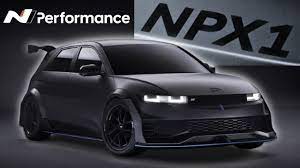
Hyundai Motor Company has unveiled the ‘IONIQ 5 N NPX1’, a concept model equipped with prototype N Performance Parts, at the Tokyo Auto Salon 2024. The ‘NPX1’ is the first N Performance Parts concept model based on the company’s high-performance electric vehicle (EV) IONIQ 5 N. The company plans to enhance the EV ownership experience with N Performance Parts, a project that began in 2019 and continues to develop high-quality tuning parts for customers. Following the success of internal combustion engine vehicles such as the Elantra N, i30 N, and i20 N, Hyundai N plans to offer specialised tuning components for all-electric N models, including the IONIQ 5 N.The ‘NPX1’ concept model previews a range of N-specific enhancements that will soon be available for purchase from a catalogue of N Performance Parts.These enhancements include a carbon front splitter, side skirts, rear diffuser, rear wing spoiler, lightweight hybrid carbon wheels, high-performance brake pads, and lowering springs. The concept model’s interior is further enhanced with Alcantara material and racing bucket seats.The prototype N Performance Parts applied to the NPX1 concept will be further developed for production in preparation for sales in 2024. Starting with the IONIQ 5 N, Hyundai N will expand the availability of N Performance Parts products for all N models.Joon Park, Vice President of N Brand Management Group at Hyundai, said, “In 2024, Hyundai Motor Company will take a step forward as a leader in new tuning parts suitable for the high-performance EV era as demonstrated with the ‘NPX1’ concept model.”He added that the company is also developing software customisation such as sound and vehicle calibration by over-the-air (OTA) updates, opening a completely new category of EV customisation for an exciting future for the tuning community.
Tata Punch facelift launch confirmed for 2025
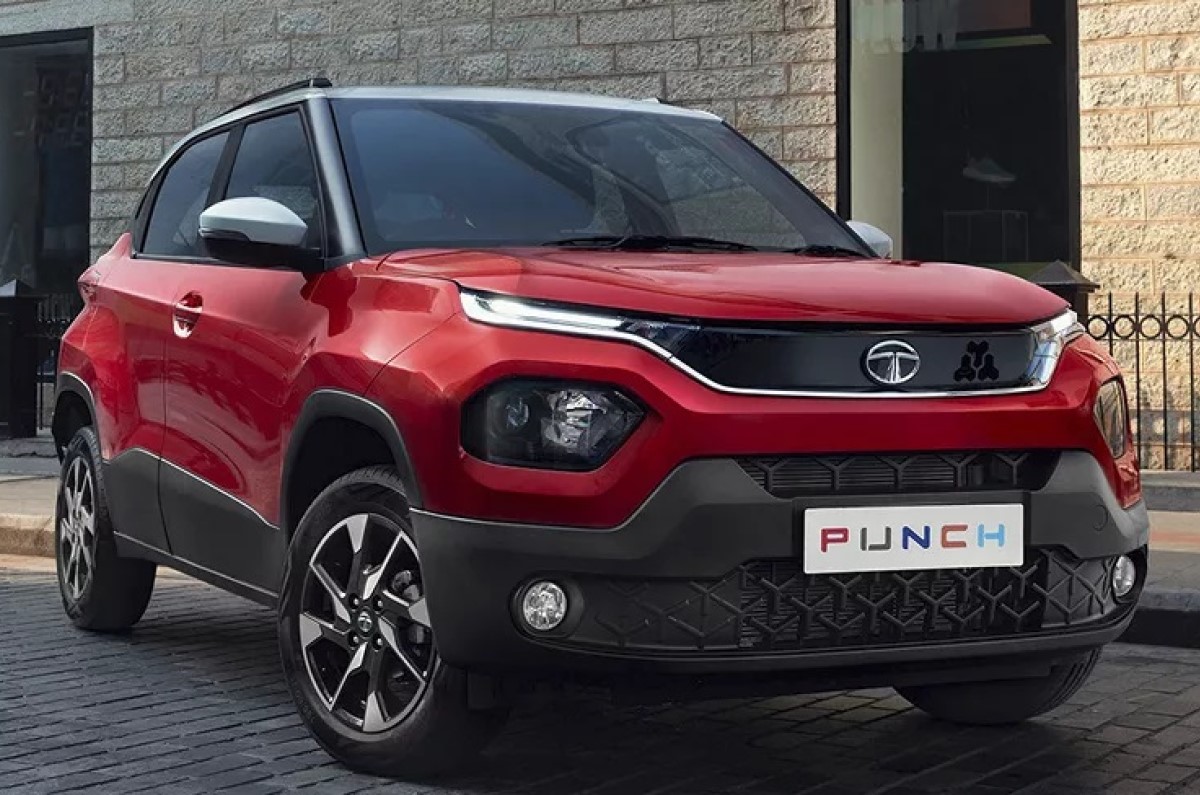
The Tata Punch petrol will see a mid-life facelift sometime next year. Confirming this development on the sidelines of the Punch EV launch, Tata Motors’ Passenger Vehicles Unit MD, Shailesh Chandra, said, “As far as the upgrade of the Punch is concerned, you know that it was launched in October 2021. Typical facelift period is three years. So, we should be expecting a facelift for the ICE version only in mid-2025, or slightly later.” Just like what we’ve seen on the Nexon and Harrier facelifts recently, expect Tata Motors to update the Punch SUV’s styling with fresh design cues to bring it in line with the newer Tata models. Changes to the front bumper and grille, along with minor tweaks to the headlamps and the bonnet can be expected to make the small SUV look new.Like the Nexon and the Nexon EV facelift, there will be styling bits that will help differentiate the petrol-powered Punch from the recently launched Punch EV. What’s more, Chandra also said that the Punch will have feature differences between the petrol and EV versions.
Renault Bigster global debut later this year
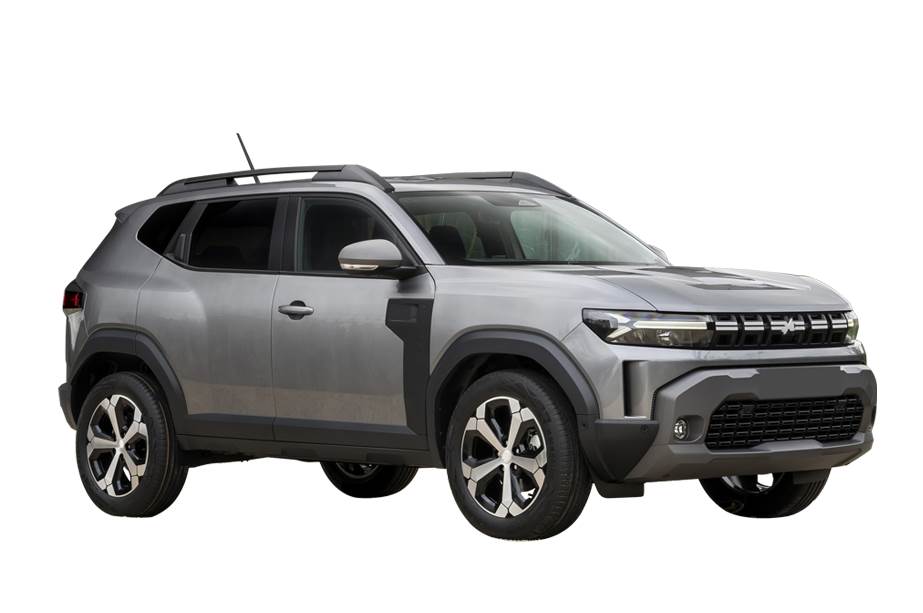
The new Renault Bigster SUV will see a global debut later this year and is expected to go on sale internationally by early 2025. Revealed as a concept in 2021, it is essentially a three-row iteration of the all-new Duster, which made its global debut a few months ago. Sources have conveyed to our friends at Motor1 Brazil that the Bigster SUV will share its design cues largely with the new Duster and the Bigster concept. Essentially, it will be most likely an elongated version of the Duster, similar to what we see with the Creta and Alcazar in India. There will, however, be styling, tech and equipment differences on the inside and out. This new SUV from Renault will be around 4.6 metres long – nearly 0.3 metres longer than the new Duster, which measures 4.34 metres. It will get rugged looks and interior bits from the Duster, but there will be more upmarket materials and additional creature comforts to justify the SUV's higher price tag. The Duster currently has a 2,657mm wheelbase, which also could see an increment for the Bigster in order to facilitate easy ingress-egress and more cabin room. As far as the platform goes, the Bigster will share the same CMF-B modular architecture. There isn’t much known about its powertrain options, however, it will be safe to expect that the SUV will share its powertrain line-up with the latest-gen Duster, which comes with three engine options – two of which are electrified. Starting the proceedings is the 1.6-litre four-cylinder petrol hybrid that gets two electric motors; this engine comes with an automatic gearbox. It also comes with regenerative braking and a 1.2kWh battery, enabling purely electric driving for up to 80 percent of the time in the city.The next engine is the 130hp, 1.2-litre three-cylinder turbo-petrol coupled with a 48V starter motor. While the Duster will also come with a 1.0-litre petrol-LPG option in some markets, there is no diesel option in any market right now. The next engine is the 130hp, 1.2-litre three-cylinder turbo-petrol coupled with a 48V starter motor. While the Duster will also come with a 1.0-litre petrol-LPG option in some markets, there is no diesel option in any market right now.
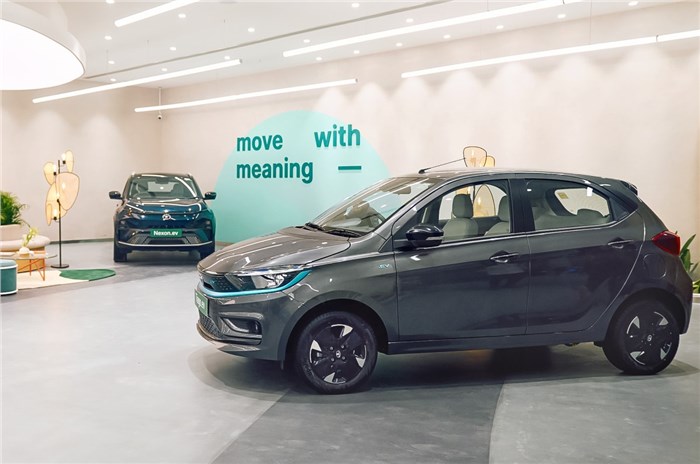
Tata Motors aims for EVs to make up 15-17 percent of its volume in 2024
Tata Motors, which currently holds over 75 percent of electric vehicle market share, expects strong demand for its latest all-electric model – the Punch EV. The carmaker clocked its best-ever EV sales of 69,153 units in CY23, registering a robust 62 percent year-on-year (YoY) growth (CY22: 43,451 units). The electric SUV, which expands the company’s EV portfolio to four products – Tiago EV, Tigor EV, Nexon EV and Punch EV – will allow Tata Motors to tap into another vacant space in the segment. In the ongoing calendar year, it has the Curvv and Harrier EVs lined up for introduction, while next year, it will further expand its EV line-up with the Sierra EV and Altroz EV. Tata Motors currently sees EV volume contribution being pegged at around 12-15 percent (17-20 percent in terms of revenues), and expects it to reach 15-17 percent by the end of 2024. It expects EV penetration in its portfolio to touch 25 percent over the next three years, and reach 50 percent by 2030. The company anticipates waiting periods to creep in for the Punch EV, but is also geared to ramp up capacity at its newly operational plant in Sanand, Gujarat, to bring the delivery times under control, and within reasonable timeframes. “We are prepared to ramp up capacity starting the second half of this month, and we are hopeful of keeping the waiting periods within a reasonable number of months,” said Shailesh Chandra, managing director of Tata Passenger Electric Mobility (TPEM) and Tata Motors Passenger Vehicles. As the company switches to Gen-2 ground-up EV architecture – Acti.ev – with the Punch EV, Tata Motors says its magnitude of investment in EVs has increased multifold. Tata Motors believes the Punch EV is uniquely positioned between the Tiago EV and Nexon EV in its portfolio, and targets the young buyer eyeing an all-rounder product.“With almost 65 percent buyers being younger than 35, tech-savvy, and having a certain price point in mind, if one offers a product with a high value, it is bound to create a new customer segment for this kind of an EV, which, with its over 400km range, does not limit the car purely for city use,” Chandra said.He further said that the Nexon and Tiago EVs have very different customer bases – the former is used as a primary car, but in a multi-car household, while the latter – a 320km-range product – is primarily used within the city with limited outdoorsy experience. “The Punch EV sits right in between the two. There is no such product below Rs 15 lakh so far, and therefore, there is not going to be significant cannibalisation within our portfolio,” he further highlighted.Last month, Tata Motors opened two of its flagship EV-only stores in Gurugram, and aims to expand the exercise with more such outlets in key markets across the country in the next 12-18 months.
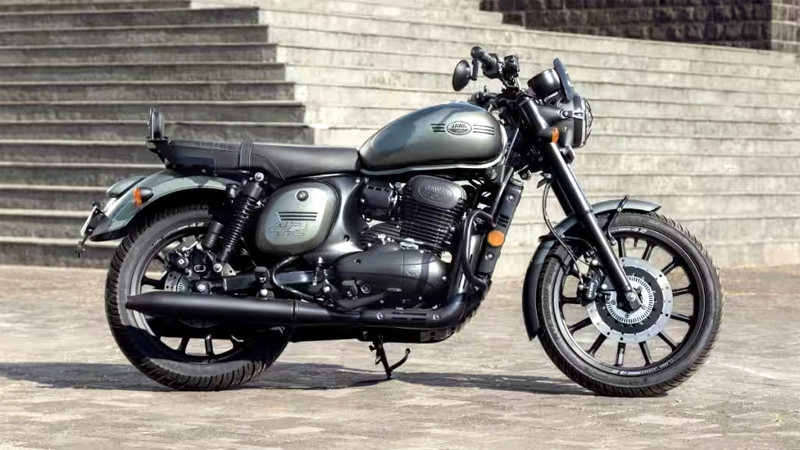
Jawa Yezdi Motorcycles eyes ASEAN market for Jawa exports
The company has been exporting Jawa back to the Czech Republic-based JAWA Moto spol. S r.O. The successor to the original JAWA company using the trademark JAWA, which in turn sells the bikes mostly in Eastern Europe and the Czech Republic. Jawa Yezdi Motorcycles plans to start exports of Jawa brand of bikes in ASEAN countries in the next three to four months, a top company official said on Thursday. The company, which launched the new Jawa 350 priced at Rs 2,14,950 (ex-showroom Delhi), is also working to enhance its reach across India, especially in smaller cities targeting to open 750 outlets in the next 24 to 30 months, Jawa Yezdi Motorcycles CEO Ashish Singh Joshi told reporters in an interaction here. The company has been exporting Jawa back to the Czech Republic-based JAWA Moto spol. S r.O. The successor to the original JAWA company using the trademark JAWA, which in turn sells the bikes mostly in Eastern Europe and the Czech Republic. We also sell directly in Nepal and we have already opened operations in the Philippines, which will serve as the hub to sell in other ASEAN countries such as Malaysia, Vietnam and Thailand," Joshi said. This is likely to start in the next three to four months, he said.On export volumes, Joshi said it is not so large considering the company's focus has been on the Indian market.After making a comeback in India in 2018, the company has sold about 2 lakh units in total, out of which nearly 5,000 units have been exported.When asked about domestic plans, Joshi said Jawa Yezdi Motorcycles plans to bring in more models to add to the existing nine products in its stable at present without specifying details. Also, he said the company is on a network expansion journey to widen and deepen its presence across India. "We are looking to increase our outlets to 750 in the next 24 to 30 months from 423 at present," he said, adding that when the company started it was mainly in the metros and major cities.It has gradually entered smaller cities and towns and will continue to do so, while also increasing the number of outlets in cities where it already has a presence to deepen its presence, Joshi added.On the outlook, he said the company is looking at "double-digit" growth this year, having overcome the COVID-19 induced disruptions and supply chain issues."2024 is going to be the year of consolidation for us," he said, adding that the premium motorcycle segment in India has recovered while the entry-level motorcycle segment is also witnessing recovery.

2024 Hyundai Creta Facelift Review: New Look, Updated Interior And Powertrains Enhance Bestseller’s Appeal
Strikingly different face with new radiator grille. All-new dashboard and interior trim with Level 2 ADAS. Dual-clutch transmission returns but with a 1.5-litre turbo petrol. This is the new Hyundai Creta. Not a generation change, but this is a facelifted version of the second-gen Creta which has been Hyundai’s best-selling model for some time now. It has been given a substantial refresh in terms of design, features and a new range-topping powertrain.The Creta remains the same size as the version it replaces. On paper, the length has increased by 30 mm due to the redesigned bumpers but overall width, height, wheelbase and front/rear tracks don’t change. Even ground clearance is the same at 190mm.The front and rear design has undergone a sea change. Two years ago, Hyundai started production of the Creta in Indonesia and it looked different than the one in India and most jumped the gun to say that this was the one that would come to India as well. However, what has arrived is quite different. It gets a rectangular radiator grille shape – surprisingly, more similar to the smaller Venue rather than the parametric grille we see in the bigger new Tucson. Horizon lights with DRLs give it a distinct identity and are reminiscent of the new flagship Santa Fe that broke cover in 2023.Hyundai has done an Apple here with the headlamps - instead of tri-beam it is now quad-beam. The SUV looks less rounded and more upright now due to the changes. The previous design of the Creta was quite polarising, just like its name when it was first launched eight years ago, but both grew on us and how. This one is less polarising than the outgoing Creta, but a tad generic. Now that is my personal opinion - looks are subjective so let us know in the comments if you think otherwise.Hyundai recently updated its engines to be BS6 Phase-2 compliant, so the Creta continues with its previous set of powertrains. There are some changes though. The engine options start with a 1.5 petrol from its Kappa family, a 1.5 turbo diesel is on offer too with the range topper being the new 1.5 turbo petrol which is also available in the all-new Verna. The previous Creta came with a 1.4-litre turbo which is now discontinued. On the transmission side there is a six-speed manual or a continuously variable transmission it calls ‘iVT’ for the naturally-aspirated petrol engine. Diesel gets a 6-speed torque converter or a 6-speed manual while the turbo petrol gets a 7-speed dual clutch transmission.The 1.5 diesel is slicker than ever and feels more refined than in the earlier Creta. It has oodles of torque and it appears in a wide range across the rev band. What I like is how vibrations are under check and so is the noise. The six-speed automatic isn’t as quick as the dual clutch but is fairly practical. Where the gearbox lacks in speed it compensates with finesse. Acceleration feels purposeful and confident. Steering weighs up nicely and the Creta suspension does well to balance between absorbing potholes and maintaining poise, whatever the speed.The CVT version too feels perfect for urban and less hurried highway driving. The start is smooth and through the power band it doesn’t feel stressed. It is only when you floor the throttle is when the engine sounds a bit stressed as you need to rev higher for peak torque.

Tata Punch EV Launched In India; Prices Start At Rs. 10.99 Lakh
Tata Motors has launched the all-new Punch EV in the Indian market with prices ranging from Rs. 10.99 lakh to Rs. 14.49 lakh (ex-showroom). Based on Tata’s new born EV ‘Acti.ev’ architecture, the Punch EV will become Tata’s fourth EV to go on sale in India after the electric versions of the Nexon, Tiago and Tigor. The vehicle will be available in a total of five trims- Smart, Smart +, Adventure, Empowered and Empowered +and two range options – Standard and Long Range (LR).In terms of design, the Punch.ev has a lot in common with the standard Punch but also features a few distinctive styling cues that set it apart. These include the new slim, full-width LED DRLs, a charging port situated behind the front Tata logo and new 16-inch diamond-cut alloy wheels. The interior, however, is vastly different from the ICE model and is equipped with a 10.25-inch central touchscreen infotainment system, along with a 10.25-inch full-digital instrument console.The EV’s equipment list includes ventilated front seats, an electronic parking brake with auto-hold, cornering fog lamps, auto-folding wing mirrors, an electric sunroof, wireless phone charging and 360-degree cameras. On the safety front, the Punch EV gets six airbags and electronic stability programme (ESP) as standard, and a blind spot monitor on the top-spec variant.The EV’s equipment list includes ventilated front seats, an electronic parking brake with auto-hold, cornering fog lamps, auto-folding wing mirrors, an electric sunroof, wireless phone charging and 360-degree cameras. On the safety front, the Punch EV gets six airbags and electronic stability programme (ESP) as standard, and a blind spot monitor on the top-spec variant.The Punch.ev also features bolstered ventilated leatherette seats, mood lights and an Air purifier with AQI display. Additionally, the Punch.ev comes with paddle-shifters, which enables the 4-level multi-mode regeneration and over-the-air software upgrade capabilities.On the powertrain front, the Long Range variant of the vehicle will be offered with a 90 kW motor with a torque output of 190 Nm. It will also feature a battery capacity of 35 kWh and a ARAI range of 421 km. The regular Punch.ev will have a 25 kWh battery, with a range of 315 km along with a 69 kW motor and 114 Nm of torque output.The Punch EV will be offered with a 3.3 kW wall box charger as standard while a 7.2 kW AC fast charger is also available as an option for an additional Rs 50,000.To be offered in five trims- Smart, Smart+, Adventure, Empowered and Empowered+.Gets a new infotainment system and full-digital instruments display.To be offered with two range options – Standard and Long Range (LR).
Red Bull Racing RB20 F1 Race Car Launch Date Revealed
Red Bull announces its Formula 1 2024 season launch date, set for February 15, aligning with Mercedes and Alpine's unveiling. Sergio Perez is confirmed to continue alongside Verstappen in 2024. Its predecessor, the RB19, dominated the 2023 season with all but one of the 22 Grand Prix races. Red Bull Racing has officially announced its Formula 1 2024 season launch date, aligning with its rivals Mercedes and Alpine. The unveiling is scheduled for February 15, a mere six days before the commencement of winter testing in Bahrain. While it remains uncertain whether Red Bull will present the actual RB20 car or reveal an updated colour scheme on a show car, expectations are high following the exceptional success of its predecessor, the RB19, which dominated the 2023 season, securing all but one of the 22 Grand Prix victories and propelling Max Verstappen to a more than comfortable third world championship.In response to questions about the team's prospects in the upcoming season, Christian Horner, Red Bull team boss, drew parallels with Mercedes' dominance in 2020 and emphasised the dynamic nature of Formula. Despite subtle rule changes, Horner acknowledged the evolving competition and expressed the team's commitment to adapting lessons learned from the RB19 to the development of the RB20, aiming for a competitive car to defend their titles.Sergio Perez is confirmed to continue alongside Verstappen in 2024, facing a crucial year to secure a contract extension with Red Bull. The team's launch follows announcements from Mercedes and Alpine, with Mercedes revealing its new W15 on February 14. Alpine, Renault's brand, is set to unveil its 2024 motorsport season, encompassing both F1 and the World Endurance Championship teams, on February 7. The launch dates for AlphaTauri, McLaren, and Haas are yet to be disclosed, completing the lineup of F1 teams preparing for the upcoming campaign.

