




StartUps
StartUps are the backbone of any country and in any Industry as these are the new ventures which entrepreneurs establish and then contribute to the nation growth and progress. The stratups will then grow and become unicorns and create thousands of employments in different sector boosting the economy and take it to the next level.
Top Print Advertisers from July to September 23, 23: TAM AdEx, SBS Biotech, Maruti Suzuki, and Kia
In 2023, Top10VPN calculated the worldwide economic impact of shutdowns, which included 79,238 hours of government-mandated internet outages, to be $9.01 billion. This indicates that India was responsible for approximately 6.5% of the total economic damage caused by internet outages worldwide.The cost of these disruptions—which included significant ISP throttling, internet blackouts, and shutdowns of social media—was estimated using a variety of metrics from the US Census, the World Bank, the ITU, and Eurostat.In India, internet outages are not unusual. India experienced 92 internet shutdown occurrences in 2023, and just a few days into 2024, the nation has already recorded another internet outage, according to SFLC.in's internet shutdown tracker. Furthermore, the Center has a history of taking action against particular websites and pressuring social media companies to remove content at their request. Authorities have disagreed with digital rights advocates over shutdowns, despite citing grounds including putting an end to rumors and misinformation.Since many users rely on online services for information and business, internet disruptions come at a high cost since they reduce trade, which has an economic impact.

Pre-Series A Funding of Rs 10 Crore is Secured by Settl for Co-Living Expansion
In a pre-series A investment round, investors including Gruhas, We Founder Circle, Inflection Point Ventures, and others have contributed Rs. 10 crore to the proptech startup Settl. Settl., which was founded in 2020, intends to use the money for technology advancement, staff growth, and working capital.With 60+ locations across Bengaluru, Hyderabad, Gurugram, and Chennai, Settl. is a co-living operator that offers 4000 beds, mostly for working people, for rental fees between Rs 12,500 and Rs 18,000 per bed.To date, the portal that lets users look for and rent completely furnished rooms, flats, or communal living spaces has raised a total of Rs 15 crore.Another IIT Madras initiative aims to support 100 businesses by 2024. By 2024, 100 companies from a variety of industries will be supported by the IIT Madras Incubation Cell (IITMIC), the institute's central hub for fostering, advising, and supervising diverse innovation and entrepreneurship initiatives."We at IIT Madras take tremendous satisfaction in the fact that we innovate a lot more. In 2024, we also want to launch 100 start-ups. A number of intriguing innovations are also emerging from IIT Madras-incubated start-ups, including Mindgrove Tech, AgniKul Cosmos, and Hyperloop start-up The ePlane Company. These startups will produce goods that are extremely important to the country." remarked Professor V. Kamakoti, Director of IIT Madras.

A diagnostics business is getting ready to launch a blood testing product in Austin and San Antonio.
Babson Diagnostics has successfully obtained important FDA clearance for its blood testing products following years of cooperation and trials. Listen to the most recent episode of Texas Business Minds to hear about the startup's history, its funding efforts, and the Texas towns it plans to debut in this year, including San Antonio.A diagnostic firm is getting ready to launch a blood testing product in Austin and San Antonio. Babson Diagnostics has successfully obtained important FDA clearance for its blood testing products following years of cooperation and trials. The creator of Babson Diagnostics is getting ready to introduce a cutting-edge blood test device. The founder, COO, and chairman of Austin-based Babson Diagnostics, a blood testing firm, is Eric Olson. He was recently a guest on the Texas Business Minds podcast.

How HRtech Startup Erekrut Is Revolutionizing Employers Hiring and Employee Job Search Processes
Since the start of the Covid-19 outbreak, hiring has been erratic. The alternatives available to recruiters have changed over time, ranging from totally remote, tech-driven interviews to in-person meetings brought on by the present back-to-office demands. Job seekers have also witnessed seismic shifts, with tech giants facing broad cuts and the "Great Resignation" giving way to enormous layoffs. Nevertheless, it's still difficult to get qualified applicants through the door, even in this unstable labor market. As a result, businesses and recruiting managers seek to create a talent pipeline that is both efficient and affordable, as well as future-proof recruitment. There are numerous elements to a successful talent hunt, such as finding the ideal candidate, creating a memorable application process, and providing individualized growth plans. Additionally, hiring must be quick and scalable in order to avoid losing out on top talent, income, and credibility for the business. To keep ahead of the curve, nothing really works better than quickly identifying the top candidates for open positions and automating processes. However, in 2019 Amity University fashion student Ajay Goyal witnessed the other side of the story while working as a volunteer for the university's campus-to-corporate program. It was obvious at the time that traditional hiring would need to be fixed because of its drawn-out processes, slow candidate responses, and general impersonal approach that failed to draw in or accommodate outstanding talent. Ajay, being one to let things slide, went to his father, Dr. Ravinder Goyal, who was a professional with almost thirty years of expertise in vocational training and placement.

VinFast, A Rival To Tesla, Is Likely To Construct An EV Battery Plant In India
The test-prep startup Unacademy reported that, despite constant layoffs at the company, its losses in FY23 decreased by 41% to Rs 1,678 crore. In FY23, employee-related expenses decreased by 28% to Rs 1,281 crore.The test-prep startup Unacademy reported that, despite constant layoffs at the company, its losses in FY23 decreased by 41% to Rs 1,678 crore. In FY23, employee-related expenses decreased by 28% to Rs 1,281 crore.In what was a difficult year for the startup environment, many modern businesses, like Myntra, ZestMoney, and Curefoods, reported stronger revenues for FY23, but their losses also increased.Revenue at Myntra rises to Rs 4,375 crore: The apparel retailer Myntra, which is owned by Flipkart, reported a 25% increase in operating revenue to Rs 4,375 crore in FY23, despite a 31% increase in losses to Rs 782 crore. The online fashion platform's largest expense, amounting to Rs 1,758 crore, was spent on advertising and promotional activities, representing a 35% increase over the previous year.Unacademy reduces losses to Rs 1,678 crore, or 41%: Unacademy, a startup providing test preparation, reported that its losses in FY23, which included several layoffs at the company, decreased by 41% to Rs 1,678 crore. The Bengaluru-based firm saw a 26% increase in sales to Rs 907 crore during the year, while costs associated with payroll decreased by 28% to Rs 1,281 crore.ZestMoney reports a loss of Rs 412 crore. ZestMoney, a troubled startup that has been searching for a buyer, declared a net loss of Rs 412.4 crore for the fiscal year 2023. On the other hand, while total expenses increased by 21% to Rs 662.2 crore, overall revenue for the buy-now-pay-later platform increased by 72% to Rs 250 crore.

In 2023, India Lost A Hefty $584 Mn Due to Internet Shutdowns
VinFast, an electric vehicle manufacturer located in Vietnam and considered a competitor of Tesla and BYD in China, is expected to establish its first manufacturing facility in Tamil Nadu, India. Batteries intended for electric vehicles will be produced at the company's new plant in Thoothukudi, according to Reuters, which cited people with direct knowledge of the situation.According to one of the persons who spoke with Reuters, "Several VinFast officials have visited Thoothukudi district in Tamil Nadu to check out sites." There were rumors in September that VinFast had started employing people in India for back-office, sales, and legal positions. But it's unclear how much VinFast would invest and when it will start operating in Tamil Nadu.The corporation is looking into ways to enter the Indian market with electric automobiles and scooters.In 2023, internet outages cost India $585.4 million in lost revenue, according to a report published by UK-based review website Top10VPN. According to the survey, 59.1 million Indians were affected by 7,812 hours of internet blackouts and 144 hours of social media shutdowns that the nation experienced throughout the year.
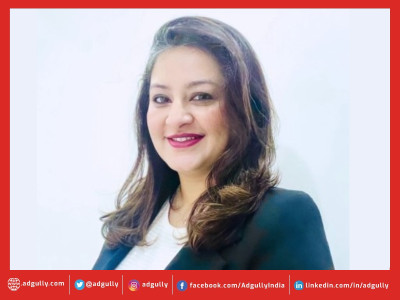
Prerna Korla becomes a Director of Communications for Asia Pacific at Mastercard.
Prerna Korla is a new Director of Communications for Asia Pacific at Mastercard. With over 15 years of significant experience, Prerna is a communication and PR specialist who has worked with leading Indian and international B2B and B2C brands. Prerna spent more than two years as Manager, Senior Communications at Microsoft before joining Mastercard.She was the Uber South Asia and India Consumer Communications Lead. Prerna has also collaborated with a number of PR companies, such as Edelman and MSL Group India. Prerna Korla has been appointed by Mastercard India as the director of communications for Asia Pacific. She leaves Microsoft after working there for two years as a senior communications manager. Korla updated her LinkedIn post on this development. Korla was the head of customer communications for a brief period of time at Uber before.
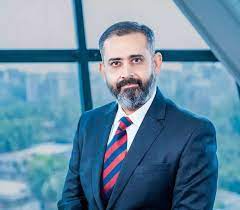
Rajat Diwakar is appointed CEO of iD Fresh Foods India.
Rajat Diwakar has been named CEO of iD Fresh Food's India division, the business announced on Friday. Diwakar worked as the Managing Director of Marico Bangladesh Limited before being hired by iD Fresh Foods. Additionally, he has over 20 years of experience leading FMCG companies.Leader of iD Fresh India, Rajat Diwakar Delhi, New: iD Fresh Food, a ready-to-cook packaged food firm, strengthened its leadership team on a national and international level on Friday by appointing industry veteran Rajat Diwaker as the India CEO and PC Musthafa as the Global CEO.Today, iD Fresh Food announced the appointment of Rajat Diwaker, a seasoned industry veteran, as the CEO for India. Rajat is a seasoned professional with more than 20 years of experience in the FMCG sector. He was the Managing Director of Marico Bangladesh Limited in his previous position. Additionally, he serves as a director on the board of Bangladesh's Foreign Investors' Chamber of Commerce and Industry (FICCI).In addition to continuing to lead the board of directors, PC Musthafa, who founded iD Fresh and served in that capacity for almost 20 years, now assumes the position of global CEO. Musthafa will be in charge of iD Fresh's worldwide market innovations, as well as international expansions, strategic acquisitions, the development of food-tech capabilities, and organizational culture inspiration.iD Fresh plans to designate specific Business Heads and CEOs for every international market as part of its expansion strategy. In actuality, the business is currently employing a US CEO. At present, more than one-third originates from sources outside of India. In 2024, the company intends to increase its presence in the current markets while branching out into new ones like Singapore and Australia.The global CEO of iD Fresh Food, PC Musthafa, commented on the most recent development, saying, "iD Fresh's journey has been incredibly rewarding so far, and we continue to make tremendous strides." I'm happy to have Rajat Diwaker join the iD Fresh team. I have no doubt that in the years to follow, we will accomplish greater things and win over more hearts under his capable and visionary leadership. And because of the unwavering support from customers that we have accumulated over the years, I am excited to lead the brand into new international markets as we set off on new experiences.

Namma Yatri and Bengaluru City Police collaborate to introduce a program for female drivers.
App for automatic booking Mahila Shakti, an initiative by Namma Yatri, aims to increase the number of female drivers. The Bengaluru City Police and this initiative were partners in its launch.This curriculum provides a thorough one-month training course covering safe driving, traffic rules, maintenance of vehicles, and practical driving. It also helps women launch their own automobile enterprises.After the ladies finish the program, Namma Yatri helps them own low-interest cars through financial institutions and provides them with electric cars for a small daily rent.On January 5, 2024, the Namma Yatri app company launched Mahila Shakti in Bengaluru. In partnership with Bengaluru police and non-governmental organizations, ride-booking service Namma Yatri announced plans to hire 1,000 women drivers over the next six months.Bengaluru: In partnership with the Bengaluru City Police, Parihar, and the Dr. B R Ambedkar Health and Education Foundation, Namma Yatri, the city's community-focused ride-booking app, has introduced the Mahila Shakti program, which is aimed at empowering women drivers. The goal of this program is to enable women from a variety of backgrounds to become skilled electric vehicle drivers. A thorough one-month training course including practical driving, traffic rules, safety, and car maintenance is provided by the Mahila Shakti program. It also helps women launch their own automobile enterprises. The initiative, which targets women between the ages of 25 and 45, opens doors to increased income, financial independence, and flexible work schedules. Following the free training, Namma Yatri helps women obtain low-interest car loans from financial institutions and gives them access to electric cars for a little daily fee."We are thrilled to launch this program, in line with our mission for women's empowerment," said Parihar's leader, Smt. Rani Shetty. It is encouraging to see more women taking up driving, as this makes Bengaluru a safer and more welcoming city. Juspay's Chief Product Officer, Magizhan Selvan, discussed the advancements, saying, "Since August 2023, we have been empowering women drivers in partnership with NGOs like Shishu Mandir." We take great pride in the 50 female drivers we employ, who between them have driven 55,000 kilometers, served 11,000 clients, and earned a total of Rs. 12 lakhs. By June 2024, we want to have 1000 women driving. Lead trainer Nagalakshmi S P talked about her own experience, saying, "Being an auto driver was a turning point to support my family." Taking the lead on this project makes me very happy.A ground-breaking program that promotes women's economic empowerment and questions established gender conventions is the Mahila Shakti Electric Auto Program. With its EV technology and user-friendly software, it makes the acceptance of driving as a career easier. Due to increased freedom and higher pay, participants evaluated driving automobiles as more favourable than traditional career options like housekeeping or shopkeeping. Women who are interested in participating in the program can reach Namma Yatri at 080-69724800 or 8618963188 via WhatsApp.


After the failed Zee merger, what will happen to Sony? The CEO of the company discloses its India strategy.
"Overview ""India has significant long-term growth potential. This market has a lot of appeal. Consequently, in response to a question concerning the company's plans in India following the cancellation of the proposed merger, Totoki stated, ""We will attempt to seek various opportunities and see if we can find another opportunity that would replace this type of plan."" According to a senior business official, Sony will explore a number of possibilities now that the planned merger of its Indian branch with Zee has been canceled. These would include looking for an alternative plan and exploring organic development chances in India, which has enormous long-term potential. Hiroki Totoki, president, COO, and CFO of Sony, stated during an earnings call that the company will keep making investments in India since it is a very good market. ""India has significant long-term growth potential. This market has a lot of appeal. Consequently, in response to a question concerning the company's plans in India following the cancellation of the proposed merger, Totoki stated, ""We will attempt to seek various opportunities and see if we can find another opportunity that would replace this type of plan."" He commented, ""Well, that investment is not going to change a capital allocation or our behavior in our investment,"" in reference to the investment Sony had made as part of the agreement. Thus, we don't yet have any firm plans."" February 14 was the day of the earnings call. According to the terms of the merger that ZEEL and Sony agreed upon, Additionally, the Japanese behemoth was expected to contribute USD 1.5 billion to the combined company. He stated in the investor call that the company will keep pursuing organic development in line with its plan in India, where it conducts business through Culver Max Entertainment (formerly known as Sony Pictures Network India). The arrangement between Sony and ZEEL to combine its two Indian companies, Culver Max Entertainment and Bangla Entertainment Private Limited (BEPL), was terminated last month. Sony Group Corporation (SGC) claimed that ZEEL had not complied with the merger requirements and had filed for arbitration before SIAC, requesting a termination cost of USD 90 million (about Rs 748.5 crore). In a petition to the National Company Law Tribunal (NCLT), ZEEL requested that Sony Group be directed to...Over 700 million people watch the 26 channels that Sony Pictures Network India (SPNI), an indirect wholly-owned subsidiary of Sony Group Corporation, Japan, owns and operates in Hindi and numerous other languages. In addition, it offers live sports, movies, short films, as well as its own original and archived material, on its single OTT platform, Sony LIV. There are about 33 million people who watch it."

Sukoon Health starts offering cashless insurance for inpatient care
A program to offer cashless insurance coverage for people requiring inpatient psychiatric care has been announced by ukoon Health. In order to receive cashless insurance benefits at Sukoon, patients must stay in the hospital for a minimum of 24 hours. This is the amount of time that is needed in order to file an insurance claim under the mental health coverage. Certain treatments are not covered and are not eligible for cashless insurance benefits. Examples of these treatments include talk therapy, alcohol and drug addiction, self-harm, and treatment for alcoholism. Bipolar disorder, acute depression, anxiety disorders, schizophrenia, mood disorder, psychotic disorder, post-traumatic stress disorder, obsessive-compulsive disorders, and attention-deficit/hyperactivity disorder are just a few of the conditions that are covered by Sukoon's mental health insurance. Ceremony for Women Startup Program is hosted by NSRCEL-IIMB and Kotak Mahindra Bank. The IIMB startup cluster, NSRCEL, and Kotak Mahindra Bank Limited together hosted the Bangalore valedictory celebration for the fourth cohort of the Women Startup Programme. The event honored the accomplishments of fifteen entrepreneurs that were thrilled to be awarded grants for the third phase. Each initiative received Rs 5 lakh, and six founders in the special category received an additional Rs 5 lakh each in appreciation of their total progress since the program's start. The initiative has distributed a total of Rs 2.75 crore in funds. Furthermore, the program's entrepreneurs have been successful in obtaining Rs 1.8 crore in outside finance. 267 female entrepreneurs who made the short list were chosen to get a 12-month incubation period NSRCEL will evaluate their prototypes and pitches to the screening committee over the course of a year. By helping them to develop their ideas into profitable businesses, the initiative seeks to assist aspirational and creative women entrepreneurs. Over 23,053 women have benefited from the Women Startup Programme, which has helped them strengthen their managerial and entrepreneurial skills. According to CarePay, its growth in 2023 was 100% month over month. According to CarPay, a financial platform for the healthcare industry, its growth in 2023 was 100% month over month. For the current quarter, the platform is anticipated to grow at a rate of 50% to 70% each month.

Akshay Kumar attends the inauguration of Abu Dhabi’s first Hindu stone temple.
"At the BAPS Hindu Mandir in Abu Dhabi's opening, Akshay Kumar wore a golden and white kurta. On Wednesday, the first Hindu stone temple in the city was inaugurated, and actor Akshay Kumar arrived early. Prime Minister Narendra Modi will dedicate the temple in Abu Dhabi, which was constructed utilising a blend of science and traditional building methods. Akshay wore a white and gold kurta for the event. The 56-year-old actor arrived with his protection detail in tow.More than 300 sophisticated sensors were used in the construction of the temple, known as the BAPS Hindu Mandir, to track seismic activity and measure temperature. The temple was built without the use of any metal, and the foundation was filled in with fly ash. At an estimated cost of over Rs 700 crore, the BAPS Swaminarayan Sanstha constructed the opulent temple on a 27-acre plot of land in Abu Mreikhah, close to Al Rahba off the Dubai-Abu Dhabi Sheikh Zayed Highway. Following his Tuesday signing of many bilateral agreements with the UAE and his attendance at the high-profile ""Ahlan Modi"" event, which drew big crowds from the Indian diaspora, Prime Minister Modi is scheduled to open the largest Hindu stone temple in Abu Dhabi on Wednesday night. Subsequently, the prime minister will go to Doha for a two-day visit with the Qatari leadership. The BAPS Hindu Mandir is a temple that was constructed without the use of any metal and filled with fly ash. It includes over 300 sophisticated sensors to monitor seismic activity and measure temperature. Abu Dhabi, United Arab Emirates: On Wednesday, the first Hindu stone temple in the city was inaugurated, and actor Akshay Kumar arrived early. Prime Minister Narendra Modi will dedicate the temple in Abu Dhabi, which was constructed utilising a blend of science and traditional building methods. Akshay wore a white and gold kurta for the event. Tuesday saw PM Modi sign many bilateral agreements with the UAE. He also attended the high-profile 'Ahlan Modi' event, which attracted a sizable number of Indian diaspora attendees. On Wednesday night, PM Modi will officially open the largest Hindu stone temple in Abu Dhabi. You can only listen to the newest music on JioSaavn.com. Subsequently, the prime minister will go to Doha for a two-day visit with the Qatari leadership."

RBI Cracks Down On Card Networks’ Tie-Ups With Payments Intermediaries
"SUMMARY: All card-based business payments made through specific intermediaries to organisations that do not accept card payments are to be held in abeyance by an unidentified card network. Under the radar are middlemen or suppliers of business payment solutions who take credit card payments for business payments and then transfer the money to receivers who do not accept credit cards via IMPS, RTS, or NEFT. The Reserve Bank of India (RBI) has issued a new directive just one day after it was reported that the central bank has instructed card networks Visa and Mastercard to stop accepting commercial cards for business payments. According to the RBI, no request for clearance was made to the appropriate authorities for these transactions, meaning that there was no legal backing for the entire payment process. The RBI has instructed an unidentified card network to hold up any card-based business payments made to organisations that don't accept card payments through payment intermediaries, as per a circular dated February 15. The RBI has been informed that a card network has a deal in place that allows companies to pay with cards to companies that don't take cards through specific middlemen. The circular stated, ""The card network has been advised to keep all such arrangements under abeyance, until further orders, as the matter is under detailed examination."" In this system, corporates pay with cards for business payments to the business payments solutions providers or intermediary, which subsequently transfers the money to recipients who do not accept cards using IMPS, RTS, or NEFT. Industry insiders claim that Visa and Mastercard implemented this unique arrangement to increase the acceptability of credit cards for commercial transactions. The agreement, which was exclusive to business or corporate credit cards, stated that certain empanelled vendors would pay a substantially reduced merchant discount rate or interchange fee to payments intermediaries. ""Card networks brought in a significantly reduced interchange, preventing acceptance costs from becoming an issue. One person linked to a fintech unicorn said, ""Business payments solutions providers, or BPSPs, their acquirers and issuers entered a mutual commercial agreement at a much lower pricing which could be as low as 0.3%."" According to a second fintech sector insider, the RBI might also be looking into whether the BPSP payouts are for real transactions rather than money laundering or round-tripping. The Payment and Settlement Systems (PSS) Act of 2007 stipulates that specific authorization is necessary for any agreements made with card networks, according to the central bank. It stated that since the appropriate authorities were not consulted for such transactions, there was no legal backing for the entire payment process."

Ixigo Refiles DRHP For IPO, Slashes Fresh Issue Size To INR 120 Cr
"SUMMARY The company's initial public offering (IPO) includes a fresh issue of INR 120 Cr and an equity portion of 6.66 Cr The fresh proceeds will be used to fund the startup's working capital needs, technology development and support inorganic growth through acquisitions..On Wednesday, February 14, the parent company of online travel aggregator (OTA) ixigo, Le Travenues Technology Ltd, re-filed its draft red herring prospectus (DRHP) with the Securities and Exchange Board of India (SEBI). The startup's initial public offering (IPO) will include an offer for sale (OFS) component of 6.66 Cr equity shares and a new issue of INR 120 Cr, according the DRHP. Among the investors who will sell shares via OFS are cofounders Aloke Bajpai and Rajnish Kumar, SAIF Partners India, Peak XV Partners, and Micromax Informatics. The IPO revenues of INR 45 Cr would be used by the firm to meet its working capital needs. The remaining INR 26 Cr will be used to expand investments in data science, artificial intelligence, and stacking the tech stack investments, among other things, in artificial intelligence and data science. Additionally, the money collected from the IPO will be put towards general business needs and acquisitions to support inorganic development. Ixigo is a travel technology platform that was founded in 2007 by Bajpai and Kumar. It generates income through the selling of different travel-related services, such as bus, rail, and airline tickets. By providing advertising services on its platform, it also makes money. Over the last 15 years, the firm has garnered around $88 million in capital from a variety of investors, including Peak XV Partners, Singapore's GIC, InfoEdge, Elevation Capital, and Fosun RZ. At the height of the funding boom in 2021, it last raised $53 million. Its rivals include Cleartrip, MakeMyTrip, EaseMyTrip, and Yatra. Ixigo's initial public offering (IPO) coincides with a series of cost-cutting initiatives the traveltech business has implemented over the last year to improve financial performance. Cofounder Bajpai discussed ixigo's frugal plan and mentioned that the company's zero-dollar marketing strategy had greatly benefited profitability in an interview with Inc42 last year. In the fiscal year 2022–2023 (FY23), the company surpassed the INR 500 Cr operational revenue revenue mark, up 32% year over year (YoY), thanks to post-pandemic growth and its thrifty attitude. In addition to this, the OTA recorded a net profit in FY23 of INR 23.4 Cr as opposed to a deficit in FY22 of INR 21.1 Cr. In the nine months that concluded in December 2023, Ixigo generated operational revenue of INR 491 Cr, according to the DRHP. During this time, its profit was INR 65.7 Cr, compared to INR 18.7 Cr the previous year. The company is making its second effort at going public. In 2021, it first submitted a DRHP for an INR 1,600 Cr IPO. Ixigo, however, decided against going public because of the unfavourable macroeconomic climate, which saw funding freezes and market volatility hit new-age tech firms. "
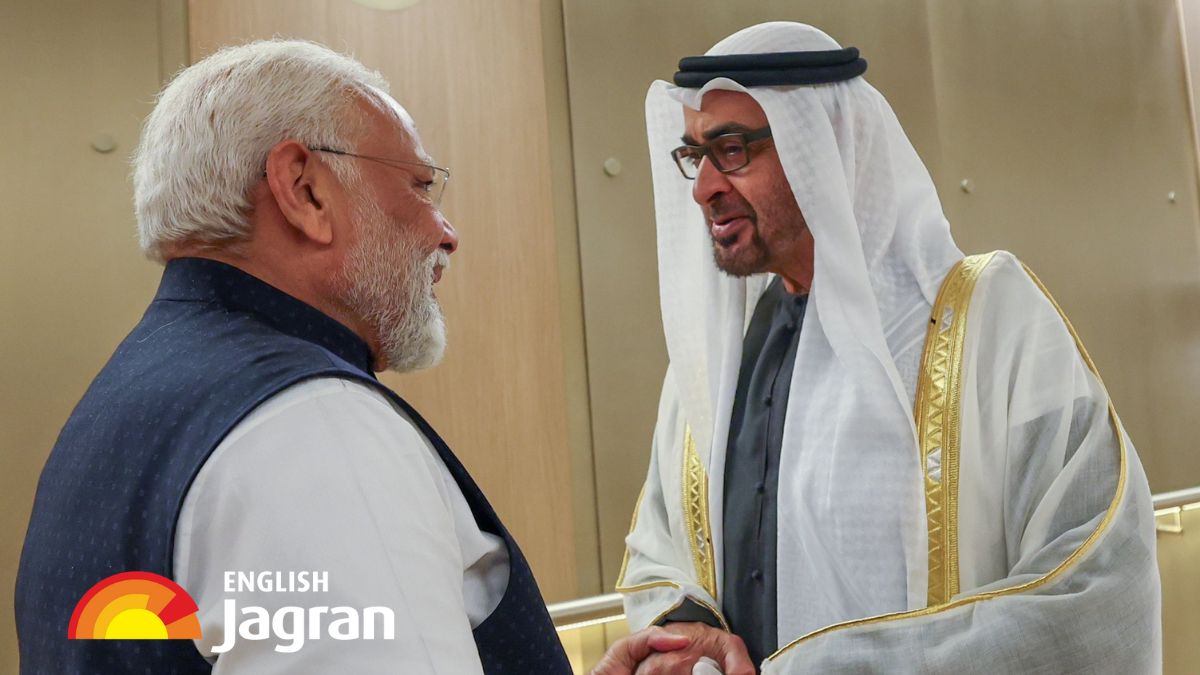
Narendra Modi UAE Visit Highlights UPI payment to begin in UAE soon, announces PM
Highlights of Prime Minister Narendra Modi's UAE visit: At the 'Ahlan Modi' event in Abu Dhabi, Modi spoke to the Indian diaspora. Highlights of Narendra Modi's UAE visit: On Tuesday, Prime Minister Narendra Modi began a two-day visit to the United Arab Emirates (UAE). President Mohamed bin Zayed Al Nahyan met Modi at the airport in a cordial manner. The two chiefs gave each other hugs. Later on, he received a guard of honour. The two leaders also had extensive discussions in which they went over the strategic partnership, talked about potential new areas of collaboration, and saw a number of agreements, including a bilateral investment pact, signed. The temple is located in Abu Mureikhah near Al Rahba on the Dubai-Abu Dhabi Sheikh Zayed Highway. It has reached about 27 hectares of land in Abu Dhabi and construction work is ongoing since 2019. The land for the temple was donated by the United Arab Emirates government. During Modiand#039's meeting with UAE President Mohamed bin Zayed Al Nahyan, the leaders witnessed the exchange of eight agreements, including a bilateral investment treaty, a memorandum of understanding on cooperation in electricity connectivity and trade, and an intergovernmental framework agreement between India and India . . . UAE in the India-Middle East Economic Corridor. Modi also congratulated the UAE President on the launch of JAYWAN, the country's domestic card based on RuPay's digital credit and debit card. Both the drivers saw the transaction that was made with JAYWAN's card. Modi will also attend the World Government Summit 2024 in Dubai as the guest of honor during his visit, where he will deliver the keynote address. Modiandi's visit to the UAE is his seventh since 2015 and the third in the last eight months, highlighting the strong ties between the Indian and UAE leadership. Here are some highlights of PM Modiand visit #039 to UAE. ."UPI payment to begin in UAE soon," said PM Narendra Modi during his live visit to the country. At the 'Ahlan Modi' event, the Prime Minister addressed the Indian diaspora and announced that UPI payments will soon start in the United Arab Emirates. "It will make seamless payments between India and UAE accounts possible," he states. UPI (Unified Payment Interface) services were launched in Abu Dhabi on Tuesday by Prime Minister Narendra Modi and President Sheikh Mohammed Bin Zayed Al Nahyan of the United Arab Emirates. The Indian Prime Minister is scheduled to dedicate the country's first Hindu stone temple during his two-day visit to the Gulf state. During a bilateral encounter, the president of the UAE and Modi exchanged multiple Memoranda of Understandings (MoUs). "First and first, Brother, let me sincerely thank you for your cordial welcome. It is quite uncommon for us to have met five times in the past seven months. I've also had the chance to visit this place seven times; the manner we've advanced in all areas remarkable..

Dubai Hosted PMFAIs International Crop Science Conference & Exhibition
The JW Marriott Marquis Hotel in Dubai, United Arab Emirates hosted the 18th edition of PMFAI's International Crop Science Conference & Exhibition (ICSCE 2024 Dubai) on February 8–9, 2024.The two-day celebration got off to a lucky start on February 8, 2024, when PMFAI President Pradip Dave gave a heartfelt welcome speech. In his inaugural speech, Dave emphasized the significance of the occasion, emphasizing how far it has come since PMFAI's first event in Mumbai in 1997. ICSCE serves as an international trade platform for the agrochemical, agri-biological, and related product industries. It helps these industries stay up to date on market developments and build strategic and sourcing partnerships with foreign businesses. Additionally, PMFAI organizes the annual International Conference on Biological Sciences and Agriculture (ICSCE) to promote the health of the Generic Pesticide Industry and to bring together agricultural researchers, pesticide producers, agrochemical merchants, agricultural biological industries, and related businesses.ICSCE has gone a long way to become known as the top Agri Inputs event that connects the agrochemical, agri-biological, and agriculture sectors since its inaugural event was held in Mumbai, India, in 1997. Agrochemical exports from India were valued at Rs. 270 crores (US $32.5 million) in 1997, the year the PMFAI hosted the first ICSCE. Today, that figure has risen to Rs. 45,000 crores ($5.4 billion) and beyond. Through joint ventures, bilateral commerce, subcontracting, contract manufacturing, contract distribution, and networking possibilities, ICSCE offered businesses the chance to grow and benefit from each other's advantages. There was a great response at ICSCE 2024 Dubai, with delegates actively participating from all around the world. At the conclusion of the first session, Deepak Shah, Vice President-PMFAI and Chairman of the Crop Care Federation of India, expressed gratitude to all of the speakers, exhibitors, sponsors, and attendees for their enthusiastic involvement and support of the occasion.For two days, ICSCE 2024 Dubai featured the product portfolios of ninety-one top firms. The event proved to be a big success, drawing in over 2,500 attendees and more than 1,200 registered delegates.Participating in the event were delegates from Argentina, Australia, Afghanistan, Brazil, Bangladesh, Belgium, China, Egypt, Ethiopia, France, Germany, Guinea, Ghana, Georgia, Iran, Iraq, Indonesia, Ireland, Italy, Jordan, Kenya, Lebanon, Lithuania, Malaysia, Malwai, Morocco, Myanmar, Nigeria, Netherlands, Oman, Poland, Pakistan, Russia, Saudi Arabia, Scotland, Singapore, Sri Lanka, Somalia, Sudan, Syria, Turkiye, Tanzania, Tunisia, USA, UAE, Uganda, Ukraine, United Kingdom, Uruguay, and Zambia.Renowned scientists studying pesticides, specialists in biological products, and business professionals were in attendance for the two days of the event. They presented on a range of significant subjects, a summary of which is provided below:

Medical devices startup Noccarc raises $2 Mn led by IAN
Indian Angel Network (IAN) sponsored a $2 million funding round for medical device startup Noccarc. IIT Kanpur, SIDBI (Small Industries Development Bank of India), and TDB (Technology Development Board) were also involved in this round. In addition, Hero Enterprises Chairman Sunil Munjal was welcomed as a prominent stakeholder in the investment round. The money raised will be put towards growing Noccarc's business and diversifying its line of products. The fundraising round, according to the company, is anticipated to assist R&D projects, ease market penetration, bolster customer service, and establish sales and distribution networks throughout major cities. Founded by Harshit Rathore, Noccarc specializes in the development and manufacturing of high-value critical care medical equipment, including ICU ventilators, patient monitors and more. In addition, the company offers a digital platform that allows doctors to remotely access device data, digitize documents and plans to integrate AI-based services in the future. The company has a strong research and development unit and ambitious plans to develop a versatile product range, starting with intensive care. Noccarc currently holds seven patents and has applied for 19 new patents for its innovative technologies. The company has also recently received a license from CDSCO (Central Drug Standard Control Organisation), which gives them the right to manufacture and sell these regulated products in India. The startup claims to have shipped more than 3,600 ventilators across India and has partnered with several different hospitals. Noccarc is now expanding its product range with a view to globalization..Future-Generation Ventilation for Intensive Care Units With the use of cutting-edge technologies, critical care has been redefined and given new meaning. The most advanced ICU ventilator, created specifically for user comfort and ease of use, will raise the bar for both patient care and your own standards.

Bharat Forge-backed Tork Motors raises $6 Mn in new round
Electric car startup Tork Motors has raised 50 million rupees, or $6 million, from Maxis Capital. This is the second institutional round for the Pune-based company after a gap of two-and-a-half years. The Tork Motors board approved a special resolution to issue 1 share and 6,912 CCPS at an issue price of 72,425 rupees to raise 50 million rupees, or $6 million, according to a regulatory filing available with the registrar of companies. Each preferred share issued to the new investor (Maxis Capital) will be converted into one share during the corresponding conversion period, in the appendix. Founded in 2010, Tork Motors is an electric two-wheeler manufacturer known for its flagship Kratos R. The company initially started with its units in Mumbai and Hyderabad and currently has a monthly production capacity of 4000-5000 units. The company planned to expand its geographic reach and reach 70-100 cities by the end of 2023. In October, Tork Motors announced a partnership with electric car software and charging infrastructure provider Bolt.Earth to provide its customers with 30,000 charging points. According to startup data intelligence platform TheKredible, the company is worth about 370 million rupees, or $45 million, after the split.. Through several rounds, Tork Motors has raised almost $16 million. With 52.46% of the total ownership, Bharat Forge is the largest shareholder, followed by Maxis Advisors with 13.51%. Kapil Shelke, the company's founder and CEO, owns 19.42% of the business. To view the entire shareholding pattern, visit TheKredible. Operating revenue for Tork Motors increased sevenfold from Rs 4.5 crore in FY22 to Rs 35.5 crore in FY23. During that time, the company's losses increased by 5.7X, from Rs 8.34 crore in FY22 to Rs 47.9 crore in FY23. Disclaimer: A group of investors just provided funds to Bareback Media. Some of the investors might be connected to other businesses we might write about, or they might be directly or indirectly involved in a rival company. That being said, this will not in any way affect our coverage or reporting. A list of our investors is available.

Apple will resolve its case against chip company Rivos over trade secrets.
According to a joint court filing on Friday in California federal court, Apple opens new tab plans to settle a dispute in which it was accused by tech startup Rivos of stealing its trade secrets pertaining to computer-chip technology.Both businesses stated to the U.S. District Court for the Northern District of California, opens new tab, that they had "signed an agreement that potentially settles the case," allowing Apple to look through Rivos' systems and retrieve any private data.Requests for comments and additional details regarding the settlement were not immediately answered by representatives for Apple or Rivos.In2022, "stealth" startup Rivos was sued by Apple. It claimed that Rivos, a company based in Mountain View, California, had hired away dozens of its engineers and utilized its proprietary knowledge to create rival "system-on-chip" (SoC) technology.Integrated circuits, or SoCs, are chips that contain many computer components, such as visual processing units and central processing units, on one chip. During almost a decade of study and billions of dollars, Apple claimed in the complaint that its SoC designs had "revolutionized the personal and mobile computing worlds."Rejecting the accusations, Rivos asserted that Apple had "sought to punish Rivos and any Apple employees who may seek to work there since the moment Apple learned about the promising startup."

IMPACT OF SHARK TANK INDIA ON THE GROWING STARTUP MINDSET IN INDIA
Examine how Shark Tank's existence changes the way Indian startups approach their business, stimulating creativity and investor interest in the vibrant ecosystem of entrepreneurship.shark tank India, which was modeled off the same-titled American TV series, has had a significant influence on the country's startup landscape since its December 2021 premiere. In the show, aspiring business owners present their concepts to a group of investors known as "Sharks" in the hopes of receiving capital and advice.Aspiring business owners approach the stage, pitching their ground-breaking concepts to a group of seasoned investors known as "Sharks" with nothing more than their vision and resolve.More than 100 million people have watched Shark Tank India, which has sparked a national entrepreneurial fervor. An increasing number of startup applications and inquiries to incubators and accelerators are indicative of this spike, which suggests that Indians are becoming more interested in becoming entrepreneurs.Our connection with television has altered recently as a result of the digital age, which allows us to consume content anywhere, anytime, and across a variety of media. This changed when Shark Tank India began to stream on Sony TV at a peak time of 9 PM. The US broadcast of Shark Tank's inaugural season took place in 2009. It made its way to India in 2021 after 13 seasons of great success, and in just two months, it drastically and urgently altered Indian society.People's perceptions of the startup culture have been altered by this reality show. This show is based on the actual ideas of the average person, where each idea is unique, as opposed to the typical reality shows that are a competition for a trophy and prize. Not only are compelling pitches and financial backing important, but viewers are also interested in the sharks' reactions to specific ideas and their recommendations, which is another aspect of the show. In other words, this show is essentially a blend of educating and entertainment that keeps viewers interested and encourages them to dive into the many fascinating tales of entrepreneurs. Indians now understand that issues they once dismissed as unreal could actually becomeThe Sharks have said in a few interviews that after the first season, pitching will be much better in the following seasons because pitchers will understand how it works and will feel much more comfortable talking about their creative business ideas on national television.With 500 million people between the ages of 15 and 44, this show has the potential to spur widespread entrepreneurship. The majority of children in India are brought up with a traditional mindset, which advises them to select a safe job over starting their own business. Shark Tank India's contribution to the expansion and development of the startup ecosystem is expected to bring about a profound cultural and mental transformation in the nation. In addition, the program has offered viewers a genuine understanding of today's real heroes. Sharks are those who, through their innovative ideas, have successfully filled a void in the market, provided the finest returns on their investments, and are well-liked throughout the nation. What's more, these sharks make investments

At last, someone noticed Ronnie Screwvala, the founder of Grad, responds as calls to remove Byju Raveendran grow.
In response to a LiveMint article stating that Byju's shareholders are attempting to remove the company's founders, notably Byju Raveendran, co-founder of the ed-tech platform upGrad, Ronnie Screwvala said.Screwvala posted on the X platform, "Finally someone smelt the coffee". In order to support "India as an investment destination" and the legitimacy of the "otherwise sunrise and sunshine sector," he hoped that the shareholders will stick with the plan and see it through to completion.According to a Livemint story published on Thursday, a faction of shareholders in the struggling ed-tech startup Byju's has demanded a management transition that would involve the dismissal of Byju Raveendran, the company's chief executive and co-founder.Prosus Ventures, Peak XV, Chan Zuckerberg Initiative, General Atlantic, and other investors signed a notice requesting an extraordinary general meeting (EGM) and proposing a reorganization of the company's board.In the best interests of the business and its shareholders, the investment consortium said that they were sending out EGM notices. The shareholders released a statement saying, "We are deeply concerned about the future stability of the company under its current leadership and with the current constitution of the Board.""Outstanding governance, financial mismanagement, and compliance issues; the reconstitution of the Board of Directors, so that it is no longer controlled by the founders... and a change in leadership of the company," the investors also stated in their request for a meeting. Thanks to a spike in remote learning during the Covid-19 outbreak, Byju's was one of India's most successful firms, estimated at $22 billion in 2022. After nearly 22 months, Byju's finally released its financial statements, showing a growing operational loss of ₹6,679 crore in FY22, primarily as a result of losses experienced by subsidiaries White Hat Jr. and Osmo.Based on its regulatory filing, the company reported an operational loss (EBITDA) of ₹4,143 crore for the fiscal year 2021.From ₹4,564 crore in FY21 to ₹8,245 crore in FY22, the company's net losses grew. The largest asset manager in the world, BlackRock, has reduced Byju's suggested worth from $22 billion to roughly $1 billion. Following Byju's delay in releasing its financial results for the year ended March 31, 2022, Deloitte announced their resignation as the company's auditor. Aside from Peak XV, Prosus, and the Chan Zuckerberg Initiative, other board members left Byju's board last year.In addition, the business is being sued in the US over conditions and repayment of a loan. Byju's, meantime, is purportedly trying to raise $200 million at an enterprise valuation between $220 and $250 million through the issuance of equity rights."The board of Think and Learn Private Limited (TLPL) today launched the raising of funds $200 million by way of a rights issue to all its equity shareholders to support its ongoing efforts to drive growth and achieve operational sustainability," the business stated in a statement. The business stated that TLPL's planned rights issue is intended to support general corporate purposes and finance the company's ongoing capital expenditures.


