


Top Trending Government News News & Highlights


AAP must leave its headquarters by June 15th, per a Supreme Court order.
The Aam Aadmi Party of Arvind Kejriwal will have to leave its headquarters, which are located on a plot of land designated for the High Court. The good news is that you still have until June 15 to act. The Supreme Court gave the party a long deadline because of the upcoming Lok Sabha elections, emphasizing that this is an encroachment case. The party may now submit an application for alternative land to the Land and Development Office of the Center.The bench, which included Chief Justice D Y Chandrachud and Justices J B Pardiwala and Manoj Misra, stated, "We would request the L&DO to process the application and communicate its decision within a period of four weeks." The bench continued, "AAP has no legal right to remain on the land." The Delhi High Court was granted land in February to expand its operations and build more courtrooms for the Rouse Avenue location. The court had noticed that the AAP was intruding on this land. When considering a case involving the nation's judicial system, the highest court took notice of the issue.The state government promised at a meeting on February 15 that the plot would be removed in two months if a substitute plot was provided, in response to a court order. However, the situation remained unchanged. According to India's Chief Justice, DY Chandrachud, nobody has the authority to impose law on others. "It is absurd for any political party to sit on it. Every intrusion will be eliminated... The land should be given to the High Court so that it can be utilized by the general public and citizens, Justice Chandrachud stated.
Published 04 Mar 2024 05:31 PM

Article 21: The Constitutions Soul, with Citizens Liberty Supreme
According to the Supreme Court, Article 21 is the essence of the Constitution because it protects citizens' rights to liberty, which are so valuable that a person would lose them if the high court takes too long to decide cases pertaining to it. Amol Vithal Vahile, a prime accused in the murder of a corporator in Maharashtra, was granted bail by the Bombay High Court on January 29 following prodding from the top court, according to a bench of Justices B R Gavai and Sandeep Mehta.In a recent ruling, the bench stated that it is evident that prior to this court's order being issued on January 29, 2024, the high court had dismissed the bail application on one or more grounds rather than considering it on its merits.It goes without saying that Article 21 of the Indian Constitution is its core because it upholds the fundamental right to liberty for all citizens. It stated, "Depriving the party of their precious right guaranteed under Article 21 of the Constitution of India would mean not reaching a quick decision and brushing off the issue on one or the other basis pertaining to a citizen's liberty." The bench stated that it has encountered numerous cases from the Bombay High Court in which the applications for bail and anticipatory bail were not resolved promptly. The bench mentioned one instance where the application for anticipatory bail was pending for over four years. "We have also encountered many cases where the judges find an excuse to reroute the case on unrelated grounds rather than rendering a decision based on the merits of the case. As a result, we ask the chief justice of the Bombay High Court to communicate our request to all judges who have criminal jurisdiction so that the issue of bail and anticipatory bail can be decided as soon as possible," the bench stated.It requested that the Supreme Court's Registrar (Judicial) forward this directive to the High Court's Registrar (Judicial), who will present it to the Bombay High Court's chief justice. The bench stated on January 29 that, despite the fact that Vahile had been detained for more than seven years, on March 30, 2023, the high court had ordered him to appear before the trial court for regular bail.
Published 02 Mar 2024 06:02 PM

India Receives Its Second Space Port, Excitement for Rocket Startups
Today, Prime Minister Narendra Modi will lay the foundation stone for India's second launch site, Kulasekharapatnam, which is situated in the Thoothukudi district of Tamil Nadu. This will significantly advance the nation's spacefaring endeavors. The new launch pad has the small rocket community in India, including ISRO and startups, giddy with anticipation for more efficient small rocket launches.Up until now, all rockets used to launch satellites into orbit were launched from the nation's single spaceport, which was located in Sriharikota, Andhra Pradesh. To date, India has launched 95 rockets from Sriharikota, 80 of which have been declared successful. Renamed the Satish Dhawan Space Center, it began modestly in 1971 with the launch of a sounding rocket, the RH-125. The center is currently getting ready for India's human spaceflight project, Gaganyaan, to launch. Satish Dhawan Space Center has a distinct advantage—it is one of the world's southernmost rocket ports—but it also has a major disadvantage. The land mass of Sri Lanka presents a safety concern for rockets launching in polar or southerly directions because it keeps rocket debris from landing on foreign soil.In order to lessen this, ISRO has traditionally carried out a unique manoeuvre referred to as the "dogleg maneuver" in order to avoid Sri Lanka when conducting direct southward launches. Although there is a penalty for this maneuver, it can be tolerated for larger rockets with sufficient fuel, such as PSLV, GSLV, and LVM-3. But the advantages of using Sriharikota as the preferred launch site become clear as India gains proficiency in the launch of smaller rockets, such as the Small Satellite Launch Vehicle (SSLV), which can carry satellites weighing up to 500 kilograms. According to an ISRO rocket specialist, it becomes almost impossible to launch small rockets from Sriharikota in polar or southern trajectories with payloads weighing between 500 and 700 kg. As a result, Kulasekharapatnam has been chosen as the second launch site to address these issues because of its expanding small rocket market.
Published 28 Feb 2024 05:29 PM

Survey Says RBIs Paytm Action Won Affect Merchants Trust
Merchants' trust in the payment platform is unaffected by the severe limitations the Reserve Bank of India (RBI) placed on Paytm Payments Bank (PPBL), according to a survey done. According to Datum Intelligence, a Gurugram-based provider of business consulting and services, 59% of retailers still use Paytm and don't think the government crackdown will have an immediate effect on their business. The business conducted a survey with 2,000 business owners in 12 cities who accept payments through Paytm apps. According to a press release from Datum Intelligence, it was done between February 7 and February 15. Survey Says RBI's Paytm Action Won't Affect Merchants' Trust According to a Datum survey, 76% of retailers accept payments through Paytm. Merchants' trust in the payment platform is unaffected by the severe limitations the Reserve Bank of India (RBI) placed on Paytm Payments Bank (PPBL), according to a survey done. According to Datum Intelligence, a Gurugram-based provider of business consulting and services, 59% of retailers still use Paytm and don't think the government crackdown will have an immediate effect on their business. The business conducted a survey with 2,000 business owners in 12 cities who accept payments through Paytm apps. According to a press release from Datum Intelligence, it was done between February 7 and February 15. According to the survey, 21% of retailers are awaiting additional information The fact that a Paytm representative contacted them following the RBI ruling is what gives retailers their confidence. "After being contacted by a Paytm representative, 71% of merchants feel comfortable continuing to use Paytm for payments. According to the Datum Intelligence survey, only 11% of respondents are less confident about using Paytm for payments, and 14% of respondents are still looking for more information."Overall, the impact is limited on the merchant business and Paytm is engaging with merchants to reduce the damage and merchants are also waiting before deciding on alternatives," it added.
Published 28 Feb 2024 05:01 PM


Government News
Government News & Trends where we share you the latest updates under the government authorities globally starting from India to USA, China, Russia, Pakistan, UK and many more nations.

JN shouldn't cause you to panic.One COVID-19 variation is Health Minister
"In response to the introduction of the new COVID-19 variant JN.1, Health Minister Saurabh Bharadwaj urged Delhi residents on Wednesday to ""not panic."" He explained that although the strain is contagious, it is mild, with only a small number of patients requiring oxygen support. ""Take precautions, but don't panic—this [new variant] is not very dangerous. About 90% of patients are recovering while receiving treatment at home, Mr. Bharadwaj informed the media, noting that comorbidity patients were the focus of reports of deaths in other States."

For FY23, Unacademys revenue jumps 26% to Rs 907 crore while its loss cuts
The test-prep startup Unacademy reported that, despite constant layoffs at the company, its losses in FY23 decreased by 41% to Rs 1,678 crore. In FY23, employee-related expenses decreased by 28% to Rs 1,281 crore.The test-prep startup Unacademy reported that, despite constant layoffs at the company, its losses in FY23 decreased by 41% to Rs 1,678 crore. In FY23, employee-related expenses decreased by 28% to Rs 1,281 crore.In what was a difficult year for the startup environment, many modern businesses, like Myntra, ZestMoney, and Curefoods, reported stronger revenues for FY23, but their losses also increased.Revenue at Myntra rises to Rs 4,375 crore: The apparel retailer Myntra, which is owned by Flipkart, reported a 25% increase in operating revenue to Rs 4,375 crore in FY23, despite a 31% increase in losses to Rs 782 crore. The online fashion platform's largest expense, amounting to Rs 1,758 crore, was spent on advertising and promotional activities, representing a 35% increase over the previous year.Unacademy reduces losses to Rs 1,678 crore, or 41%: Unacademy, a startup providing test preparation, reported that its losses in FY23, which included several layoffs at the company, decreased by 41% to Rs 1,678 crore. The Bengaluru-based firm saw a 26% increase in sales to Rs 907 crore during the year, while costs associated with payroll decreased by 28% to Rs 1,281 crore.ZestMoney reports a loss of Rs 412 crore. ZestMoney, a troubled startup that has been searching for a buyer, declared a net loss of Rs 412.4 crore for the fiscal year 2023. On the other hand, while total expenses increased by 21% to Rs 662.2 crore, overall revenue for the buy-now-pay-later platform increased by 72% to Rs 250 crore.
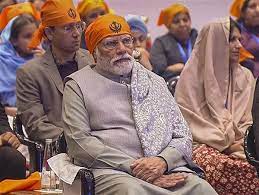
Prime Minister Modi on Veer Bal Diwas: Sikh gurus taught Indians
Speaking on Tuesday, Prime Minister Narendra Modi said that Sikh gurus had inspired Indians to improve and develop their nation by teaching them to live for the beauty of their homeland. He was giving a speech at a ceremony called "Veer Bal Diwas" to honor the martyrdom of Guru Gobind Singh's two sons. According to PM Modi, their sacrifices are being honored not only in India but also around the world through initiatives in nations like Australia and the United States. We don't need to squander time or pause for a single moment. These lessons came from the gurus...We must live for the honor and glory of our nation. We must live for the benefit of the nation, PM Modi stated.
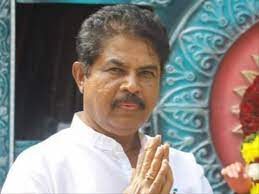
Karnataka LoP Arrested For Opposing Karsevak Shrikant Pujaris Arrest Regarding Babri Demolition
Legislative Assembly member and BJP leader R Ashoka was held by Karnataka police for allegedly inciting rioting following the 1992 demolition of the Babri Masjid. Ashoka had staged a demonstration against the state government over the detention of Shrikant Pujari. The BJP workers who have been protesting the arrest escalated their demonstration on Thursday by starting the 'I'm also a Karsevak, Arrest Me Too' campaign.LoP Karnataka Legislative Assembly & BJP politician R Ashoka was taken into custody by the police, according to ANI. Along with party members, he was demonstrating against the state government over the detention of Shrikant Pujari, who was taken into custody for his alleged role in the rioting that followed the 1992 demolition of the Babri Masjid.LoP Karnataka Legislative Assembly & BJP politician R Ashoka was taken into custody by the police, according to ANI. Along with party members, he was demonstrating against the state government over the detention of Shrikant Pujari, who was taken into custody for his alleged role in the rioting that followed the 1992 demolition of the Babri Masjid.

2023s Military Innovations and What Defense Technology Can Expect in 2024
Amidst escalating geopolitical tensions worldwide, several nations, such as Russia and India, spearheaded military innovation in 2023. Sputnik India takes a look back at some of the most inventive weapons from the previous year. In 2023, a number of cutting-edge weapon systems made their debuts. Russia, in particular, used its most advanced defense hardware in Ukraine, where the Eurasian sovereign state was engaged in a special military operation against the forces of Volodymyr Zelensky, the leader of that country.India, a longstanding strategic ally of Moscow, was not going to lag behind in terms of military hardware as New Delhi expanded its stockpile in response to the Indo-Pacific region becoming as the center of attention for world geopolitics. It's interesting to note that in 2023, Indian armaments and ammunition production and exports reached a record high.India's Defence Ministry (MoD) reports that during the current fiscal year, the South Asian nation exported military equipment valued at INR 16,000 crore ($1.95 billion). The figures indicate a $360 million increase in exports compared to the previous fiscal year.Additionally, BJP officials informed the media that it is unlikely for the panel to accept requests from rival parties' defectors that they be appointed to prestigious posts in exchange for their allegations. Senior members of the saffron party gathered in New Delhi to plan for the impending parliamentary elections and the dedication of the Ram Temple in the Uttar Pradesh city of Ayodhya. These members included Federal Ministers Bhupendra Yadav, Ashwini Vaishnav, Chief Himanta Biswa Sarma of the Assam State, and general secretaries Tarun Chugh and Sunil Bansal.
A New Panel Is Formated by the BJP to Examine New Hires Before the 2024 Elections
With the new panel, the federally dominant BJP hopes to assess potential members' devotion in advance of the 2024 parliamentary elections. A new panel has been established by the Bharatiya Janata Party (BJP) to screen lawmakers from other parties who may want to join the party before the March–April 2024 general elections.The panel will determine whether to accept or reject the politicians who wish to join the party, according to media reports citing party sources. The BJP seeks to reduce the possibility of enlisting supporters who might turn against them if they are elected to the legislature. Only after receiving consent from the committee will anyone wishing to cross the floor be permitted to participate. It is anticipated that the committee will convene for the first time on January 6.

President Muizzu of the Maldives arrives in China for a closely monitored state visit
The visit to China by Maldivian President Mohamed Muizzu takes place against the backdrop of a diplomatic spat between India and the Maldives following remarks made disparagingly about Prime Minister Narendra Modi. At the invitation of Chinese President Xi Jinping, Maldivian President Mohamed Muizzu landed in China on Monday and will stay for five days till January 12, according to an official announcement.During his visit, Muizzu is also expected to meet with business executives and senior Chinese government officials at the "Invest Maldives Forum," according to the presidency. China is currently the Maldives' biggest creditor; Male owes Beijing around $1.3 billion in debt obligations. Beijing is among the nation's largest investors and economic partners; in 2017, the two governments signed a Free Trade Agreement (FTA). The Maldives has also ratified the Belt and Road Initiative (BRI), which is supported by Beijing.
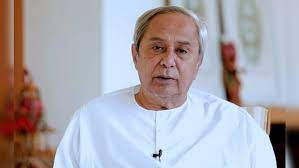
Odisha is investing more than Rs 2,500 crore to help millet farmers with their income and way of life.
"On Thursday, Odisha Chief Minister Naveen Patnaik announced that his government is investing more than Rs 2,500 crore to help the state's millet farmers with income and livelihood support. The Odisha Millets Mission was recently started by the state government in 2017 with the goal of restoring the cereal's ecosystem.Odisha has been the ""pioneer in designing a people-centric Millet Mission with focus on livelihood and nutrition of tribal communities"" , according to him. According to Patnaik, ""My government will make every effort to turn Odisha into a millet center of excellence and contribute to economic growth, wellbeing, and health of the people of Odisha."" He emphasized that Odisha is the first state to organize an international convention involving all the stakeholders, noting that the UN has declared 2023 to be the International Year of Millets. In the millet value chain, the chief minister commended the work of the Mission Shakti Women Self Help Groups (SHGs). These Self-Help Groups, operating under the name Millet Shakti, have demonstrated to the world the significant role that millet-based businesses can play in enhancing livelihoods. "
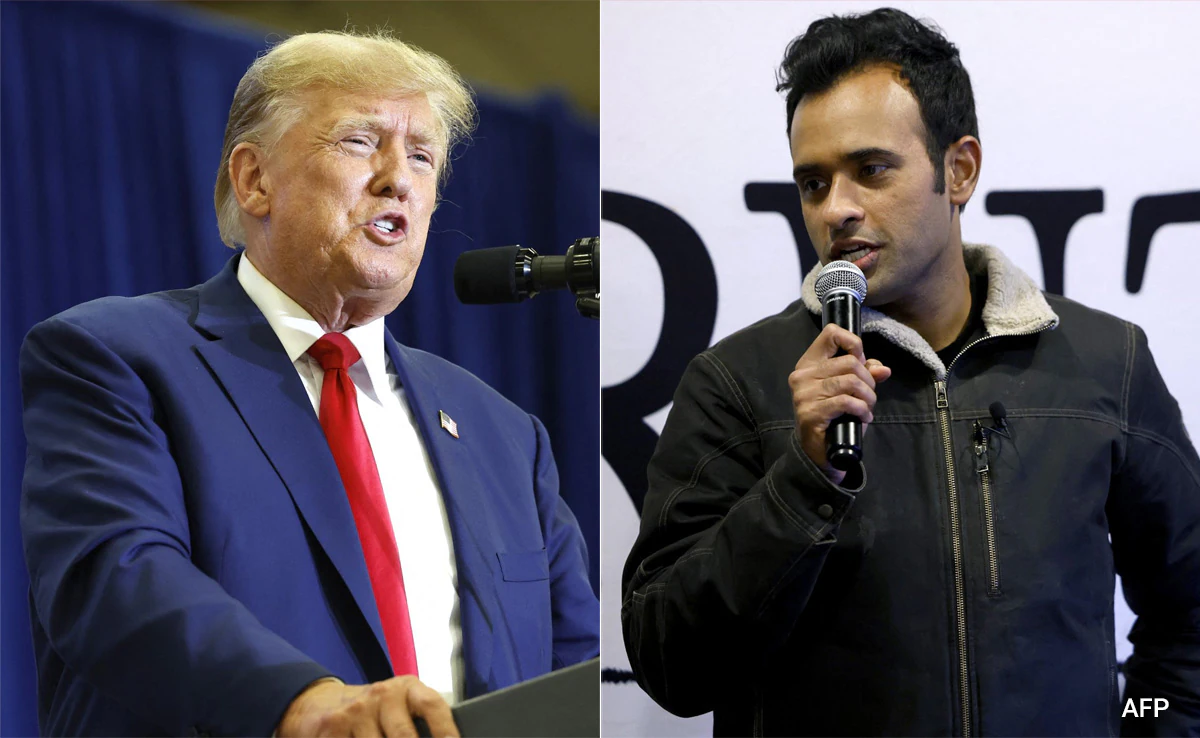
V Ramaswamy Resigns from the Presidential Race and Backs Trump Following Victory in the Iowa Caucuses
Entrepreneur Vivek Ramaswamy, who is Indian-American, withdrew from the 2024 US presidential contest today and declared his endorsement of Donald Trump following a lackluster showing in the Iowa Republican primary. Despite being relatively unknown in political circles when he entered the race in February 2023, Mr. Ramaswamy was able to attract the attention and support of Republican voters by emphasizing America first and holding strong views on immigration. His campaign strategy, in terms of both tone and policy, was very similar to that of the former president Trump. Mr. Ramaswamy aimed to reach out to the conservative support base that had helped Trump win earlier elections.Trump's victory in Iowa that same evening cemented his standing as the front-runner for the Republican nomination.Born in Ohio to Keralan immigrants, Mr. Ramaswamy became one of the surprise candidates in a Republican field still heavily influenced by Trump's name. But in the final days before the Iowa caucuses, Mr. Ramaswamy found himself under fire from Trump, who publicly attacked him, calling him a "fraud" on his social media platform Truth Social and saying that supporting the Indian-American represented siding with the "other side."


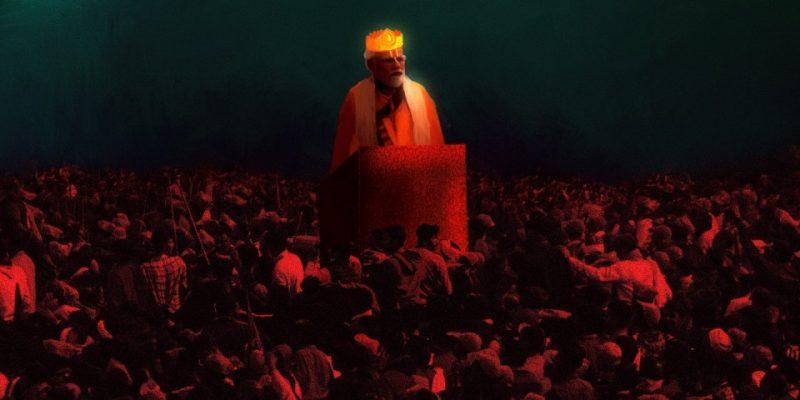
Of Bread and Circus: Roman Rajya in India
In a recent conversation on the state of affairs in India, I was educated about the ancient Roman politics of “bread and circus”. The Romans relied on skilfully curated distractions that kept the populace happy and distracted from the realities around them. The gladiators in the Colosseum and circus performances would keep the masses entertained while problems like hunger were taken care of by the state by ensuring a steady flow of grains and bread. Bread placated the public and kept their basic needs fulfilled, while the circus ensured that they were distracted from the dismal state of affairs around them.I utilise American journalist Alice Schroeder’s succinct and useful explanations of what the Roman system of bread and circus meant as a framework to make my case. While we are in the times of focusing on Ram Rajya, let us compare our current state with Roman Rajya. While we chest thump our way to being the 3rd largest economy globally, we are facing an ever-widening gap between the rich and the poor. On one hand, Indian businessmen and industrialists are climbing up on the global billionaire index while on the other, self-employed wages and regular wages have seen a negligible increase since 2017. The government has obfuscated this truth by clutching on to NITI Aayog’s Multi-Dimensional Poverty Index which claims that 25 million individuals have been lifted out of poverty in the past 9 years. Without any information on household consumption and savings, the government has hidden income-based indicators of poverty and is relying on this flawed, inaccurate and cherry-picked statistic. Manufacturing has reached historical lows under the Bharatiya Janata Party government (BJP). In 2022-23 it grew a dismal 1.3%. This is the second-lowest growth in the last 25 years. The only year worse than this was 2019-20, when the output declined by 3%. The focus is on the optics of being a manufacturing giant of smartphones, yet the devil is in the details. Wherein, government schemes have incentivised the exporting of phones from India, while ignoring incentivising value addition.
Former employees own 44 start-ups, eight backed by Binny Bansal
In the wee years of the millennium, two young former Amazon employees, Sachin Bansal and Binny Bansal, quit their jobs and founded their own e-commerce company Flipkart. The company grew by leaps and bounds and almost two decades later, a good number of Bansals’ former employees followed their paths, to start their ventures. Popularly referred to as ‘Flipkart Mafia’, Flipsters (former Flipkart employees) now own 44 start-ups, based on the data by PrivateCircle Research. However, these are only the companies about which information is available publicly and the real number could be higher. Data from the analytics platform YNOS venture engine, on the other hand, shows that of these 44 companies, eight are backed by Binny. These companies cumulatively have a valuation of $25 billion. Six of them are unicorns, with PhonePe being the company with the highest valuation - $12 billion. The other unicorns are Groww ($3 billion), Udaan ($1.75 billion), Spinny ($1.55 billion), cult.fit ($1.3 billion) and Slice ($1.3 billion), in that order. PrivateCircle’s data shows that the formation of new start-ups by Flipsters has a co-relation with the company’s ESOP buybacks. In December 2017, Flipkart bought back ESOPs worth over $100 million from over 3,000 current and former employees. In May 2018, American multinational Walmart acquired a majority stake in Flipkart. That year, the company exercised another ESOP buyback worth $500 million. The year 2018 also marked the creation of six start-ups by former Flipkart employees, the highest until then. In 2019, the company, yet again, exercised an ESOP buyback worth $100 million. In that year, eight start-ups were created by former Flipkart employees, the highest to date. Amid the pandemic, seven flipster-backed start-ups were incorporated in 2020. Four start-ups each were created in 2021 and 2022. In 2021, too, the company exercised an ESOP buyback.

Bharat Bandh today Noida, Delhi, Ghaziabad traffic and travel advisory to follow
Overview - With the announcement of a sectoral industrial strike and Gramin Bharat Bandh by workers and farmers, India is ready for a statewide protest on February 16. According to reports, there will be widespread blockages, or chakka jams, on important routes around the nation during the protest. Punjab will be the focal point of this, since most state and federal highways there are predicted to be closed for four hours. India is witnessing a statewide demonstration today, February 16, as farmers and laborers have declared a Gramin Bharat Bandh and a sectoral industrial strike. To take part in the daylong demonstration, farmer associations must band together, according to a demand made by the Samyukta Kisan Morcha, which speaks for farmers in a non-political capacity. There will be a nationwide strike from 6 a.m. to 4 p.m. According to reports, there will be widespread blockages, or chakka jams, on important routes around the nation during the protest. Punjab will be the focal point of this, since most state and federal highways there are predicted to be closed for four hours. Due to the Bharat Bandh organized by farmers' unions, the Gautam Buddh Nagar Police in Noida would implement restrictions, including CrPC Section 144, to prohibit illegal public gatherings throughout the region. The nationwide farmers' protest may cause traffic gridlock in Delhi as well.Thirty-four public intellectuals and artists have signed a joint statement endorsing the strike and calling on people of all backgrounds to support the farmers and workers. The significance of this "momentous action" is emphasized in the sentence. Emergency services including ambulance services, medical shops, and schools are likely to continue operating despite the interruption caused by the Bharat Bandh, guaranteeing minimum impact on essential services. Workers and farmers are uniting to draw attention to urgent issues and demand action from the government through the walkout and Bharat Bandh. The demonstration seeks to raise awareness of the difficulties experienced by these marginalized groups and to advocate for significant change with broad support and participation. The Samyukta Kisan Morcha (SKM) and central trade unions have called for a statewide Gramin Bharat Bandh in response to the treatment of farmers at the Haryana border. Tear gas was deployed by the Haryana police to break up the farmers' march. According to reports, the following are anticipated to be impacted by the Gramin Bharat Bandh: 1) National transportation 2) Stores in remote locations 3) Current MNREGA projects 4) Industrial projects in rural regions Private offices; 6) the service industry; 7) all aspects of agriculture.

57% vs 10%: BJP vs Congress share in electoral bond funds
In the six years since the electoral bonds scheme was introduced, more than half, or 57%, of the funds extended through bonds have gone to the BJP. The party, as per its declarations to the Election Commission, received Rs 5,271.97 crore via bonds between 2017-2022. The Congress was a distant second at Rs 952.29 crore. The EC is yet to publish the annual reports of parties for the financial year 2022-2023. The Supreme Court on Thursday held the changes made in the law to introduce the electoral bonds scheme as unconstitutional, in a unanimous verdict on a batch of pleas challenging the legal validity of the Centre’s scheme which allowed for anonymous funding to political parties. A five-judge Constitution Bench presided by Chief Justice of India D Y Chandrachud also directed that “the issuing bank shall herewith stop the issuance of electoral bonds” and asked the State Bank of India (SBI) to “submit details of the electoral bonds purchased since the interim order of the court dated April 12, 2019, till date to the Election Commission of India (ECI)”. The bench, also comprising Justices Sanjiv Khanna, B R Gavai, J B Pardiwala and Manoj Misra, said, “The deletion of the proviso to Section 182(1) of the Companies Act, permitting unlimited corporate funding to political parties is arbitrary and violative of Article 14”. Under the scheme, notified by the Narendra Modi government on January 2, 2018, electoral bonds could be purchased by any citizen of India or entity incorporated or established in India. An individual can buy electoral bonds, either singly or jointly with other individuals. It was pitched as an alternative to cash donations and as a way to increase transparency in political funding. In the period between 2017-2018 and 2021-2022, electoral bonds worth Rs 9,208.23 crore were sold, according to State Bank of India data obtained by The Indian Express through RTI.An analysis of the annual audited account statements submitted by the parties to the EC puts the worth of the contributions via bonds to the BJP at Rs 5,271.97 crore, from 2017-2018 till 2021-2022.
After Swami Maurya, SP’s Apna Dal ally speaks out over ‘sidelining’ of backwards
There is trouble brewing within the Samajwadi Party (SP), with dissenters using the latest round of rolling Rajya Sabha polls, due on February 27, as a platform to voice their disagreements with the party leadership. At least two prominent leaders of the party have questioned the SP’s “treatment” of backward leaders, with questions raised on why it had not stood by its own Lok Sabha poll promises regarding, what it calls, the PDA (Pichda, Dalit and Alpasankhyak) groups, while naming its Rajya Sabha candidates. The first was party national general secretary Swami Prasad Maurya, who resigned from his post on Tuesday, claiming that he was being undermined within the party by other leaders who described his statements as his “personal views”. Now Pallavi Patel, who won the Assembly seat from Sirathu in 2022 on the SP symbol, with her party Apna Dal (Kamervadi) as SP’s ally, has said she won’t cast her vote for the Rajya Sabha polls. The vote of the lone Apna Dal (K) leader could become crucial for the SP in getting all three of its nominees elected to the Rajya Sabha. Patel has objected to the fact that two of the three candidates nominated by the SP are not from PDA communities, and she suggested Wednesday that it was not certain that her party would continue as an SP ally. SP sources claimed her real grievance was that her mother Krishna Patel wasn’t nominated. SP chief Akhilesh Yadav, still recovering from the exit of ally RLD, asserted that there was no cause for worry. The SP, which can win 3 of the 10 Rajya Sabha seats from Uttar Pradesh that are falling vacant, has nominated former chief secretary Alok Ranjan, actor-turned-politician Jaya Bachchan — both Kayasths — and Ramji Lal Suman, a Dalit. Other party leaders too said on Wednesday that there was a difference between what SP chief Akhilesh Yadav is preaching and what he does. “To vindicate his PDA pitch, he should have sent three PDA people to the Rajya Sabha. He has sent Jaya Bachchan ji, who is a reliable leader for the SP. But was it the right choice in an election year? The second choice — Alok Ranjan — has raised more eyebrows within the party. He is from an upper caste, has no grounding in politics. The party leadership could have chosen a woman from a marginalised community. Maybe a Muslim woman and a backward class leader…,” a Lucknow-based SP leader said. Another SP leader said: “Look at what the BJP is doing. They have given Bharat Ratna to a farmer leader (Chaudhary Charan Singh) and a backward leader (Karpoori Thakur). This is all a part of their election strategy. Akhileshji and the top leadership could have also made the nominations a tactical move. The Muslims are a main vote bank for the SP now, but it seems they have no standing within the party.”
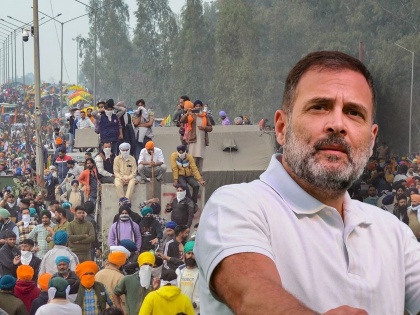
Farmers protest: Congress promises MSP for various crops if INDIA bloc wins Lok Sabha elections
The Congress has promised to implement MSP for various crops if INDIA bloc wins the upcoming Lok Sabha elections. The development came even as members of over 200 farmer unions began a Delhi Chalo agitation to press their demands. The protesters have called for several changes including the enactment of a law guaranteeing minimum support price for crops. “Farmer brothers, today is a historic day! Congress has decided to give legal guarantee of MSP to every farmer on crops as per Swaminathan Commission. This step will change the lives of 15 crore farmer families by ensuring their prosperity. This is the first guarantee of Congress on the path of justice," tweeted Congress MP Rahul Gandhi. Meanwhile Congress National President Mallikarjun Kharge lashed out at the "dictatorial Modi government" for being “hell-bent on curbing the voice of farmers!". The Congress party, he assured, would provide full support to the farmers' movement. Barbed wire, tear gas from drones, nails and guns... everything is arranged. The dictatorial Modi government is trying to curb the voice of farmers! Do you remember that farmers were called "agitators" and "parasites"? In 10 years, the Modi government has broken three promises made to the food providers of the country -Farmers' income to double by 2022, according to Swaminathan report, implementation of Input Cost 50 per cent MSP and legal status to MSP," he said. The remarks however sparked censure in the BJP ranks with lawmakers noting that the other party had previously failed to implement its guarantees. “Congress failed not once but many times and the guarantees of Congress also failed...In Himachal Pradesh too, they had given a guarantee of ₹1500 to every woman per month...but all their guarantees have failed...we increased the prices of MSP and also increased the procurement and Congress spent ₹5.5 lakh crore. While the Modi government spent ₹18.49 lakh crore... the Modi government has done many times more work for the agriculture sector and the welfare of farmers and will continue to do so in future also…" Union Minister Anurag Thakur told ANI.
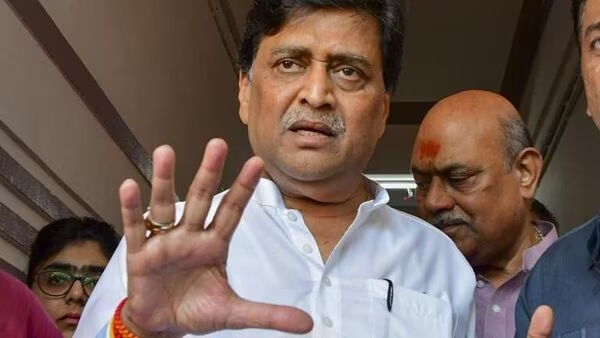
Ashok Chavan to join BJP today, calls it ‘a new beginning’
Former Maharashtra CM Ashok Chavan on Tuesday morning announced that he would be formally joining the BJP today.Ashok Chavan resigned from the primary membership of the Congress party on Monday. Sources close to the party further revealed some MLAs and office bearers of the Congress party are also likely to follow him. After submitting his resignation to Maharashtra Pradesh Congress Committee President Nana Patole, he told reporters on Monday, "I have resigned from the Assembly membership as an MLA. I have given my resignation to the Speaker. I have resigned from the Congress Working Committee and the Congress primary membership." Ashok Chavan served in the Maharashtra Legislative Assembly for three terms from 1999 to May 2014. He was the Chief Minister of Maharashtra from December 8, 2008, to November 9, 2010, when he was forced to resign due to corruption allegations linked to the Adarsh Housing Society scam. Meanwhile, several Congress leaders condemned the move, calling it a 'dirty political' game. Party leader Prithviraj Chavhan said, "Our senior colleague Ashok Chavan has resigned from the party and also as the MLA. It's a sad decision. This had been talked about for a long time. We didn't think he would make this decision. He was made the state CM on two occasions. What went wrong, who was he upset about--only he will tell about this. This is very tragic. All members of the Congress Legislative Party are together. BJP leaders are spreading rumours that some people are in touch with them," Chavan said while addressing the media. "It is really surprising. This hasn't happened in Maharashtra before. It is totally a dirty political game by the Bharatiya

‘We Need Extensive, Systematic Datasets To Counter Narratives Around Caste’
In November 2023, Bihar released the findings of its caste survey, revealing tentative but crucial data on various caste groups in the state, and exposing privileges and disadvantages faced by caste groups. There has been a demand by opposition parties to conduct a nationwide caste census to collate caste data. Such an exercise was last conducted in 1931. Some states such as Andhra Pradesh and Telangana have decided to conduct state-level surveys.We have a stereotype about caste based on the varna hierarchy [traditional birth-based Hindu social order] that it is ancient and stable, and nothing changes. The reality of caste is different at the regional level,” said sociologist Surinder S. Jodhka. Caste is an important indicator of social exclusion, he added. While the population census, which is now more than a decade old and delayed by nearly three years, collects data on Scheduled Castes (SCs) and Scheduled Tribes (STs), caste-based enumeration must be done by state governments because “caste formations are regional in character”, he added. Jodhka is a professor of sociology at the Centre for the Study of Social Systems, School of Social Sciences in Jawaharlal Nehru University, Delhi. In an interview, he speaks about the need for state-based caste censuses, why governments must engage more with scholars to unpack caste data, and the need for subclassifications of SCs, STs and Other Backward Classes (OBCs).

Gandhi’s ‘Doctrine of Frightfulness’ Charge Against the British is Just as Relevant for India Today
After the Jallianwala Bagh massacre of 1919, Mahatma Gandhi wrote that the British regime perpetuated itself by employing the doctrine of frightfulness. It struck fear in the hearts of people who were expected to meekly surrender before the colonial authorities by accepting falsehoods spun by them and forsaking not just protest but even a questioning attitude either in public or through the media. That doctrine of frightfulness is being replayed in the India of 2024. Those sections of the media which question the Modi regime are under attack and opposition parties are being split. People’s representatives, some of whom occupy high constitutional positions, are not spared. Many of them face jail, the threat of incarceration or repeated coercive action at the hands of government agencies. On February 12, former Maharashtra Chief Minister Ashok Chavan and a veteran leader of Congress resigned from the party. He was facing several corruption cases. A day later, he joined the BJP. The political buzz is that he was told he had two options – join the BJP or go to jail. This exemplifies how the doctrine of fear is used to actuate a former chief minister of a major state like Maharashtra to resign from his party and embrace the BJP. Several newspapers and independent media platforms such as Newsclick, Caravan, The Wire and Newslaundry have faced punitive action. In Kashmir, the press club was shut down and several journalists were jailed on trumped up charges. In the case of Newsclick, its founding editor Prabir Purkayastha faces terrorism charges under the draconian UAPA law for discharging journalistic responsibilities. Prime Minister Modi often takes pride in saying that India is the mother of democracy and yet his regime is acting contrary to basic democratic values. The relentless penal measures directed against the media flow from the doctrine of frightfulness which is applied with impunity to make independent and critical media subservient to the government, just as corporate media already is. These developments remind us of the dark days of martial law imposed in Punjab following the Jallianwala Bagh massacre and the suppression of the press. Mahatma Gandhi in his report on the Punjab Disorders observed that “The existence of independent journalism became an impossibility during the Martial Law regime and The Tribune, the Punjabee, and the Pratap stopped publishing”. Those words of Gandhi resonate in India now when there is a great threat posed to independent journalism and those media platforms who dare to question the powers that be.
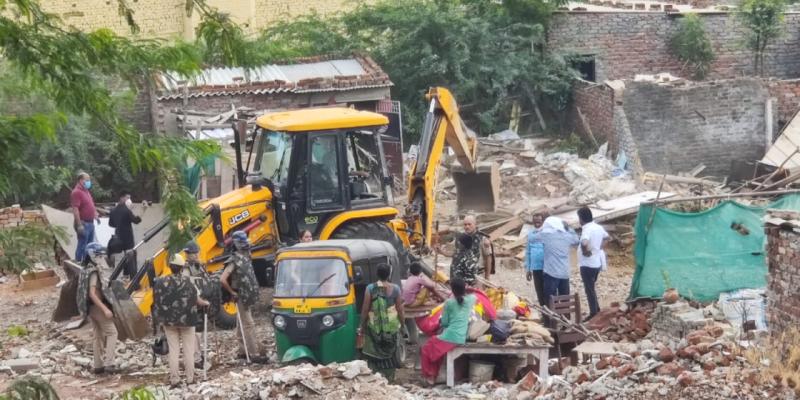
Demolitions as Extra-Judicial Punishment Have Left India in a Perpetual State of Violence
Under international human rights law, states must ensure that evictions only occur in exceptional circumstances, require full justification and the provision of adequate legal safeguards. None of that here in New India, of course. The demolitions in Uttarakhand last week, after which five people were killed in violence, follows a pattern that we see in Bharatiya Janata Party-ruled states. The pattern is of course that the government goes after citizens, especially Muslims. The demolitions are carried out as a form of extra-judicial punishment by the municipal authorities and the police, whether after episodes of communal violence or protests against discrimination. The pattern has been documented in reports like “Routes of Wrath: Weaponising religious processions” by the Citizens and Lawyers Initiative. In his foreword, former Supreme Court Justice Rohinton F. Nariman says the report corroborates the findings (of decline in Indian democratic values), adding: “It finds that in nine states, during Ram Navami and Hanuman Jayanti celebrations in April 2022, there were widespread acts of hooliganism and violence.” After this, the JCBs came out. A report by Amnesty International, of which I am India chair, has found similar patterns of people made homeless and deprived of livelihoods. These individuals were subjected to forced evictions, intimidation and unlawful force by the police and collective and arbitrary punishment, which undermined their rights to non-discrimination, adequate housing, and a fair trial. Muslim-concentrated localities were either chosen or Muslim-owned properties selectively targeted in diverse areas for demolitions.
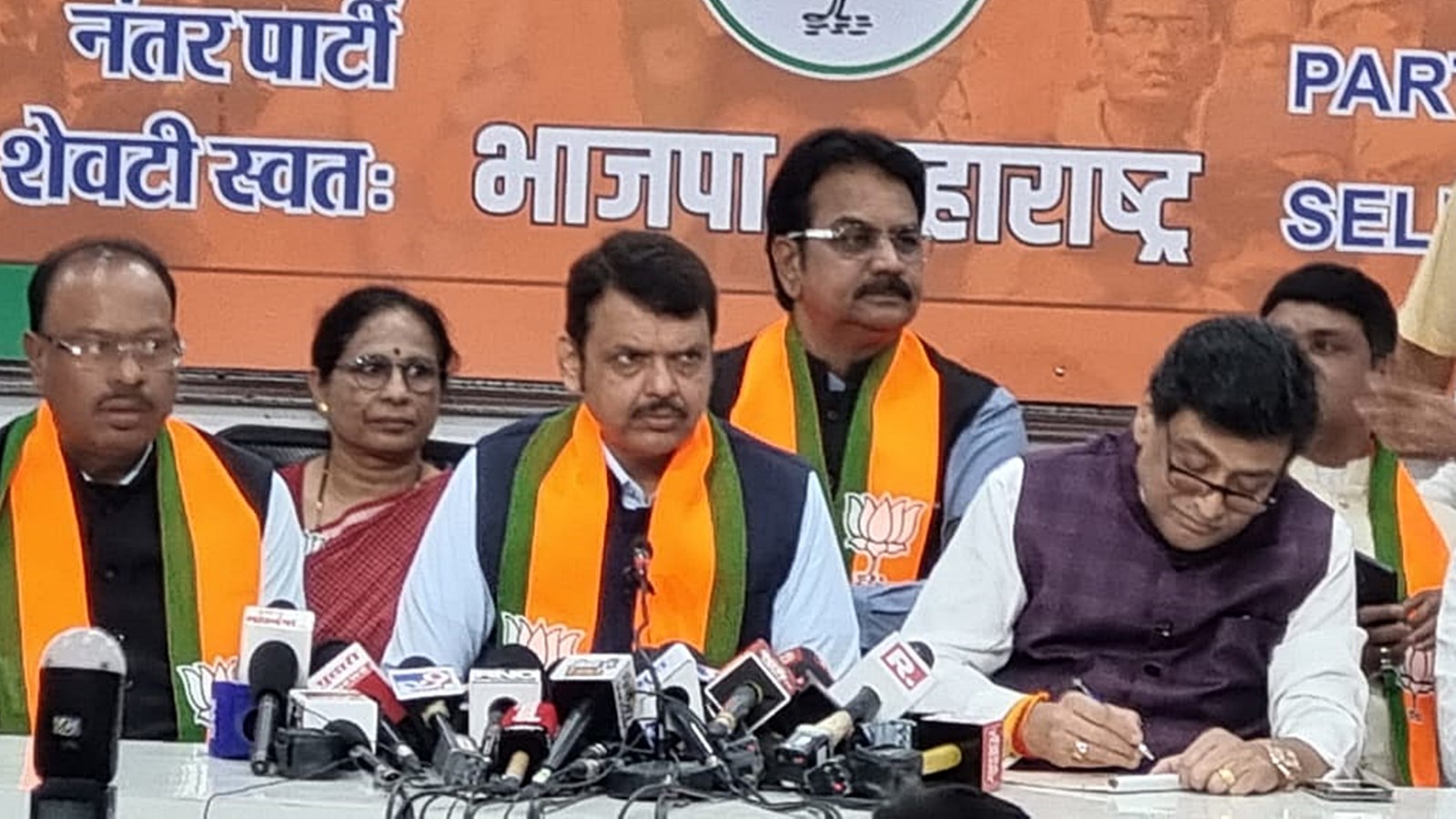
BJP imports leaders, exports confidence? What Ashok Chavan’s move says about the saffron party’s insecurities
The BJP needs Maharashtra to retain its strength in Parliament. With 48 seats — second only to Uttar Pradesh, which has 80 seats — the western state has been making the BJP nervous since the 2019 assembly elections when it failed to get a majority on its own On March 30, 2014, when he was in Nanded to campaign for the Lok Sabha elections, then Gujarat chief minister Narendra Modi received huge applause for his announcement that should he become prime minister, he would send Ashok Chavan to jail “within six months”. In 2023, with the incumbent PM expecting to begin his third innings, Chavan found himself mentioned again for his role in the Adarsh scam in the Modi government’s much tom-tommed White Paper, presented by Finance Minister Nirmala Sitharaman last week. However, as the 10th anniversary of the promise made in Nanded approaches, and barely four days after coming up in Parliament for his alleged role in the Adarsh scam, Ashok Chavan has joined the BJP. This is perfectly in line with the BJP’s current policy: Accuse and appropriate. Last year, when addressing party workers in Bhopal, Modi charged the NCP leadership of swindling Rs 70,000 crore in various misdeeds, including the Maharashtra State Cooperative Bank scam, irrigation scam and illegal mining scam. Soon, Ajit Pawar, an alleged kingpin in these scams, joined hands with the BJP, sharing the deputy chief ministership with its home-grown stalwart, Devendra Fadnavis. The BJP’s “Free Incoming” policy, read with PM Narendra Modi’s frequent trips to the state, underlines the importance given to Maharashtra in pursuit of its “Mission 400” in the upcoming parliamentary polls. In contrast to its rhetoric, the BJP’s unabashed import of tainted leaders hints at how unsure it is about Maharashtra.Having peaked in the Hindi heartland, two states are crucial for the BJP’s parliamentary arithmetic — Bihar and Maharashtra. Thanks to habitual turncoat Nitish Kumar, the BJP is assured of its position in Bihar. However, Maharashtra continues to be its Achilles’ heel. This reality was reflected in the recent survey conducted by a private agency for a media house, which gave the ruling combine not more than 22 seats. This is despite the BJP making every effort to split the Shiv Sena and the NCP to form a three-party government in the state. If this poll is to be believed, the residual Shiv Sena led by Uddhav Thackeray and the NCP that is led by the old Maratha war horse, Sharad Pawar, could walk away with as many as 26 seats. The fact that in the 2019 general elections, the BJP-Shiv Sena combine had pocketed 41 out of 48 seats speaks of how tough the task in Maharashtra is for the BJP. The BJP needs Maharashtra to retain its strength in Parliament. With 48 seats — second only to Uttar Pradesh, which has 80 seats — the western state has been making the BJP nervous since the 2019 assembly elections when it failed to get a majority on its own. The subsequent experiment by the Congress, the Sharad Pawar-led NCP and the Shiv Sena to join hands and keep the BJP at bay forced the saffron party to adopt a two-pronged strategy: Split the Shiv Sena and the NCP and later weaken the Congress by incorporating many of its leaders. Having achieved the first two, the BJP is now on the third. A point worth noting is that all these imported settlers have a common imprint. Almost all of them are Marathas — be it Narayan Rane, Radhakrishna Vikhe Patil, Harshvardhan Patil, etc — who were brought in a few years ago, or the fresh ones like Ajit Pawar and Ashok Chavan. The BJP’s quest for Maratha votes has a solid reason: It lacks its own Maratha leader who has popular appeal, particularly in western Maharashtra and Marathwada. The BJP has high hopes for Ajit Pawar for the former region, while it expects Ashok Chavan to deliver in the latter, where the BJP has been unable to find an able successor to the late Gopinath Munde. The legacy of Munde — who hailed from Beed, adjacent to Ashok Chavan’s constituency, Nanded — has three claimants: Two of his daughters, Pritam, a doctor and MP, and Pankaja, an MLA, and his nephew Dhananjay, who has joined hands with Ajit Pawar after a stint in the BJP. Even the three together do not wield the kind of influence that Munde did. Since his demise in 2014, the BJP has been in search of a formidable face in the region.
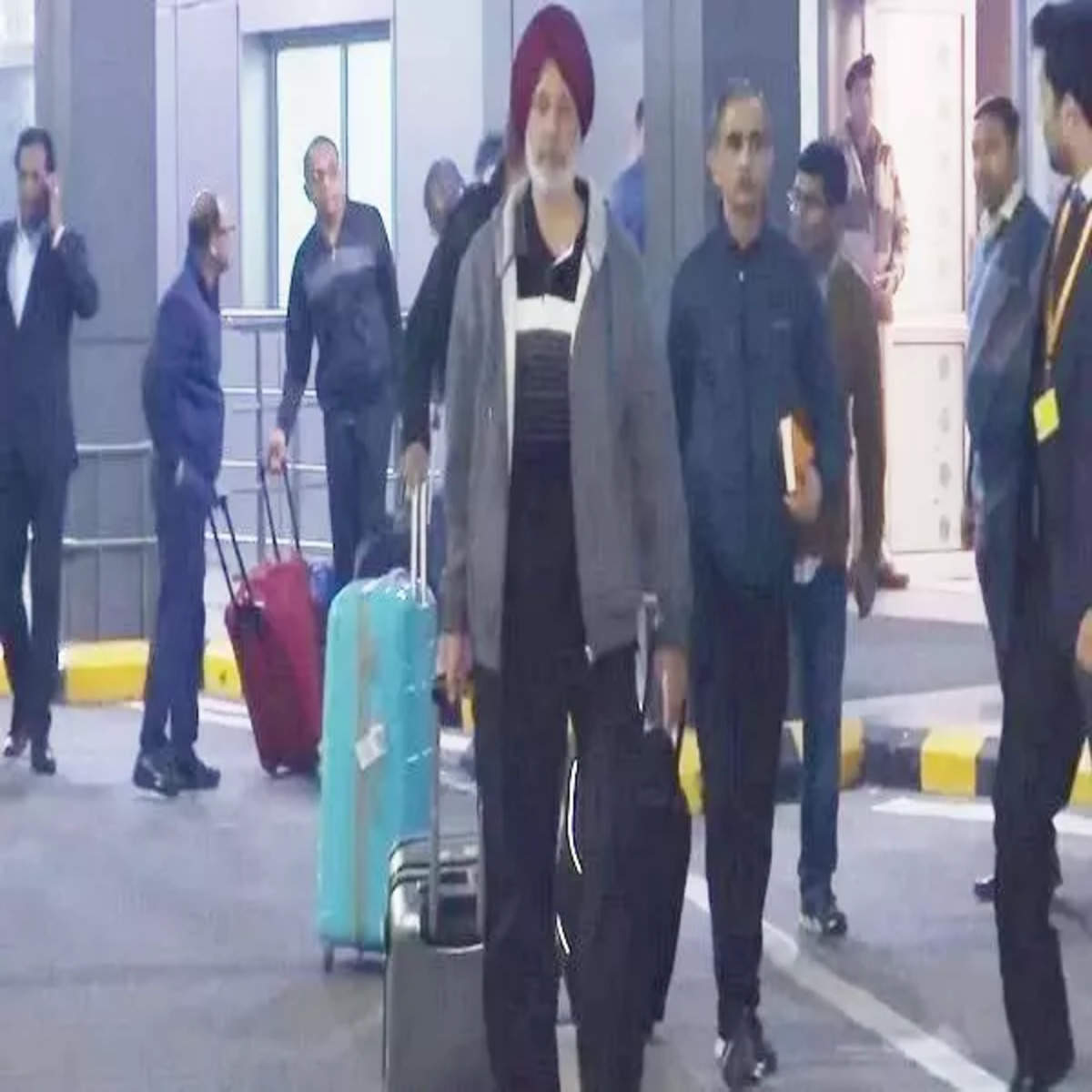
Ex-Navy vets freed by Qatar chant Bharat Mata Ki Jai, praise PM Modi
Setting foot to their homeland after several agonising months of captivity in Qatar, seven of the eight Indian navy veterans who were sentenced to death on ‘espionage’ charges, heaped praise on Prime Minister Narendra Modi, saying they wouldn’t have been freed had it for the sustained diplomatic efforts at his behest to secure their release. Relieved to finally walk free, the seven former Navy officers raised chants of ‘Bharat Mata ki Jai’ after arriving at the Delhi airport in the early hours of Feb 12. One of the Navy veterans who returned from Qatar said, “We waited almost for 18 months to be back in India. We are extremely grateful to the PM. It wouldn’t have been possible without his intervention and his equation with Qatar. We are grateful to the Government of India from the bottom of our hearts for every effort that has been made and this day won’t have been possible without those efforts.”The eight Indian nationals were imprisoned in Qatar since October 2022 and were accused of allegedly spying on a submarine programme. The retired naval personnel were sentenced to death by a Qatar court on charges that have not yet been made public officially.


