


Top Trending Business News & Highlights


Microsoft Unveils Copilot for Finance, an AI Solution to Simplify Tasks Associated with Enterprise Finance
Microsoft on Thursday unveiled Copilot for Finance, a new artificial intelligence (AI) tool designed to make everyday mundane tasks easier for financial professionals. The Copilot tool adds new features tailored to financial operations to the already-existing Copilot for Microsoft 365 stack, rather than creating a brand-new AI model. This AI tool, which focuses on enterprises, is currently in public preview. Notably, a recent update from the tech giant revealed additional features and significant enhancements for Windows 11.Microsoft presented its new AI tool in a blog post, pitching it as a means of allowing finance departments within businesses to focus on strategic tasks rather than tedious analysis and report writing. The business also cited a statistic from CFO magazine, stating that the "drudgery of data entry and review cycles" was cited by 62% of finance professionals polled as a reason they could not find time for strategic tasks. The tech giant claims that Copilot for Finance automates a number of financial tasks that would otherwise require users to put in long hours. It can accomplish a wide range of tasks, including using natural language prompts to conduct a variance analysis in Excel, reconciling data in Excel with automated data structure comparisons, giving a comprehensive summary of pertinent customer account details, transforming raw data into visuals and reports, and much more.
Published 04 Mar 2024 05:41 PM

Survey Says RBIs Paytm Action Won Affect Merchants Trust
Merchants' trust in the payment platform is unaffected by the severe limitations the Reserve Bank of India (RBI) placed on Paytm Payments Bank (PPBL), according to a survey done. According to Datum Intelligence, a Gurugram-based provider of business consulting and services, 59% of retailers still use Paytm and don't think the government crackdown will have an immediate effect on their business. The business conducted a survey with 2,000 business owners in 12 cities who accept payments through Paytm apps. According to a press release from Datum Intelligence, it was done between February 7 and February 15. Survey Says RBI's Paytm Action Won't Affect Merchants' Trust According to a Datum survey, 76% of retailers accept payments through Paytm. Merchants' trust in the payment platform is unaffected by the severe limitations the Reserve Bank of India (RBI) placed on Paytm Payments Bank (PPBL), according to a survey done. According to Datum Intelligence, a Gurugram-based provider of business consulting and services, 59% of retailers still use Paytm and don't think the government crackdown will have an immediate effect on their business. The business conducted a survey with 2,000 business owners in 12 cities who accept payments through Paytm apps. According to a press release from Datum Intelligence, it was done between February 7 and February 15. According to the survey, 21% of retailers are awaiting additional information The fact that a Paytm representative contacted them following the RBI ruling is what gives retailers their confidence. "After being contacted by a Paytm representative, 71% of merchants feel comfortable continuing to use Paytm for payments. According to the Datum Intelligence survey, only 11% of respondents are less confident about using Paytm for payments, and 14% of respondents are still looking for more information."Overall, the impact is limited on the merchant business and Paytm is engaging with merchants to reduce the damage and merchants are also waiting before deciding on alternatives," it added.
Published 28 Feb 2024 05:01 PM

India Accepts All Foreign Investment In The Space Industry
In an effort to facilitate business in the nation, the Indian government approved an amendment on Wednesday that permits 100% foreign direct investment (FDI) in the space sector. The government stated in a statement that the FDI policy reform will encourage growth in investment, income, and employment. The government stated in a statement that the FDI policy reform will encourage growth in investment, income, and employment.
Published 22 Feb 2024 01:45 AM

Thailands New Program Will Provide Up To $14,000 In Medical Coverage For Visitors
In an effort to entice travelers back after the pandemic, Thailand has launched a program to provide up to $14,000 in medical coverage in the event of an accident, the country's tourism minister announced on Thursday. Under the new plan, the government will pay up to 500,000 baht ($14,000) in expenses and up to one million baht in compensation in the event of a death. The kingdom's vital tourism industry was severely impacted by travel restrictions during the Covid-19 pandemic, and arrivals have not recovered as quickly as officials had hoped.According to AFP, the new Thailand Traveler Safety program launched on January 1 and will run through August 31. Sudawan Wangsuphakijkosol is the minister of tourism. "The campaign aims to assure foreign tourists that Thailand is safe and everyone will be under good care," she stated. For a long time, young travelers from all over the world who are looking for sun, sand, and excitement have been drawn to the kingdom. However, mishaps are not unusual, and in the past few months, there have been multiple accounts of young Europeans being left with large medical bills and insufficient insurance.The Thai government makes it clear that mishaps brought on by "negligence, intent, illegal acts" or reckless behavior are not covered by the program. Travelers can sign up for the program at tts.go.th, the website for Thailand Traveller Safety. In 2023, there were about 28 million tourists to Thailand, up from 11 million in the previous year but still far less than the 40 million that arrived in 2019, the final year before the pandemic.
Published 15 Feb 2024 04:11 PM


Business
Business globally are the pillars of any economy and they contribute in huge amount to take any country ahead financially and economically and boost the country grwoth.

Weak rural demand is anticipated to have an influence on the volume growth of FMCG companies in Q3.
Leading FMCG companies anticipate sequential improvement in consumer demand and low to mid-single-digit volume growth in the October–December quarter. Leading listed FMCG companies including Dabur, Marico, and Godrej Consumer Products stated in their quarterly reports that consumer demand from the rural market is trailing, even while the urban markets remained stable in the third quarter as demonstrated in the September quarter.Businesses anticipate a slow recovery since there are encouraging trends in volume trends and early indications of a recovery in consumption.Additionally, the producers anticipate growth in gross margins year over year, which will be aided by a moderating effect on inflation as the costs of essential inputs, including copra and edible oil, continue to be lower, and there has been some downward bias in the prices of crude derivatives. This will assist FMCG companies in allocating more funding for marketing and promotions. "Increasing advertising and promotion (A&P) spending will be the primary driver of a sizable amount of the gross margin growth. As a result, operating profit is anticipated to increase year over year and record an improvement, according to Dabur India's quarterly updates. This is somewhat faster than revenue growth.

Pre-Series A Funding of Rs 10 Crore is Secured by Settl for Co-Living Expansion
In a pre-series A investment round, investors including Gruhas, We Founder Circle, Inflection Point Ventures, and others have contributed Rs. 10 crore to the proptech startup Settl. Settl., which was founded in 2020, intends to use the money for technology advancement, staff growth, and working capital.With 60+ locations across Bengaluru, Hyderabad, Gurugram, and Chennai, Settl. is a co-living operator that offers 4000 beds, mostly for working people, for rental fees between Rs 12,500 and Rs 18,000 per bed.To date, the portal that lets users look for and rent completely furnished rooms, flats, or communal living spaces has raised a total of Rs 15 crore.Another IIT Madras initiative aims to support 100 businesses by 2024. By 2024, 100 companies from a variety of industries will be supported by the IIT Madras Incubation Cell (IITMIC), the institute's central hub for fostering, advising, and supervising diverse innovation and entrepreneurship initiatives."We at IIT Madras take tremendous satisfaction in the fact that we innovate a lot more. In 2024, we also want to launch 100 start-ups. A number of intriguing innovations are also emerging from IIT Madras-incubated start-ups, including Mindgrove Tech, AgniKul Cosmos, and Hyperloop start-up The ePlane Company. These startups will produce goods that are extremely important to the country." remarked Professor V. Kamakoti, Director of IIT Madras.

For FY23, Unacademys revenue jumps 26% to Rs 907 crore while its loss cuts
The test-prep startup Unacademy reported that, despite constant layoffs at the company, its losses in FY23 decreased by 41% to Rs 1,678 crore. In FY23, employee-related expenses decreased by 28% to Rs 1,281 crore.The test-prep startup Unacademy reported that, despite constant layoffs at the company, its losses in FY23 decreased by 41% to Rs 1,678 crore. In FY23, employee-related expenses decreased by 28% to Rs 1,281 crore.In what was a difficult year for the startup environment, many modern businesses, like Myntra, ZestMoney, and Curefoods, reported stronger revenues for FY23, but their losses also increased.Revenue at Myntra rises to Rs 4,375 crore: The apparel retailer Myntra, which is owned by Flipkart, reported a 25% increase in operating revenue to Rs 4,375 crore in FY23, despite a 31% increase in losses to Rs 782 crore. The online fashion platform's largest expense, amounting to Rs 1,758 crore, was spent on advertising and promotional activities, representing a 35% increase over the previous year.Unacademy reduces losses to Rs 1,678 crore, or 41%: Unacademy, a startup providing test preparation, reported that its losses in FY23, which included several layoffs at the company, decreased by 41% to Rs 1,678 crore. The Bengaluru-based firm saw a 26% increase in sales to Rs 907 crore during the year, while costs associated with payroll decreased by 28% to Rs 1,281 crore.ZestMoney reports a loss of Rs 412 crore. ZestMoney, a troubled startup that has been searching for a buyer, declared a net loss of Rs 412.4 crore for the fiscal year 2023. On the other hand, while total expenses increased by 21% to Rs 662.2 crore, overall revenue for the buy-now-pay-later platform increased by 72% to Rs 250 crore.

VinFast, A Rival To Tesla, Is Likely To Construct An EV Battery Plant In India
The test-prep startup Unacademy reported that, despite constant layoffs at the company, its losses in FY23 decreased by 41% to Rs 1,678 crore. In FY23, employee-related expenses decreased by 28% to Rs 1,281 crore.The test-prep startup Unacademy reported that, despite constant layoffs at the company, its losses in FY23 decreased by 41% to Rs 1,678 crore. In FY23, employee-related expenses decreased by 28% to Rs 1,281 crore.In what was a difficult year for the startup environment, many modern businesses, like Myntra, ZestMoney, and Curefoods, reported stronger revenues for FY23, but their losses also increased.Revenue at Myntra rises to Rs 4,375 crore: The apparel retailer Myntra, which is owned by Flipkart, reported a 25% increase in operating revenue to Rs 4,375 crore in FY23, despite a 31% increase in losses to Rs 782 crore. The online fashion platform's largest expense, amounting to Rs 1,758 crore, was spent on advertising and promotional activities, representing a 35% increase over the previous year.Unacademy reduces losses to Rs 1,678 crore, or 41%: Unacademy, a startup providing test preparation, reported that its losses in FY23, which included several layoffs at the company, decreased by 41% to Rs 1,678 crore. The Bengaluru-based firm saw a 26% increase in sales to Rs 907 crore during the year, while costs associated with payroll decreased by 28% to Rs 1,281 crore.ZestMoney reports a loss of Rs 412 crore. ZestMoney, a troubled startup that has been searching for a buyer, declared a net loss of Rs 412.4 crore for the fiscal year 2023. On the other hand, while total expenses increased by 21% to Rs 662.2 crore, overall revenue for the buy-now-pay-later platform increased by 72% to Rs 250 crore.
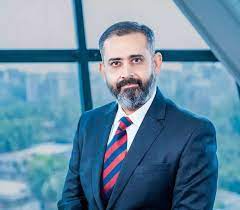
Rajat Diwakar is appointed CEO of iD Fresh Foods India.
Rajat Diwakar has been named CEO of iD Fresh Food's India division, the business announced on Friday. Diwakar worked as the Managing Director of Marico Bangladesh Limited before being hired by iD Fresh Foods. Additionally, he has over 20 years of experience leading FMCG companies.Leader of iD Fresh India, Rajat Diwakar Delhi, New: iD Fresh Food, a ready-to-cook packaged food firm, strengthened its leadership team on a national and international level on Friday by appointing industry veteran Rajat Diwaker as the India CEO and PC Musthafa as the Global CEO.Today, iD Fresh Food announced the appointment of Rajat Diwaker, a seasoned industry veteran, as the CEO for India. Rajat is a seasoned professional with more than 20 years of experience in the FMCG sector. He was the Managing Director of Marico Bangladesh Limited in his previous position. Additionally, he serves as a director on the board of Bangladesh's Foreign Investors' Chamber of Commerce and Industry (FICCI).In addition to continuing to lead the board of directors, PC Musthafa, who founded iD Fresh and served in that capacity for almost 20 years, now assumes the position of global CEO. Musthafa will be in charge of iD Fresh's worldwide market innovations, as well as international expansions, strategic acquisitions, the development of food-tech capabilities, and organizational culture inspiration.iD Fresh plans to designate specific Business Heads and CEOs for every international market as part of its expansion strategy. In actuality, the business is currently employing a US CEO. At present, more than one-third originates from sources outside of India. In 2024, the company intends to increase its presence in the current markets while branching out into new ones like Singapore and Australia.The global CEO of iD Fresh Food, PC Musthafa, commented on the most recent development, saying, "iD Fresh's journey has been incredibly rewarding so far, and we continue to make tremendous strides." I'm happy to have Rajat Diwaker join the iD Fresh team. I have no doubt that in the years to follow, we will accomplish greater things and win over more hearts under his capable and visionary leadership. And because of the unwavering support from customers that we have accumulated over the years, I am excited to lead the brand into new international markets as we set off on new experiences.
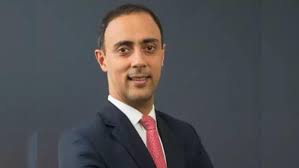
Revenues increase 67% as InCred Finance reports a net profit of Rs 121 crore for FY23.
InCred Finance, which joined the unicorn club last year, declared total revenues for the fiscal year 2023 of Rs 877.5 crore, a 67% increase over the previous fiscal year. According to data obtained from research platform Tracxn, the non-banking financial company also claimed a net profit of Rs 121 crore in FY23, a notable increase from the Rs 31 crore it reported in FY22.As the second unicorn of 2023, InCred Finance raised $60 million in December from a group of investors that included very wealthy customers, valued at $1.04 billion. The money will be utilized to expand its primary business verticals, which include lending to micro, small, and medium-sized businesses (MSME), consumers, and students.The other Indian firm to join the unicorn club in 2023 was Zepto, a quick commerce company. A privately held business valued at $1 billion or more is known as a unicorn. Experienced banker Bhupinder Singh launched InCred Finance, the lending division of InCred Group, in 2016. It offers loans in the areas of school finance, small business lending, and retail lending. It amalgamated with KKR India Financial S.A. in 2022.InCred said earlier in November that it has grown its loan portfolio to Rs 7,500 crore in six years, with over 50% compound annual growth over the previous three years. Institutional investors include the Abu Dhabi Investment Authority (ADIA), Moore Strategic Ventures, Elevar Equity, Oaks Asset Management, and the Dutch development financing corporation FMO have contributed money to InCred.

Fireside Ventures leads a 50 crore Series A fundraising round for mental health firm Amaha.
On Wednesday, Amaha, a company focused on mental health, announced that it has raised ₹50 crore in a Series A financing round led by Fireside Ventures. ₹15.6 crore more was contributed by other angel investors.Amaha, the former InnerHour, intends to expand and improve its mental health offerings with the help of this investment. Serving more than 600 Indian locations, the Mumbai-based organization provides a range of therapies and care programs for mental health issues like anxiety, depression, bipolar disorder, ADHD, OCD, schizophrenia, and addictions.The portfolio of Fireside Ventures, an investment firm that focuses mostly on consumer-focused startups, comprises businesses in the food and beverage, personal care, kids & education, lifestyle, and home products industries. It made investments in various wellness firms last year, including The Good Bug and Inito.A portion of the increased awareness and support for mental health and wellness in recent years has come from celebrities, including actors and cricket players, as well as from a number of organizations and social media platforms. Amaha was established in 2016 and offers digital services via an app that provides self-care tools and resources, in addition to operating physical centers in Delhi NCR, Bengaluru, and Mumbai. The founder and CEO of Amaha, Amit Malik, stated in an interview with Mint that "we're looking to go beyond digital at this stage because I think there is a lot of unmet need within the industry." Amaha has been aggressively investing in infrastructure, including physical clinics and technical advancements, despite growing losses in 2023 and maintaining a positiveAmaha obtained $5.2 million from Lightbox Ventures, a venture capital firm, in 2021. Additional angel investors that took part were Hitesh Oberoi, CEO & MD of Info Edge India Pvt. Ltd., Pankaj Sahni, CEO of Medanta-The Medicity Hospitals, and Capricorn Ventures & Micasa Investments (Singapore).

Melissa Niebes is named CEO of Federal Package, effective January 1, 2024.
Melissa Niebes has been named the new Chief Executive Officer of Federal Package, a turnkey contract manufacturer with its headquarters located in Chanhassen, MN. Her appointment will take effect on January 1, 2024. Niebes is Federal Package's President and Chief Commercial Officer at the moment. She will take over as CEO from Steve Dakolios, who recently declared his intention to become a Vice Chairman and Senior Advisor at Federal Package."Melissa has a strong track record as a growth-oriented leader in the consumer goods sector. She has given the business new life, direction, and energy. As the business grows, she will keep improving operational effectiveness and organizational procedures. The time is right for new leadership, and Melissa is qualified to advance our long-term plan and quicken

Ranji Trophy: Hand of Pondicherry Delhi lost by nine wickets.
The Ranji Trophy campaign for Delhi in 2023–24 got off to the worst conceivable start. It was Pondicherry's sole victory in the Ranji Trophy elite group, as they thrashed Delhi by nine wickets.On a chilly Day 4, Pondicherry's victory was a formality when Gourav Yadav and Abin Matthew dismissed Delhi's overnight batters, Harsh Tyagi and Ishant Sharma, early in their second innings, as they collapsed for 145 runs. With nine wickets remaining, Pondicherry took down the score in 13.1 overs, needing just 50 runs to win.Ranji Trophy 2024: Puducherry defeated Delhi, the defending champions, by nine wickets in their home opener. Former Madhya Pradesh fast bowler Gourav Yadav haunted Delhi in their own backyard with a match-winning tally of 10 wickets.Puducherry had one of their greatest victories in Ranji Trophy history on Monday, January 8, when they defeated Delhi, one of the league's heavyweights, by nine wickets in the opening game of Elite Group D at the Arun Jaitley Stadium in New Delhi. On a chilly morning in the capital city, Puducherry only needed to chase 51 runs to win, and they did so in style in just 13.4 overs.


Zee-Sony merger: NCLT issues notice to Sony to file reply in three weeks
The National Company Law Tribunal (NCLT) on Tuesday accepted a petition by a Zee Entertainment shareholder seeking the merger of its Indian entity with Sony, which was called off last week despite regulatory approvals.The Mumbai-bench of NCLT issued a notice on a petition moved by Mad Men Film Ventures, a shareholder of Zee Entertainment Enterprises (ZEEL), directing Sony Pictures Network India, now known as Culver Max, to file a reply within three weeks.Mad Men Film Ventures on Tuesday filed the petition requesting both ZEEL and Sony to implement the merger as it was approved by the NCLT in August 2023.The tribunal did not agree to the arguments made by the counsel stating that the approval by NCLT was conditional and depended on various conditions, which may be fulfilled or waived off in writing. Last week, the Sony Group Corp called off the merger with ZEEL following a stalemate over who will lead the merged entity.NCLT has kept the next date of hearing on this matter on March 12.The deal stipulated that the merger was to be completed before December 21, 2023, including regulatory and other approvals with a grace period of one month to complete the transaction.This merger could have otherwise created a $ 10 billion media enterprise in the country. The National Company Law Tribunal (NCLT), on Tuesday, accepted a petition filed by a shareholder of Zee Entertainment seeking the merger of Zee Entertainment's Indian entity with Sony, a move that had been called off last week despite obtaining regulatory approvals.The NCLT Mumbai bench issued a notice regarding a petition filed by Mad Men Film Ventures, a shareholder of Zee Entertainment Enterprises (ZEEL) directing Sony Pictures Network India, currently known as Culver Max, to submit a reply within a three-week timeframe.On Tuesday, Mad Men Film Ventures submitted a petition urging both Zee Entertainment Enterprises (ZEEL) and Sony to execute the approved merger, which was sanctioned by the NCLT in August 2023.
Bajaj Finserv Q3 results: Net profit increases by 22% to Rs 2,158 crore
Bajaj Finserv on Tuesday reported a 22 per cent increase in consolidated net profit to Rs 2,158 crore for the December quarter.The diversified financial services group had earned a net profit of Rs 1,782 crore in the year-ago period.The company's total income increased to Rs 29,038 crore in the third quarter of the ongoing fiscal from Rs 21.755 crore in the year-ago period, Bajaj Finserv said in a regulatory filing.Interest income during the quarter increased to Rs 13,922 crore as against Rs 10,430 crore in the same period a year ago.Total expenses also moved up to Rs 23,609 crore from Rs 17,336 crore in the same quarter a year ago. During the quarter, its subsidiary Bajaj Allianz Life Insurance Company posted shareholders' profit at Rs 108 crore from Rs 81 crore, registering an increase of 33 per cent.Non-life arm Bajaj Allianz General Insurance profit remained flat at Rs 281 crore as compared to Rs 278 crore in the year-ago period. The profit after tax for Bajaj Housing Finance Ltd, a wholly-owned subsidiary of Bajaj Finance, experienced a growth of 31 per cent. Additionally, Bajaj Finance's consolidated assets under management crossed the milestone of Rs 3 lakh crore in Q3FY24.Bajaj Allianz General Insurance Company (BAGIC) reported a 19 per cent growth in gross written premium. Excluding the impact of bulky tender-driven crops and government health business, the growth remained robust at 20 per cent for the company. Meanwhile, on Monday, Bajaj Finance, a subsidiary of Bajaj Finserv, announced a consolidated net profit of Rs 3,638.95 crore for the December quarter, marking a 22.4 per cent increase from the previous year. In Q3FY24, Bajaj Finance achieved its highest-ever quarterly growth in customer franchise, adding 3.85 million new customers and recording 9.86 million new loans booked.In addition, the interest income of the company during the quarter increased by 33.5 per cent on an on-year basis to Rs 13,922 crore compared to Rs 10,430 crore in the same period of the previous fiscal year. The premium and operating income from the insurance business of the company in the October-December quarter climbed to Rs 12,308.62 crore, as compared to Rs 9,102.50 crore in the same period of the previous year.

ITC Q3 results: Net profit rises 10.8% to Rs 5,572 crore, beats estimates
India's ITC beat analysts' estimates for third-quarter profit on Monday as the consumer goods giant benefited from higher demand for its products ranging from cigarettes to noodles. The company's profit rose 10.8% to Rs 5,572 crore ($670.3 million) in the three months ended Dec. 31. Analysts on average had expected a profit of Rs 5,148 crore, according to data from LSEG. The company and peers have benefited as a crackdown oFY23.e smuggling of international cigarette brands reduced competition.Cigarettes account for more than 40% of ITC's topline. Revenue from operations rose 2% to Rs 17,665 crore, with the cigarettes business growing 3.6%. Bajaj Finance Ltd on Monday reported a 22.40 per cent year-on-year (YoY) rise in its consolidated third-quarter (Q3) profit for the ongoing financial year 2023-24 (FY24). The figure stood at Rs 3,638.95 crore in Q3 FY24 as against Rs 2,973 crore in the same period last fiscal. During the quarter under review, the non-bank lender's revenue from operations grew 31.28 per cent to Rs 14,161.09 crore from Rs 10,787.25 crore in Q3 FY23. Assets under management (AUM) grew by 35 per cent to Rs 3,10,968 crore as of December 31, 2023 from Rs 230,842 crore in Q3 FY23. Net interest income increased by 29 per cent in Q3 FY24 to Rs 7,655 crore from Rs 5,922 crore in Q3 FY23. In Q3 FY24, gross NPA (non-performing asset) and net NPA stood at 0.95 per cent and 0.37 per cent, respectively, as against 1.14 per cent and 0.41 per cent in the corresponding period last fiscal. The company also said it has provisioning coverage ratio of 62 per cent on stage 3 assets.Pre-provisioning operating profit increased by 27 per cent in Q3 FY24 to Rs 5,539 crore from Rs 4,351 crore in Q3 FY23

NTPC Q3 results: Profit up 7% at Rs 5,208 cr, income falls to Rs 43,574 cr
State-owned power giant NTPC on Monday reported over 7 per cent rise in consolidated net profit to Rs 5,208.87 crore for the December 2023 quarter, aided by energy sales through trading. Its net profit stood at Rs 4,854.36 crore in the year-ago period, a BSE filing said. The total income fell to Rs 43,574.65 crore in the quarter from Rs 44,989.21 crore in the same period a year ago.The company's expenses rose to Rs 38,782.22 crore from Rs 37,007.51 a year ago. "Revenue from operations for the quarter and nine months ended 31 December 2023 include Rs 2,117.12 crore and Rs 7,012.90 crore, respectively (Previous quarter and nine months Rs 1,984.92 crore and Rs 6,039.14 crore, respectively) on account of sale of energy through trading," the filing said. The Board of Directors of the company has also approved a second interim dividend of 2.25 per share (face value of Rs 10 each) for the financial year 2023-24 in their meeting held on January 29, 2024. The date of payment/dispatch of the dividend shall be February 22, 2024. The Board had declared the first interim dividend of 2.25 per share (face value of Rs 10 each) for the financial year 2023-24 in their meeting held on October 28, 2023, which was paid in November 2023.The average tariff of the company was Rs 4.57 per unit during April-December this fiscal compared to Rs 4.96 per unit a year ago.The gross electricity generation of NTPC increased to 89.467 billion units (BU) during the third quarter against 78.646 BU in the year-ago period. Coal output increased to 8.09 MMT in the quarter from 5.35 MMT a year ago. Its production also increased during April-December this fiscal to 19.92 MMT from 13.75 MMT.Plant load factor or capacity utilisation of coal-based thermal power plants improved to 75.95 per cent in the quarter from 68.85 per cent a year ago.Domestic coal supply improved to 60.23 MMT in the October-December quarter over 52.45 MMT in the same period last fiscal.Gas consumption improved to 2.26 MMSCMD from 1.13 MMSCMD. Imported coal supply stood at 2.15 MMT in the quarter against 1.57 MMT a year ago.NTPC Group's installed power generation capacity stood at 73,874 MW as of December 31, 2023.

Share Market Budget 2024 Expectations Live: Top Stocks to watch
On February 1, finance minister Nirmala Sitharaman will present an ‘interim’ budget as the government faces a general election this year, in April-May. There are the top stocks to watch before the interim budget to watch for. The benchmark equity indices ended Monday’s trading session in the positive territory. The NSE Nifty 50 gained 385 points or 1.80% to settle at 21,737.60, while the BSE Sensex soared 1240.90 points or 1.79% to 71,941.57. The broader indices ended in positive territory, with gain led by Largecap and Smallcap stocks. Bank Nifty index ended higher by 576.20 points or 1.28% to settle at 45,442.35. Energy and PSU Banks stocks outperformed among the other sectoral indices while Media and FMCG stocks shed. Over the last 5 days, BPCL shares have seen a notable increase of 3.53%, and in the last month, the growth has been substantial, reaching almost 9.31%. Assessing the medium and long-term performance, the stock has delivered exceptional returns, recording a surge of 30.49% in the last 6 months and an impressive 47.08% over the past year. Year-to-date, the stock has jumped by a noteworthy 9.01%. As the Indian e-commerce market continues to thrive, a robust last-mile infrastructure becomes paramount for seamless and efficient deliveries. Investments in improved road networks, strategically located delivery hubs, and advanced technology solutions for optimal route planning are essential. Particularly crucial in a market with a substantial volume of Cash-on-delivery (COD) orders, enhancing last-mile capabilities not only benefits e-commerce sellers but also offers logistics companies a cost-effective solution, steering away from expensive air deliveries. Additionally, anticipating reduced tax burdens, especially on fuel and operations, would further support the financial sustainability of courier companies, fostering a conducive environment for cost-effective operations. In tandem, advocating for e-commerce-friendly policies can propel the growth of the sector, indirectly benefiting courier companies. Streamlining licensing procedures, minimizing regulatory hurdles, and implementing measures that facilitate the smooth functioning of e-commerce operations will contribute to a thriving logistics ecosystem. Furthermore, recognizing the pivotal role played by small and medium-sized enterprises (SMEs) in the logistics sector, incentivizing their growth through financial support, simplified regulations, and improved access to credit can significantly boost the overall efficiency of e-commerce logistics in India. Finally, changes in taxation policies, especially related to customs duties and tariffs, can substantially impact import costs, providing e-commerce sellers with opportunities to minimize overall expenses and scale up their businesses rapidly,” said Raju Sinha, Chief Business Officer at Fship Logistics.

Fashion Mogul Passes Elon Musk to Become Worlds Richest Person. What Is His Net Worth?
The world's richest man, Bernard Arnault, is the chairman and CEO of Moet Hennessy Louis Vuitton (LVMH), surpassing Elon Musk. According to Forbes, the French billionaire and his family's net worth increased by $23.6 billion to reach $207.6 billion. The report also stated that on Friday, Mr. Arnault's net worth surpassed that of the Tesla CEO, whose $204.7 billion fell 13% as a result of Mr. Musk losing more than $18 billion. Since 2022, the two billionaires have reportedly been in a tug-of-war over wealth, with Mr. Arnault apparently taking the lead late in the year.According to the report, LVMH, the company that owns luxury brands such as Dior, Bulgari, and Sephora, has a market capitalization of $388.8 billion, while Tesla's is $586.14 billion. The top 10 richest people in the world, as per Forbes' real-time billionaires list, are: The Arnault Family ($207.6 billion) is the owner. Elon Musk is worth $204.7 billion. Jeff Bezos ($181.3 billion)$142.2 billion for Larry Ellison Mark Zuckerberg (139.1 billion) Warren Buffett ($127.2 billion)Larry Page, worth $127.7 billion The $122.9 billion Bill Gates $121.7 billion for Sergey Brin Ballmer Steve (118.8 billion). However, the Bloomberg Billionaires Index, on the other hand, claims that Mr Musk is still the richest man in the world, with a net worth of $199 billion wealth. Elon Musk is followed by the founder of e-commerce giant Amazon Jeff Bezos with $184 billion of wealth, on the list. On the Bloomberg Billionaires Index, Bernard Arnault has occupied third place with a $183 billion net worth.

This $1.3 billion fund manager expects Teslas shares to gain 550% by 2030
Tesla Inc.’s slowing growth and shrinking profit have made it the weakest stock on the Nasdaq 100 this year. Fund manager David Baron is betting it will be a bump in the road for Elon Musk’s company before another parabolic rally.It’s a tough wager to make right now, after the electric-vehicle maker warned on Wednesday that it will expand at a “notably lower” pace this year, prompting a 12% plunge in the stock. It has now lost $209 billion in market value this month through Friday’s close. The manager of the Baron Focused Growth Fund expects Tesla’s stock to reach $1,200 by 2030, up 550% from current levels, citing its strong brand. Tesla and Musk’s privately held SpaceX were the fund’s largest holdings as of December 31. Last year, it climbed 28%, beating the 18% rise in its benchmark, the Russell 2500 Growth Index, and the S&P 500’s 24% gain. And despite Tesla’s outlook for slower sales growth this year — a result in part of the EV winter that’s gripping the entire industry — Baron still expects the stock to touch around $300 in about 12 months, from around $183 at Thursday’s close. “While he may not be growing 50% a year as the company thought,” Baron said in an interview, “this year in a tough environment he’s still growing volume by 15% to 20% per year and making us $7,000 per car of gross profit.” Tesla delivered 1.8 million cars in 2023, up 38% from the year before. This year, Wall Street analysts project unit sales will increase 17%. The company didn’t respond to an email seeking comment. The Tesla holding is a key to Baron’s goal of boosting his fund’s assets to $2 billion this year, from $1.3 billion as of December 31.The fund manager’s father, Wall Street veteran Ron Baron, is famously a big Musk bull. The elder Baron oversees the Baron Partners Fund, which a Bloomberg Intelligence study published in August found was alone among thousands of rivals to beat the Nasdaq 100 over the prior five, 10 and 15 years. As for SpaceX, David Baron projects its valuation will rise 20% in a year, double within three years and triple within five. The space and satellite company is worth $175 billion or more, Bloomberg reported last month. Baron, 43, became co-portfolio manager in 2018 with his father. The small- and mid-cap fund first bought Tesla shares in 2014. Its outperformance last year came as Tesla’s stock doubled, powered in no small part by its artificial-intelligence potential. Replicating that success in 2024 will be tough should Tesla struggle amid waning EV demand. “More investors are beginning to increasingly question the company’s growth narrative,” Toni Sacconaghi, an analyst at Sanford C. Bernstein, wrote in a note after the latest quarterly results. And while Tesla bulls often say innovation by the company can allow it to sustain a cost advantage and strong margins, “the counterargument is that the automotive industry is hyper-competitive, and carmakers have historically been unable to sustain cost advantages,” the analyst added.

Govt halves equity infusion in OMCs to Rs 15K crore
NEW DELHI: Finance ministry has halved the amount of equity infusion in state-owned fuel retailers to Rs 15,000 crore to support their investments in energy transition projects, and also has deferred the plans to purchase crude oil worth Rs 5,000 crore to fill strategic underground storages. The ministry made this decision after considering the emerging trends in oil markets. “The plan for the purchase of crude oil worth Rs 5,000 crore for caverns at Mengaluru & Visakhapatnam has been recommended for deferral by the Department of Expenditure, Ministry of Finance. This recommendation takes into account the emerging trends in oil markets,” stated the finance ministry. India, as the world’s third-largest oil importer and consumer, relies on imports for over 80% of its oil requirements. In order to safeguard against supply disruptions, the country has established strategic storage facilities at three locations in southern India. These facilities have the capacity to store over 5 million tons of oil, providing a crucial buffer to ensure a stable and secure oil supply. In 2023, during the presentation of the national budget, finance minister Nirmala Sitharaman allocated Rs 30,000 crore for Indian Oil Corporation (IOC), Bharat Petroleum Corporation Ltd (BPCL), and Hindustan Petroleum Corporation Ltd (HPCL) to support the energy transition plans. She also proposed Rs 5,000 crore for purchasing crude oil to fill strategic underground storages in Mangalore, Karnataka, and Visakhapatnam, Andhra Pradesh. These storages were established by the government as a precautionary measure against potential supply disruptions. While other state-owned oil companies such as Oil and Natural Gas Corporation (ONGC) and GAIL (India) Ltd have also outlined substantial investments to achieve net-zero carbon emissions, the equity support was specifically directed to the three fuel retailers. “Rs 30,000 crore capital support to OMCs (IOCL,BPCL, HPCL) for green energy and net zero initiatives: During Expenditure Finance Committee meeting held on November 30, 2023, it was decided maximum of Rs 15,000 crore could be provided for equity infusion into OMCs in FY 2023-24,” said the ministry.
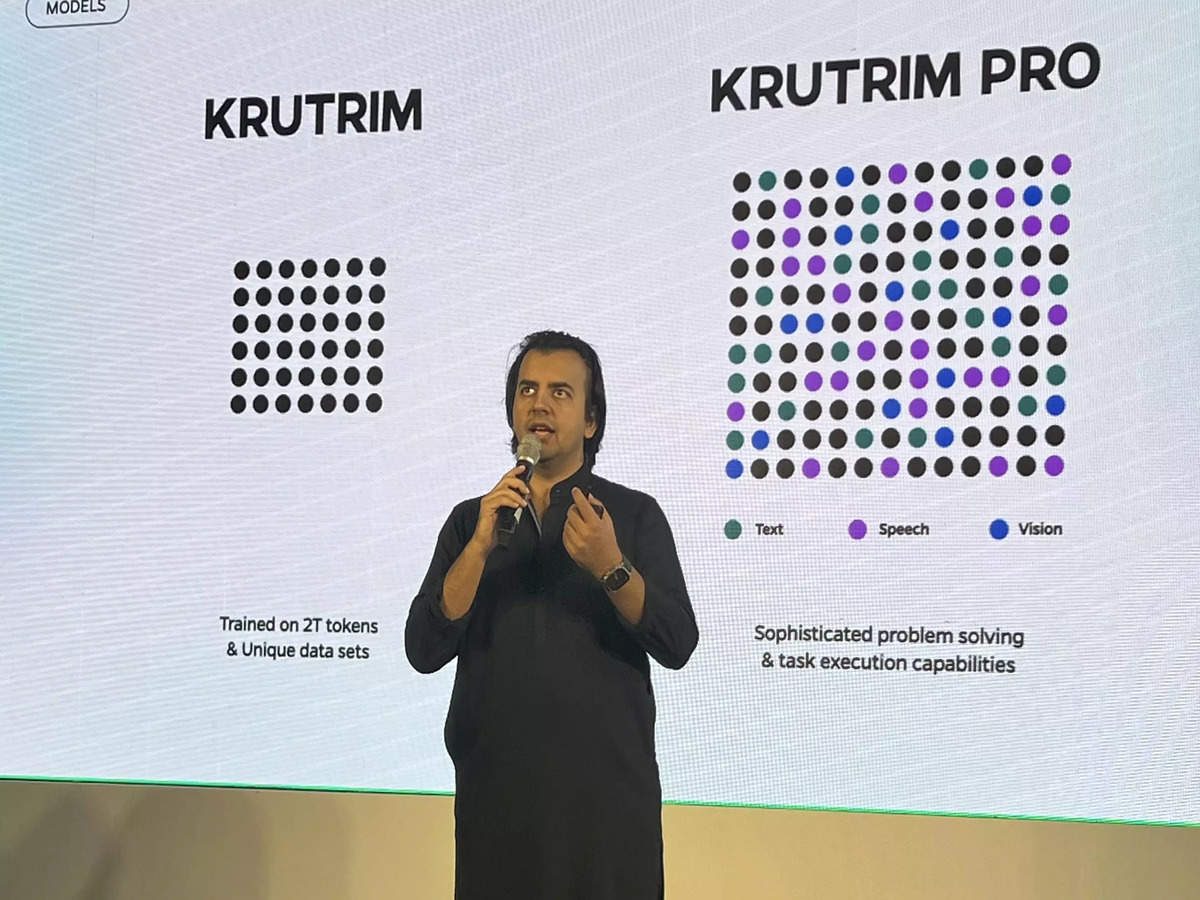
Ola founder’s Krutrim turns unicorn after raising $50 mn
BENGALURU: Ola founder Bhavish Aggarwal’s AI start-up Krutrim has turned unicorn after raising $50 million in equity. The round was led by investors including Matrix Partners India and others. Krutrim also becomes the country’s first AI start-up to attain a unicorn status. The funds raised will be instrumental in accelerating the company’s mission to revolutionise the AI landscape, drive innovation, and expand its reach globally, the start-up said. Bhavish Aggarwal, founder of Krutrim said, “India has to build its own AI, and at Krutrim, we are fully committed towards building the country’s first complete AI computing stack.” “We are thrilled to announce the successful closure of our first funding round, which not only validates the potential of Krutrim’s innovative AI solutions but also underscores the confidence investors have in our ability to drive meaningful change out of India for the world.” Last month, Krutrim unveiled its base Large Language Model (LLM). With the largest representation of Indian data used for its training, it powers generative AI applications for all Indian languages. Trained by a team of leading computer scientists, based in Bengaluru and San Francisco, this model will power Krutrim’s conversational AI assistant that understands and speaks multiple Indian languages fluently, it said. Krutrim is a family of Large Language Models, including Krutrim base and Pro that will have multimodal, larger knowledge capabilities, and many other technical advancements for inference. Trained on over 2 trillion tokens, Krutrim accomplishes better performance on multiple well known, global, LLM evaluation benchmarks including MMLU, HellaSwag, BBH, PIQA and ARC, the start-up said. Krutrim will be available in beta version for consumers in February 2024. Additionally, it will also be available as an API for enterprises and developers, seeking to create AI applications. The company is working on AI infra to develop indigenous data centers and eventually, server-computing, edge-computing and super-computers.

Yes Bank Q3 Results: Net profit soars 349.7% to Rs 231.6 crore; asset quality stable
Yes Bank Ltd's fiscal third-quarter profit surged more than fourfold but fell short of analysts' estimates. Net profit rose to Rs 231.6 crore for the quarter ended December 31 from Rs 51.5 crore a year ago, the bank said in a statement to stock exchanges on January 27. That compares with the Rs 415.1 crore quarterly profit estimate of brokerage Emkay Global.The lender's gross non-performing assets (NPA) remained steady at 2 percent in the three months ended December 31, while net NPA improved to 0.9 percent. Net interest income (NII) increased 2.3 percent from a year earlier. Operating profit rose 5.4 percent to Rs 864 crore.The bank also reported a 13.2 percent growth in deposits to Rs 2.4 lakh crore from last year. The current and savings account ratio (CASA) saw a slight decline to 29.4 percent in the quarter ended December 31 from 29.7 percent in the year earlier.

Bajaj Finance Q3 Preview: NII to rise 26%, net profit to jump 25% on strong AUM growth
All eyes will be on Bajaj Finance on January 29 as the non-banking financial company (NBFC) will declare its December quarter results. As per a poll of six brokerages, the lender's consolidated net profit is expected to rise 25 percent year-on-year to Rs 3,716 crore. An average of four brokerages shows that net interest income is expected to rise 26 percent YoY to Rs 9,344 crore. Stable asset quality and strong AUM (assets under management) growth will drive earnings, as per analysts. Bajaj Finance, on January 3, declared provisional numbers for the December quarter AUM. On the back of a strong festive season, the company's AUM crossed the Rs 3-lakh-crore mark for the first time in the quarter gone by, surging 35 percent YoY. As per the Q3 update, its deposit book grew by 35 percent to Rs 58,000 crore. During the quarter, it booked 98.6 lakh new loans, a YoY growth of 26 percent.According to domestic broking firm Motilal Oswal Financial Services margins and spreads are likely to decline sequentially by ~25 basis points and 15 basis points, respectively. Credit costs are expected to rise ~10 basis QoQ to ~1.7 percent. Axis Securities also sees margins declining by ~10-15 basis points QoQ owing to an inch-up in cost of funds. Inching up of the cost of funds is an industry-wide trend, noted Jefferies, due to the lagged repricing of MCLR-linked loans. In November 2023, the Reserve Bank of India asked Bajaj Finance to stop issuing new loans through its “eCOM” and “Insta EMI Card” for non-compliance with digital lending guidelines. It is important to watch out for management commentary on the same. Bajaj Finance Q3 results also come after RBI's caution against unsecured lending and risk-weightage increase for consumer credit. While analysts are confident of Bajaj Finance's liquidity position on the back of Rs 10,000 crore fundraising, it will be crucial to monitor management commentary on how Bajaj Finance's borrowing mix will change going ahead as banks' lending to NBFCs slows down. Apart from that, the Street will also be monitoring how new products are scaling up and if any segments are showing signs of stress.

How China Cannot Use Its Technology for Artificial Intelligence Because of US Intervention
The Biden administration is proposing requiring US cloud companies to determine whether foreign entities are accessing US data centers to train AI models, US Commerce Secretary Gina Raimondo said on Friday. "We can't have non-state actors or China or folks who we don't want accessing our cloud to train their models," Raimondo said in an interview with Reuters. "We use export controls on chips," she noted. "Those chips are in American cloud data centers so we also have to think about closing down that avenue for potential malicious activity." The Biden administration is taking a series of measures to prevent China from using US technology for artificial intelligence, as the burgeoning sector raises security concerns. The "know your customer" rule that was proposed was made available to the public on Friday and will be published the following Monday. It is significant, according to Raimondo. The US is "trying as hard as we can to deny China the compute power that they want to train their own (AI) models, but what good is that if they go around that to use our cloud to train their models?" she stated. Raimondo stated last month that Nvidia would not be permitted by Commerce "to ship is the most sophisticated, highest-processing-power AI chips, which would enable China to train their frontier models."For a variety of national security reasons, the US government is concerned about China developing sophisticated AI systems, so it has taken action to prevent Beijing from obtaining cutting-edge US technologies to bolster its armed forces. Under the proposed legislation, foreign nationals who register for or keep accounts using US cloud computing would have to provide identification through a "know-your-customer program or Customer Identification Program." Additionally, cloud computing companies would have to certify compliance on an annual basis, and it would set minimum standards for identifying foreign users.Raimondo said US cloud computing companies "should have the burden of knowing who their biggest customers are training the biggest models, and we're trying to get that information. With that information, what will we do? Depending on what we discover. President Joe Biden in October signed an executive order requiring developers of AI systems that pose risks to US national security, the economy, public health or safety to share the results of safety tests with the US government before they are released to the public.The Commerce Department intends to request those surveys from businesses in the near future. Companies will have 30 days to reply, Raimondo told Reuters. "Any company that doesn't want to comply is a red flag for me," she stated. Biden's "illegal" executive order is being implemented by Commerce, according to Carl Szabo, general counsel at the tech industry trade group NetChoice, "to force industry reporting requirements for AI." He went on to say that making US cloud providers disclose how non-US organizations were using their resources "for training large language models could deter international collaboration."


