


Top Trending Business News & Highlights


Microsoft Unveils Copilot for Finance, an AI Solution to Simplify Tasks Associated with Enterprise Finance
Microsoft on Thursday unveiled Copilot for Finance, a new artificial intelligence (AI) tool designed to make everyday mundane tasks easier for financial professionals. The Copilot tool adds new features tailored to financial operations to the already-existing Copilot for Microsoft 365 stack, rather than creating a brand-new AI model. This AI tool, which focuses on enterprises, is currently in public preview. Notably, a recent update from the tech giant revealed additional features and significant enhancements for Windows 11.Microsoft presented its new AI tool in a blog post, pitching it as a means of allowing finance departments within businesses to focus on strategic tasks rather than tedious analysis and report writing. The business also cited a statistic from CFO magazine, stating that the "drudgery of data entry and review cycles" was cited by 62% of finance professionals polled as a reason they could not find time for strategic tasks. The tech giant claims that Copilot for Finance automates a number of financial tasks that would otherwise require users to put in long hours. It can accomplish a wide range of tasks, including using natural language prompts to conduct a variance analysis in Excel, reconciling data in Excel with automated data structure comparisons, giving a comprehensive summary of pertinent customer account details, transforming raw data into visuals and reports, and much more.
Published 04 Mar 2024 05:41 PM

Survey Says RBIs Paytm Action Won Affect Merchants Trust
Merchants' trust in the payment platform is unaffected by the severe limitations the Reserve Bank of India (RBI) placed on Paytm Payments Bank (PPBL), according to a survey done. According to Datum Intelligence, a Gurugram-based provider of business consulting and services, 59% of retailers still use Paytm and don't think the government crackdown will have an immediate effect on their business. The business conducted a survey with 2,000 business owners in 12 cities who accept payments through Paytm apps. According to a press release from Datum Intelligence, it was done between February 7 and February 15. Survey Says RBI's Paytm Action Won't Affect Merchants' Trust According to a Datum survey, 76% of retailers accept payments through Paytm. Merchants' trust in the payment platform is unaffected by the severe limitations the Reserve Bank of India (RBI) placed on Paytm Payments Bank (PPBL), according to a survey done. According to Datum Intelligence, a Gurugram-based provider of business consulting and services, 59% of retailers still use Paytm and don't think the government crackdown will have an immediate effect on their business. The business conducted a survey with 2,000 business owners in 12 cities who accept payments through Paytm apps. According to a press release from Datum Intelligence, it was done between February 7 and February 15. According to the survey, 21% of retailers are awaiting additional information The fact that a Paytm representative contacted them following the RBI ruling is what gives retailers their confidence. "After being contacted by a Paytm representative, 71% of merchants feel comfortable continuing to use Paytm for payments. According to the Datum Intelligence survey, only 11% of respondents are less confident about using Paytm for payments, and 14% of respondents are still looking for more information."Overall, the impact is limited on the merchant business and Paytm is engaging with merchants to reduce the damage and merchants are also waiting before deciding on alternatives," it added.
Published 28 Feb 2024 05:01 PM

India Accepts All Foreign Investment In The Space Industry
In an effort to facilitate business in the nation, the Indian government approved an amendment on Wednesday that permits 100% foreign direct investment (FDI) in the space sector. The government stated in a statement that the FDI policy reform will encourage growth in investment, income, and employment. The government stated in a statement that the FDI policy reform will encourage growth in investment, income, and employment.
Published 22 Feb 2024 01:45 AM

Thailands New Program Will Provide Up To $14,000 In Medical Coverage For Visitors
In an effort to entice travelers back after the pandemic, Thailand has launched a program to provide up to $14,000 in medical coverage in the event of an accident, the country's tourism minister announced on Thursday. Under the new plan, the government will pay up to 500,000 baht ($14,000) in expenses and up to one million baht in compensation in the event of a death. The kingdom's vital tourism industry was severely impacted by travel restrictions during the Covid-19 pandemic, and arrivals have not recovered as quickly as officials had hoped.According to AFP, the new Thailand Traveler Safety program launched on January 1 and will run through August 31. Sudawan Wangsuphakijkosol is the minister of tourism. "The campaign aims to assure foreign tourists that Thailand is safe and everyone will be under good care," she stated. For a long time, young travelers from all over the world who are looking for sun, sand, and excitement have been drawn to the kingdom. However, mishaps are not unusual, and in the past few months, there have been multiple accounts of young Europeans being left with large medical bills and insufficient insurance.The Thai government makes it clear that mishaps brought on by "negligence, intent, illegal acts" or reckless behavior are not covered by the program. Travelers can sign up for the program at tts.go.th, the website for Thailand Traveller Safety. In 2023, there were about 28 million tourists to Thailand, up from 11 million in the previous year but still far less than the 40 million that arrived in 2019, the final year before the pandemic.
Published 15 Feb 2024 04:11 PM


Business
Business globally are the pillars of any economy and they contribute in huge amount to take any country ahead financially and economically and boost the country grwoth.

Weak rural demand is anticipated to have an influence on the volume growth of FMCG companies in Q3.
Leading FMCG companies anticipate sequential improvement in consumer demand and low to mid-single-digit volume growth in the October–December quarter. Leading listed FMCG companies including Dabur, Marico, and Godrej Consumer Products stated in their quarterly reports that consumer demand from the rural market is trailing, even while the urban markets remained stable in the third quarter as demonstrated in the September quarter.Businesses anticipate a slow recovery since there are encouraging trends in volume trends and early indications of a recovery in consumption.Additionally, the producers anticipate growth in gross margins year over year, which will be aided by a moderating effect on inflation as the costs of essential inputs, including copra and edible oil, continue to be lower, and there has been some downward bias in the prices of crude derivatives. This will assist FMCG companies in allocating more funding for marketing and promotions. "Increasing advertising and promotion (A&P) spending will be the primary driver of a sizable amount of the gross margin growth. As a result, operating profit is anticipated to increase year over year and record an improvement, according to Dabur India's quarterly updates. This is somewhat faster than revenue growth.

Pre-Series A Funding of Rs 10 Crore is Secured by Settl for Co-Living Expansion
In a pre-series A investment round, investors including Gruhas, We Founder Circle, Inflection Point Ventures, and others have contributed Rs. 10 crore to the proptech startup Settl. Settl., which was founded in 2020, intends to use the money for technology advancement, staff growth, and working capital.With 60+ locations across Bengaluru, Hyderabad, Gurugram, and Chennai, Settl. is a co-living operator that offers 4000 beds, mostly for working people, for rental fees between Rs 12,500 and Rs 18,000 per bed.To date, the portal that lets users look for and rent completely furnished rooms, flats, or communal living spaces has raised a total of Rs 15 crore.Another IIT Madras initiative aims to support 100 businesses by 2024. By 2024, 100 companies from a variety of industries will be supported by the IIT Madras Incubation Cell (IITMIC), the institute's central hub for fostering, advising, and supervising diverse innovation and entrepreneurship initiatives."We at IIT Madras take tremendous satisfaction in the fact that we innovate a lot more. In 2024, we also want to launch 100 start-ups. A number of intriguing innovations are also emerging from IIT Madras-incubated start-ups, including Mindgrove Tech, AgniKul Cosmos, and Hyperloop start-up The ePlane Company. These startups will produce goods that are extremely important to the country." remarked Professor V. Kamakoti, Director of IIT Madras.

For FY23, Unacademys revenue jumps 26% to Rs 907 crore while its loss cuts
The test-prep startup Unacademy reported that, despite constant layoffs at the company, its losses in FY23 decreased by 41% to Rs 1,678 crore. In FY23, employee-related expenses decreased by 28% to Rs 1,281 crore.The test-prep startup Unacademy reported that, despite constant layoffs at the company, its losses in FY23 decreased by 41% to Rs 1,678 crore. In FY23, employee-related expenses decreased by 28% to Rs 1,281 crore.In what was a difficult year for the startup environment, many modern businesses, like Myntra, ZestMoney, and Curefoods, reported stronger revenues for FY23, but their losses also increased.Revenue at Myntra rises to Rs 4,375 crore: The apparel retailer Myntra, which is owned by Flipkart, reported a 25% increase in operating revenue to Rs 4,375 crore in FY23, despite a 31% increase in losses to Rs 782 crore. The online fashion platform's largest expense, amounting to Rs 1,758 crore, was spent on advertising and promotional activities, representing a 35% increase over the previous year.Unacademy reduces losses to Rs 1,678 crore, or 41%: Unacademy, a startup providing test preparation, reported that its losses in FY23, which included several layoffs at the company, decreased by 41% to Rs 1,678 crore. The Bengaluru-based firm saw a 26% increase in sales to Rs 907 crore during the year, while costs associated with payroll decreased by 28% to Rs 1,281 crore.ZestMoney reports a loss of Rs 412 crore. ZestMoney, a troubled startup that has been searching for a buyer, declared a net loss of Rs 412.4 crore for the fiscal year 2023. On the other hand, while total expenses increased by 21% to Rs 662.2 crore, overall revenue for the buy-now-pay-later platform increased by 72% to Rs 250 crore.

VinFast, A Rival To Tesla, Is Likely To Construct An EV Battery Plant In India
The test-prep startup Unacademy reported that, despite constant layoffs at the company, its losses in FY23 decreased by 41% to Rs 1,678 crore. In FY23, employee-related expenses decreased by 28% to Rs 1,281 crore.The test-prep startup Unacademy reported that, despite constant layoffs at the company, its losses in FY23 decreased by 41% to Rs 1,678 crore. In FY23, employee-related expenses decreased by 28% to Rs 1,281 crore.In what was a difficult year for the startup environment, many modern businesses, like Myntra, ZestMoney, and Curefoods, reported stronger revenues for FY23, but their losses also increased.Revenue at Myntra rises to Rs 4,375 crore: The apparel retailer Myntra, which is owned by Flipkart, reported a 25% increase in operating revenue to Rs 4,375 crore in FY23, despite a 31% increase in losses to Rs 782 crore. The online fashion platform's largest expense, amounting to Rs 1,758 crore, was spent on advertising and promotional activities, representing a 35% increase over the previous year.Unacademy reduces losses to Rs 1,678 crore, or 41%: Unacademy, a startup providing test preparation, reported that its losses in FY23, which included several layoffs at the company, decreased by 41% to Rs 1,678 crore. The Bengaluru-based firm saw a 26% increase in sales to Rs 907 crore during the year, while costs associated with payroll decreased by 28% to Rs 1,281 crore.ZestMoney reports a loss of Rs 412 crore. ZestMoney, a troubled startup that has been searching for a buyer, declared a net loss of Rs 412.4 crore for the fiscal year 2023. On the other hand, while total expenses increased by 21% to Rs 662.2 crore, overall revenue for the buy-now-pay-later platform increased by 72% to Rs 250 crore.
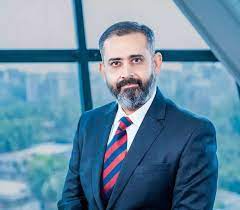
Rajat Diwakar is appointed CEO of iD Fresh Foods India.
Rajat Diwakar has been named CEO of iD Fresh Food's India division, the business announced on Friday. Diwakar worked as the Managing Director of Marico Bangladesh Limited before being hired by iD Fresh Foods. Additionally, he has over 20 years of experience leading FMCG companies.Leader of iD Fresh India, Rajat Diwakar Delhi, New: iD Fresh Food, a ready-to-cook packaged food firm, strengthened its leadership team on a national and international level on Friday by appointing industry veteran Rajat Diwaker as the India CEO and PC Musthafa as the Global CEO.Today, iD Fresh Food announced the appointment of Rajat Diwaker, a seasoned industry veteran, as the CEO for India. Rajat is a seasoned professional with more than 20 years of experience in the FMCG sector. He was the Managing Director of Marico Bangladesh Limited in his previous position. Additionally, he serves as a director on the board of Bangladesh's Foreign Investors' Chamber of Commerce and Industry (FICCI).In addition to continuing to lead the board of directors, PC Musthafa, who founded iD Fresh and served in that capacity for almost 20 years, now assumes the position of global CEO. Musthafa will be in charge of iD Fresh's worldwide market innovations, as well as international expansions, strategic acquisitions, the development of food-tech capabilities, and organizational culture inspiration.iD Fresh plans to designate specific Business Heads and CEOs for every international market as part of its expansion strategy. In actuality, the business is currently employing a US CEO. At present, more than one-third originates from sources outside of India. In 2024, the company intends to increase its presence in the current markets while branching out into new ones like Singapore and Australia.The global CEO of iD Fresh Food, PC Musthafa, commented on the most recent development, saying, "iD Fresh's journey has been incredibly rewarding so far, and we continue to make tremendous strides." I'm happy to have Rajat Diwaker join the iD Fresh team. I have no doubt that in the years to follow, we will accomplish greater things and win over more hearts under his capable and visionary leadership. And because of the unwavering support from customers that we have accumulated over the years, I am excited to lead the brand into new international markets as we set off on new experiences.
Revenues increase 67% as InCred Finance reports a net profit of Rs 121 crore for FY23.
InCred Finance, which joined the unicorn club last year, declared total revenues for the fiscal year 2023 of Rs 877.5 crore, a 67% increase over the previous fiscal year. According to data obtained from research platform Tracxn, the non-banking financial company also claimed a net profit of Rs 121 crore in FY23, a notable increase from the Rs 31 crore it reported in FY22.As the second unicorn of 2023, InCred Finance raised $60 million in December from a group of investors that included very wealthy customers, valued at $1.04 billion. The money will be utilized to expand its primary business verticals, which include lending to micro, small, and medium-sized businesses (MSME), consumers, and students.The other Indian firm to join the unicorn club in 2023 was Zepto, a quick commerce company. A privately held business valued at $1 billion or more is known as a unicorn. Experienced banker Bhupinder Singh launched InCred Finance, the lending division of InCred Group, in 2016. It offers loans in the areas of school finance, small business lending, and retail lending. It amalgamated with KKR India Financial S.A. in 2022.InCred said earlier in November that it has grown its loan portfolio to Rs 7,500 crore in six years, with over 50% compound annual growth over the previous three years. Institutional investors include the Abu Dhabi Investment Authority (ADIA), Moore Strategic Ventures, Elevar Equity, Oaks Asset Management, and the Dutch development financing corporation FMO have contributed money to InCred.

Fireside Ventures leads a 50 crore Series A fundraising round for mental health firm Amaha.
On Wednesday, Amaha, a company focused on mental health, announced that it has raised ₹50 crore in a Series A financing round led by Fireside Ventures. ₹15.6 crore more was contributed by other angel investors.Amaha, the former InnerHour, intends to expand and improve its mental health offerings with the help of this investment. Serving more than 600 Indian locations, the Mumbai-based organization provides a range of therapies and care programs for mental health issues like anxiety, depression, bipolar disorder, ADHD, OCD, schizophrenia, and addictions.The portfolio of Fireside Ventures, an investment firm that focuses mostly on consumer-focused startups, comprises businesses in the food and beverage, personal care, kids & education, lifestyle, and home products industries. It made investments in various wellness firms last year, including The Good Bug and Inito.A portion of the increased awareness and support for mental health and wellness in recent years has come from celebrities, including actors and cricket players, as well as from a number of organizations and social media platforms. Amaha was established in 2016 and offers digital services via an app that provides self-care tools and resources, in addition to operating physical centers in Delhi NCR, Bengaluru, and Mumbai. The founder and CEO of Amaha, Amit Malik, stated in an interview with Mint that "we're looking to go beyond digital at this stage because I think there is a lot of unmet need within the industry." Amaha has been aggressively investing in infrastructure, including physical clinics and technical advancements, despite growing losses in 2023 and maintaining a positiveAmaha obtained $5.2 million from Lightbox Ventures, a venture capital firm, in 2021. Additional angel investors that took part were Hitesh Oberoi, CEO & MD of Info Edge India Pvt. Ltd., Pankaj Sahni, CEO of Medanta-The Medicity Hospitals, and Capricorn Ventures & Micasa Investments (Singapore).

Melissa Niebes is named CEO of Federal Package, effective January 1, 2024.
Melissa Niebes has been named the new Chief Executive Officer of Federal Package, a turnkey contract manufacturer with its headquarters located in Chanhassen, MN. Her appointment will take effect on January 1, 2024. Niebes is Federal Package's President and Chief Commercial Officer at the moment. She will take over as CEO from Steve Dakolios, who recently declared his intention to become a Vice Chairman and Senior Advisor at Federal Package."Melissa has a strong track record as a growth-oriented leader in the consumer goods sector. She has given the business new life, direction, and energy. As the business grows, she will keep improving operational effectiveness and organizational procedures. The time is right for new leadership, and Melissa is qualified to advance our long-term plan and quicken

Ranji Trophy: Hand of Pondicherry Delhi lost by nine wickets.
The Ranji Trophy campaign for Delhi in 2023–24 got off to the worst conceivable start. It was Pondicherry's sole victory in the Ranji Trophy elite group, as they thrashed Delhi by nine wickets.On a chilly Day 4, Pondicherry's victory was a formality when Gourav Yadav and Abin Matthew dismissed Delhi's overnight batters, Harsh Tyagi and Ishant Sharma, early in their second innings, as they collapsed for 145 runs. With nine wickets remaining, Pondicherry took down the score in 13.1 overs, needing just 50 runs to win.Ranji Trophy 2024: Puducherry defeated Delhi, the defending champions, by nine wickets in their home opener. Former Madhya Pradesh fast bowler Gourav Yadav haunted Delhi in their own backyard with a match-winning tally of 10 wickets.Puducherry had one of their greatest victories in Ranji Trophy history on Monday, January 8, when they defeated Delhi, one of the league's heavyweights, by nine wickets in the opening game of Elite Group D at the Arun Jaitley Stadium in New Delhi. On a chilly morning in the capital city, Puducherry only needed to chase 51 runs to win, and they did so in style in just 13.4 overs.



Sundar Pichai asks Google employees to brace for more job cuts
San Francisco, Google CEO Sundar Pichai has reportedly warned employees to brace themselves for more job cuts this year.Google, which has let go over a thousand employees across various departments in the last one week or so, is likely to go for more job cuts, reports The Verge, citing an internal memo."We have ambitious goals and will be investing in our big priorities this year," Pichai told employees in the memo."The reality is that to create the capacity for this investment, we have to make tough choices," he added. In the memo, Pichai said that latest "role eliminations are not at the scale of last year's reductions, and will not touch every team". "But I know it's very difficult to see colleagues and teams impacted," the Google CEO added.The layoffs this year are about "removing layers to simplify execution and drive velocity in some areas"."Many of these changes are already announced, though to be upfront, some teams will continue to make specific resource allocation decisions throughout the year where needed, and some roles may be impacted," Pichai further wrote.After laying off nearly 1,000 employees last week, Google is also reportedly slashing "a few hundred" more jobs in its advertising sales team as part of an ongoing restructuring exercise. Philipp Schindler, Google's chief business officer, told staff in a memo that the fresh job cuts "were the result of changes to how Google's sales team operated", Business Insider reported.A Google spokesperson also confirmed that "a few hundred roles globally are being eliminated" as part of the restructuring.In January last year, Google cut its workforce by 12,000 people, or around 6 per cent of its full-time employees.

2024 will be a perilous year for the world economy as geopolitical tensions ramp up, top economists warn
The year 2024 will likely be a stormy one for the global economy as growth slows and geopolitical tensions ramp up around the world, according to a World Economic Forum survey. The foundation polled over 60 chief economists ahead of its annual meeting, which is taking place in the Swiss ski resort town of Davos this week. More than half the respondents said the world economy will get weaker this year, and 70% predicted looser financial conditions – implying that they believe central banks, including the US Federal Reserve, will start lowering interest rates at some point in 2024. Over 80% of the economists surveyed by the WEF expect geopolitical tensions to drive up stock-market volatility and economic uncertainty, while around three-quarters of those polled said they're expecting artificial intelligence to boost innovation in advanced economies this year. "Amid accelerating divergence, the resilience of the global economy will continue to be tested in the year ahead," WEF managing director Saadia Zahidi said. "Though global inflation is easing, growth is stalling, financial conditions remain tight, global tensions are deepening and inequalities are rising." Wall Street executives have been fretting about heightened geopolitical volatility since war broke out in the Middle East in October, although those worries didn't stop stocks from charging higher over the final two months of 2023. Despite their gloomy outlooks, the Chicago Board Options Exchange's VIX index – a widely-followed Wall Street "fear gauge" – is trading close to its lowest level since before the pandemic, suggesting that traders aren't so worried.

India emerges strong amid global economic challenges, feels Citis Tyler Dickson
Tyler Dickson, head of investment banking at Citi feels that India stands out as a shining star in Asia in the midst of global macroeconomic challenges, The Economic Times reported. Dickson expressed bullish sentiments about India's mergers and acquisition (M&A) segment and equity market activities, during an interview with the paper.Questioned about his thoughts on how well India has fared amid the global macroeconomic challenges compared to other emerging markets in Asia, Dickson noted that the country is currently the fifth-largest economy globally and is poised to climb to the third position. The enthusiasm of Indian business leaders, coupled with the 'China plus one' strategy, makes India an attractive market for global investors, he said. Citi sees it as one of the best opportunities for both Indian and international clients, it reported. On the environment regarding M&As and tighter global liquidity conditions, Dickson felt that India's M&A market remains robust at around $85 billion despite global challenges. While the debt capital markets (DCM) face challenges due to fluctuating rates, Citi maintains a positive long-term perspective on the M&A landscape in India, he added. In terms of deal activity he feels that higher interest rates globally indicate slower economic growth and necessitate adjustments in deal activity. He however noted that stability in the cost of capital is crucial, and that as the market recalibrates, confidence will increase. The focus on quality in earnings, cash flow, and growth becomes more significant in a higher interest rate environment, he added. Further, Dickson also expressed a long-term bullish outlook on technology, considering it a fundamental driver of growth, the report said. While acknowledging the challenges faced during the "technology winter," Citi is cautiously optimistic about increased activity levels for technology companies in M&A, ECM, and DCM in 2024, he added. Acknowledging that there is a "financing wall in the 2025-2026 era", characterized by the need to refinance debt at higher costs, Dickson said Citi emphasises that this debt is not super expensive. The bank sees an opportunity for the global market to adjust to this reality, considering historical periods with more expensive debt, it said.
Fitch expects RBI to cut interest rates by 75 basis points in FY25
Mumbai, Federal Bank on Tuesday reported 23 per cent increase in consolidated net profit at Rs 1,035.42 crore for December quarter 2023-24, helped by a sharp decline in provisions and also surge in non-interest income. On a standalone basis, the private sector lender's net profit in the quarter increased 25 per cent to Rs 1,007 crore, its highest ever. The growth in the core NII was constrained because of narrowing of net interest margin at 3.19 per cent from the 3.55 per cent in the year-ago period, and the 18 per cent asset growth provided a limited succour. Chief executive and managing director Shyam Srinivasan said the bank has posted 19 per cent growth in deposits by giving higher rates, but was quick to add that the deposit growth is from individual clients which will yield dividends over a period of time. He admitted that the bank has not been able to deliver on its guidance of expanding NIMs in the second half of FY24 due to the challenging external environment where funds are coming at a higher cost, and added that it will look at maintaining NIM at the 3.20 per cent level in the near term. The net advances at the end of the December quarter stood at Rs 199,185 crore, 18% year-on-year (YoY) growth over Rs 168,173 crore in Q3FY23. In the previous quarter, the bank had reported net advances at Rs 192,817 crore.The retail book was up by 24% YoY in Q3Y24, while the business banking book registered an 18% YoY growth. The bank also reported a 23% YoY growth in gold loans.The deposits in the said quarter stood at Rs 239,591 crore and were up 19% versus Rs 201,408 crore in Q3FY23. On a quarter-on-quarter (QoQ) basis, the uptick was 3% against Rs 232,868 crore in Q2FY24.The bank reported a slight uptick in its gross non-performing assets (NPAs) in Q3FY24 at Rs 2.29% on a sequential basis against 2.26% in Q2FY24. However, GNPA was down YoY from 2.43% in Q3FY23. The net NPA was flat on a QoQ basis at 0.64% in Q3FY23. In the year-ago period, the lender had reported NNPA at 0.73%.The PCR improved by 189 bps YoY and 5 bps QoQ, while the collection efficiency ensured recoveries upgradations of Rs 290 crore, the company filing said. The PCR remains elevated at 11-quarter high.The returns on assets for Q3FY24 stood at 1.39% versus 1.36% in Q2FY24 and 1.33% in Q3FY23. The net interest margins (NIMs) were reported at 3.19%, down from 3.22% in Q2FY24 and 3.55% in Q3FY23.The bank reported its October-December quarter earnings during market hours and the share fell 0.55% to the day's low of Rs 152.10.Federal Bank posted strong growth in the branch network, adding 65 new branches in FY24.

Federal Bank Q3 consolidated profit jumps 23% to Rs 1,035 cr
Mumbai, Federal Bank on Tuesday reported 23 per cent increase in consolidated net profit at Rs 1,035.42 crore for December quarter 2023-24, helped by a sharp decline in provisions and also surge in non-interest income. On a standalone basis, the private sector lender's net profit in the quarter increased 25 per cent to Rs 1,007 crore, its highest ever. The growth in the core NII was constrained because of narrowing of net interest margin at 3.19 per cent from the 3.55 per cent in the year-ago period, and the 18 per cent asset growth provided a limited succour. Chief executive and managing director Shyam Srinivasan said the bank has posted 19 per cent growth in deposits by giving higher rates, but was quick to add that the deposit growth is from individual clients which will yield dividends over a period of time. He admitted that the bank has not been able to deliver on its guidance of expanding NIMs in the second half of FY24 due to the challenging external environment where funds are coming at a higher cost, and added that it will look at maintaining NIM at the 3.20 per cent level in the near term.The net advances at the end of the December quarter stood at Rs 199,185 crore, 18% year-on-year (YoY) growth over Rs 168,173 crore in Q3FY23. In the previous quarter, the bank had reported net advances at Rs 192,817 crore. The retail book was up by 24% YoY in Q3Y24, while the business banking book registered an 18% YoY growth. The bank also reported a 23% YoY growth in gold loans.The deposits in the said quarter stood at Rs 239,591 crore and were up 19% versus Rs 201,408 crore in Q3FY23. On a quarter-on-quarter (QoQ) basis, the uptick was 3% against Rs 232,868 crore in Q2FY24.The bank reported a slight uptick in its gross non-performing assets (NPAs) in Q3FY24 at Rs 2.29% on a sequential basis against 2.26% in Q2FY24. However, GNPA was down YoY from 2.43% in Q3FY23. The net NPA was flat on a QoQ basis at 0.64% in Q3FY23. In the year-ago period, the lender had reported NNPA at 0.73%.The PCR improved by 189 bps YoY and 5 bps QoQ, while the collection efficiency ensured recoveries upgradations of Rs 290 crore, the company filing said. The PCR remains elevated at 11-quarter high.The returns on assets for Q3FY24 stood at 1.39% versus 1.36% in Q2FY24 and 1.33% in Q3FY23. The net interest margins (NIMs) were reported at 3.19%, down from 3.22% in Q2FY24 and 3.55% in Q3FY23.The bank reported its October-December quarter earnings during market hours and the share fell 0.55% to the day's low of Rs 152.10.Federal Bank posted strong growth in the branch network, adding 65 new branches in FY24.

RE Shotgun 650 vs Kawasaki Eliminator – new twin engines but which one suits your pocket and need
Indian bike maker Royal Enfield has launched its latest bike, the Shotgun 650, the fourth bike in the company’s 650cc series in India. The Shotgun 650 is inspired by the company’s Super Meteor 650, with some design changes that give it a distinct look. While the Shotgun 650 has no direct rivals, it takes on the Kawasaki Eliminator as both are new twin-engine bikes. While the Eliminator is priced significantly higher than the Shotgun 650, it is one of the closest rivals to the new offering from Royal Enfield. The Kawasaki Eliminator is powered by a 451cc liquid-cooled engine compared to the 648cc air-cooled engine on the Shotgun 650cc. In terms of design, the Royal Enfield Shotgun 650 is inspired by the Royal Enfield Super Meteor 650 and is based on the same platform. However, the Shotgun 650 comes with a bobber design. It comes with a rugged design and features a round headlamp and rear-view mirrors. It comes with a single-piece seat and minimal body panels. It features blacked out engine parts that give it a retro look. It features a large 13.8-litre fuel tank and comes with an 18-inch front-wheel and a 17-inch rear wheel.Kawasaki Eliminator Price starts at Rs. 5.62 Lakh which is Rs. 2.02 Lakh costlier than base model of Royal Enfield Shotgun 650 priced at Rs. 3.59 Lakh. In technical specifications, Kawasaki Eliminator is powered by 451 cc engine , while Royal Enfield Shotgun 650 is powered by 648 cc engine. Kawasaki Eliminator is available in 1 different colours while Royal Enfield Shotgun 650 comes with 4 colours. The Comparison Kawasaki Eliminator vs Royal Enfield Shotgun 650 can be described on the basis of price and specifications.BikeWale brings you comparison of Kawasaki Eliminator and Royal Enfield Shotgun 650. The ex-showroom price of Kawasaki Eliminator is ₹ 5,62,000 and Royal Enfield Shotgun 650 is ₹ 3,59,430. Kawasaki Eliminator is available in 1 colour and 1 variant and Royal Enfield Shotgun 650 is available in 1 colour and 3 variants. Apart from prices, you can also find comparison of these bikes based on displacement, mileage, performance, and many more parameters. Comparison between these bikes have been carried out to help users make correct buying decision between Kawasaki Eliminator and Royal Enfield Shotgun 650.
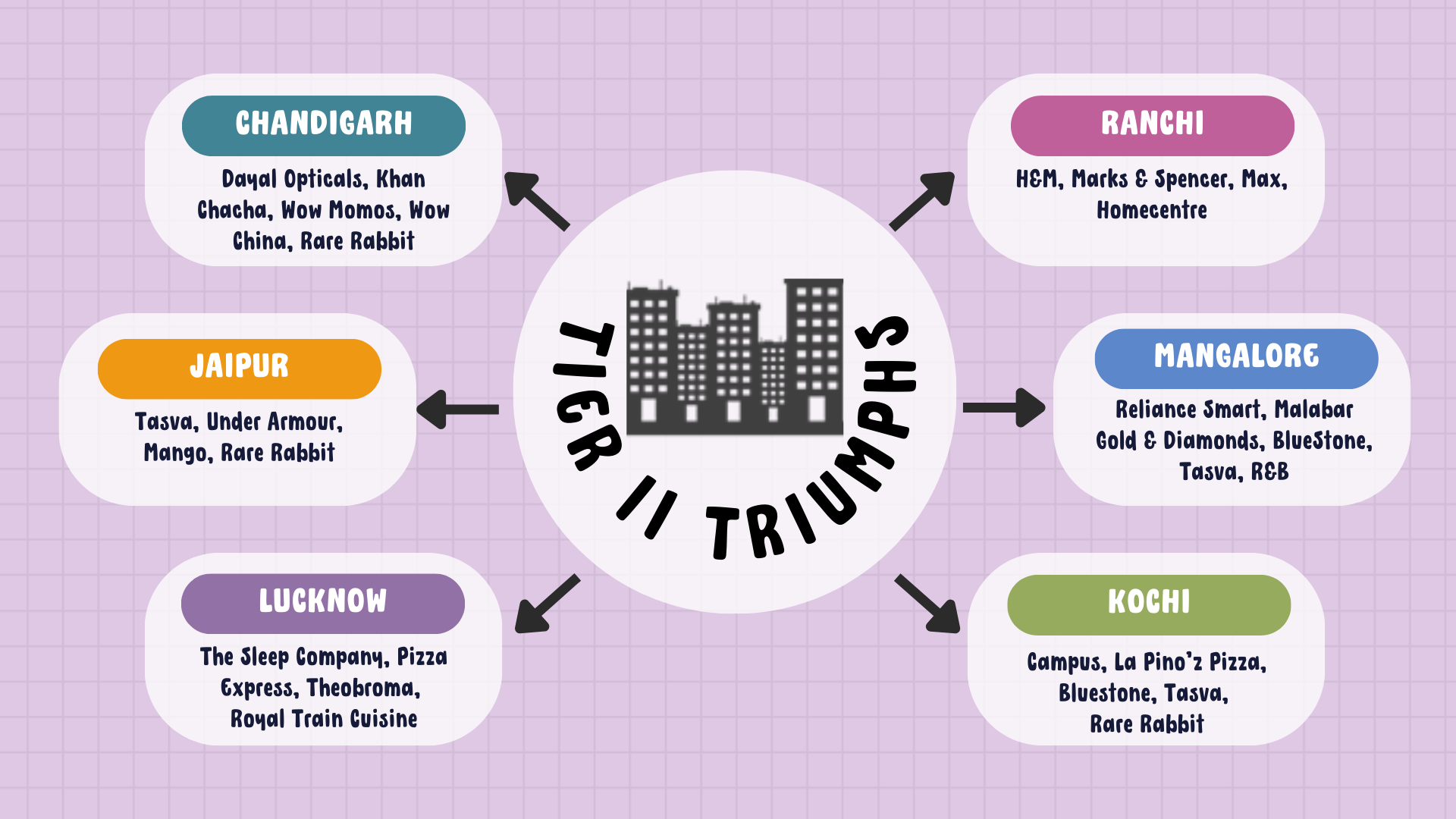
Big brands, chain stores boost retail developments in tier-2 cities
Last year, H&M opened its store in Ranchi, GAP too opened its doors to Guwahati; and Rare Rabbit did the same in Kochi. It’s not just top apparel chains that are going deeper into Bharat, fine dining restaurants like Royal Train Cuisine too have set up shop in Lucknow and Wow chain is wooing Chandigarh. In summation, as many as 35 major retail brands expanded their footprint to 14 tier-2 cities between January to September 2023, says a report by real estate services and investment firm CBRE. This flurry of activity has triggered a retail space boom in 14 cities that include Chandigarh, Jaipur, Indore, Goa, Mangalore, Kochi, Lucknow, Patna, Ranchi, Guwahati, Bhubaneshwar, Vizag, Mysore, and Coimbatore. Chains like Armani Exchange, Malabar Gold & Diamonds, Tanishq, Marks & Spencer, Starbucks, Pizza Express, Under Armour are now catering to a growing set of consumers in these cities. “Domestic and international fashion brands are looking to expand in non-metro cities, fueled by a well-aware and well-travelled consumer set,” said Ram Chandnani, MD, advisory & transactions services of CBRE India. Changing consumption patterns are affecting the retail dynamics in these cities, the report says. E-commerce trends also point to a highly-aspiring consumer base in these cities, which has brought in an influx of quality retail supply. “A striking example of evolving consumer patterns in these cities is the fact that 50% of online urban shoppers were residing in these tier-2 and tier-3 cities. A percentage that’s projected to reach nearly 60% by 2030,” the report adds.As high-end retailers make a beeline for tier-2 city business, the retail developments in the cities also picked up pace. The total retail stock in these 14 cities stood at 29 million square feet, as of September 2023. Amongst them, Jaipur, Lucknow, and Chandigarh each boast retail stock ranging between 3-7 million square feet.In the three months between July and September 2023, around 2.4 million square feet was added in the 14 cities. Most of it was added in Chandigarh, Jaipur and Lucknow. Also, a similar amount – again 2.4 million square feet – was absorbed across these cities, led by Kochi, Jaipur, and Goa.“The e-commerce boom, tech-savvy consumer base, growing aspirations and surge in discretionary purchasing are defining the retail growth in tier-II cities. Most non-metro cities are established trade and business hubs and are now witnessing multinational corporations and start-ups setting up offices as well,” said Anshuman Magazine, chairman & CEO, India, Southeast Asia, Middle East & Africa of CBRE.The retail developments have a healthy mix of malls and high streets. But, they too are evolving from vanilla stores in high-streets to malls by top-end developers. A lot of high-end malls have also come up in recent times like Nexus Elante Mall in Chandigarh; World Trade Park Mall in Jaipur; DLF Mall in Panjim and more.“Investment-grade developers are setting up large-sized contemporary malls in these cities, which are seen as an entertainment destination and not just as a place to shop,” adds Magazine.
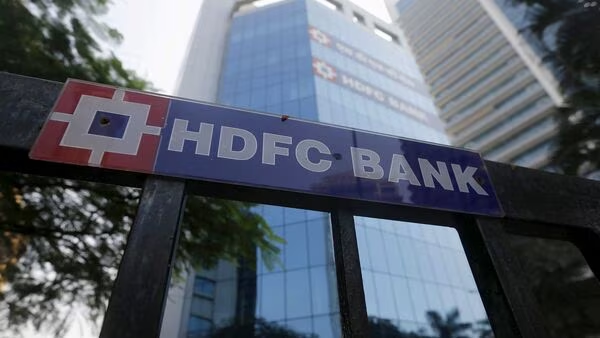
HDFC Bank Q3 consol net profit grows 2.6% sequentially to over ₹ 17,000 crore
Pre-provision operating profit (PPOP) came in at ₹23,650 crore which grew 4% sequentially.HDFC Bank’s third quarter consolidated net profit went up 2.6% sequentially to ₹17,257 crore from ₹16,811 crore in the second quarter of FY24. The year on year numbers are not comparable as HDFC Bank merged with HDFC as of July last year.The reading is better than what the street expected as most analysts predicted a marginal sequential drop in profits. Its total income went up by 6.9% to ₹1,15,015 crore as compared to ₹1,07,566 crore in the second quarter. On a standalone basis, its net interest income grew 3.9% to ₹28,470 crore from ₹27,385 crore in the September quarter. This was less than what the street was expecting. Provisions and contingencies for the quarter stood at ₹4,603 crore versus ₹3,311 crore in Q2. Gross non-performing assets (NPAs) saw an improvement sequentially as they stood at 1.26% of gross advances as compared to 1.34% as of September end. Net NPAs were at 0.34% of net advances for the third quarter.HDFC Bank’s third quarter consolidated net profit went up 2.6% sequentially to ₹17,257 crore from ₹16,811 crore in the second quarter of FY24. The year on year numbers are not comparable as HDFC Bank merged with HDFC as of July last year.The reading is better than what the street expected as most analysts predicted a marginal sequential drop in profits. Its total income went up by 6.9% to ₹1,15,015 crore as compared to ₹1,07,566 crore in the second quarter.Gross non-performing assets (NPAs) saw an improvement sequentially as they stood at 1.26% of gross advances as compared to 1.34% as of September end. Net NPAs were at 0.34% of net advances for the third quarter.Total deposits grew 27.7% while CASA deposits grew 9.5% on a year on year basis. Gross advances saw an increase of 62.4% YoY due to the effects of the merger. The balance sheet as of December 2023 stands at ₹34,82,600 crore.Nomura expected the bank to report a 6% sequential rise in net interest income and a 3% drop in profit after tax QoQ. Yearly growth is not comparable for the bank due to its merger with HDFC in July last year.Most banks are expected to see margin contraction, lack of treasury gains, and higher opex including staff cost and franchise cost in the third quarter. Emkay expects HDFC Bank’s net interest margins (NIMs) to recover from their lows seen in the second quarter.“HDFC reported strong credit revival of around 5% QoQ, but deposit growth has been lower of 2% QoQ, which we believe could be due to the unwinding of ICRR and should help the bank witness some margin recovery from the lows of Q2,” said Emkay.BoBCaps on the other hand expected its benefits from absorption of excess liquidity in the books likely to be offset by higher term deposit rates, leading to contraction in net interest margins.“Credit cost to remain stable. Expect minor YoY improvement in gross non-performing assets (GNPA) and net non-performing assets (NNPA) with controlled slippages,” BoBCaps said.

Recently, in a Meesho commercial, Rashmika Mandanna and Ranveer Singh
A new campaign from Meesho called "Jab Meesho pe hain latest trends, toh sochna kyun just maximise" has been released. Meesho has launched #Trendz, a curation that highlights affordability and modern designs, with an emphasis on Generation Z. Meesho wants to attract youthful consumers who are looking for stylish clothing that doesn't break the bank.A visual narrative starring celebrities like Rashmika Mandanna and Ranveer Singh is at the center of the campaign. Meesho hopes to position itself as a hip destination for fashion where consumers can find the newest styles at reasonable costs by launching this campaign.During the pre-launch stage, the firm showcased its fashionable apparel, the focal point of its campaign, in a transparent refrigerated truck that traveled throughout Bengaluru. The purpose of using the chilled truck is to convey the idea that trends are new and that refrigeration is necessary to keep them delicious. Prominent paparazzi like Viral Bhayani and fashion influencers like Urfi Javed intensified the online and offline dialogues created by the truck. The company created an Instagram page to provide details on the truck's daily travels throughout the city. Engaging social media users generated a lot of discussion, reaching an amazing 100 million people in just four days on various social media platforms."Fashion is ever-evolving, and many people struggle with finding the latest fashion trends at affordable prices," stated Nilesh Gupta, General Manager, Growth at Meesho. We have consistently worked to offer our clients the greatest items over the years, without sacrificing on either cost or quality. Our most recent campaign, "Meesho #trendz," was thoughtfully chosen to give fashion aficionados who appreciate both style and affordability a genuine and approachable platform. Through our partnership with trend-setters Ranveer and Rashmika and our use of humor, we hope to establish a lasting connection with the public.Meesho has partnered with Swiggy Instamart to expand its product offers even more. When clients shop for cold things (items that need to be placed in an insulated packaging) on Instamart, Meesho gives them free jewelry. Similar to the refrigerated truck, this demonstrates how new the trends are.Four films in all are part of the campaign, which will be promoted on television and online. Meesho hopes to make fashion accessible to everyone by offering a wide range of reasonably priced clothing options to its clients through this campaign.
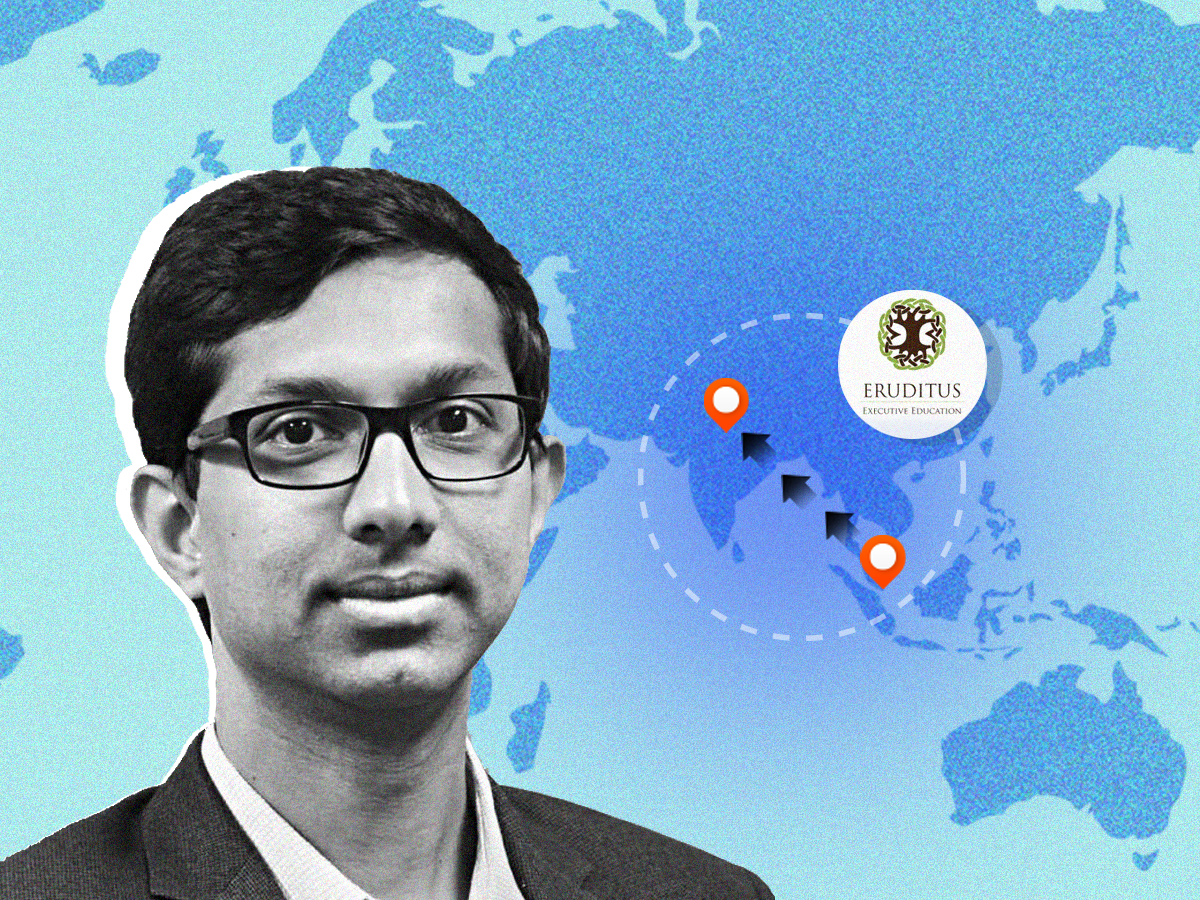
Edtech Eruditus considers an IPO as it joins the line of Indian firms doing reverse flips.
According to persons with knowledge, the edtech unicorn Eruditus intends to relocate its headquarters from Singapore to India. It will become the next in a long line of foreign-domiciled firms planning a homecoming. Now let's get started:SoftBank-backed comeback child In preparation for a flip back to India, Eruditus is in talks with several law firms and two of the Big Four firms. The decision is related to its intentions for this possible IPO, considering that markets are valuing profitable companies at multiples of their earnings. Eruditus, a company devoted to higher education, is worth $3.2 billion.Drawing a straight line: Indian startups with foreign holding corporations are in different stages of returning to India from places like Singapore and the US. The plans of digital payments company Razorpay to "reverse flip" from the US to India were originally covered by us in May of last year. Together with e-commerce firms Udaan and Meesho, other fintechs including Groww and Pine Labs have also entered the list. Fintech companies are primarily concerned with regulatory matters; nonetheless, some are relocating their registered firms in order to go local public.Numbers game: With revenue of Rs 3,322 crore ($400 million) for the fiscal year 2023, Eruditus is currently the second-largest edtech in India. The business, which reports from July to June, saw a 75% increase in full-year revenue over the prior year.Byju's, the front-runner, has not yet released its audited FY23 financial statements. According to people with knowledge, the troubled company has made over Rs 5,000 crore in sales but has lost more than Rs 8,200 crore. They stated that although it has not yet submitted its FY22 profits to the Registrar of Companies, it has given the investor access to the financials.Overview. Unicorn Edtech Eruditus plans to "reverse flip," or move their domicile from Singapore to India. Pine Labs, Udaan, Razorpay, and Groww are just a few of the Indian online companies that Eruditus is joining. Eruditus is assessing going public on the local stock exchanges.As of fiscal 2023, Eruditus has amassed revenue of Rs 3,322 crore ($400 million), making it the second largest edtech company in India. The business, which reports from July to June, saw a 75% increase in full-year revenue over the prior year.Byju's, the front-runner, has not yet released its audited FY23 financial statements. According to people with knowledge, the troubled company has made over Rs 5,000 crore in sales but has lost more than Rs 8,200 crore. They stated that although it has not yet submitted its FY22 profits to the Registrar of Companies, it has given the investor access to the financials.

Zomato Notices An Increase In Sovereign Fund Stakes From Singapore And Kuwait
Large sovereign investors from Kuwait and Singapore increased their interests in the listed foodtech startup Zomato at a time when unicorn makers Tiger Global and SoftBank had completely exited the market.Kuwait Investment Authority reportedly purchased 88 million shares in the September quarter and then added an additional 6.7 million shares in the December quarter, increasing its interests, according to an ET report. Conversely, during the December quarter, Temasek, the national fund of Singapore, purchased 95 million shares in the business. Temasek already had 169 million shares through its investment subsidiary.The nation's mutual funds have increased their holdings in Zomato by twofold in addition to the sovereign funds. Mutual funds held a 12.34% interest in the company as of December 2023, about twice as much as they had owned 5.72% of the same time the previous year. As was previously said, it's interesting to note that these changes happened at the same time as institutional investors SoftBank and Tiger Global were pulling out of Zomato.Tiger Global sold 12.24 Cr shares, or 1.44% of the foodtech behemoth Zomato, in open market transactions in August of last year.According to the BSE's bulk deal data, Tiger Global's investment vehicle Internet Fund III Pte Ltd sold the shares in several tranches at an average price of INR 91.01 Cr. The venture capitalist received INR 1,123.84 Cr. in total for the shares that were sold. The prominent French bank Societe Generale purchased the majority of these shares. The other buyers of the offloaded shares were BNP Paribas Arbitrage, Axis Mutual Fund, Morgan Stanley Asia Singapore, Societe Generale, and Kotak's midcap fund.By the end of June 2023, Tiger Global's Internet Fund III owned 1.44% of Zomato. Masayoshi Son-led SoftBank exited the foodtech behemoth situated in Delhi-NCR just last month when it sold 9.35 Cr of Zomato shares in an INR 1,127 Cr block sale.Among the buyers of these shares were Morgan Stanley Asia Singapore, Invesco, ICICI Prudential Insurance, Goldman Sachs (Singapore), and Kadensa Capital.In a block transaction worth INR 621.6 Cr earlier this month, Motilal Oswal Mutual Fund sold 4.5 Cr shares of Zomato for INR 138.15 apiece. The company's stock fell 3% as a result of this block transaction. On January 20, 2023, at the closing bell, Zomato's shares traded for INR 130.10.

JUMPSTART 2024 IS LAUNCHED BY WEWORK LABS TO SUPPORT EARLY-STAGE START-UPS
WeWork India's investment and acceleration division, through its Growth Campus initiative, would give entrepreneurs discounted access to workspaces, a chance to network with founders, investors, and mentors, and the chance to apply for $200,000 in pre-seed money through investments.WEWORK LABS, THE investment and acceleration division of WeWork India, launched Jumpstart 2024 on Saturday. The program's objectives are to assist early-stage start-ups by introducing them to mentors and the investor community, giving them access to workspaces at a discounted rate, and providing them with a $200,000 seed investment in capital.vStartups and entrepreneurs can get discounted access to workplaces worldwide through WeWork Labs' Growth Campus program. They can also grow their businesses by interacting with mentors, investors, and founders, and they can receive up to $200,000 in pre-seed funding through investments.The arm's goals are to support fledgling companies with idea and product validation, early customer acquisition, market expansion, recruiting, mentorship, and funding.For instance, WeWork will work with founders and carry out the product idea validation using its mentor community within its vast network, explained Arvind Radhakrishnan, associate director and head of WeWork Labs, WeWork India.For example, according to WeWork India's associate director and head of WeWork Labs Arvind Radhakrishnan, WeWork would collaborate with founders and use its extensive network of mentors to validate product ideas."We'll streamline the entire product testing process so that the founder sets up their product for testing in a single conference room. After that, they fill out a brief form with information and leave knowing if their product is useful or not. Would anyone purchase it? "What else should I include in the product roadmap to improve its usefulness?" "And what would the cost be to the people?" Thus, that saves a ton of time, he remarked.Access to WeWork Labs' tech stack, which will aid companies in expanding their operations into new markets, will also be made available through the Growth Campus program. "We identified 13 business building domains for our partner stack, starting from fundamentals like Cloud, Sales, Marketing, Finance, Legal, and even Mental Health," stated Radhakrishnan. WeWork Labs began identifying leaders in these industries with startup-friendly services that address problems with the least amount of friction, he continued. Among the partners are Google, IBM, and AWS. The investment and acceleration division has developed a thesis to identify viable startups and has chosen the consumer services and retail, fintech, healthcare, construction and property tech, and SaaS as their focal areas for further development.WeWork Labs now offers 330 businesses subsidized offices, and by the end of the next year, it hopes to have increased that number to 1,000. WeWork India established its investment and acceleration division in 2018 in an effort to support early-stage companies by providing them with subsidized workspaces and carefully selected founder communities. This was done because the real estate provider was drawing a lot of small-sized teams and enterprises. WeWork Labs did not, however, decide to begin providing financial support for the entrepreneurs until 2023. You are capable of doing all of things, but capital is the kind of fuel that is required. The goal of startups is to turn a profit. WeWork Labs provided funding for our modest start in 2023 after several variations on how to approach this, according to Radhakrishnan."Rather than adding something to the offerings, I think what I want to focus on is being able to deliver it at scale," he said in response to a question about future offerings WeWork Labs wants to add to the program. In addition, he stated that he would like to see the mentorship community grow, enter new markets, serve micromarkets, and switch to larger checks.


