


Top Trending Business News & Highlights


Microsoft Unveils Copilot for Finance, an AI Solution to Simplify Tasks Associated with Enterprise Finance
Microsoft on Thursday unveiled Copilot for Finance, a new artificial intelligence (AI) tool designed to make everyday mundane tasks easier for financial professionals. The Copilot tool adds new features tailored to financial operations to the already-existing Copilot for Microsoft 365 stack, rather than creating a brand-new AI model. This AI tool, which focuses on enterprises, is currently in public preview. Notably, a recent update from the tech giant revealed additional features and significant enhancements for Windows 11.Microsoft presented its new AI tool in a blog post, pitching it as a means of allowing finance departments within businesses to focus on strategic tasks rather than tedious analysis and report writing. The business also cited a statistic from CFO magazine, stating that the "drudgery of data entry and review cycles" was cited by 62% of finance professionals polled as a reason they could not find time for strategic tasks. The tech giant claims that Copilot for Finance automates a number of financial tasks that would otherwise require users to put in long hours. It can accomplish a wide range of tasks, including using natural language prompts to conduct a variance analysis in Excel, reconciling data in Excel with automated data structure comparisons, giving a comprehensive summary of pertinent customer account details, transforming raw data into visuals and reports, and much more.
Published 04 Mar 2024 05:41 PM

Survey Says RBIs Paytm Action Won Affect Merchants Trust
Merchants' trust in the payment platform is unaffected by the severe limitations the Reserve Bank of India (RBI) placed on Paytm Payments Bank (PPBL), according to a survey done. According to Datum Intelligence, a Gurugram-based provider of business consulting and services, 59% of retailers still use Paytm and don't think the government crackdown will have an immediate effect on their business. The business conducted a survey with 2,000 business owners in 12 cities who accept payments through Paytm apps. According to a press release from Datum Intelligence, it was done between February 7 and February 15. Survey Says RBI's Paytm Action Won't Affect Merchants' Trust According to a Datum survey, 76% of retailers accept payments through Paytm. Merchants' trust in the payment platform is unaffected by the severe limitations the Reserve Bank of India (RBI) placed on Paytm Payments Bank (PPBL), according to a survey done. According to Datum Intelligence, a Gurugram-based provider of business consulting and services, 59% of retailers still use Paytm and don't think the government crackdown will have an immediate effect on their business. The business conducted a survey with 2,000 business owners in 12 cities who accept payments through Paytm apps. According to a press release from Datum Intelligence, it was done between February 7 and February 15. According to the survey, 21% of retailers are awaiting additional information The fact that a Paytm representative contacted them following the RBI ruling is what gives retailers their confidence. "After being contacted by a Paytm representative, 71% of merchants feel comfortable continuing to use Paytm for payments. According to the Datum Intelligence survey, only 11% of respondents are less confident about using Paytm for payments, and 14% of respondents are still looking for more information."Overall, the impact is limited on the merchant business and Paytm is engaging with merchants to reduce the damage and merchants are also waiting before deciding on alternatives," it added.
Published 28 Feb 2024 05:01 PM

India Accepts All Foreign Investment In The Space Industry
In an effort to facilitate business in the nation, the Indian government approved an amendment on Wednesday that permits 100% foreign direct investment (FDI) in the space sector. The government stated in a statement that the FDI policy reform will encourage growth in investment, income, and employment. The government stated in a statement that the FDI policy reform will encourage growth in investment, income, and employment.
Published 22 Feb 2024 01:45 AM

Thailands New Program Will Provide Up To $14,000 In Medical Coverage For Visitors
In an effort to entice travelers back after the pandemic, Thailand has launched a program to provide up to $14,000 in medical coverage in the event of an accident, the country's tourism minister announced on Thursday. Under the new plan, the government will pay up to 500,000 baht ($14,000) in expenses and up to one million baht in compensation in the event of a death. The kingdom's vital tourism industry was severely impacted by travel restrictions during the Covid-19 pandemic, and arrivals have not recovered as quickly as officials had hoped.According to AFP, the new Thailand Traveler Safety program launched on January 1 and will run through August 31. Sudawan Wangsuphakijkosol is the minister of tourism. "The campaign aims to assure foreign tourists that Thailand is safe and everyone will be under good care," she stated. For a long time, young travelers from all over the world who are looking for sun, sand, and excitement have been drawn to the kingdom. However, mishaps are not unusual, and in the past few months, there have been multiple accounts of young Europeans being left with large medical bills and insufficient insurance.The Thai government makes it clear that mishaps brought on by "negligence, intent, illegal acts" or reckless behavior are not covered by the program. Travelers can sign up for the program at tts.go.th, the website for Thailand Traveller Safety. In 2023, there were about 28 million tourists to Thailand, up from 11 million in the previous year but still far less than the 40 million that arrived in 2019, the final year before the pandemic.
Published 15 Feb 2024 04:11 PM


Business
Business globally are the pillars of any economy and they contribute in huge amount to take any country ahead financially and economically and boost the country grwoth.

Weak rural demand is anticipated to have an influence on the volume growth of FMCG companies in Q3.
Leading FMCG companies anticipate sequential improvement in consumer demand and low to mid-single-digit volume growth in the October–December quarter. Leading listed FMCG companies including Dabur, Marico, and Godrej Consumer Products stated in their quarterly reports that consumer demand from the rural market is trailing, even while the urban markets remained stable in the third quarter as demonstrated in the September quarter.Businesses anticipate a slow recovery since there are encouraging trends in volume trends and early indications of a recovery in consumption.Additionally, the producers anticipate growth in gross margins year over year, which will be aided by a moderating effect on inflation as the costs of essential inputs, including copra and edible oil, continue to be lower, and there has been some downward bias in the prices of crude derivatives. This will assist FMCG companies in allocating more funding for marketing and promotions. "Increasing advertising and promotion (A&P) spending will be the primary driver of a sizable amount of the gross margin growth. As a result, operating profit is anticipated to increase year over year and record an improvement, according to Dabur India's quarterly updates. This is somewhat faster than revenue growth.

Pre-Series A Funding of Rs 10 Crore is Secured by Settl for Co-Living Expansion
In a pre-series A investment round, investors including Gruhas, We Founder Circle, Inflection Point Ventures, and others have contributed Rs. 10 crore to the proptech startup Settl. Settl., which was founded in 2020, intends to use the money for technology advancement, staff growth, and working capital.With 60+ locations across Bengaluru, Hyderabad, Gurugram, and Chennai, Settl. is a co-living operator that offers 4000 beds, mostly for working people, for rental fees between Rs 12,500 and Rs 18,000 per bed.To date, the portal that lets users look for and rent completely furnished rooms, flats, or communal living spaces has raised a total of Rs 15 crore.Another IIT Madras initiative aims to support 100 businesses by 2024. By 2024, 100 companies from a variety of industries will be supported by the IIT Madras Incubation Cell (IITMIC), the institute's central hub for fostering, advising, and supervising diverse innovation and entrepreneurship initiatives."We at IIT Madras take tremendous satisfaction in the fact that we innovate a lot more. In 2024, we also want to launch 100 start-ups. A number of intriguing innovations are also emerging from IIT Madras-incubated start-ups, including Mindgrove Tech, AgniKul Cosmos, and Hyperloop start-up The ePlane Company. These startups will produce goods that are extremely important to the country." remarked Professor V. Kamakoti, Director of IIT Madras.

For FY23, Unacademys revenue jumps 26% to Rs 907 crore while its loss cuts
The test-prep startup Unacademy reported that, despite constant layoffs at the company, its losses in FY23 decreased by 41% to Rs 1,678 crore. In FY23, employee-related expenses decreased by 28% to Rs 1,281 crore.The test-prep startup Unacademy reported that, despite constant layoffs at the company, its losses in FY23 decreased by 41% to Rs 1,678 crore. In FY23, employee-related expenses decreased by 28% to Rs 1,281 crore.In what was a difficult year for the startup environment, many modern businesses, like Myntra, ZestMoney, and Curefoods, reported stronger revenues for FY23, but their losses also increased.Revenue at Myntra rises to Rs 4,375 crore: The apparel retailer Myntra, which is owned by Flipkart, reported a 25% increase in operating revenue to Rs 4,375 crore in FY23, despite a 31% increase in losses to Rs 782 crore. The online fashion platform's largest expense, amounting to Rs 1,758 crore, was spent on advertising and promotional activities, representing a 35% increase over the previous year.Unacademy reduces losses to Rs 1,678 crore, or 41%: Unacademy, a startup providing test preparation, reported that its losses in FY23, which included several layoffs at the company, decreased by 41% to Rs 1,678 crore. The Bengaluru-based firm saw a 26% increase in sales to Rs 907 crore during the year, while costs associated with payroll decreased by 28% to Rs 1,281 crore.ZestMoney reports a loss of Rs 412 crore. ZestMoney, a troubled startup that has been searching for a buyer, declared a net loss of Rs 412.4 crore for the fiscal year 2023. On the other hand, while total expenses increased by 21% to Rs 662.2 crore, overall revenue for the buy-now-pay-later platform increased by 72% to Rs 250 crore.

VinFast, A Rival To Tesla, Is Likely To Construct An EV Battery Plant In India
The test-prep startup Unacademy reported that, despite constant layoffs at the company, its losses in FY23 decreased by 41% to Rs 1,678 crore. In FY23, employee-related expenses decreased by 28% to Rs 1,281 crore.The test-prep startup Unacademy reported that, despite constant layoffs at the company, its losses in FY23 decreased by 41% to Rs 1,678 crore. In FY23, employee-related expenses decreased by 28% to Rs 1,281 crore.In what was a difficult year for the startup environment, many modern businesses, like Myntra, ZestMoney, and Curefoods, reported stronger revenues for FY23, but their losses also increased.Revenue at Myntra rises to Rs 4,375 crore: The apparel retailer Myntra, which is owned by Flipkart, reported a 25% increase in operating revenue to Rs 4,375 crore in FY23, despite a 31% increase in losses to Rs 782 crore. The online fashion platform's largest expense, amounting to Rs 1,758 crore, was spent on advertising and promotional activities, representing a 35% increase over the previous year.Unacademy reduces losses to Rs 1,678 crore, or 41%: Unacademy, a startup providing test preparation, reported that its losses in FY23, which included several layoffs at the company, decreased by 41% to Rs 1,678 crore. The Bengaluru-based firm saw a 26% increase in sales to Rs 907 crore during the year, while costs associated with payroll decreased by 28% to Rs 1,281 crore.ZestMoney reports a loss of Rs 412 crore. ZestMoney, a troubled startup that has been searching for a buyer, declared a net loss of Rs 412.4 crore for the fiscal year 2023. On the other hand, while total expenses increased by 21% to Rs 662.2 crore, overall revenue for the buy-now-pay-later platform increased by 72% to Rs 250 crore.
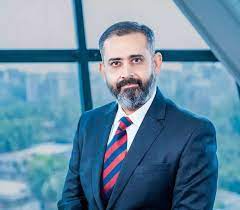
Rajat Diwakar is appointed CEO of iD Fresh Foods India.
Rajat Diwakar has been named CEO of iD Fresh Food's India division, the business announced on Friday. Diwakar worked as the Managing Director of Marico Bangladesh Limited before being hired by iD Fresh Foods. Additionally, he has over 20 years of experience leading FMCG companies.Leader of iD Fresh India, Rajat Diwakar Delhi, New: iD Fresh Food, a ready-to-cook packaged food firm, strengthened its leadership team on a national and international level on Friday by appointing industry veteran Rajat Diwaker as the India CEO and PC Musthafa as the Global CEO.Today, iD Fresh Food announced the appointment of Rajat Diwaker, a seasoned industry veteran, as the CEO for India. Rajat is a seasoned professional with more than 20 years of experience in the FMCG sector. He was the Managing Director of Marico Bangladesh Limited in his previous position. Additionally, he serves as a director on the board of Bangladesh's Foreign Investors' Chamber of Commerce and Industry (FICCI).In addition to continuing to lead the board of directors, PC Musthafa, who founded iD Fresh and served in that capacity for almost 20 years, now assumes the position of global CEO. Musthafa will be in charge of iD Fresh's worldwide market innovations, as well as international expansions, strategic acquisitions, the development of food-tech capabilities, and organizational culture inspiration.iD Fresh plans to designate specific Business Heads and CEOs for every international market as part of its expansion strategy. In actuality, the business is currently employing a US CEO. At present, more than one-third originates from sources outside of India. In 2024, the company intends to increase its presence in the current markets while branching out into new ones like Singapore and Australia.The global CEO of iD Fresh Food, PC Musthafa, commented on the most recent development, saying, "iD Fresh's journey has been incredibly rewarding so far, and we continue to make tremendous strides." I'm happy to have Rajat Diwaker join the iD Fresh team. I have no doubt that in the years to follow, we will accomplish greater things and win over more hearts under his capable and visionary leadership. And because of the unwavering support from customers that we have accumulated over the years, I am excited to lead the brand into new international markets as we set off on new experiences.
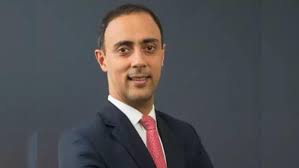
Revenues increase 67% as InCred Finance reports a net profit of Rs 121 crore for FY23.
InCred Finance, which joined the unicorn club last year, declared total revenues for the fiscal year 2023 of Rs 877.5 crore, a 67% increase over the previous fiscal year. According to data obtained from research platform Tracxn, the non-banking financial company also claimed a net profit of Rs 121 crore in FY23, a notable increase from the Rs 31 crore it reported in FY22.As the second unicorn of 2023, InCred Finance raised $60 million in December from a group of investors that included very wealthy customers, valued at $1.04 billion. The money will be utilized to expand its primary business verticals, which include lending to micro, small, and medium-sized businesses (MSME), consumers, and students.The other Indian firm to join the unicorn club in 2023 was Zepto, a quick commerce company. A privately held business valued at $1 billion or more is known as a unicorn. Experienced banker Bhupinder Singh launched InCred Finance, the lending division of InCred Group, in 2016. It offers loans in the areas of school finance, small business lending, and retail lending. It amalgamated with KKR India Financial S.A. in 2022.InCred said earlier in November that it has grown its loan portfolio to Rs 7,500 crore in six years, with over 50% compound annual growth over the previous three years. Institutional investors include the Abu Dhabi Investment Authority (ADIA), Moore Strategic Ventures, Elevar Equity, Oaks Asset Management, and the Dutch development financing corporation FMO have contributed money to InCred.

Fireside Ventures leads a 50 crore Series A fundraising round for mental health firm Amaha.
On Wednesday, Amaha, a company focused on mental health, announced that it has raised ₹50 crore in a Series A financing round led by Fireside Ventures. ₹15.6 crore more was contributed by other angel investors.Amaha, the former InnerHour, intends to expand and improve its mental health offerings with the help of this investment. Serving more than 600 Indian locations, the Mumbai-based organization provides a range of therapies and care programs for mental health issues like anxiety, depression, bipolar disorder, ADHD, OCD, schizophrenia, and addictions.The portfolio of Fireside Ventures, an investment firm that focuses mostly on consumer-focused startups, comprises businesses in the food and beverage, personal care, kids & education, lifestyle, and home products industries. It made investments in various wellness firms last year, including The Good Bug and Inito.A portion of the increased awareness and support for mental health and wellness in recent years has come from celebrities, including actors and cricket players, as well as from a number of organizations and social media platforms. Amaha was established in 2016 and offers digital services via an app that provides self-care tools and resources, in addition to operating physical centers in Delhi NCR, Bengaluru, and Mumbai. The founder and CEO of Amaha, Amit Malik, stated in an interview with Mint that "we're looking to go beyond digital at this stage because I think there is a lot of unmet need within the industry." Amaha has been aggressively investing in infrastructure, including physical clinics and technical advancements, despite growing losses in 2023 and maintaining a positiveAmaha obtained $5.2 million from Lightbox Ventures, a venture capital firm, in 2021. Additional angel investors that took part were Hitesh Oberoi, CEO & MD of Info Edge India Pvt. Ltd., Pankaj Sahni, CEO of Medanta-The Medicity Hospitals, and Capricorn Ventures & Micasa Investments (Singapore).

Melissa Niebes is named CEO of Federal Package, effective January 1, 2024.
Melissa Niebes has been named the new Chief Executive Officer of Federal Package, a turnkey contract manufacturer with its headquarters located in Chanhassen, MN. Her appointment will take effect on January 1, 2024. Niebes is Federal Package's President and Chief Commercial Officer at the moment. She will take over as CEO from Steve Dakolios, who recently declared his intention to become a Vice Chairman and Senior Advisor at Federal Package."Melissa has a strong track record as a growth-oriented leader in the consumer goods sector. She has given the business new life, direction, and energy. As the business grows, she will keep improving operational effectiveness and organizational procedures. The time is right for new leadership, and Melissa is qualified to advance our long-term plan and quicken

Ranji Trophy: Hand of Pondicherry Delhi lost by nine wickets.
The Ranji Trophy campaign for Delhi in 2023–24 got off to the worst conceivable start. It was Pondicherry's sole victory in the Ranji Trophy elite group, as they thrashed Delhi by nine wickets.On a chilly Day 4, Pondicherry's victory was a formality when Gourav Yadav and Abin Matthew dismissed Delhi's overnight batters, Harsh Tyagi and Ishant Sharma, early in their second innings, as they collapsed for 145 runs. With nine wickets remaining, Pondicherry took down the score in 13.1 overs, needing just 50 runs to win.Ranji Trophy 2024: Puducherry defeated Delhi, the defending champions, by nine wickets in their home opener. Former Madhya Pradesh fast bowler Gourav Yadav haunted Delhi in their own backyard with a match-winning tally of 10 wickets.Puducherry had one of their greatest victories in Ranji Trophy history on Monday, January 8, when they defeated Delhi, one of the league's heavyweights, by nine wickets in the opening game of Elite Group D at the Arun Jaitley Stadium in New Delhi. On a chilly morning in the capital city, Puducherry only needed to chase 51 runs to win, and they did so in style in just 13.4 overs.


HDFC seeks Singapore bank licence to open its 1st branch in the country
HDFC Bank Ltd, India’s biggest private sector lender, is seeking to open its first branch in Singapore, signaling its overseas ambitions after sewing up a landmark merger with mortgage financier Housing Development Finance Corp. last year. The bank has applied to the Monetary Authority of Singapore for a banking licence and is awaiting approval, according to sources familiar with the matter. It is not clear what kind of banking licence HDFC Bank is seeking in Singapore, said one of the people, who declined to be identified as the information is confidential.The banking giant is seeking a bigger presence abroad to tap the Indian diaspora for savings and term deposits, as well as to cross-sell more products, including mortgages, the people said. At home, HDFC has been focusing on deepening its reach in the world’s most populous country through loans to retail customers. HDFC Bank did not respond to an email seeking comment. “As a matter of policy, MAS does not comment on our dealings with financial institutions,” according to a spokesperson from the Singapore regulator.Singapore, with a population of almost 6 million people, houses a large India diaspora. About 650,000 non-resident and persons of Indian origin live in the city-state, according to Indian government data.HDFC Bank is currently not licenced or regulated by the MAS, according to its website. It only provides home loans-related advisory services for the purchase of properties in India, the website states. The categories of banking licences in Singapore encompass full banks, qualifying full banks and wholesale banks, which impose varying levels of restrictions on the lenders’ activities. State Bank of India and ICICI Bank Ltd. hold qualifying full banking licences, alongside eight other banks like Bank of China Ltd. and BNP Paribas SA. Such licences are open only to foreign banks and allow them to have additional branches and/or off-premise ATMs as well as to share ATMs among themselves, according to the Association of Banks in Singapore’s website.The MAS regulates and supervises more than 150 deposit-taking institutions in Singapore, ranging from full banks to finance companies, according to its website. Besides Singapore, HDFC Bank also has presence in markets like London, Hong Kong and Bahrain. The India bank has a total customer base of 93 million at the end of the December quarter compared with 91 million in the preceding three-month period, according to an investor presentation.

Sensex slips for 3rd day, dips 314 pts; OFSS up 27%, LTIMindtree tanks 11%
Intraday, the Nifty witnessed a pullback from the support zone of 21,820 – 21,300, which is likely to continue over the next few trading sessions. On the upside, the counter-trend pullback can extend till 21,600 – 21,650 where resistance in the form of the 20-day moving average is placed.In terms of levels, 21,550 – 21,570 is the immediate hurdle zone while 21,350 – 21,300 is the crucial support zone. Bank Nifty has reached the 161.82% Fibonacci extension level 45,768, which also coincides with the 20-week moving average making the zone of 45,800 – 45,600 a crucial support zone.Until this is not breached on the downside, we can expect the recovery to continue. On the upside, the pullback can come till 46,400 – 46,600.Views by: Jatin Gedia – Technical Research Analyst at Sharekhan by BNP Paribas. The benchmark indices exhibited recovery from the day’s low and ended in red amid weak global cues, as investors are trimming bets on rapid FED cuts due to strong US retail sales and the resulting rise in global bond yields.Furthermore, oil price advances and rate escalation risks have led to disruptions in global shipping and crude production.The broader market continued its selling pressure given the elevated valuation and profit booking with an aim for sector rotation.Indian snacks maker Haldiram's is in talks to acquire a majority stake in Prataap Snacks, which is valued at $350 million, to expand its presence in the potato chip market, two people with direct knowledge of the matter said.The talks are at an early stage and a valuation has not been discussed, though it could be at a premium to Prataap's stock price.Haldiram's is eyeing a majority stake of at least 51%, but a final number has not been decided, said the sources.

Adani stocks found buyers in Indias retail investors during Hindenburg row
India’s retail investors piled into Adani Group companies as their shares cratered in the wake of the Hindenburg Research’s scathing report last January. A year later, they’re still keeping the faith. Individual holdings in nine of the group’s 10 stocks at the end of December are higher than they were before the short-seller’s attack on the conglomerate, exchange data compiled by Bloomberg show. The group’s market value has increased by more than $60 billion since late November, and is just $50 billion away from erasing the losses spurred by Hindenburg’s report. The recovery likely rewarded retail investors who used the selloff as a buying opportunity. “Many of the retail investors came in after the crash,” said Chakri Lokapriya, managing director at Mumbai-based asset manager RedStrawBerry LLP and former fund manager at BNP Paribas Asset Management. “They have exhibited a sense of maturity to hold on given that infrastructure companies take longer to realize their earnings potential.” While foreign investors, insurance companies and high-networth individuals pared their holdings in various group entities in 2023, the number of retail investors — those with at least Rs 2,00,000 ($2,411) to invest — jumped 42 per cent to 6.7 million in Adani companies, data compiled by Bloomberg show. Hindenburg’s allegations of stock manipulation and fraud, repeatedly denied by the group, had wiped off more than $150 billion from its market value at one point. Billions of dollars in investments from marquee funds including GQG Partners LLC, and more recently, an observation from India’s top court that it won’t take media reports on Adani as the “gospel truth,” has renewed investor confidence in the group stocks. To be sure, retail shareholding in the flagship Adani Enterprises Ltd. and Adani Ports and Special Economic Zone Ltd. fell from the levels reached at the end of March 2023, as the rally likely prompted some investors to book gains. “Retail investors who bought into these stocks definitely made money,” said Ambareesh Baliga, an independent market expert. “But when you are buying momentum stocks, you should book profits from time to time.”

Apple expands India presence, opens office covering 15 floors in Bengaluru
US-based technology giant Apple expands its presence in India with a new office in Bengaluru, Karnataka. The new Apple office is located at Minsk Square in the center of the city. In its proximity, there are landmarks buildings and spots such as parliament, high court, central library, Chinnaswamy cricket stadium, and one of the largest green parks within Bengaluru. Covering 15 floors, the new Apple office will house up to 1,200 employees and features a dedicated lab space, areas for collaboration and wellness, and Caffe Macs. Its proximity to Cubbon Park metro station means public transit is easily accessible for employees. "Apple is thrilled to expand in India with our new office in the heart of Bengaluru. This dynamic city is already home to so many of our talented teams, including software engineering and hardware technologies, operations, customer support, and more. Like everything we do at Apple, this workspace is created to foster innovation, creativity, and connection. It’s an amazing space for our teams to collaborate” said Apple.From its Bengaluru office, Apple’s teams will work across a wide range of Apple’s business — from software, hardware, services, IS&T, operations, customer support, and others. In line with Apple's global presence, the new Apple office in Bengaluru boasts an interior crafted from locally-sourced materials, including stone, wood, and fabric in the walls and flooring, and the office is filled with native plants. The office is designed with sustainability at the core – will run on 100 per cent renewable energy. With it Apple aims to achieve a Leadership in Energy and Environmental Design (LEED) Platinum rating — the highest level of LEED certification. Apple has been carbon neutral for its corporate operations since 2020, and has run all Apple facilities using 100 per cent renewable energy since 2018. In India, the company has its corporate office footprint in Mumbai, Hyderabad, and Gurugram, and now in Bengaluru.

Govt may earmark Rs 4 trillion for next years food, fertiliser subsidies
India may earmark about Rs 4 trillion ($48 billion) for food and fertiliser subsidies for the next fiscal year, two government sources said, indicating fiscal caution ahead of this year's general election. Food and fertiliser subsidies account for about one-ninth of India's total budget spending of Rs 45 trillion during the current fiscal year that ends on March 31. The Ministry of Consumer Affairs, Food and Public Distribution has estimated next year's food subsidy bill at Rs 2.2 trillion ($26.52 billion), the two sources said. That is 10 per cent higher than a projected outlay of nearly Rs 2 trillion ($24.11 billion) for the current 2023-24 fiscal year. Additionally, next fiscal year's fertiliser subsidy is expected to be Rs 1.75 trillion ($21.10 billion), down from the current 2022-23 fiscal year estimate of nearly Rs 2 trillion, one of the sources said.The sources, which are directly involved in the decision making on the subsidies, did not wish to be named as they were not authorised to speak to the media.Finance Minister Nirmala Sitharaman will unveil the 2024/25 budget on Feb. The Ministry of Finance, the Ministry of Chemicals and Fertilizers and the Ministry of Consumer Affairs, Food and Public Distribution ministries of finance did not reply to requests for comment. Maintaining the combined subsidies at their current level would be unusual for a government facing a national election in just a few months, but Prime Minister Narendra Modi is widely expected to win a rare third term in elections scheduled for April and May. Also, containing food and fertiliser subsidies is crucial for managing India's fiscal deficit, which Modi's government is targeting at 5.9 per cent of gross domestic product this year and planning to lower by at least 50 basis points in the fiscal year 2024/25. The food subsidy bill is likely to go up next year as Modi's administration late last year extended its flagship free food welfare programme for the next five years.

L&T Technology retains full-year forecast after all units post Q3 growth
Indian tech services provider L&T Technology Services retained its revenue growth forecast for the current financial year on Tuesday as all its five business verticals posted year-on-year growth for the third quarter.This comes as Infosys and HCLTech tightened their revenue guidance for the year last week citing no change in the demand environment for the year, marred by high inflation and clients cutting down on discretionary spending.However, better-than-feared numbers by the top four firms have triggered a rally in IT stocks this week, helping the country's benchmark indices hit fresh lifetime highs. L&T Technology's consolidated net profit rose 3.36 billion rupees ($40.43 million) from 2.97 billion rupees a year earlier, marginally above analysts' estimate of 3.31 billion rupees.Revenue from operations rose 12 per cent to 24.22 billion rupees, on the back of double-digit growth in telecom and medical devices verticals, below analysts' estimate of 24.45 billion rupees.Indian tech services provider L&T Technology Services retained its revenue growth forecast for the current financial year on Tuesday as all its five business verticals posted year-on-year growth for the third quarter.The Mumbai-based firm expects revenue for the current fiscal year ending March 31 to grow 17.5 per cent-18.5 per cent in constant currency."All five segments grew positively for the second quarter in a row giving us 1per cent sequential growth despite the seasonal softness," CEO Amit Chadha said in a statement.Two units - the industrial products segment and Europe region - have scaled a $200 million run-rate on annualised basis, he added. This comes as Infosys and HCLTech tightened their revenue guidance for the year last week citing no change in the demand environment for the year, marred by high inflation and clients cutting down on discretionary spending.However, better-than-feared numbers by the top four firms have triggered a rally in IT stocks this week, helping the country's benchmark indices hit fresh lifetime highs.Revenue from operations rose 12 per cent to 24.22 billion rupees, on the back of double-digit growth in telecom and medical devices verticals, below analysts' estimate of 24.45 billion rupees.The subsidiary of infra giant Larsen and Toubro won six deals that are more than $10 million each in size, it said in a filing. This included one deal each of sizes $40 million and $20 million.

Adani Group set to start mapping famous Mumbai slums Dharavi in weeks
The conglomerate owned by tycoon Gautam Adani won a government contract to redevelop Dharavi in late 2022 and will begin surveying the roughly 600 acre densely packed neighborhood in March, according to people familiar with the matter, who asked not to be identified because they aren’t authorized to speak publicly. The Times of India reported Tuesday that the survey will kick off in two weeks. His bid to revamp Dharavi has received considerable attention thanks to the slum’s fame with tourists and backdrop to multiple films, including 2008’s Slumdog Millionaire. But Adani Group faces considerable political opposition and legal hurdles to completing the renovation, which has been sounded out with little progress for decades. Adani, one of India’s richest and most powerful businessmen who is seen to enjoy strong ties to Prime Minister Narendra Modi, is expected to complete the estimated $3 billion project over the next seven years, the people said. Last year, the billionaire said he intends to turn Dharavi into a modern hub and support the small industries based there. His bid to revamp Dharavi has received considerable attention thanks to the slum’s fame with tourists and backdrop to multiple films, including 2008’s Slumdog Millionaire. But Adani Group faces considerable political opposition and legal hurdles to completing the renovation, which has been sounded out with little progress for decades. In a statement issued on Monday, Adani said that eligible residents will get a 350 square foot flat in the area once the project is completed, while ineligible residents will be rehoused in areas across the city.But with few other details about Adani’s plans for the slum yet to be made public, many of Dharavi’s estimated million residents believe Adani will gut their community, shunting them into poor quality apartments or rehouse them miles from Mumbai’s center.Adani is also locked in a legal battle in the Bombay High Court with a Dubai-based consortium of developers and investors called SecLink Technologies Corp., which won a 2018 bid to revamp Dharavi. That tender was later canned and reissued by the state government of Maharashtra, which counts Mumbai as its capital and holds a 20% stake in the Adani-controlled entity pursuing the project. Adani’s team are aware they will have to win trust of residents and may face violent protests while conducting the survey, which will determine who is eligible for new apartments and commercial spaces, the people said.They added that the survey will help build out Adani’s master plan for the slum, which is expected to be submitted to local authorities by March — a delay from an original December deadline, according to the original tender documents.While local firm Genesys International Ltd. will map the area, UK consultancy Buro Happold Ltd. will outline the physical infrastructure needs, while Boston-based Sasaki Associates Inc. will be in charge of the overall re-design, said one of the people.

Bond market expects RBI to change policy stance in February review
Bond market participants are expecting the Reserve Bank of India (RBI) to change its stance in the February policy review to neutral from withdrawal of accommodation, citing the continuous variable rate repo (VRR) auctions. “RBI is trying to adjust liquidity and bring it close to neutral or zero. The way RBI spoke in the last policy, it doesn't look like it wants a hike anytime soon,” said Naveen Singh, vice-president of ICICI Securities primary dealership.“If they don't want to cut now, but they also don't want to hike, then what's the point of keeping withdrawal of accommodation stance? They can very well come to a neutral stance. And, a neutral stance doesn't stop RBI from hiking if it wants to. Consequently, the market has been strategically taking long positions in government bonds, said dealers. “A majority of the people, if not everyone, is taking long positions (buying) because the market is factoring in that the RBI would change its stance in February,” said a dealer at a state-owned bank.Consequently, the market has been strategically taking long positions in government bonds, said dealers. “A majority of the people, if not everyone, is taking long positions (buying) because the market is factoring in that the RBI would change its stance in February,” said a dealer at a state-owned bank.Yield on the benchmark 10-year government bond has fallen by 3 basis points (bps) in January so far. In December, the yield had fallen by 11 bps. “A minority section of the market thinks that a change in stance in February is possible. The general view is that April is when the change in stance happens,” said Vijay Sharma, senior executive vice-president at PNB Gilts.“Even after this Rs 1.75 trillion VRR, the liquidity is still in deficit mode. It is apparent that through the recent consecutive VRR auctions, RBI is ensuring that tightness in liquidity is not stretched. However, it is too early to say that RBI is taking an accommodative stance. So, it is still a wait-and-watch situation.” he added. The central bank has been conducting VRR auctions in order to infuse liquidity into the banking system. In the 13-day VRR auction conducted by the RBI on Friday, bids were received for Rs 3.92 trillion, against a notified amount of Rs 1.75 trillion.In the preceding VRR auctions, the central bank received a strong demand, with banks submitting bids ranging between 2.5 and 3.2 times of the bidding amounts. This is due to tight liquidity conditions in the system. Liquidity remained largely in deficit mode in the third quarter. The central bank had conducted a VRR auction after six months on December 15.Market participants observed that despite the higher-than-expected US consumer price index (CPI), the US Treasury yield softened. This reinforced the anticipation of a rate cut by the Federal Reserve in March.

MC Exclusive | Capacity addition, lower AT&C losses top RK Singhs wishlist for Modi 3.0
With the general elections scheduled in April-May, Union Minister for Power and New and Renewable Energy RK Singh listed out his top priorities with the hope that the Narendra Modi government will return for the third consecutive term. "The top priority once the government led by Modi is back in power will be increasing our electricity generation capacity. The other priority will be to reduce the aggregate technical and commercial (AT&C) losses of distribution companies (discoms) to about 10 percent," Singh said during a fireside chat at Moneycontrol's Policy Next Summit in Delhi on January 18. "Rest, India is already a leader in energy transition, so I am not worried about the country's renewable energy targets. We will overachieve it anyway," he said. He said capacity addition is important to keep up with India's growing energy demand. “Since our country is going to continue growing at 7.5 percent or more for the next three decades, we will have to ensure enough electricity. In 2030, our peak demand is going to go up from 241 GW today to 366 GW. Our established capacity has to go up to 900 GW, from about 427 GW today," the power minister said. Giving an overview of the ongoing capacity additions in the power sector, the Union minister said the government is adding around 99,000 megawatt (MW) of renewable energy capacity, which is under construction. Another about 32,000 MW is under various bidding processes. Besides, the government has decided to bid 50,000 MW of renewable energy projects every year.On thermal capacity addition plan, Singh said the government will add 87,000 MW (87 GW) by 2030. "About 27,000 MW is under construction. In addition, we have bid out about 12,000 MW of thermal capacity. Another, 21,000 MW coal-fired capacity is under survey and investigation. Further, about 22,000 MW are under initial stages, where we have identified the land," he said. Singh said the government intends to increase India's hydropower capacity from the current 47,000 MW to about 90,000-100,000 MW. Talking about reduction of AT&C losses of discoms, the Union minister said he has set a fresh target of reducing it to 10-11 percent.AT&C losses are a combination of energy loss and commercial loss. While energy loss may comprise technical loss, theft, and inefficiency in billing, commercial loss constitutes default in payment and inefficiency in the collection. In 2021, the government had set the target to bring down AT&C losses to 12-15 percent by the financial year 2025. However, going by the latest provisional data, the government is likely to have achieved this target two years in advance.According to data from the power ministry, AT&C losses were as high as 25.5 percent in FY13. Till FY21, the AT&C losses stood at 22.3 percent. However, in FY22 it drastically declined to 16.4 percent. As per provisional data, in FY23, India's average AT&C losses have further come down to 13.5 percent.

HNIs chase mid, small caps, IEX under bear attack, I-Pru Life tumbles, NHPC in focus
“Current earnings, future prospects, management, marketability are all factors more or less independent of assets which contribute their share to the intrinsic value.” - Benjamin Graham. Sentiment has turned cautious after three successive sessions of fall, but two days of gains could change that. In the past, mid and small caps would take a battering during market corrections and investors would flee to the safety of large caps. But now exactly the opposite is taking place — large caps are sliding harder than second-line stocks when the market falls.Whispers in market is that many of the mid and small cap companies say they have good earnings visibility for the next few quarters. And that is giving HNIs the comfort to hold on their positions in the stocks. The stock prices so far indicate that the market is willing to believe the earnings story. They would flag when there's still a couple of quarters of earnings growth left. Bull argument: Spot LNG prices have softened. Strong demand for LNG across sectors of late, and this trend is likely to strengthen going forward.Bear argument: Competition is rising, also domestic gas production is increasing. The capex on its proposed petrochemicals foray could weigh on margins. Stock has fallen 16 percent in last couple of trading sessionsBear argument: Huge build up of speculative positions in F&O segment. Uncertainty over the market coupling policy for power exchanges an overhang on the stock.Bull argument: Stock has good support in the Rs 120-125 band. Also, concerns about the market coupling have already been priced in. Stock under pressure as government to sell 2.5 percent stakeBull argument: Seen benefitting from India’s commitment to net-zero as hydro power not polluting like thermal power. Capacity expected to go up sharply in the coming years.Bear argument: Increase in floating stock could be an overhang in the short term. Right now, power is a fancied sector and there is unusually high demand for PSU stocks. This could change. Earnings could be volatile because of dependency on monsoon. GQG Partners upped its stake in ITC to 2.79 percent from 1.58 percent.Bull argument: A good defensive bet if the market continues to correct further. Cigarette volumes increased in Q2 and the trend is likely to sustain.Bear argument: Revenues from agri-business is under stress in FY24 due to a ban on the exports of wheat and rice. Re-rating story is largely over. Further gains will depend on ability to grow earnings.

IndusInd Bank Q3 results impress analysts. Should you buy or sell?
IndusInd Bank impressed the street with a healthy set of number for the December quarter and analysts remain bullish on the counter, counting steady margins, improving retail deposit mix and strong loan growth as some of the key positives. In the past year, the stock has jumped more than 31 percent, outperforming Bank Nifty index which is up 8 percent. The stock hit a 52-week high of Rs 1,694 on January 15.The bank's net profit grew 17 percent on-year to Rs 2,301 crore, aided by healthy net interest income (NII) growth of 18 percent and lower provisions, the private lender said on January 18. At a time when banking sector is grappling with higher cost of funds, its net interest margin (NIM) saw a modest expansion of two basis points (bps) YoY to 4.29 percent in the December quarter. Analysts at Jefferies shared a "buy" call for IndusInd, with a target price of Rs 2,070, saying the lender's NII growth was among the best across coverage. "IndusInd's profit met estimates but they used Rs 200 crore of contingent buffers. We see 20 percent profit compounded annual growth rate (CAGR) in FY24-26, with return of equity (RoE) of 16 percent in FY25," they wrote in their result review. HSBC, too, shared a "buy" call, with a target price of Rs 2,040 apiece on the back of in-line Q3 operating performance, but remain wary of higher slippages. "We forecast CAGR of 23 percent for operating profit and 21 percent earnings per share (EPS) over FY24-26," they said. The rise in fresh slippages, or bad loans, however, remained a key concern during the quarter, analysts at Morgan Stanley said, trimming EPS by 0.5 percent for FY24 and a percent for FY25. The brokerage firm, however, shared an "overweight" call with a target price of Rs 1,850 per share. IndusInd Bank's fresh slippages rose 20.5 percent on a sequential basis to Rs 1,700 crore in the December quarter due to a elevated slippages in corporate and vehicle finance books. However, the management guided that they will normalise to Rs 1,200 crore going ahead. Gross non-performing asset (GNPA) and net NPA ratios were stable at 1.9 percent and 0.5 percent, respectively, due to asset reconstruction company (ARC) sale of Rs 3,100 crore. On the business front, analysts at Macquarie said 24 percent on-year growth in retail book was encouraging during the quarter. "The retail book growth was driven by vehicle book growth. As per liquidity coverage ratio classification mix, retail deposit improved to 45 percent YoY," the brokerage firm said, sharing an "outperform call" with a target price of Rs 1,900 a share. The lender's loan growth was up by 20 percent YoY, while deposits grew by 13 percent YoY. The management expects loan growth to be in the range of 18-23 percent, with the retail loan mix at 55-60 percent. "We estimate 21 percent earnings CAGR over FY24-26, leading to RoE of 16.2 percent in FY25," analysts at Motilal Oswal Financial Services said, reiterating a "buy" rating for IndusInd Bank with a target price of Rs 1,900. Disclaimer: The views and investment tips expressed by investment experts on Moneycontrol.com are their own and not those of the website or its management. Moneycontrol.com advises users to check with certified experts before taking any investment decisions.

HDFC Bank tremors rock banking stocks, Nifty Bank plunges 4%
Banking stocks saw heavy selling on January 17, as all 12 Nifty Bank index names traded with cuts in the afternoon after negative commentary on heavyweight HDFC Bank's below-par December numbers weighed heavy on sentiment for the sector. HDFC Bank, which takes up over 29 percent of weightage in Nifty Bank, plunged nearly 7 percent, putting pressure on the sectoral index, which was down nearly 4 percent. The weakness also rubbed off on other lenders, pulling them down by up to 4 percent. Other index heavyweights, IndusInd Bank, ICICI Bank, Kotak Mahindra Bank, SBI and Axis Bank, which have a cumulative weightage of nearly 49 percent in Nifty Bank, lost 2-4 percent. HDFC's Q3 net profit came largely in-line with Moneycontrol's estimates but there was a twist. Brokerage firm Jefferies noted that the net profit was lifted with a lower tax expense in the third quarter. Brokerage firm Citi also issued a cautious outlook for private lenders, as it lowered FY25/26 net interest margin estimates for Kotak Mahindra Bank, HDFC Bank, Axis Bank, Federal Bank and ICICI Bank.The firm said that quarterly business updates reflected further loan-to-deposit expansion and loan-to-credit contraction, which points towards further downside to net interest margin.The brokerage downgraded state-lender SBI to “sell” and lowering its price target for the stock by over 14 percent to Rs 600. Citi also initiated a 90-day negative catalyst on SBI. It also downgraded Federal Bank to “neutral” and reduced the target price by 20.5 percent to Rs 135.Manish Gunwani, fund manager at Bandhan AMC, warned against being overweight on private banks, saying the segment doesn't offer great risk-reward at the current juncture. Banking stocks saw heavy selling on January 17, as all 12 Nifty Bank index names settled with sharp cuts after negative commentary on heavyweight HDFC Bank's below-par December numbers weighed heavy on sentiment for the sector. HDFC Bank, which takes up over 29 percent of weightage in Nifty Bank, dived over 8 percent, putting pressure on the sectoral index, which was down 4.3 percent. The weakness also rubbed off on other lenders, pulling them down by up to 4 percent.HDFC's Q3 net profit came largely in-line with Moneycontrol's estimates but there was a twist. Brokerage firm Jefferies noted that the net profit was lifted with a lower tax expense in the third quarter.Other index heavyweights, IndusInd Bank, ICICI Bank, Kotak Mahindra Bank, SBI and Axis Bank, which have a cumulative weightage of nearly 49 percent in Nifty Bank, lost 2-4 percent.


