StartUps
By Q4 2026, Pixxel and Sarvam will launch an orbital data center satellite.

By Kajal Sharma - 08 May 2026 05:53 PM
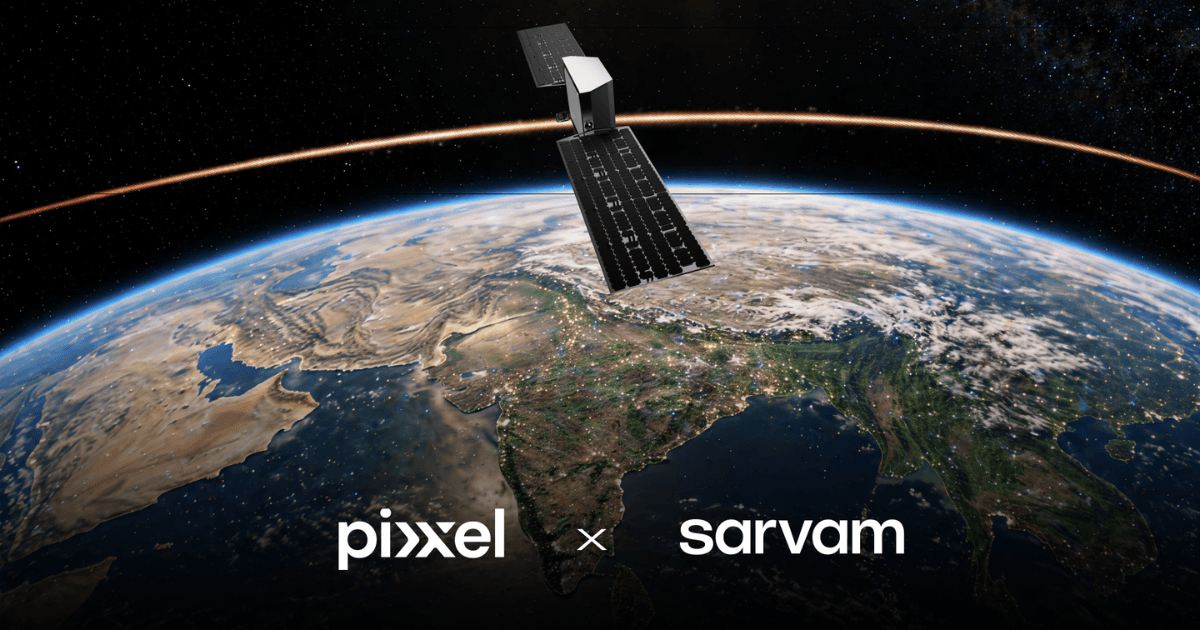
In the final quarter of 2026, the Spacetech startup intends to launch India's first orbital data center satellite, handling every stage of the project from design to operation. The satellite, called Pathfinder, is being built by the startup in collaboration with Sarvam, an AI business. The startup plans to open Gigapixxel, a future production plant with a capacity of 100 satellite units, prior to constructing the satellite. Gigapixxel will design the Pathfinder."The existing approach is becoming more difficult to sustain environmentally, and ground-based data centers are experiencing rising limits related to energy, land, regulation, and scalability. According to Awais Ahmed, CEO and cofounder of Pixxel, "orbital data centers open up a new frontier where compute can be powered by abundant solar energy, operate closer to space-based data, and move beyond some of the limitations faced on Earth." While Sarvam will manage its AI-based training and inference directly in orbit, with its full-stack language models operating onboard the Pathfinder, Pixxel will construct, launch, and run the 200-kg satellite. Organizations with strategic, commercial, and compute-intensive needs that could profit from the construction of orbital data centers will be the focus of the cooperation.
Unlike current orbiting computing stations that rely on low-power edge processors, the Pathfinder will host terrestrial data center-class GPUs, according to Google-backed Pixxel. Additionally, Pixxel's hyperspectral imaging sensor will be installed on the satellite, enabling it to collect high-fidelity hyperspectral data and analyze it in orbit using Sarvam's foundation AI models. Sarvam's models and inference platform, which will operate directly on the satellite's GPU computing layer and process data while in orbit, will be installed on the Pathfinder, keeping the satellite's whole value chain in India.According to Pixxel, the system will be able to recognize trends, spot changes, and produce insights in real time by utilizing AI in orbit. Conventional satellites, on the other hand, send unprocessed pictures down to Earth for examination, which can result in delays between data collection and decision-making. The technology can be utilized for earth observation, which is necessary for use cases such as resource management, critical infrastructure tracking, and environmental monitoring. Pratyush Kumar, cofounder and CEO of Sarvam, stated, "Having models built in India operating in orbit aboard an India-built satellite is exactly the kind of foundational capability that the country needs to control its own intelligence infrastructure."
Similar News
View All