


Top Trending Government News News & Highlights


AAP must leave its headquarters by June 15th, per a Supreme Court order.
The Aam Aadmi Party of Arvind Kejriwal will have to leave its headquarters, which are located on a plot of land designated for the High Court. The good news is that you still have until June 15 to act. The Supreme Court gave the party a long deadline because of the upcoming Lok Sabha elections, emphasizing that this is an encroachment case. The party may now submit an application for alternative land to the Land and Development Office of the Center.The bench, which included Chief Justice D Y Chandrachud and Justices J B Pardiwala and Manoj Misra, stated, "We would request the L&DO to process the application and communicate its decision within a period of four weeks." The bench continued, "AAP has no legal right to remain on the land." The Delhi High Court was granted land in February to expand its operations and build more courtrooms for the Rouse Avenue location. The court had noticed that the AAP was intruding on this land. When considering a case involving the nation's judicial system, the highest court took notice of the issue.The state government promised at a meeting on February 15 that the plot would be removed in two months if a substitute plot was provided, in response to a court order. However, the situation remained unchanged. According to India's Chief Justice, DY Chandrachud, nobody has the authority to impose law on others. "It is absurd for any political party to sit on it. Every intrusion will be eliminated... The land should be given to the High Court so that it can be utilized by the general public and citizens, Justice Chandrachud stated.
Published 04 Mar 2024 05:31 PM

Article 21: The Constitutions Soul, with Citizens Liberty Supreme
According to the Supreme Court, Article 21 is the essence of the Constitution because it protects citizens' rights to liberty, which are so valuable that a person would lose them if the high court takes too long to decide cases pertaining to it. Amol Vithal Vahile, a prime accused in the murder of a corporator in Maharashtra, was granted bail by the Bombay High Court on January 29 following prodding from the top court, according to a bench of Justices B R Gavai and Sandeep Mehta.In a recent ruling, the bench stated that it is evident that prior to this court's order being issued on January 29, 2024, the high court had dismissed the bail application on one or more grounds rather than considering it on its merits.It goes without saying that Article 21 of the Indian Constitution is its core because it upholds the fundamental right to liberty for all citizens. It stated, "Depriving the party of their precious right guaranteed under Article 21 of the Constitution of India would mean not reaching a quick decision and brushing off the issue on one or the other basis pertaining to a citizen's liberty." The bench stated that it has encountered numerous cases from the Bombay High Court in which the applications for bail and anticipatory bail were not resolved promptly. The bench mentioned one instance where the application for anticipatory bail was pending for over four years. "We have also encountered many cases where the judges find an excuse to reroute the case on unrelated grounds rather than rendering a decision based on the merits of the case. As a result, we ask the chief justice of the Bombay High Court to communicate our request to all judges who have criminal jurisdiction so that the issue of bail and anticipatory bail can be decided as soon as possible," the bench stated.It requested that the Supreme Court's Registrar (Judicial) forward this directive to the High Court's Registrar (Judicial), who will present it to the Bombay High Court's chief justice. The bench stated on January 29 that, despite the fact that Vahile had been detained for more than seven years, on March 30, 2023, the high court had ordered him to appear before the trial court for regular bail.
Published 02 Mar 2024 06:02 PM

India Receives Its Second Space Port, Excitement for Rocket Startups
Today, Prime Minister Narendra Modi will lay the foundation stone for India's second launch site, Kulasekharapatnam, which is situated in the Thoothukudi district of Tamil Nadu. This will significantly advance the nation's spacefaring endeavors. The new launch pad has the small rocket community in India, including ISRO and startups, giddy with anticipation for more efficient small rocket launches.Up until now, all rockets used to launch satellites into orbit were launched from the nation's single spaceport, which was located in Sriharikota, Andhra Pradesh. To date, India has launched 95 rockets from Sriharikota, 80 of which have been declared successful. Renamed the Satish Dhawan Space Center, it began modestly in 1971 with the launch of a sounding rocket, the RH-125. The center is currently getting ready for India's human spaceflight project, Gaganyaan, to launch. Satish Dhawan Space Center has a distinct advantage—it is one of the world's southernmost rocket ports—but it also has a major disadvantage. The land mass of Sri Lanka presents a safety concern for rockets launching in polar or southerly directions because it keeps rocket debris from landing on foreign soil.In order to lessen this, ISRO has traditionally carried out a unique manoeuvre referred to as the "dogleg maneuver" in order to avoid Sri Lanka when conducting direct southward launches. Although there is a penalty for this maneuver, it can be tolerated for larger rockets with sufficient fuel, such as PSLV, GSLV, and LVM-3. But the advantages of using Sriharikota as the preferred launch site become clear as India gains proficiency in the launch of smaller rockets, such as the Small Satellite Launch Vehicle (SSLV), which can carry satellites weighing up to 500 kilograms. According to an ISRO rocket specialist, it becomes almost impossible to launch small rockets from Sriharikota in polar or southern trajectories with payloads weighing between 500 and 700 kg. As a result, Kulasekharapatnam has been chosen as the second launch site to address these issues because of its expanding small rocket market.
Published 28 Feb 2024 05:29 PM

Survey Says RBIs Paytm Action Won Affect Merchants Trust
Merchants' trust in the payment platform is unaffected by the severe limitations the Reserve Bank of India (RBI) placed on Paytm Payments Bank (PPBL), according to a survey done. According to Datum Intelligence, a Gurugram-based provider of business consulting and services, 59% of retailers still use Paytm and don't think the government crackdown will have an immediate effect on their business. The business conducted a survey with 2,000 business owners in 12 cities who accept payments through Paytm apps. According to a press release from Datum Intelligence, it was done between February 7 and February 15. Survey Says RBI's Paytm Action Won't Affect Merchants' Trust According to a Datum survey, 76% of retailers accept payments through Paytm. Merchants' trust in the payment platform is unaffected by the severe limitations the Reserve Bank of India (RBI) placed on Paytm Payments Bank (PPBL), according to a survey done. According to Datum Intelligence, a Gurugram-based provider of business consulting and services, 59% of retailers still use Paytm and don't think the government crackdown will have an immediate effect on their business. The business conducted a survey with 2,000 business owners in 12 cities who accept payments through Paytm apps. According to a press release from Datum Intelligence, it was done between February 7 and February 15. According to the survey, 21% of retailers are awaiting additional information The fact that a Paytm representative contacted them following the RBI ruling is what gives retailers their confidence. "After being contacted by a Paytm representative, 71% of merchants feel comfortable continuing to use Paytm for payments. According to the Datum Intelligence survey, only 11% of respondents are less confident about using Paytm for payments, and 14% of respondents are still looking for more information."Overall, the impact is limited on the merchant business and Paytm is engaging with merchants to reduce the damage and merchants are also waiting before deciding on alternatives," it added.
Published 28 Feb 2024 05:01 PM


Government News
Government News & Trends where we share you the latest updates under the government authorities globally starting from India to USA, China, Russia, Pakistan, UK and many more nations.

JN shouldn't cause you to panic.One COVID-19 variation is Health Minister
"In response to the introduction of the new COVID-19 variant JN.1, Health Minister Saurabh Bharadwaj urged Delhi residents on Wednesday to ""not panic."" He explained that although the strain is contagious, it is mild, with only a small number of patients requiring oxygen support. ""Take precautions, but don't panic—this [new variant] is not very dangerous. About 90% of patients are recovering while receiving treatment at home, Mr. Bharadwaj informed the media, noting that comorbidity patients were the focus of reports of deaths in other States."

For FY23, Unacademys revenue jumps 26% to Rs 907 crore while its loss cuts
The test-prep startup Unacademy reported that, despite constant layoffs at the company, its losses in FY23 decreased by 41% to Rs 1,678 crore. In FY23, employee-related expenses decreased by 28% to Rs 1,281 crore.The test-prep startup Unacademy reported that, despite constant layoffs at the company, its losses in FY23 decreased by 41% to Rs 1,678 crore. In FY23, employee-related expenses decreased by 28% to Rs 1,281 crore.In what was a difficult year for the startup environment, many modern businesses, like Myntra, ZestMoney, and Curefoods, reported stronger revenues for FY23, but their losses also increased.Revenue at Myntra rises to Rs 4,375 crore: The apparel retailer Myntra, which is owned by Flipkart, reported a 25% increase in operating revenue to Rs 4,375 crore in FY23, despite a 31% increase in losses to Rs 782 crore. The online fashion platform's largest expense, amounting to Rs 1,758 crore, was spent on advertising and promotional activities, representing a 35% increase over the previous year.Unacademy reduces losses to Rs 1,678 crore, or 41%: Unacademy, a startup providing test preparation, reported that its losses in FY23, which included several layoffs at the company, decreased by 41% to Rs 1,678 crore. The Bengaluru-based firm saw a 26% increase in sales to Rs 907 crore during the year, while costs associated with payroll decreased by 28% to Rs 1,281 crore.ZestMoney reports a loss of Rs 412 crore. ZestMoney, a troubled startup that has been searching for a buyer, declared a net loss of Rs 412.4 crore for the fiscal year 2023. On the other hand, while total expenses increased by 21% to Rs 662.2 crore, overall revenue for the buy-now-pay-later platform increased by 72% to Rs 250 crore.
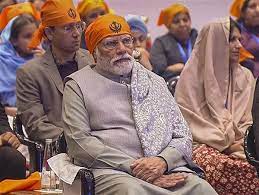
Prime Minister Modi on Veer Bal Diwas: Sikh gurus taught Indians
Speaking on Tuesday, Prime Minister Narendra Modi said that Sikh gurus had inspired Indians to improve and develop their nation by teaching them to live for the beauty of their homeland. He was giving a speech at a ceremony called "Veer Bal Diwas" to honor the martyrdom of Guru Gobind Singh's two sons. According to PM Modi, their sacrifices are being honored not only in India but also around the world through initiatives in nations like Australia and the United States. We don't need to squander time or pause for a single moment. These lessons came from the gurus...We must live for the honor and glory of our nation. We must live for the benefit of the nation, PM Modi stated.
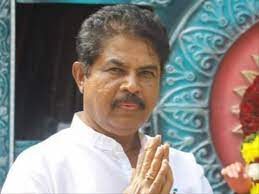
Karnataka LoP Arrested For Opposing Karsevak Shrikant Pujaris Arrest Regarding Babri Demolition
Legislative Assembly member and BJP leader R Ashoka was held by Karnataka police for allegedly inciting rioting following the 1992 demolition of the Babri Masjid. Ashoka had staged a demonstration against the state government over the detention of Shrikant Pujari. The BJP workers who have been protesting the arrest escalated their demonstration on Thursday by starting the 'I'm also a Karsevak, Arrest Me Too' campaign.LoP Karnataka Legislative Assembly & BJP politician R Ashoka was taken into custody by the police, according to ANI. Along with party members, he was demonstrating against the state government over the detention of Shrikant Pujari, who was taken into custody for his alleged role in the rioting that followed the 1992 demolition of the Babri Masjid.LoP Karnataka Legislative Assembly & BJP politician R Ashoka was taken into custody by the police, according to ANI. Along with party members, he was demonstrating against the state government over the detention of Shrikant Pujari, who was taken into custody for his alleged role in the rioting that followed the 1992 demolition of the Babri Masjid.

2023s Military Innovations and What Defense Technology Can Expect in 2024
Amidst escalating geopolitical tensions worldwide, several nations, such as Russia and India, spearheaded military innovation in 2023. Sputnik India takes a look back at some of the most inventive weapons from the previous year. In 2023, a number of cutting-edge weapon systems made their debuts. Russia, in particular, used its most advanced defense hardware in Ukraine, where the Eurasian sovereign state was engaged in a special military operation against the forces of Volodymyr Zelensky, the leader of that country.India, a longstanding strategic ally of Moscow, was not going to lag behind in terms of military hardware as New Delhi expanded its stockpile in response to the Indo-Pacific region becoming as the center of attention for world geopolitics. It's interesting to note that in 2023, Indian armaments and ammunition production and exports reached a record high.India's Defence Ministry (MoD) reports that during the current fiscal year, the South Asian nation exported military equipment valued at INR 16,000 crore ($1.95 billion). The figures indicate a $360 million increase in exports compared to the previous fiscal year.Additionally, BJP officials informed the media that it is unlikely for the panel to accept requests from rival parties' defectors that they be appointed to prestigious posts in exchange for their allegations. Senior members of the saffron party gathered in New Delhi to plan for the impending parliamentary elections and the dedication of the Ram Temple in the Uttar Pradesh city of Ayodhya. These members included Federal Ministers Bhupendra Yadav, Ashwini Vaishnav, Chief Himanta Biswa Sarma of the Assam State, and general secretaries Tarun Chugh and Sunil Bansal.

A New Panel Is Formated by the BJP to Examine New Hires Before the 2024 Elections
With the new panel, the federally dominant BJP hopes to assess potential members' devotion in advance of the 2024 parliamentary elections. A new panel has been established by the Bharatiya Janata Party (BJP) to screen lawmakers from other parties who may want to join the party before the March–April 2024 general elections.The panel will determine whether to accept or reject the politicians who wish to join the party, according to media reports citing party sources. The BJP seeks to reduce the possibility of enlisting supporters who might turn against them if they are elected to the legislature. Only after receiving consent from the committee will anyone wishing to cross the floor be permitted to participate. It is anticipated that the committee will convene for the first time on January 6.

President Muizzu of the Maldives arrives in China for a closely monitored state visit
The visit to China by Maldivian President Mohamed Muizzu takes place against the backdrop of a diplomatic spat between India and the Maldives following remarks made disparagingly about Prime Minister Narendra Modi. At the invitation of Chinese President Xi Jinping, Maldivian President Mohamed Muizzu landed in China on Monday and will stay for five days till January 12, according to an official announcement.During his visit, Muizzu is also expected to meet with business executives and senior Chinese government officials at the "Invest Maldives Forum," according to the presidency. China is currently the Maldives' biggest creditor; Male owes Beijing around $1.3 billion in debt obligations. Beijing is among the nation's largest investors and economic partners; in 2017, the two governments signed a Free Trade Agreement (FTA). The Maldives has also ratified the Belt and Road Initiative (BRI), which is supported by Beijing.

Odisha is investing more than Rs 2,500 crore to help millet farmers with their income and way of life.
"On Thursday, Odisha Chief Minister Naveen Patnaik announced that his government is investing more than Rs 2,500 crore to help the state's millet farmers with income and livelihood support. The Odisha Millets Mission was recently started by the state government in 2017 with the goal of restoring the cereal's ecosystem.Odisha has been the ""pioneer in designing a people-centric Millet Mission with focus on livelihood and nutrition of tribal communities"" , according to him. According to Patnaik, ""My government will make every effort to turn Odisha into a millet center of excellence and contribute to economic growth, wellbeing, and health of the people of Odisha."" He emphasized that Odisha is the first state to organize an international convention involving all the stakeholders, noting that the UN has declared 2023 to be the International Year of Millets. In the millet value chain, the chief minister commended the work of the Mission Shakti Women Self Help Groups (SHGs). These Self-Help Groups, operating under the name Millet Shakti, have demonstrated to the world the significant role that millet-based businesses can play in enhancing livelihoods. "
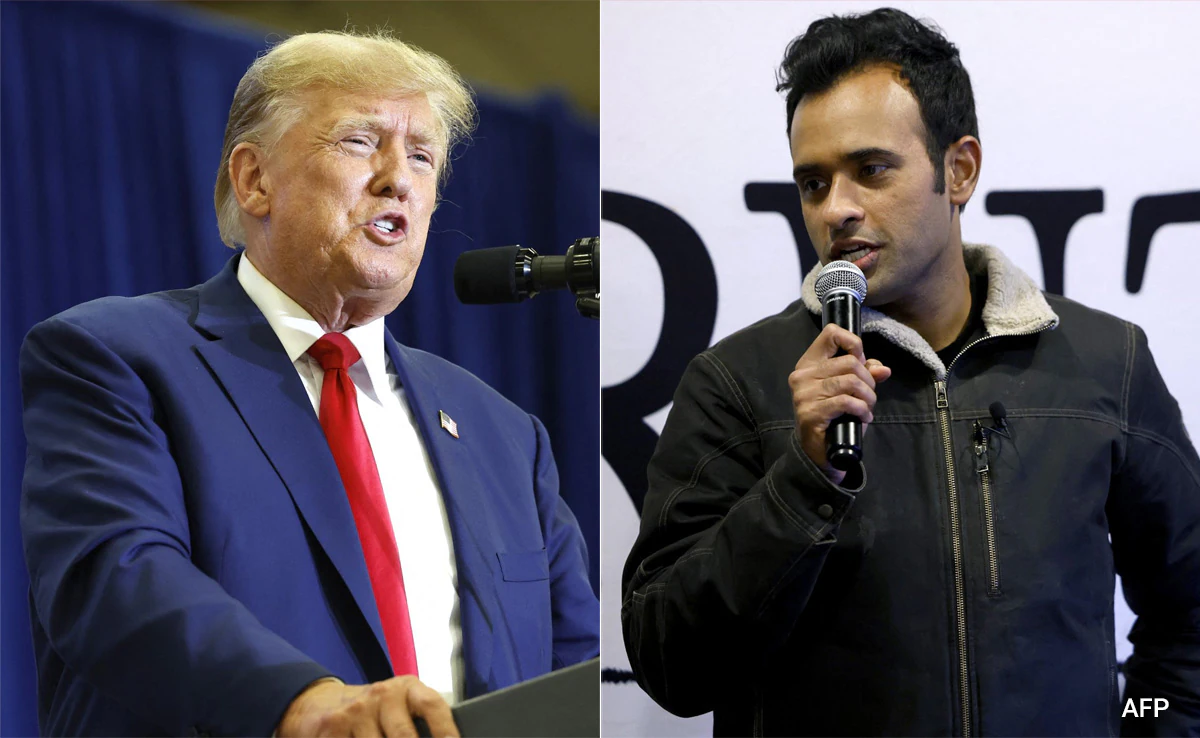
V Ramaswamy Resigns from the Presidential Race and Backs Trump Following Victory in the Iowa Caucuses
Entrepreneur Vivek Ramaswamy, who is Indian-American, withdrew from the 2024 US presidential contest today and declared his endorsement of Donald Trump following a lackluster showing in the Iowa Republican primary. Despite being relatively unknown in political circles when he entered the race in February 2023, Mr. Ramaswamy was able to attract the attention and support of Republican voters by emphasizing America first and holding strong views on immigration. His campaign strategy, in terms of both tone and policy, was very similar to that of the former president Trump. Mr. Ramaswamy aimed to reach out to the conservative support base that had helped Trump win earlier elections.Trump's victory in Iowa that same evening cemented his standing as the front-runner for the Republican nomination.Born in Ohio to Keralan immigrants, Mr. Ramaswamy became one of the surprise candidates in a Republican field still heavily influenced by Trump's name. But in the final days before the Iowa caucuses, Mr. Ramaswamy found himself under fire from Trump, who publicly attacked him, calling him a "fraud" on his social media platform Truth Social and saying that supporting the Indian-American represented siding with the "other side."


HDFC seeks Singapore bank licence to open its 1st branch in the country
HDFC Bank Ltd, India’s biggest private sector lender, is seeking to open its first branch in Singapore, signaling its overseas ambitions after sewing up a landmark merger with mortgage financier Housing Development Finance Corp. last year. The bank has applied to the Monetary Authority of Singapore for a banking licence and is awaiting approval, according to sources familiar with the matter. It is not clear what kind of banking licence HDFC Bank is seeking in Singapore, said one of the people, who declined to be identified as the information is confidential.The banking giant is seeking a bigger presence abroad to tap the Indian diaspora for savings and term deposits, as well as to cross-sell more products, including mortgages, the people said. At home, HDFC has been focusing on deepening its reach in the world’s most populous country through loans to retail customers. HDFC Bank did not respond to an email seeking comment. “As a matter of policy, MAS does not comment on our dealings with financial institutions,” according to a spokesperson from the Singapore regulator.Singapore, with a population of almost 6 million people, houses a large India diaspora. About 650,000 non-resident and persons of Indian origin live in the city-state, according to Indian government data.HDFC Bank is currently not licenced or regulated by the MAS, according to its website. It only provides home loans-related advisory services for the purchase of properties in India, the website states. The categories of banking licences in Singapore encompass full banks, qualifying full banks and wholesale banks, which impose varying levels of restrictions on the lenders’ activities. State Bank of India and ICICI Bank Ltd. hold qualifying full banking licences, alongside eight other banks like Bank of China Ltd. and BNP Paribas SA. Such licences are open only to foreign banks and allow them to have additional branches and/or off-premise ATMs as well as to share ATMs among themselves, according to the Association of Banks in Singapore’s website.The MAS regulates and supervises more than 150 deposit-taking institutions in Singapore, ranging from full banks to finance companies, according to its website. Besides Singapore, HDFC Bank also has presence in markets like London, Hong Kong and Bahrain. The India bank has a total customer base of 93 million at the end of the December quarter compared with 91 million in the preceding three-month period, according to an investor presentation.

Apple expands India presence, opens office covering 15 floors in Bengaluru
US-based technology giant Apple expands its presence in India with a new office in Bengaluru, Karnataka. The new Apple office is located at Minsk Square in the center of the city. In its proximity, there are landmarks buildings and spots such as parliament, high court, central library, Chinnaswamy cricket stadium, and one of the largest green parks within Bengaluru. Covering 15 floors, the new Apple office will house up to 1,200 employees and features a dedicated lab space, areas for collaboration and wellness, and Caffe Macs. Its proximity to Cubbon Park metro station means public transit is easily accessible for employees. "Apple is thrilled to expand in India with our new office in the heart of Bengaluru. This dynamic city is already home to so many of our talented teams, including software engineering and hardware technologies, operations, customer support, and more. Like everything we do at Apple, this workspace is created to foster innovation, creativity, and connection. It’s an amazing space for our teams to collaborate” said Apple.From its Bengaluru office, Apple’s teams will work across a wide range of Apple’s business — from software, hardware, services, IS&T, operations, customer support, and others. In line with Apple's global presence, the new Apple office in Bengaluru boasts an interior crafted from locally-sourced materials, including stone, wood, and fabric in the walls and flooring, and the office is filled with native plants. The office is designed with sustainability at the core – will run on 100 per cent renewable energy. With it Apple aims to achieve a Leadership in Energy and Environmental Design (LEED) Platinum rating — the highest level of LEED certification. Apple has been carbon neutral for its corporate operations since 2020, and has run all Apple facilities using 100 per cent renewable energy since 2018. In India, the company has its corporate office footprint in Mumbai, Hyderabad, and Gurugram, and now in Bengaluru.

Govt may earmark Rs 4 trillion for next years food, fertiliser subsidies
India may earmark about Rs 4 trillion ($48 billion) for food and fertiliser subsidies for the next fiscal year, two government sources said, indicating fiscal caution ahead of this year's general election. Food and fertiliser subsidies account for about one-ninth of India's total budget spending of Rs 45 trillion during the current fiscal year that ends on March 31. The Ministry of Consumer Affairs, Food and Public Distribution has estimated next year's food subsidy bill at Rs 2.2 trillion ($26.52 billion), the two sources said. That is 10 per cent higher than a projected outlay of nearly Rs 2 trillion ($24.11 billion) for the current 2023-24 fiscal year. Additionally, next fiscal year's fertiliser subsidy is expected to be Rs 1.75 trillion ($21.10 billion), down from the current 2022-23 fiscal year estimate of nearly Rs 2 trillion, one of the sources said.The sources, which are directly involved in the decision making on the subsidies, did not wish to be named as they were not authorised to speak to the media.Finance Minister Nirmala Sitharaman will unveil the 2024/25 budget on Feb. The Ministry of Finance, the Ministry of Chemicals and Fertilizers and the Ministry of Consumer Affairs, Food and Public Distribution ministries of finance did not reply to requests for comment. Maintaining the combined subsidies at their current level would be unusual for a government facing a national election in just a few months, but Prime Minister Narendra Modi is widely expected to win a rare third term in elections scheduled for April and May. Also, containing food and fertiliser subsidies is crucial for managing India's fiscal deficit, which Modi's government is targeting at 5.9 per cent of gross domestic product this year and planning to lower by at least 50 basis points in the fiscal year 2024/25. The food subsidy bill is likely to go up next year as Modi's administration late last year extended its flagship free food welfare programme for the next five years.

L&T Technology retains full-year forecast after all units post Q3 growth
Indian tech services provider L&T Technology Services retained its revenue growth forecast for the current financial year on Tuesday as all its five business verticals posted year-on-year growth for the third quarter.This comes as Infosys and HCLTech tightened their revenue guidance for the year last week citing no change in the demand environment for the year, marred by high inflation and clients cutting down on discretionary spending.However, better-than-feared numbers by the top four firms have triggered a rally in IT stocks this week, helping the country's benchmark indices hit fresh lifetime highs. L&T Technology's consolidated net profit rose 3.36 billion rupees ($40.43 million) from 2.97 billion rupees a year earlier, marginally above analysts' estimate of 3.31 billion rupees.Revenue from operations rose 12 per cent to 24.22 billion rupees, on the back of double-digit growth in telecom and medical devices verticals, below analysts' estimate of 24.45 billion rupees.Indian tech services provider L&T Technology Services retained its revenue growth forecast for the current financial year on Tuesday as all its five business verticals posted year-on-year growth for the third quarter.The Mumbai-based firm expects revenue for the current fiscal year ending March 31 to grow 17.5 per cent-18.5 per cent in constant currency."All five segments grew positively for the second quarter in a row giving us 1per cent sequential growth despite the seasonal softness," CEO Amit Chadha said in a statement.Two units - the industrial products segment and Europe region - have scaled a $200 million run-rate on annualised basis, he added. This comes as Infosys and HCLTech tightened their revenue guidance for the year last week citing no change in the demand environment for the year, marred by high inflation and clients cutting down on discretionary spending.However, better-than-feared numbers by the top four firms have triggered a rally in IT stocks this week, helping the country's benchmark indices hit fresh lifetime highs.Revenue from operations rose 12 per cent to 24.22 billion rupees, on the back of double-digit growth in telecom and medical devices verticals, below analysts' estimate of 24.45 billion rupees.The subsidiary of infra giant Larsen and Toubro won six deals that are more than $10 million each in size, it said in a filing. This included one deal each of sizes $40 million and $20 million.

Bond market expects RBI to change policy stance in February review
Bond market participants are expecting the Reserve Bank of India (RBI) to change its stance in the February policy review to neutral from withdrawal of accommodation, citing the continuous variable rate repo (VRR) auctions. “RBI is trying to adjust liquidity and bring it close to neutral or zero. The way RBI spoke in the last policy, it doesn't look like it wants a hike anytime soon,” said Naveen Singh, vice-president of ICICI Securities primary dealership.“If they don't want to cut now, but they also don't want to hike, then what's the point of keeping withdrawal of accommodation stance? They can very well come to a neutral stance. And, a neutral stance doesn't stop RBI from hiking if it wants to. Consequently, the market has been strategically taking long positions in government bonds, said dealers. “A majority of the people, if not everyone, is taking long positions (buying) because the market is factoring in that the RBI would change its stance in February,” said a dealer at a state-owned bank.Consequently, the market has been strategically taking long positions in government bonds, said dealers. “A majority of the people, if not everyone, is taking long positions (buying) because the market is factoring in that the RBI would change its stance in February,” said a dealer at a state-owned bank.Yield on the benchmark 10-year government bond has fallen by 3 basis points (bps) in January so far. In December, the yield had fallen by 11 bps. “A minority section of the market thinks that a change in stance in February is possible. The general view is that April is when the change in stance happens,” said Vijay Sharma, senior executive vice-president at PNB Gilts.“Even after this Rs 1.75 trillion VRR, the liquidity is still in deficit mode. It is apparent that through the recent consecutive VRR auctions, RBI is ensuring that tightness in liquidity is not stretched. However, it is too early to say that RBI is taking an accommodative stance. So, it is still a wait-and-watch situation.” he added. The central bank has been conducting VRR auctions in order to infuse liquidity into the banking system. In the 13-day VRR auction conducted by the RBI on Friday, bids were received for Rs 3.92 trillion, against a notified amount of Rs 1.75 trillion.In the preceding VRR auctions, the central bank received a strong demand, with banks submitting bids ranging between 2.5 and 3.2 times of the bidding amounts. This is due to tight liquidity conditions in the system. Liquidity remained largely in deficit mode in the third quarter. The central bank had conducted a VRR auction after six months on December 15.Market participants observed that despite the higher-than-expected US consumer price index (CPI), the US Treasury yield softened. This reinforced the anticipation of a rate cut by the Federal Reserve in March.

HNIs chase mid, small caps, IEX under bear attack, I-Pru Life tumbles, NHPC in focus
“Current earnings, future prospects, management, marketability are all factors more or less independent of assets which contribute their share to the intrinsic value.” - Benjamin Graham. Sentiment has turned cautious after three successive sessions of fall, but two days of gains could change that. In the past, mid and small caps would take a battering during market corrections and investors would flee to the safety of large caps. But now exactly the opposite is taking place — large caps are sliding harder than second-line stocks when the market falls.Whispers in market is that many of the mid and small cap companies say they have good earnings visibility for the next few quarters. And that is giving HNIs the comfort to hold on their positions in the stocks. The stock prices so far indicate that the market is willing to believe the earnings story. They would flag when there's still a couple of quarters of earnings growth left. Bull argument: Spot LNG prices have softened. Strong demand for LNG across sectors of late, and this trend is likely to strengthen going forward.Bear argument: Competition is rising, also domestic gas production is increasing. The capex on its proposed petrochemicals foray could weigh on margins. Stock has fallen 16 percent in last couple of trading sessionsBear argument: Huge build up of speculative positions in F&O segment. Uncertainty over the market coupling policy for power exchanges an overhang on the stock.Bull argument: Stock has good support in the Rs 120-125 band. Also, concerns about the market coupling have already been priced in. Stock under pressure as government to sell 2.5 percent stakeBull argument: Seen benefitting from India’s commitment to net-zero as hydro power not polluting like thermal power. Capacity expected to go up sharply in the coming years.Bear argument: Increase in floating stock could be an overhang in the short term. Right now, power is a fancied sector and there is unusually high demand for PSU stocks. This could change. Earnings could be volatile because of dependency on monsoon. GQG Partners upped its stake in ITC to 2.79 percent from 1.58 percent.Bull argument: A good defensive bet if the market continues to correct further. Cigarette volumes increased in Q2 and the trend is likely to sustain.Bear argument: Revenues from agri-business is under stress in FY24 due to a ban on the exports of wheat and rice. Re-rating story is largely over. Further gains will depend on ability to grow earnings.

IndusInd Bank Q3 results impress analysts. Should you buy or sell?
IndusInd Bank impressed the street with a healthy set of number for the December quarter and analysts remain bullish on the counter, counting steady margins, improving retail deposit mix and strong loan growth as some of the key positives. In the past year, the stock has jumped more than 31 percent, outperforming Bank Nifty index which is up 8 percent. The stock hit a 52-week high of Rs 1,694 on January 15.The bank's net profit grew 17 percent on-year to Rs 2,301 crore, aided by healthy net interest income (NII) growth of 18 percent and lower provisions, the private lender said on January 18. At a time when banking sector is grappling with higher cost of funds, its net interest margin (NIM) saw a modest expansion of two basis points (bps) YoY to 4.29 percent in the December quarter. Analysts at Jefferies shared a "buy" call for IndusInd, with a target price of Rs 2,070, saying the lender's NII growth was among the best across coverage. "IndusInd's profit met estimates but they used Rs 200 crore of contingent buffers. We see 20 percent profit compounded annual growth rate (CAGR) in FY24-26, with return of equity (RoE) of 16 percent in FY25," they wrote in their result review. HSBC, too, shared a "buy" call, with a target price of Rs 2,040 apiece on the back of in-line Q3 operating performance, but remain wary of higher slippages. "We forecast CAGR of 23 percent for operating profit and 21 percent earnings per share (EPS) over FY24-26," they said. The rise in fresh slippages, or bad loans, however, remained a key concern during the quarter, analysts at Morgan Stanley said, trimming EPS by 0.5 percent for FY24 and a percent for FY25. The brokerage firm, however, shared an "overweight" call with a target price of Rs 1,850 per share. IndusInd Bank's fresh slippages rose 20.5 percent on a sequential basis to Rs 1,700 crore in the December quarter due to a elevated slippages in corporate and vehicle finance books. However, the management guided that they will normalise to Rs 1,200 crore going ahead. Gross non-performing asset (GNPA) and net NPA ratios were stable at 1.9 percent and 0.5 percent, respectively, due to asset reconstruction company (ARC) sale of Rs 3,100 crore. On the business front, analysts at Macquarie said 24 percent on-year growth in retail book was encouraging during the quarter. "The retail book growth was driven by vehicle book growth. As per liquidity coverage ratio classification mix, retail deposit improved to 45 percent YoY," the brokerage firm said, sharing an "outperform call" with a target price of Rs 1,900 a share. The lender's loan growth was up by 20 percent YoY, while deposits grew by 13 percent YoY. The management expects loan growth to be in the range of 18-23 percent, with the retail loan mix at 55-60 percent. "We estimate 21 percent earnings CAGR over FY24-26, leading to RoE of 16.2 percent in FY25," analysts at Motilal Oswal Financial Services said, reiterating a "buy" rating for IndusInd Bank with a target price of Rs 1,900. Disclaimer: The views and investment tips expressed by investment experts on Moneycontrol.com are their own and not those of the website or its management. Moneycontrol.com advises users to check with certified experts before taking any investment decisions.

Interim Budget 2024 Expectations: Govt to target fiscal deficit at 5.3% of GDP for FY2025, says ICRA
ICRA expects the fiscal deficit target for FY2025 to be set at 5.3 per cent of GDP, midway through the expected print of 6.0 per cent for FY2024 and the medium-term target of sub-4.5 per cent by FY2026.With the the Union Finance Minister Nirmala Sitharaman all set to present the interim Budget for the fiscal year 2024-25 on February 1, 2024, an analysis by ICRA suggested that the government is likely to target fiscal deficit at 5.3 per cent of GDP for FY2025, entailing a reasonable degree of fiscal consolidation amid slower capex growth. The upcoming Budget will be an interim one and is said to have no major announcements as it is coinciding with the general elections year which is scheduled for this year. The full budget for the fiscal year 2024-25 will be presented after the formation of the new government following the general elections. The Budget is allotted for the upcoming fiscal year, which runs from 1st April to 31st March of the next year.However, the expansion in the Government of India’s (GoI’s) capex and the extent of fiscal consolidation would be scrutinised closely, given the implications for growth and G-sec yields, respectively. ICRA expects the fiscal deficit target for FY2025 to be set at 5.3 per cent of GDP, midway through the expected print of 6.0 per cent for FY2024 and the medium-term target of sub-4.5 per cent by FY2026. “This, along with our projection of an appreciable dip in the revenue deficit, would allow for a capex target of Rs 10.2 trillion for FY2025, 10 per cent higher than the expected level for FY2024 vis-à-vis the 20 per cent-plus YoY expansion seen during FY2021-FY2024. A higher capex target would impinge on the GoI’s ability to bridge half the required fiscal consolidation in FY2025, thereby making the task of reaching medium-term fiscal deficit target by FY2026 even more challenging,” ICRA said in a report. Given the favourable macroeconomic backdrop and expectations of the benign domestic environment sustaining in the next fiscal, per the analysis by ICRA, the GoI is expected to continue on the fiscal consolidation path in the Union Budget for FY2025. However, it added that this is likely to entail a slower expansion in capex vis-à-vis that seen in the post-Covid years, which could weigh on the growth in economic activity. Additionally, with the upcoming Budget set to be an interim one for the purpose of a vote-on-account, major policy changes and announcements are unlikely at this juncture, it said.“We expect the GoI’s gross tax revenues (GTR) to grow by a healthy 11 per cent in FY2025, led by direct taxes and GST collections, even as the growth in excise and customs duty collections is likely to be subdued,” it said. The disinvestment target is likely to be pegged at sub-Rs 500 billion for FY2025. Given the uncertainties involved in market transactions, it would be prudent to set a moderate target of sub-Rs 500 billion for FY2025, instead of a higher aim that may disrupt the budget math if there is a large shortfall in such receipts by the end of the fiscal, based on the past year trends. Furthermore, ICRA expects the revenue expenditure to increase by a modest ~4 per cent in FY2025, led by a moderate growth in interest payments amid a slight moderation in allocation for subsidies and a continued focus on curtailment of other expenses. It added, “We estimate the GoI to budget for a capex of Rs 10.2 trillion in FY2025, implying a relatively sedate YoY expansion of ~10 per cent, compared to over 20 per cent expansion seen in each of post-Covid years. The slowdown in capex growth is likely to have some bearing on economic activity and GDP growth.” As already mentioned above, ICRA expects the GoI to target a fiscal deficit of 5.3 per cent of GDP in FY2025, midway through the expected print of 6.0 per cent in FY2024 and the medium-term target of 4.5 per cent for FY2026.

Dense fog impacts flight operations at Delhi airport
The IGI airport experienced dense fog with visibility ranging between 50 and 100 metres from 12.30 am to 6.30 am, which improved and currently the visibility is 300 metres at 8 am today. Several flights were delayed at Delhi International Airport due to dense fog and low visibility. A few flights were also cancelled due to severe fog conditions in several parts of the country, Flight Information Display Board (FIDB) at Indira Gandhi International (IGI) Airport showed. The IGI airport experienced dense fog with visibility ranging between 50 and 100 metres from 12.30 am to 6.30 am, which improved and currently the visibility is 300 metres at 8 am today, India Meteorological Department (IMD) mentioned in a tweet while adding that Runway Visual Range (RVR) is between 600-1200 metres. According to the weather forecast agency, very dense fog is when visibility is between 0 and 50 metres, between 51 and 200 metres is dense, between 201 and 500 metres moderate, and between 501 and 1,000 metres shallow. Several flights were also delayed and a few were cancelled due to the prevailing fog. Arrived from Bahrain and my (connecting) flight is delayed by one hour,” a passenger at Delhi’s IGI airport said. People in Delhi woke up to a foggy Thursday morning with the minimum temperature settling at 6.6 degrees Celsius, one notch below the season’s average, the weather department said. The Financial Express logoThe Financial ExpressSign inInterim Budget 2024 Expectations: Govt to target fiscal deficit at 5.3% of GDP for FY2025, says ICRARam Mandir inauguration date draws closer: Find out the top stocks with Ayodhya connection to bet onThe regional Lala Land! From cinemas to TV, OTT, regional content catches the imagination of viewersWhere to invest for your child’s higher educationBusiness NewsBusinessAirlines AviationFlight Operations Hit! Dense Fog Delays Several Flights At Delhi Airport – Details InsideFlight operations hit! Dense fog delays several flights at Delhi Airport – Details insideThe IGI airport experienced dense fog with visibility ranging between 50 and 100 metres from 12.30 am to 6.30 am, which improved and currently the visibility is 300 metres at 8 am today. The IGI airport experienced dense fog with visibility ranging between 50 and 100 metres from 12.30 am to 6.30 am, which improved and currently the visibility is 300 metres at 8 am today, India Meteorological Department (IMD) mentioned in a tweet while adding that Runway Visual Range (RVR) is between 600-1200 metres.Planned model of Rajmata Vijayaraje Scindia Airport in Gwalior (Image/@MoCA_GoI)Gwalior soars higher! Jyotiraditya Scindia boosts regional connectivity with new flights to 3 cities including Ayodhyapenalties for IndiGo and MIAL; Air India, SpiceJet finedMumbai Airport tarmac incident leads to rare high penalties for IndiGo and MIAL; Air India, SpiceJet fined Rs 30 lakh each – Here’s what happenedHindustan 228 aircraft HALHAL to unveil Hindustan-228 aircraft, upgraded Dhruv helicopter at Wings India 2024Air India Express Gwalior to Bengaluru direct flightAir India Express expands footprint: Daily direct flight from Gwalior to Bengaluru takes offAccording to the weather forecast agency, very dense fog is when visibility is between 0 and 50 metres, between 51 and 200 metres is dense, between 201 and 500 metres moderate, and between 501 and 1,000 metres shallow. Several flights were also delayed and a few were cancelled due to the prevailing fog.“I arrived from Bahrain and my (connecting) flight is delayed by one hour,” a passenger at Delhi’s IGI airport said.Dense fog prevails in parts of the country People in Delhi woke up to a foggy Thursday morning with the minimum temperature settling at 6.6 degrees Celsius, one notch below the season’s average, the weather department said.The Indian Meteorological Department has issued a yellow alert for moderate to dense fog at isolated places in the city for the next two days.According to an official release by the IMD, ‘very dense fog’ was observed in isolated parts of Punjab, Haryana, West Rajasthan and Bihar at 5.30 am on Thursday.Similar heavy fog was also reported in isolated parts of Delhi, West Uttar Pradesh, Jharkhand, Odisha and Assam while moderate fog was observed in isolated parts of Sub-Himalayan West Bengal and Sikkim, as per IMD.

Ram temple tourism: Hospitality, travel industries create up to 20,000 jobs in Ayodhya
A surge in tourist inflows has already increased demand for accommodation and travel, “leading to a significant upswing in Ayodhya’s hospitality sector, with a particular focus on the establishment of adequate infrastructure to host travellers”, he said. “At least 10,000 jobs and up to about 20,000 positions were created in various roles related to hospitality, travel and tourism – including hotel staff, cooks, servers, drivers, etc. in the last six months,” said Balasubramanian A, vice president and head - consumer & ecommerce at TeamLease. According to several officials in the hospitality sector, thousands of jobs in areas such as hospitality managers, restaurant and hotel staff, logistics managers, drivers, etc are likely to open up towards the end of this year or the first half of 2025 – not just in Ayodhya but in neighbouring cities like Lucknow, Kanpur, Gorakhpur, etc - with hotel companies and restaurant owners keeping a close eye on how the demand-supply situation pans out.“In the next three-four months, we should get a clearer picture of the everyday traffic at the temple and the demand for manpower to cater to the devotees,” an industry executive said on condition of anonymity. According to estimates, Tirupati Balaji Temple, which is among the world’s richest temples and remains crowded all year round, attracts an average 50,000 daily devotees in a steady state and the number goes up to 100,000 on festival days or holidays.According to various estimates, the Ram Temple in Ayodhya is likely to see traffic of between 300,000 to 700,000 people in the first week post inauguration.However, most of these jobs are temporary in nature and the count may go up or down, depending on how the demand pans out and the number of devotees that visit the temple, industry experts said. Typically, a hotel from construction stage to getting operational takes about 3-4 years, said Nandivardhan Jain, chief executive of Noesis Capital Advisors. Typically, a hotel from construction stage to getting operational takes about 3-4 years, said Nandivardhan Jain, chief executive of Noesis Capital Advisors. However, in the case of Ayodhya, various permissions could be fast-tracked and, so, the demand for manpower is expected to pour in within the next 18 to 24 months, he added.Hotel companies are watching how the demand-supply situation pans out. Currently Ayodhya is short in supply with only two big, branded hotels – Park Inn by Radisson and Cygnet.

Budget 2024: A pressing issue that may not wait till full budget
The fiscal deficit target of 5.3% will be set by the government in FY25, keeping in view the fiscal consolidation path till FY26, as it normalises capital spending and refrains from any major announcements in the interim budget before the general elections, Icra and Barclays economists have said. ICRA expects the fiscal deficit target for FY25 to be set at 5.3% of GDP, midway through the expected print of 6.0% for FY2024 and the medium-term target of sub-4.5% by FY26. India's Fast Moving Consumer Goods (FMCG) sector, which has 34% of its market in rural areas, is a good indicator of rural economic health. It is facing challenges in rural areas due to sluggish demand. The deficiency in rainfall in key agricultural states has disrupted the revival of rural demand seen in the first two quarters of the financial year. President of All India Consumer Products Distributors Federation, Dhairyashil Patil, has told TOI that FMCG sales in rural areas are 20-30% lower than usual. Demand for daily household products and groceries continued to be challenging in villages during October-December quarter, potentially hurting volume growth of the overall consumer goods sector. Godrej Consumer Products said demand trends in the fast-moving consumer sector during the third quarter were like the earlier quarter, while Marico said urban markets stayed steady but rural markets offered little cheer."High rural unemployment, along with demand for NREGS, reflects rural stress. El Nino derailed the initial green shoots seen at the start of FY24. Increased aggression of smaller players and alternative avenues of spending such as higher spends on education, medical, telecom charges, are leading to softer growth in the FMCG sector," Abneesh Roy, executive director at Nuvama Institutional Equities, has said. Consumer goods companies and analysts say demand for daily groceries and personal and home products in villages continued to trail urban growth in the December quarter but expect a steady recovery across markets on improving macro indicators, positive consumer sentiment and, importantly, increase in government spending in the election year.Another marker of rural distress is stiff demand for work under the Mahatma Gandhi National Rural Employment Guarantee Scheme. The budgetary outlay of Rs 60,000 crore for the shceme for fiscal 2024 was exhausted by November itself. The government subsequently provided Rs 10,000 crore in urgent assistance to meet demand.The FMCG companies have high hopes from election-year spending that will spur rural consumption. "During an election year, governments often extends benefits which are provided as part of various schemes, offer sops, helping rural households," said Akshay D'souza, chief of growth and insights at retail intelligence platform Bizom.

Cyprus faces backlash over use of British bases to bomb Houthis
The Cyprus government is facing growing criticism over British military bases on the island being used by UK and US forces to stage airstrikes on Iran-backed Houthi rebels in Yemen.President Nicos Christodoulides has been accused by activists of turning a blind eye to the risks the EU’s most easterly state might confront if the strategic facilities on the island continue to be deployed in military operations.The Guardian has learned that both the US ambassador and British high commissioner briefed the Cypriot president of imminent military action in Yemen before the first round of airstrikes last week.“There are ever more war planes taking off every day,” Tassos Costeas, a prominent Greek Cypriot peace activist, told the Guardian. “The dangers of Cyprus becoming a target are evident. The two installations, retained by the British after the country won independence in 1960 to end decades of colonial rule, operate as sovereign overseas territories beyond the reach of the republic. Both extend across 3% of Cyprus’s land mass, or 98 sq miles.Although never confirmed, EU diplomats in Nicosia, the island’s war-split capital, say US forces are present on the military installation. “If you look over the fence at Akrotiri you’ll see US military surveillance and other aircraft,” one said.On Tuesday, the Cyprus government’s spokesperson, Konstantinos Letymbiotis, emphasised the eastern Mediterranean island was not involved in any military operations, intimating that under the bases’ treaty of establishment, the UK was not obliged to inform Cypriot authorities about activity in the facilities. “The government is in constant communication with the UK within the framework established in relation to the bases’ use,” he said.Protests mounted last week after RAF Akrotiri was used as a launch pad for Typhoon fighter jets conducting targeted airstrikes on Houthi strongholds in Yemen in retaliation for attacks on commercial shipping in the Red Sea. The pro-Palestinian militia has justified its assaults – with one of its missiles recently hitting a Greek-owned cargo ship – by saying it was acting in response to Israel’s ongoing offensive. In an apparent attempt to calm nerves in Cyprus, the British defence minister, Grant Shapps, was on the island on Friday meeting the president. “We want to do everything possible to ensure the security of Cyprus, which is in everyone’s best interests. We appreciate that you are in a difficult neighbourhood and want to do everything possible to make it easier,” he said. The Houthis, he claimed, “do not pose an immediate threat to Cyprus”.The US and UK strikes have exacerbated concerns of the Israel-Gaza war becoming a wider regional conflagration. Washington and London have vowed to continue the airstrikes if necessary. Cypriot activists say they are deeply concerned the British bases may also be used by the US and UK to send military aid to Israel, a claim neither country has confirmed.At Sunday’s protest, demonstrators chanted “out with the bases of death” outside the entrance of RAF Akrotiri, close to the coastal city of Limassol in the island’s south.Within weeks of the Hamas attack, Israel’s Haaretz newspaper reported that “more than 40 US transport aircraft, 20 British transport aircraft and seven heavy transport helicopters [had] arrived at the British Akrotiri base on the island. They carried equipment, arms and forces.”


