


Top Trending Business News & Highlights


Microsoft Unveils Copilot for Finance, an AI Solution to Simplify Tasks Associated with Enterprise Finance
Microsoft on Thursday unveiled Copilot for Finance, a new artificial intelligence (AI) tool designed to make everyday mundane tasks easier for financial professionals. The Copilot tool adds new features tailored to financial operations to the already-existing Copilot for Microsoft 365 stack, rather than creating a brand-new AI model. This AI tool, which focuses on enterprises, is currently in public preview. Notably, a recent update from the tech giant revealed additional features and significant enhancements for Windows 11.Microsoft presented its new AI tool in a blog post, pitching it as a means of allowing finance departments within businesses to focus on strategic tasks rather than tedious analysis and report writing. The business also cited a statistic from CFO magazine, stating that the "drudgery of data entry and review cycles" was cited by 62% of finance professionals polled as a reason they could not find time for strategic tasks. The tech giant claims that Copilot for Finance automates a number of financial tasks that would otherwise require users to put in long hours. It can accomplish a wide range of tasks, including using natural language prompts to conduct a variance analysis in Excel, reconciling data in Excel with automated data structure comparisons, giving a comprehensive summary of pertinent customer account details, transforming raw data into visuals and reports, and much more.
Published 04 Mar 2024 05:41 PM

Survey Says RBIs Paytm Action Won Affect Merchants Trust
Merchants' trust in the payment platform is unaffected by the severe limitations the Reserve Bank of India (RBI) placed on Paytm Payments Bank (PPBL), according to a survey done. According to Datum Intelligence, a Gurugram-based provider of business consulting and services, 59% of retailers still use Paytm and don't think the government crackdown will have an immediate effect on their business. The business conducted a survey with 2,000 business owners in 12 cities who accept payments through Paytm apps. According to a press release from Datum Intelligence, it was done between February 7 and February 15. Survey Says RBI's Paytm Action Won't Affect Merchants' Trust According to a Datum survey, 76% of retailers accept payments through Paytm. Merchants' trust in the payment platform is unaffected by the severe limitations the Reserve Bank of India (RBI) placed on Paytm Payments Bank (PPBL), according to a survey done. According to Datum Intelligence, a Gurugram-based provider of business consulting and services, 59% of retailers still use Paytm and don't think the government crackdown will have an immediate effect on their business. The business conducted a survey with 2,000 business owners in 12 cities who accept payments through Paytm apps. According to a press release from Datum Intelligence, it was done between February 7 and February 15. According to the survey, 21% of retailers are awaiting additional information The fact that a Paytm representative contacted them following the RBI ruling is what gives retailers their confidence. "After being contacted by a Paytm representative, 71% of merchants feel comfortable continuing to use Paytm for payments. According to the Datum Intelligence survey, only 11% of respondents are less confident about using Paytm for payments, and 14% of respondents are still looking for more information."Overall, the impact is limited on the merchant business and Paytm is engaging with merchants to reduce the damage and merchants are also waiting before deciding on alternatives," it added.
Published 28 Feb 2024 05:01 PM

India Accepts All Foreign Investment In The Space Industry
In an effort to facilitate business in the nation, the Indian government approved an amendment on Wednesday that permits 100% foreign direct investment (FDI) in the space sector. The government stated in a statement that the FDI policy reform will encourage growth in investment, income, and employment. The government stated in a statement that the FDI policy reform will encourage growth in investment, income, and employment.
Published 22 Feb 2024 01:45 AM

Thailands New Program Will Provide Up To $14,000 In Medical Coverage For Visitors
In an effort to entice travelers back after the pandemic, Thailand has launched a program to provide up to $14,000 in medical coverage in the event of an accident, the country's tourism minister announced on Thursday. Under the new plan, the government will pay up to 500,000 baht ($14,000) in expenses and up to one million baht in compensation in the event of a death. The kingdom's vital tourism industry was severely impacted by travel restrictions during the Covid-19 pandemic, and arrivals have not recovered as quickly as officials had hoped.According to AFP, the new Thailand Traveler Safety program launched on January 1 and will run through August 31. Sudawan Wangsuphakijkosol is the minister of tourism. "The campaign aims to assure foreign tourists that Thailand is safe and everyone will be under good care," she stated. For a long time, young travelers from all over the world who are looking for sun, sand, and excitement have been drawn to the kingdom. However, mishaps are not unusual, and in the past few months, there have been multiple accounts of young Europeans being left with large medical bills and insufficient insurance.The Thai government makes it clear that mishaps brought on by "negligence, intent, illegal acts" or reckless behavior are not covered by the program. Travelers can sign up for the program at tts.go.th, the website for Thailand Traveller Safety. In 2023, there were about 28 million tourists to Thailand, up from 11 million in the previous year but still far less than the 40 million that arrived in 2019, the final year before the pandemic.
Published 15 Feb 2024 04:11 PM


Business
Business globally are the pillars of any economy and they contribute in huge amount to take any country ahead financially and economically and boost the country grwoth.

Weak rural demand is anticipated to have an influence on the volume growth of FMCG companies in Q3.
Leading FMCG companies anticipate sequential improvement in consumer demand and low to mid-single-digit volume growth in the October–December quarter. Leading listed FMCG companies including Dabur, Marico, and Godrej Consumer Products stated in their quarterly reports that consumer demand from the rural market is trailing, even while the urban markets remained stable in the third quarter as demonstrated in the September quarter.Businesses anticipate a slow recovery since there are encouraging trends in volume trends and early indications of a recovery in consumption.Additionally, the producers anticipate growth in gross margins year over year, which will be aided by a moderating effect on inflation as the costs of essential inputs, including copra and edible oil, continue to be lower, and there has been some downward bias in the prices of crude derivatives. This will assist FMCG companies in allocating more funding for marketing and promotions. "Increasing advertising and promotion (A&P) spending will be the primary driver of a sizable amount of the gross margin growth. As a result, operating profit is anticipated to increase year over year and record an improvement, according to Dabur India's quarterly updates. This is somewhat faster than revenue growth.

Pre-Series A Funding of Rs 10 Crore is Secured by Settl for Co-Living Expansion
In a pre-series A investment round, investors including Gruhas, We Founder Circle, Inflection Point Ventures, and others have contributed Rs. 10 crore to the proptech startup Settl. Settl., which was founded in 2020, intends to use the money for technology advancement, staff growth, and working capital.With 60+ locations across Bengaluru, Hyderabad, Gurugram, and Chennai, Settl. is a co-living operator that offers 4000 beds, mostly for working people, for rental fees between Rs 12,500 and Rs 18,000 per bed.To date, the portal that lets users look for and rent completely furnished rooms, flats, or communal living spaces has raised a total of Rs 15 crore.Another IIT Madras initiative aims to support 100 businesses by 2024. By 2024, 100 companies from a variety of industries will be supported by the IIT Madras Incubation Cell (IITMIC), the institute's central hub for fostering, advising, and supervising diverse innovation and entrepreneurship initiatives."We at IIT Madras take tremendous satisfaction in the fact that we innovate a lot more. In 2024, we also want to launch 100 start-ups. A number of intriguing innovations are also emerging from IIT Madras-incubated start-ups, including Mindgrove Tech, AgniKul Cosmos, and Hyperloop start-up The ePlane Company. These startups will produce goods that are extremely important to the country." remarked Professor V. Kamakoti, Director of IIT Madras.

For FY23, Unacademys revenue jumps 26% to Rs 907 crore while its loss cuts
The test-prep startup Unacademy reported that, despite constant layoffs at the company, its losses in FY23 decreased by 41% to Rs 1,678 crore. In FY23, employee-related expenses decreased by 28% to Rs 1,281 crore.The test-prep startup Unacademy reported that, despite constant layoffs at the company, its losses in FY23 decreased by 41% to Rs 1,678 crore. In FY23, employee-related expenses decreased by 28% to Rs 1,281 crore.In what was a difficult year for the startup environment, many modern businesses, like Myntra, ZestMoney, and Curefoods, reported stronger revenues for FY23, but their losses also increased.Revenue at Myntra rises to Rs 4,375 crore: The apparel retailer Myntra, which is owned by Flipkart, reported a 25% increase in operating revenue to Rs 4,375 crore in FY23, despite a 31% increase in losses to Rs 782 crore. The online fashion platform's largest expense, amounting to Rs 1,758 crore, was spent on advertising and promotional activities, representing a 35% increase over the previous year.Unacademy reduces losses to Rs 1,678 crore, or 41%: Unacademy, a startup providing test preparation, reported that its losses in FY23, which included several layoffs at the company, decreased by 41% to Rs 1,678 crore. The Bengaluru-based firm saw a 26% increase in sales to Rs 907 crore during the year, while costs associated with payroll decreased by 28% to Rs 1,281 crore.ZestMoney reports a loss of Rs 412 crore. ZestMoney, a troubled startup that has been searching for a buyer, declared a net loss of Rs 412.4 crore for the fiscal year 2023. On the other hand, while total expenses increased by 21% to Rs 662.2 crore, overall revenue for the buy-now-pay-later platform increased by 72% to Rs 250 crore.

VinFast, A Rival To Tesla, Is Likely To Construct An EV Battery Plant In India
The test-prep startup Unacademy reported that, despite constant layoffs at the company, its losses in FY23 decreased by 41% to Rs 1,678 crore. In FY23, employee-related expenses decreased by 28% to Rs 1,281 crore.The test-prep startup Unacademy reported that, despite constant layoffs at the company, its losses in FY23 decreased by 41% to Rs 1,678 crore. In FY23, employee-related expenses decreased by 28% to Rs 1,281 crore.In what was a difficult year for the startup environment, many modern businesses, like Myntra, ZestMoney, and Curefoods, reported stronger revenues for FY23, but their losses also increased.Revenue at Myntra rises to Rs 4,375 crore: The apparel retailer Myntra, which is owned by Flipkart, reported a 25% increase in operating revenue to Rs 4,375 crore in FY23, despite a 31% increase in losses to Rs 782 crore. The online fashion platform's largest expense, amounting to Rs 1,758 crore, was spent on advertising and promotional activities, representing a 35% increase over the previous year.Unacademy reduces losses to Rs 1,678 crore, or 41%: Unacademy, a startup providing test preparation, reported that its losses in FY23, which included several layoffs at the company, decreased by 41% to Rs 1,678 crore. The Bengaluru-based firm saw a 26% increase in sales to Rs 907 crore during the year, while costs associated with payroll decreased by 28% to Rs 1,281 crore.ZestMoney reports a loss of Rs 412 crore. ZestMoney, a troubled startup that has been searching for a buyer, declared a net loss of Rs 412.4 crore for the fiscal year 2023. On the other hand, while total expenses increased by 21% to Rs 662.2 crore, overall revenue for the buy-now-pay-later platform increased by 72% to Rs 250 crore.
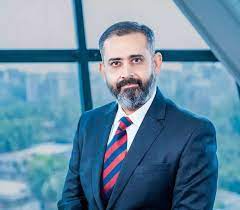
Rajat Diwakar is appointed CEO of iD Fresh Foods India.
Rajat Diwakar has been named CEO of iD Fresh Food's India division, the business announced on Friday. Diwakar worked as the Managing Director of Marico Bangladesh Limited before being hired by iD Fresh Foods. Additionally, he has over 20 years of experience leading FMCG companies.Leader of iD Fresh India, Rajat Diwakar Delhi, New: iD Fresh Food, a ready-to-cook packaged food firm, strengthened its leadership team on a national and international level on Friday by appointing industry veteran Rajat Diwaker as the India CEO and PC Musthafa as the Global CEO.Today, iD Fresh Food announced the appointment of Rajat Diwaker, a seasoned industry veteran, as the CEO for India. Rajat is a seasoned professional with more than 20 years of experience in the FMCG sector. He was the Managing Director of Marico Bangladesh Limited in his previous position. Additionally, he serves as a director on the board of Bangladesh's Foreign Investors' Chamber of Commerce and Industry (FICCI).In addition to continuing to lead the board of directors, PC Musthafa, who founded iD Fresh and served in that capacity for almost 20 years, now assumes the position of global CEO. Musthafa will be in charge of iD Fresh's worldwide market innovations, as well as international expansions, strategic acquisitions, the development of food-tech capabilities, and organizational culture inspiration.iD Fresh plans to designate specific Business Heads and CEOs for every international market as part of its expansion strategy. In actuality, the business is currently employing a US CEO. At present, more than one-third originates from sources outside of India. In 2024, the company intends to increase its presence in the current markets while branching out into new ones like Singapore and Australia.The global CEO of iD Fresh Food, PC Musthafa, commented on the most recent development, saying, "iD Fresh's journey has been incredibly rewarding so far, and we continue to make tremendous strides." I'm happy to have Rajat Diwaker join the iD Fresh team. I have no doubt that in the years to follow, we will accomplish greater things and win over more hearts under his capable and visionary leadership. And because of the unwavering support from customers that we have accumulated over the years, I am excited to lead the brand into new international markets as we set off on new experiences.
Revenues increase 67% as InCred Finance reports a net profit of Rs 121 crore for FY23.
InCred Finance, which joined the unicorn club last year, declared total revenues for the fiscal year 2023 of Rs 877.5 crore, a 67% increase over the previous fiscal year. According to data obtained from research platform Tracxn, the non-banking financial company also claimed a net profit of Rs 121 crore in FY23, a notable increase from the Rs 31 crore it reported in FY22.As the second unicorn of 2023, InCred Finance raised $60 million in December from a group of investors that included very wealthy customers, valued at $1.04 billion. The money will be utilized to expand its primary business verticals, which include lending to micro, small, and medium-sized businesses (MSME), consumers, and students.The other Indian firm to join the unicorn club in 2023 was Zepto, a quick commerce company. A privately held business valued at $1 billion or more is known as a unicorn. Experienced banker Bhupinder Singh launched InCred Finance, the lending division of InCred Group, in 2016. It offers loans in the areas of school finance, small business lending, and retail lending. It amalgamated with KKR India Financial S.A. in 2022.InCred said earlier in November that it has grown its loan portfolio to Rs 7,500 crore in six years, with over 50% compound annual growth over the previous three years. Institutional investors include the Abu Dhabi Investment Authority (ADIA), Moore Strategic Ventures, Elevar Equity, Oaks Asset Management, and the Dutch development financing corporation FMO have contributed money to InCred.
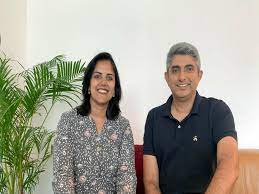
Fireside Ventures leads a 50 crore Series A fundraising round for mental health firm Amaha.
On Wednesday, Amaha, a company focused on mental health, announced that it has raised ₹50 crore in a Series A financing round led by Fireside Ventures. ₹15.6 crore more was contributed by other angel investors.Amaha, the former InnerHour, intends to expand and improve its mental health offerings with the help of this investment. Serving more than 600 Indian locations, the Mumbai-based organization provides a range of therapies and care programs for mental health issues like anxiety, depression, bipolar disorder, ADHD, OCD, schizophrenia, and addictions.The portfolio of Fireside Ventures, an investment firm that focuses mostly on consumer-focused startups, comprises businesses in the food and beverage, personal care, kids & education, lifestyle, and home products industries. It made investments in various wellness firms last year, including The Good Bug and Inito.A portion of the increased awareness and support for mental health and wellness in recent years has come from celebrities, including actors and cricket players, as well as from a number of organizations and social media platforms. Amaha was established in 2016 and offers digital services via an app that provides self-care tools and resources, in addition to operating physical centers in Delhi NCR, Bengaluru, and Mumbai. The founder and CEO of Amaha, Amit Malik, stated in an interview with Mint that "we're looking to go beyond digital at this stage because I think there is a lot of unmet need within the industry." Amaha has been aggressively investing in infrastructure, including physical clinics and technical advancements, despite growing losses in 2023 and maintaining a positiveAmaha obtained $5.2 million from Lightbox Ventures, a venture capital firm, in 2021. Additional angel investors that took part were Hitesh Oberoi, CEO & MD of Info Edge India Pvt. Ltd., Pankaj Sahni, CEO of Medanta-The Medicity Hospitals, and Capricorn Ventures & Micasa Investments (Singapore).

Melissa Niebes is named CEO of Federal Package, effective January 1, 2024.
Melissa Niebes has been named the new Chief Executive Officer of Federal Package, a turnkey contract manufacturer with its headquarters located in Chanhassen, MN. Her appointment will take effect on January 1, 2024. Niebes is Federal Package's President and Chief Commercial Officer at the moment. She will take over as CEO from Steve Dakolios, who recently declared his intention to become a Vice Chairman and Senior Advisor at Federal Package."Melissa has a strong track record as a growth-oriented leader in the consumer goods sector. She has given the business new life, direction, and energy. As the business grows, she will keep improving operational effectiveness and organizational procedures. The time is right for new leadership, and Melissa is qualified to advance our long-term plan and quicken

Ranji Trophy: Hand of Pondicherry Delhi lost by nine wickets.
The Ranji Trophy campaign for Delhi in 2023–24 got off to the worst conceivable start. It was Pondicherry's sole victory in the Ranji Trophy elite group, as they thrashed Delhi by nine wickets.On a chilly Day 4, Pondicherry's victory was a formality when Gourav Yadav and Abin Matthew dismissed Delhi's overnight batters, Harsh Tyagi and Ishant Sharma, early in their second innings, as they collapsed for 145 runs. With nine wickets remaining, Pondicherry took down the score in 13.1 overs, needing just 50 runs to win.Ranji Trophy 2024: Puducherry defeated Delhi, the defending champions, by nine wickets in their home opener. Former Madhya Pradesh fast bowler Gourav Yadav haunted Delhi in their own backyard with a match-winning tally of 10 wickets.Puducherry had one of their greatest victories in Ranji Trophy history on Monday, January 8, when they defeated Delhi, one of the league's heavyweights, by nine wickets in the opening game of Elite Group D at the Arun Jaitley Stadium in New Delhi. On a chilly morning in the capital city, Puducherry only needed to chase 51 runs to win, and they did so in style in just 13.4 overs.


Thailands New Program Will Provide Up To $14,000 In Medical Coverage For Visitors
In an effort to entice travelers back after the pandemic, Thailand has launched a program to provide up to $14,000 in medical coverage in the event of an accident, the country's tourism minister announced on Thursday. Under the new plan, the government will pay up to 500,000 baht ($14,000) in expenses and up to one million baht in compensation in the event of a death. The kingdom's vital tourism industry was severely impacted by travel restrictions during the Covid-19 pandemic, and arrivals have not recovered as quickly as officials had hoped.According to AFP, the new Thailand Traveler Safety program launched on January 1 and will run through August 31. Sudawan Wangsuphakijkosol is the minister of tourism. "The campaign aims to assure foreign tourists that Thailand is safe and everyone will be under good care," she stated. For a long time, young travelers from all over the world who are looking for sun, sand, and excitement have been drawn to the kingdom. However, mishaps are not unusual, and in the past few months, there have been multiple accounts of young Europeans being left with large medical bills and insufficient insurance.The Thai government makes it clear that mishaps brought on by "negligence, intent, illegal acts" or reckless behavior are not covered by the program. Travelers can sign up for the program at tts.go.th, the website for Thailand Traveller Safety. In 2023, there were about 28 million tourists to Thailand, up from 11 million in the previous year but still far less than the 40 million that arrived in 2019, the final year before the pandemic.

High Fives For The Adani Group Following
International rating agencies have upgraded and reaffirmed the credit ratings for Adani Group companies, which is a significant boost to the Adani Group. This includes Moody's and S&P reiterating their ratings for eight companies and giving five entities a stable outlook. All of the Adani Group's companies' ratings have been maintained by Fitch, a reputable rating agency that has a stable outlook and supports the upward trend. The collective rating actions are the result of consistent quarter-over-quarter strong performance, availability of capital at market-see-through prices, and lack of tail risk that could potentially cause a downturn.A company's credit rating serves as an indicator of its ability to meet its financial obligations, and changes to these ratings frequently have an impact on stock prices. In a statement, Moody's emphasized that the Adani Group had successfully completed a number of debt transactions, including refinancing and acquiring new loan facilities. The Group has finished a number of debt transactions in the intervening time, such as refinancing and acquiring new loan facilities, indicating its continuous availability of debt capital at a fair price. The Adani Group's consistent access to the equity market was demonstrated by the report's mention of high-profile equity transactions by significant institutional and strategic investors like GQG and Qatar Investment Authority.In February of last year, the ratings of the four companies were revised to 'negative' following a stock market meltdown in the Adani Group, which was caused by accusations of market manipulation made by Hindenburg Research. Since the Supreme Court ruled that market regulator SEBI was not responsible for any apparent regulatory failure, the Adani Group is no longer facing charges. S&P said that the fact that most regulatory investigations into the Adani Group ended without finding any evidence of wrongdoing has decreased downside risk. Restored access to funding is reflected in the repayment of all promoter loans associated with equity prices, share prices, and bank loans raised by various group entities at competitive rates.The high credit quality of the Adani Group, with steady and predictable cash flows across all of its issuers, is highlighted by these rating upgrades and affirmations. Now, among Indian private companies, the Adani Portfolio has the highest number of issuances of Investment Grade (BBB-/Baa3 and higher) ratings, which are equivalent to India's sovereign rating.

Congress mastered art of spoiling accomplishments: FM Sitharaman in RS
Accusing the UPA government of mismanaging the price situation after taking charge from the Vajpayee government in 2004, Finance Minister Nirmala Sitharaman on Saturday mocked the grand old party, saying 'gur ko gobar karna inki maastaree hai'.Replying to a short-duration discussion on the 'White Paper on the Indian Economy' in the Rajya Sabha, Sitharaman said inflation in the last year of Prime Minister Atal Bihari Vajpayee-led NDA government was below 4 per cent. "Through their ill-targeted, reckless fiscal policy, ill-targeted subsidies and wasteful expenditure, all done for political gains, inflation went high during the UPA rule," she said.In AICC's Session in Jaipur, she said, former prime minister Manmohan Singh admitted that handling inflation was a shortcoming of the UPA government. "Gur ko gobar karna inki (Congress) maastaree hai (Congress has a mastery of ruining something that has been accomplished)," she said.The minister outlined the steps taken by the Modi government after 2014 to manage inflation in the country.In the last nine years of the Modi government, retail inflation has been mostly around 5 per cent, and it has never crossed 8 per cent. "And that Congress is lecturing us now on how to manage inflation," Sitharaman noted.She further said the Modi-led government toiled for 10 years to bring the economy back on track, taking India from the 'Fragile Five' to the fifth largest economy in the world. India is soon going to become the world's third-largest economy.On the contrary, in the Modi government, the Prime Minister personally monitors programmes and projects and their progress through the PRAGATI portal by holding video conferences with officers even at the district level. Up to the 43rd edition of PRAGATI, 348 pending projects worth Rs 17.36 lakh crores have been reviewed, their progress is happening, and they are coming to a conclusion."This kind of effort never happened earlier during the UPA era," Sitharaman said.Giving reasons for coming out with the White Paper now, Sitharaman said a similar exercise earlier would have impacted the confidence of institutions, investors, and the people. As an elected government, she said it is imperative to inform the public and Parliament about the true picture of the economy during the UPA regime and the efforts taken by the Modi government to revive the economy.In an apparent jibe at the erstwhile National Advisory Council headed by Sonia Gandhi, the finance minister said India needs a clean and accountable governance and not governance through an extra-constitutional body.

Paytm Payments Bank Is Looking To Employ Outside Compliance
Four people with knowledge of the situation claim that Paytm Payments Bank Ltd. has sent out a request for proposals to outside auditors. According to the individuals cited above, who requested to remain anonymous, the bank only made this RFP available to outside auditors. As a result, it is not in the public domain.According to the three individuals mentioned above, the goal of this RFP is to audit the bank for compliance and the know-your-customer procedure.As stated by the first person quoted above, Paytm Payments Bank also hopes to demonstrate to the Reserve Bank of India that it is fully compliant by starting this audit. One97 Communications Ltd.'s associate company came under heavy fire from the RBI on January 31 for "persistent non-compliance" and serious "supervisory concerns." The regulator stated in its directives that Paytm Payments Bank will not be able to take new credit transactions, top-ups, or deposits into its accounts after February 29.

Fintech major Paytm set for small win as govt close to approving investment
Shruti Srivastava and Sankalp Phartiyal Paytm is close to winning India’s approval to invest in its key payments gateway arm, a decision which has been pending for two years and which would give the troubled fintech company some respite. The government grew more supportive of the investment after Paytm’s Chinese shareholder Ant Group Co. lowered its stake in the Indian firm, people familiar with the matter said, with one of the people saying the approval could come within days. A federal approval is needed because Ant’s stake in Paytm makes its outlay in the Paytm Payments Services Ltd. arm a direct foreign investment. The investment allows Paytm to beef up its arm which processes online transactions. While the investment is less than Rs 1 billion ($12 million), an approval would signal Paytm is still in the government’s good books even as the country’s banking regulator has tightened its grip on the company. The Reserve Bank of India in 2022 held back Paytm Payments Services’ application to become a so-called payments aggregator — an entity which makes it easier for online retailers and merchants to accept customers’ digital payments. The banking regulator also asked the unit to seek permission from the federal government for a past investment from Paytm, whose official name is One97 Communications Ltd. At the time, Ant owned a nearly 25% stake in One97, and New Delhi had stepped up scrutiny of investments from China.Paytm’s billionaire founder Vijay Shekhar Sharma acquired 10.3% stake from Ant last year in a cashless deal that made him the biggest shareholder in One97 with just over 24% equity. The deal likely boosted the government’s confidence toward giving Paytm Payments Services security clearance for foreign direct investment, the people said, declining to be named as the matter is private. The proposal will now go to an inter-ministerial committee for a final decision, one of the people said. Paytm’s application to qualify as a payments aggregator is still pending before the RBI, which in 2022 also barred the company from onboarding new online merchants. The RBI approves such applications if they fulfill regulatory requirements and match compliance norms it has set.

Govt urges RBI to issue FAQs for Paytm users
“The action against Paytm should be followed up by some sort of clarification. RBI has been urged to bring in FAQs as many customers won't be aware of many issues,” an official said. Given the broad customer base of Paytm — India’s biggest fintech that has a wide presence among both individual users and merchants — the government is learnt to have nudged the Reserve Bank of India (RBI) to issue a follow-up clarification in the form of frequently asked questions (FAQs). “The action against Paytm should be followed up by some sort of clarification. RBI has been urged to bring in FAQs as many customers won’t be aware of many issues,” an official said. Onboarding of customers without proper verification of know-your-customer (KYC) norms is learnt to have been one of the key issues for prompting the action by the RBI against Paytm last week. The RBI had taken action in the form of imposing penalty against Paytm Payments Bank last year and even then the issue did not get resolved, so the action by the RBI this time around is unlikely to be rolled back, the official said. On Tuesday, Paytm founder and CEO Vijay Shekhar Sharma had met Finance Minister Nirmala Sitharaman and RBI officials, days after the regulator imposed a ban on Paytm Payments Bank (PPBL). On January 31, the RBI barred Paytm Payments Bank from accepting deposits or top-ups in any customer account, prepaid instruments, wallets, FASTags and NCMC card after February 29, 2024, in the wake of persistent non-compliances and material supervisory concerns. The crackdown on PPBL came after a comprehensive system audit report and subsequent compliance validation report of the external auditors, the RBI had said. The RBI had directed that the Nodal Accounts of One97 Communications Ltd (OCL), which owns Paytm, and Paytm Payments Services Ltd are to be terminated at the earliest, in any case not later than February 29, 2024. Paytm Payments Bank has been facing RBI scrutiny since 2018. The RBI’s recent action on PPBL came after it was found that the bank had violated KYC norms and also had linked the same PAN to multiple customers. It was also observed that the bank was allowing transactions above the permissible limit, which raised concerns over money laundering.

Tata Sons to invest $1 billion more in digital arm
Tata Sons is poised to invest about $1 billion in Tata Digital, over the next few years, people familiar with the matter said. This comes as the parent of the diversified Tata group puts a pause on external fundraising for the ecommerce entity, which houses the superapp, Tata Neu as it reviews its digital strategy with the appointment of a new chief executive officer this week, the people said. Tata Digital will only tap external investors after the new CEO sets down to focus on execution and scale, one of the persons said. Earlier this week, Tata Digital appointed Naveen Tahilyani, the former managing director of Tata AIA Life Insurance, as its CEO & MD. Tahilyani replaced Pratik Pal who had been holding the charge since the company’s inception in 2019.Tata Sons has invested more than $2 billion in Neu so far and has board approvals for further capital infusion over a five-year period, the people said. A spokesperson for Tata Sons did not respond to ET’s queries. Multiple people aware of the management changes said Tata Sons chairman N Chandrasekaran wanted a senior hand with consumer background to steer the next stage of expansion for Neu. “The top brass wants Tata Digital to work on making its operational structure more efficient and agile and scale up the business,” a person said.

‘WTO not place for discussing labour, environment issues’
International trade experts have pointed out that developed nations have been pushing for non-trade issues in the garb of sustainability to reverse the growing trade deficit that it has with the developing nations. rules of the WTO but also have systemic implications for international law as a whole, since unilateral action undermines multilaterally negotiated rights and obligations of countries,” the official said. Last year in May, India had submitted a paper in the WTO to express its concern over use of environmental measures as protectionist non-tariff measures emphasizing unilateral measures such as EU’s carbon tax and deforestation law could disrupt global trade. India has been joined by countries including Russia, and Brazil, who have also flagged similar concerns over European Union’s (EU) carbon tax and deforestation regulation in a meeting of the WTO in Geneva, arguing that these measures would affect their industries. The EU has decided to impose a carbon tax CBAM on certain sectors like steel, cement, fertilizer, aluminum and hydrocarbon products from 2026. In 2022, India’s 27 per cent exports of iron, steel and aluminum products worth $8.2 billion went to the EU. India’s exports of products like coffee, leather hides and paperboard worth $1.3 billion annually to the EU will get impacted due to the deforestation regulation adopted by the EU last year, as per think-tank Global Trade Research Initiative (GTRI).

Paytm asks merchants to link QRs to other banks’ accounts
Following the Reserve Bank of India’s (RBI’s) strictures on Paytm Payments Bank (PPB) last week, Paytm has directed its field sales executives to migrate merchant QR codes from their existing PPB accounts to accounts with other banks. For example, Manoj Kumar, who works for a retail chain ‘More’ in Indirapuram, Ghaziabad, said that representatives of the fintech major asked them to move the store’s funds from PPB to other bank accounts before February 29. The process has started over the weekend itself and the fintech major is trying to sensitise as many merchants as possible before the deadline of February 29 to ensure that their business transactions can continue unhindered. “We have been asked to migrate as many QRs as possible to alternate bank accounts by the end of the month,” said area sales executives Fe spoke to. This comes against the backdrop of panic that has spread among a section of merchants. As per a survey of 5,000 retailers on Paytm by Kirana Club, 68% of the respondents said that they have decreased their trust on the firm since RBI’s announcement. While merchants need to shift their PPB accounts, the good news is that the QR code, soundbox or card machine will not require any physical changes, the company confirmed. “In instances, where our associate PPB operates as a back-end bank, these services can seamlessly be transitioned to other partner banks. This means that for our merchant partners, there will be no disruptions, no need to revisit existing setups, and no additional effort,” said a company spokesperson.

Setting India on the innovation journey
Innovation has often been an important aspect that distinguishes entities across the world. A business that keeps innovating survives and thrives. A country that inculcates innovation in its society doesn’t only keep the economy roaring but also empowers entrepreneurship and keeps its businesses growing. The developed block of countries and their businesses understood this advantage and continued their innovation journey by attracting the best global minds to their geographies. India, in the past few years, has started this journey, and the trajectory of becoming a $10 trillion economy and a developed nation hinges significantly on its transformation to a scientifically advanced country and a global leader in innovation. Government initiatives aimed at fostering creativity in education and incentivising careers in science underscore India’s steadfast commitment towards nurturing its innovation ecosystem. India’s ancient history is full of innovators and researchers who were constantly contributing to research and innovation that has withstood the test of time. India’s remarkable rise in the Global Innovation Index (GII), soaring to the 40th position out of 132 countries in 2023, reflects its resolute dedication to promoting innovation. The GII, complemented by the India Innovation Index published by Niti Aayog and the Institute for Competitiveness, also empowers states to measure their innovation-driven progress against global benchmarks. In a landmark move, Union finance minister Nirmala Sitharaman outlined a bold vision for India’s technological future as she presented the interim Budget 2024. Central to her announcement was the allocation of a substantial Rs 1 trillion corpus to bolster technology research, signalling a transformative leap towards fostering innovation and self-reliance. While the specifics are awaited, the announcement heralds a new era for India’s tech landscape, highlighting the pivotal role of innovation as the cornerstone of national development.

Morgan Stanley sees opportunity, buys shares worth ₹244 crore
Morgan Stanley on Friday bought shares worth ₹244 crore in Paytm's parent company One97 Communications, representing a 0.8 per cent stake Financial services giant Morgan Stanley on Friday made an investment in Paytm's parent company, One97 Communications, by acquiring shares worth ₹244 crore through an open market transaction.Morgan Stanley, via its affiliate Morgan Stanley Asia (Singapore) Pte - ODI, purchased 50 lakh shares on the National Stock Exchange (NSE), representing a 0.8 per cent stake in Paytm. The average price per share was ₹487.20, resulting in a total deal size of ₹243.60 crore. However, details about the sellers remain undisclosed, PTI reported.This comes after the banking sector regulator has found potential violations, including the misuse of customer documentation rules and non-disclosure of material transactions. Paytm shares price faced another 20 per cent decline on the NSE. This adds to a total of 36 per cent drop in the share price in just 2 days after the Reserve Bank of India (RBI) directed Paytm Payments Bank Ltd (PPBL), an associate of Paytm, to cease accepting deposits or top-ups in various accounts, wallets, and instruments from March 1. Morgan Stanley, via its affiliate Morgan Stanley Asia (Singapore) Pte - ODI, purchased 50 lakh shares on the National Stock Exchange (NSE), representing a 0.8 per cent stake in Paytm. The average price per share was ₹487.20, resulting in a total deal size of ₹243.60 crore. However, details about the sellers remain undisclosed, PTI reported.In related news, there are reports that the RBI is contemplating revoking the license of Paytm Payments Bank as early as next month.

Orios Venture Partners sells nearly 3% stake in Country Delight for Rs 225 crore
Orios Venture Partners has made a partial exit from direct-to-consumer (D2C) fresh food brand Country Delight for around Rs 225 crore. People familiar with the matter said the early-stage venture capital firm has sold about a 3% stake in Country Delight to Temasek-backed asset management group Seviora. Orios had invested Rs 15 crore in Country Delight from its Fund-I, of which the first cheque of Rs 3 crore was infused in 2017. The firm had subsequently invested additional sums in Country Delight through its later funds.Across all its investments in the D2C company, Orios held 21-22% stake in Country Delight prior to the partial exit.On January 5, ET reported that the Gurugram-based company raised around $20 million (around Rs 164 crore) in a funding round led by one of its existing investors, Singapore’s sovereign fund Temasek. Another existing backer, Venturi Partners, also participated, in addition to Seviora, which invested through its agriculture and food-focused investment vehicle Seviora T3F Fund. The round valued Country Delight at around $820 million. Orios launched Fund-I in 2014, with a final close of Rs 300 crore in 2015. In January, the Mumbai-based investment firm announced that it had returned the initial corpus to its limited partners, or sponsors of the fund. Among the various sectors, Fund-I allocated 27% of its corpus to ecommerce marketplaces, followed by D2C at 18%, and healthtech at 14%. Key portfolio companies that emerged from the fund include Country Delight, PharmEasy, Intelligence Node, and Zostel. Orios also counts BatterySmart, Vedantu, Ixigo, Mobikwik and CarDekho among its portfolio companies. It had also backed beleaguered car repair startup GoMechanic but had to eventually write off the investment after GoMechanic’s founders admitted to financial wrongdoing. The Rehan Yar Khan-led investment firm also saw two of its managing partners Anup Jain and Rajeev Suri depart in September 2023.

