

Top Trending Technology News & Highlights
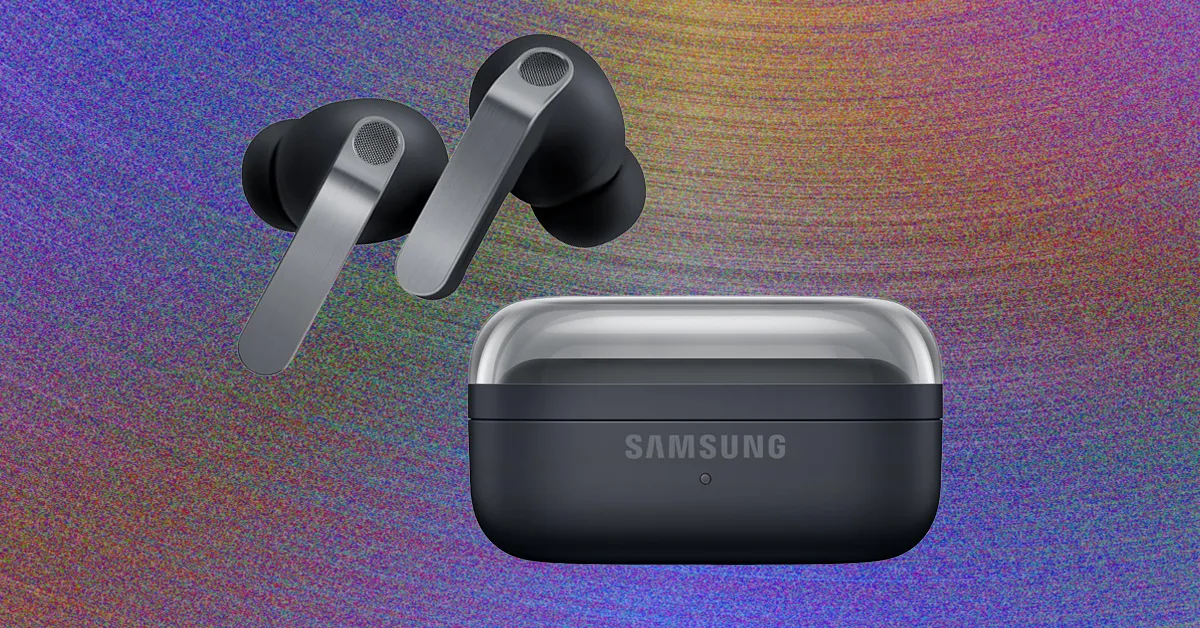

I tested the Galaxy Buds 4 Pro: Samsung has finally produced wireless earphones for Android users that are on par with the AirPods Pro.
The unpleasant reality is as follows: I see AirPods Pro everywhere, including corporate tech campuses, airports, cafes, and parks, despite my best efforts to avoid them. Even though high-end wireless earbuds have been available for years, I've always questioned why other businesses haven't been able to compete with them. But I can now confidently state that the new Galaxy Buds 4 Pro feel like a real rival to the AirPods Pro, and they function flawlessly with my Galaxy S26 Ultra.It's better late than never, and the Buds 4 Pro hit all the right notes—from their amazing sound quality and efficient active noise suppression to their simple design and cozy fit. To be honest, I didn't have high expectations for the Buds 4 Pro at first, but they astonished me.For a closer look at the Samsung Buds 4 Pro, including their strengths and weaknesses, scroll down. The Buds 4 Pro are clearly different from earlier Samsung wireless earbuds in terms of design. Instead of only making technical changes and renaming the earbuds, I'm delighted Samsung took the effort to completely redesign them. I thought it was great how the Buds 4 Pro differed cosmetically from the AirPods Pro.A premium brushed-metal strip runs along the stems of the black model I tested. They have a really elegant, minimalist design and don't appear cheap. Because each earbud weighs only 5.1 grams, your ear canals won't be strained. They didn't hurt or strain me while I wore them for hours at full power. Although it's crucial to remember that the earbuds are not completely waterproof, they have an IP57 classification, which indicates that they are resistant to dust and can be submerged in up to three feet of water for thirty minutes.
Published 21 Mar 2026 05:58 PM
As competition intensifies, Anthropic updates its AI safety pledge. What is stated in the new policy?
Anthropic has updated its safety guidelines to better reflect the current global regulatory framework that places a higher priority on the development and competitiveness of AI. The Claude maker stated in a revised version of its Responsible Scaling Policy (RSP), a voluntary framework that Anthropic uses to address catastrophic risks from AI systems, that it would not cease developing an AI model that was deemed dangerous if a competitor had already released a model that was comparable or better.This is a change from its RSP from two years ago, which said Anthropic would postpone potentially hazardous AI development. Anthropic stated in a blog post on Tuesday, February 24 that the change in its safety policy was brought about by the rapid advancement of AI and the absence of government agreement on AI rules. Given that Anthropic has been repeatedly referred to as one of the most safety-conscious companies in the AI industry, the revised policy represents a significant change. But the AI startup has also faced fierce competition from rivals like Google, OpenAI, and Elon Musk's xAI, which frequently release state-of-the-art tools."We anticipated that the announcement of our RSP would inspire other AI firms to implement comparable regulations." We anticipated that RSPs or comparable regulations would eventually become voluntary industry standards or influence AI legislation meant to promote safety and openness in AI model development, according to Anthropic. It further stated that "some parts of this theory of change have played out as we hoped, but others have not," based on its evaluation of the earlier RSPs.
Published 25 Feb 2026 05:53 PM
How CTV can prevent repeating the ad errors of linear TV for living room monetization
Connected TV live sports are about to enter a crucial period of recalibration. The medium is plagued by an old broadcast reflex: more advertisements equal more money, despite its promises of scale, accuracy, and living-room supremacy. A fundamental concern for the ecosystem is raised by the growing need to profit from every stop as live matches draw enormous concurrent audiences. To what extent can ad loads be increased before fandom becomes transactional and viewer immersion breaks down? Tolerance is a delicate currency in an environment where control and choice are paramount. This unique research explores what sustainability actually means during live sports by bringing together voices from the CTV, ad-tech, platform, and agency sectors. Beyond simple inventory counts, topics like experience design, temporal intelligence, creative ecosystems, and attention economics are covered. The emphasis is on creating a model where monetization does not come at the expense of loyalty, taking into account factors like the unpredictable nature of live broadcasts and the potential to increase interaction after the final whistle. The fundamental conflict is obvious: how well the ecosystem learns to use the screen, rather than how much advertising it can accommodate, will determine the direction of CTV sports in the future.
Published 24 Feb 2026 05:42 PM
According to sources, India orders a university to withdraw from the AI summit after introducing a Chinese robot as its own.
According to two government sources, an Indian university was forced to leave its booth at the nation's premier AI event after a staff member was seen passing off a commercially available robotic dog manufactured in China as the institution's own.Orion needs to meet you. This was created by Galgotias University's Centre of Excellence," communications professor Neha Singh said this week on state-run channel DD News in comments that have since gone viral.NEW DELHI (AP) — After one of its employees showed off a commercially available robotic dog manufactured in China and claimed it was the institution's own invention, a private Indian university was expelled from a major artificial intelligence symposium in New Delhi on Wednesday. Two government sources claim that a day after Neha Singh, a communications professor at Galgotias University, told state-run broadcaster DD News that the robotic dog Orion was created by the university's Center of Excellence, the university was directed to remove its booth at the summit. However, internet users soon recognized the robot as the Unitree Go2, which is used extensively in research and education and is marketed by China's Unitree Robotics. It starts at $1,600. Singh told reporters on Wednesday that she had never stated outright that the dog was an exhibit rather than the university's original creation.The two government officials, who spoke on condition of anonymity because they were not permitted to address the media, said the event was an embarrassment for the host nation, India. But according to a statement from Galgotias, the university was "deeply pained" and called the occurrence a "propaganda campaign" that might spread negativity and lower the spirits of students who are trying to use global technology to innovate, learn, and develop their talents.
Published 18 Feb 2026 06:06 PM


Technology
21st century is dedicated to the Technology and technology is dominating everywhere and every part of the world and almost all the industries are now a days is technology dependent or they need technology help to drive more scale and deliveries.


Why 2024 will be a year of entertainment media mergers
An existential crisis is plaguing India's entertainment industry as a result of changes in customer behavior. Globally, traditional media companies are likewise having difficulty and are looking to consolidate in order to maintain their heritage operations and reduce losses from their digital endeavors. The OTT market is having difficulties as audience growth slows and content costs rise. Indian broadcasting companies are experimenting with hybrid OTT revenue models, but they are up against e-commerce sites and software titans for digital ad dollars. The industry is at a loss as to how to proceed, whether it be through mergers or modifications to business structures.Will the business of linear television face an acceleration of collapse by 2024? Will broadcasting businesses be merging this year? Will internet behemoths in the technology sector steal viewers and money from over-the-top (OTT) video streaming services, or will they be able to survive? India's sizable entertainment corporations are facing challenges from digitally-powered businesses and changing consumer behavior, leading them to ask some unsettling questions.

Ranbir and Konkana return in the most recent OPPO advertisement as
In order to promote the Oppo Reno smartphone series, smartphone manufacturer OPPO just revealed their newest ad. It stars Ranbir Kapoor and Konkana Sen Sharma as two of their most beloved characters, Sid and Aisha, from the movie "Wake Up Sid."The characters' afterlife is captured in the video commercial campaign. Ranbir, who portrayed the aspiring photographer Sid, is shown using the just released OPPO phone to record a significant occasion."Simply capturing life with a special friend, just like Sid!" is the film's tagline and main idea.Famous Innovations is the person who conceptualized the movie. "Reno 11 Series is positioned as a Portrait Expert with this campaign; the phone boasts a superior camera, and who better to bring that alive than everyone's favorite photographer character, Sid from Wake Up Sid?" an agency spokesman remarked in reference to the same. We made an effort to depict the characters' life changes and provide a window into a unique time spent with Ayesha, Laxmi, and Rishi. People would feel nostalgic after watching this movie and be curious to learn more."
Network18 and ZEEL reveal the new RIO; modify channel prices and remove bouquets
A new Reference Interconnect Offer (RIO), which will go into effect on February 1, 2024, has been issued by Zee Entertainment Enterprises (ZEEL) Ltd. and IndiaCast, the distribution division of Network18.IndiaCast has introduced new bouquets and discontinued some of its older ones in the new RIO. Additionally, it has changed how much some channels cost. More than 25 bouquets, including Colors Wala Hindi Budget and Colors Wala Hindi Budget Plus, have been canceled by the distributor.(whose cost was Rs 25) and Colors Wala Hindi Value (whose cost was Rs 28). Colors Wala Hindi Value (Rs 34), Colors Wala Hindi Value Plus Sports (Rs 45), and Colors Wala Marathi Value (Rs 40) are among the new products that the distribution arm is selling.Some channels on Network18 have seen price increases, such as Colors Marathi, which was formerly only Rs 10 and is now Rs 15. In a similar vein, Colors Cineplex, which was formerly priced at Rs 3, is now Rs 19.